

Cleaning Staff Jobs in South Africa: A Practical Guide
Cleaning staff jobs keep South African workplaces, hotels, schools and homes running every day. They can also be a starting point for people looking for their first job, a change of career or work with hours that fit their lives.
There’s no single type of cleaning job. You might work in an office in Johannesburg, a hotel in Cape Town, a hospital in Durban or a shopping centre in a smaller town. The duties, shifts and pay can differ, so it’s worth looking closely at each advert before applying.
Here’s what to know about finding cleaning staff jobs in South Africa, what employers may expect and how to put together a strong application.
What Does a Cleaning Staff Member Do?
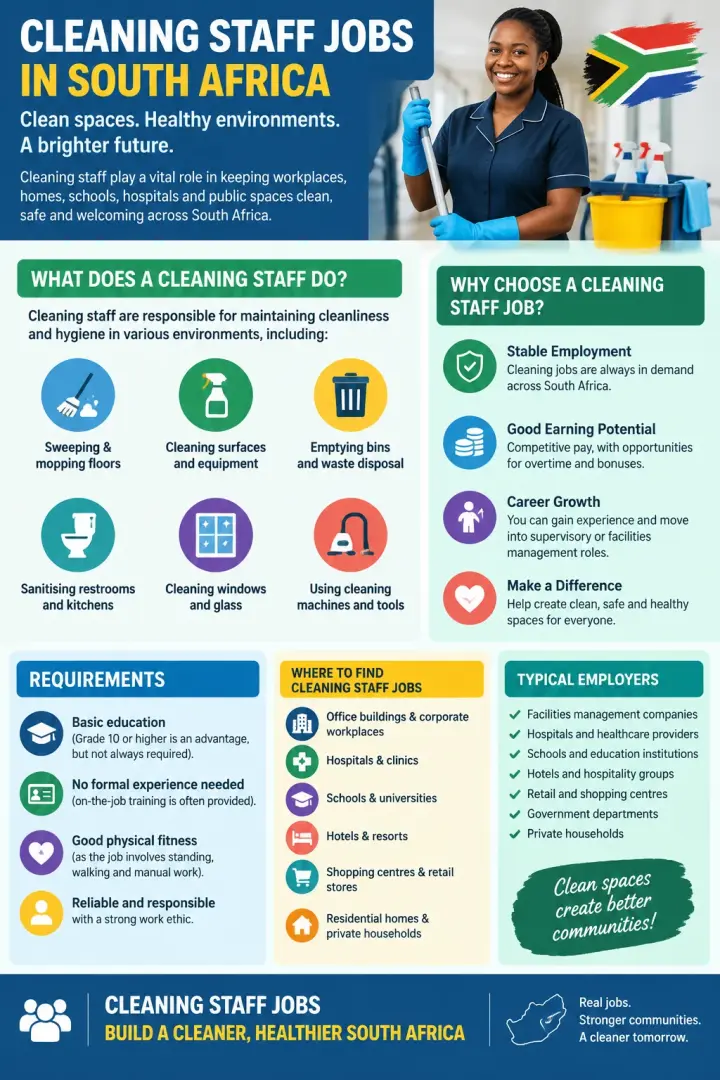
A cleaner’s main job is to keep an assigned space clean, tidy and safe to use. The exact tasks depend on the workplace and the position.
Typical cleaning duties include:
- Sweeping, vacuuming and mopping floors.
- Dusting furniture, shelves and other surfaces.
- Cleaning and disinfecting toilets, basins and shared areas.
- Emptying bins and replacing refuse bags.
- Washing windows or wiping glass surfaces.
- Restocking items such as soap and toilet paper.
- Reporting broken equipment, spills or safety hazards.
- Using cleaning products and equipment according to instructions.
Some jobs involve more specialised work. Hotel housekeepers may change linen and prepare rooms for guests, while industrial cleaners may use machines or follow specific safety procedures. Healthcare cleaning jobs can require extra training in infection prevention.
Types of Cleaning Jobs in South Africa
Office and Commercial Cleaner
Office cleaners look after workspaces, meeting rooms, kitchens and bathrooms. Shifts often take place early in the morning, in the evening or over weekends, when fewer people are using the building. A cleaner may work directly for a business or for a cleaning company that serves several clients.
Hotel Housekeeper or Room Attendant
Hotel housekeeping involves cleaning guest rooms and shared spaces, changing bedding and checking that rooms are ready for new arrivals. Attention to detail matters because guests notice the small things. Hotels, guesthouses and lodges may need staff on weekends and public holidays.
Domestic Worker or House Cleaner
Domestic cleaners work in private homes. Duties might include cleaning, laundry, ironing or other household tasks agreed with the employer. Some positions are live-in, while others are daily or part-time. Make sure you understand the duties, hours and transport arrangements before accepting an offer.
Hospital and Clinic Cleaner
Cleaners in healthcare settings help maintain hygienic spaces for patients, visitors and staff. These roles may involve strict procedures for handling waste and cleaning different areas. Employers may provide training, but previous healthcare cleaning experience can be useful.
Industrial or Specialist Cleaner
Factories, warehouses and other industrial sites may need cleaners who can use specialised equipment or work around machinery. Depending on the job, you might need safety training, protective clothing or experience with particular cleaning methods.
Requirements for Cleaning Staff Jobs
Many entry-level cleaning jobs don’t require a degree or years of experience. Some employers ask for a Grade 10 or matric certificate, while others focus on reliability and the ability to do the work. Always check the individual job advert rather than assuming every position has the same requirements.
Employers commonly look for people who:
- Arrive on time and can follow a cleaning schedule.
- Understand basic hygiene and safety practices.
- Can work independently or as part of a team.
- Pay attention to detail and report problems.
- Can manage the physical demands of the role.
- Communicate clearly with supervisors, colleagues or clients.
Some roles may require a criminal record check, references or proof that you’re allowed to work in South Africa. If you’re not a South African citizen or permanent resident, check that your immigration status and documents permit you to do the job.
Don’t rule yourself out just because you haven’t had a formal cleaning job. Experience gained through caring for a household, volunteering or helping with community events can show useful skills. Be honest about where you gained that experience.
Cleaning Staff Salary and Working Hours
Pay for cleaning jobs in South Africa varies according to the employer, location, duties, experience and hours worked. A part-time domestic cleaning job won’t necessarily pay the same amount as a full-time specialist cleaning position. Some employers advertise an hourly rate, while others quote a weekly or monthly salary.
South Africa has a national minimum wage, which is generally updated each year. Other applicable rules, collective agreements or sector-specific arrangements may affect what a worker should receive. Check the latest official rate and any rules relevant to the job with the Department of Employment and Labour or the relevant bargaining council. Don’t rely on an old job advert or social media post for the current rate.
Before accepting a job, ask:
- What is the hourly, daily or monthly pay, and when is it paid?
- How many hours and days will I work?
- Will I be required to work overtime, Sundays or public holidays, and how will that be paid?
- Are there any deductions, and what are they for?
- Will the employer provide uniforms, equipment and transport where needed for the job?
A monthly figure can sound reasonable until you work out how many hours it covers. Honestly, it’s worth doing that calculation before you agree. Also consider the cost and time involved in getting to and from work, especially for very early or late shifts.
Where to Find Cleaning Jobs in South Africa
Cleaning vacancies are advertised in several places. Try more than one route and keep a record of where you’ve applied.
- Online job sites: Search job platforms using terms such as “cleaner jobs”, “office cleaner”, “housekeeping jobs” or “cleaning staff vacancies”, along with your city or province.
- Cleaning companies: Check the websites or offices of established cleaning and facilities management businesses for vacancies.
- Hotels and guesthouses: Look at their careers pages or ask whether they accept CVs for housekeeping roles.
- Hospitals, schools and businesses: Some advertise vacancies directly; others use contracted cleaning companies.
- Employment services: Contact a Department of Employment and Labour labour centre or explore its employment services for jobseekers.
- Local networks: Let trusted friends, former colleagues and community contacts know you’re looking. Local noticeboards can also be useful.
When searching online, add areas you can realistically travel to. For example, try “cleaner jobs in Pretoria”, “housekeeping jobs in Cape Town” or “part-time cleaning jobs in Durban”. A vacancy close to home may make a big difference to your transport costs.
How to Write a Cleaner CV
A clear, simple CV is often enough. You don’t need fancy designs or long paragraphs. Keep the information relevant to the position and check that your phone number is correct.
What to Include
- Your name, phone number and area where you live.
- A short profile explaining the type of work you’re seeking.
- Relevant work or volunteer experience, with dates and main duties.
- Skills such as floor care, housekeeping, safe chemical use or operating cleaning equipment, if applicable.
- Education and any relevant training.
- References who have agreed to be contacted.
For example, a short profile could say: “Reliable cleaner with experience maintaining offices and shared bathrooms. Comfortable following cleaning schedules and working early shifts.” Only include claims that are true for you.
If you’re applying for your first formal job, list practical tasks you’ve done through volunteering or other responsibilities. You could mention helping clean a community hall, for example, and explain what you did. If possible, ask someone who supervised that work whether they’re willing to be a reference.
How to Apply and Prepare for an Interview
Read the advert carefully and follow the application instructions. If the employer asks for a CV by email, use a clear subject line such as “Application: Office Cleaner”. Include a short message saying which role you’re applying for and how to contact you.
At an interview, you may be asked about previous work, availability, cleaning routines and how you handle problems. Prepare a few straightforward examples. You might explain how you organise tasks, what you would do if you found a spill, or how you’d respond if a piece of equipment stopped working.
It’s fine to ask questions too. Find out who you’ll report to, whether training is provided and what a normal shift looks like. If the role involves travelling between sites, ask how that travel is arranged.
Safety Tips for Cleaning Work
Cleaning can involve wet floors, heavy lifting, electrical equipment and chemicals. A good employer should explain the risks and provide appropriate instruction and protective equipment for the work.
Some basic precautions include:
- Read product labels and follow the employer’s instructions.
- Never mix cleaning chemicals unless specifically instructed by a suitably qualified person; dangerous fumes can result.
- Use gloves, eye protection or other protective equipment when required.
- Put out warning signs for wet floors and report spills or damaged equipment.
- Ask for training before using unfamiliar machines or products.
If you’re unsure how to use a product safely, ask your supervisor. Don’t guess, particularly when working in a healthcare or industrial setting.
Know Your Rights and Watch for Scams
Cleaning workers are entitled to workplace protections, though the rules that apply can depend on the employment arrangement and circumstances. Ask for the terms of your job in writing, including your pay, hours, duties and leave arrangements. Keep copies of payslips and relevant messages.
Depending on the circumstances, rules about minimum pay, leave, overtime and Unemployment Insurance Fund contributions may apply. The Department of Employment and Labour can help you check your situation. If you have a workplace dispute, you can also ask the Commission for Conciliation, Mediation and Arbitration, known as the CCMA, about its processes.
Job scams are another thing to watch out for. Be cautious if someone promises guaranteed work but asks you to pay an upfront fee, refuses to identify the employer or pressures you to share banking details immediately. Verify the company using contact details you find independently, rather than only the number in the advert. Never hand over original identity documents as a condition of an interview.
Growing Your Career in Cleaning
A cleaning job can lead to opportunities beyond an entry-level role. With experience and suitable training, you might move into a team leader, housekeeping supervisor, facilities or specialist cleaning position. Some workers also build their own cleaning businesses, although that comes with costs and responsibilities of its own.
Ask about training available through your employer and keep a record of courses you complete. Learning to use equipment safely, manage stock or supervise a team can help when applying for your next role.
Frequently Asked Questions
Do I need matric to get a cleaning job?
Not always. Requirements differ between employers, and many entry-level roles focus on practical skills and reliability. Check each advert to see whether a particular qualification is required.
Can I apply without previous cleaning experience?
Yes. Look for entry-level vacancies and highlight relevant skills from volunteering, household responsibilities or other work. Be clear about your experience and willingness to learn.
Are part-time cleaning jobs available in South Africa?
Yes. Part-time roles can be found in homes, offices and other settings. Hours may be early, late or limited to certain days, so confirm the schedule and pay before accepting.
What should I bring to a cleaning job interview?
Bring a copy of your CV, identification and any documents the employer has reasonably requested, such as certificates or references. If you’re unsure what’s needed, ask beforehand. Keep your original documents safe.
Ready to Start Your Search?
Start with a straightforward CV, search for roles within reach of your home and apply to vacancies that match your availability. Check the employer, understand the pay and ask questions before agreeing to start. A little preparation can help you find a cleaning job that works for you.