


Packing Jobs in the UK: What to Expect and How to Apply
Packing jobs are a popular choice for people looking for practical, hands-on work in the UK. You might pack online orders in a warehouse, prepare food products for delivery or check items before they leave a factory. Some roles need experience, but plenty of employers offer training when you start.
Whether you're looking for full-time work, a temporary job or shifts that fit around other commitments, it helps to know what the job involves before you apply. Here's a straightforward guide to finding packing work, understanding the pay and spotting a decent opportunity.
What Are Packing Jobs?
Packing jobs involve preparing products so they can be stored, shipped or sold. The work varies by employer, but it usually includes checking items, putting them into suitable packaging and getting them ready for the next stage of the process.
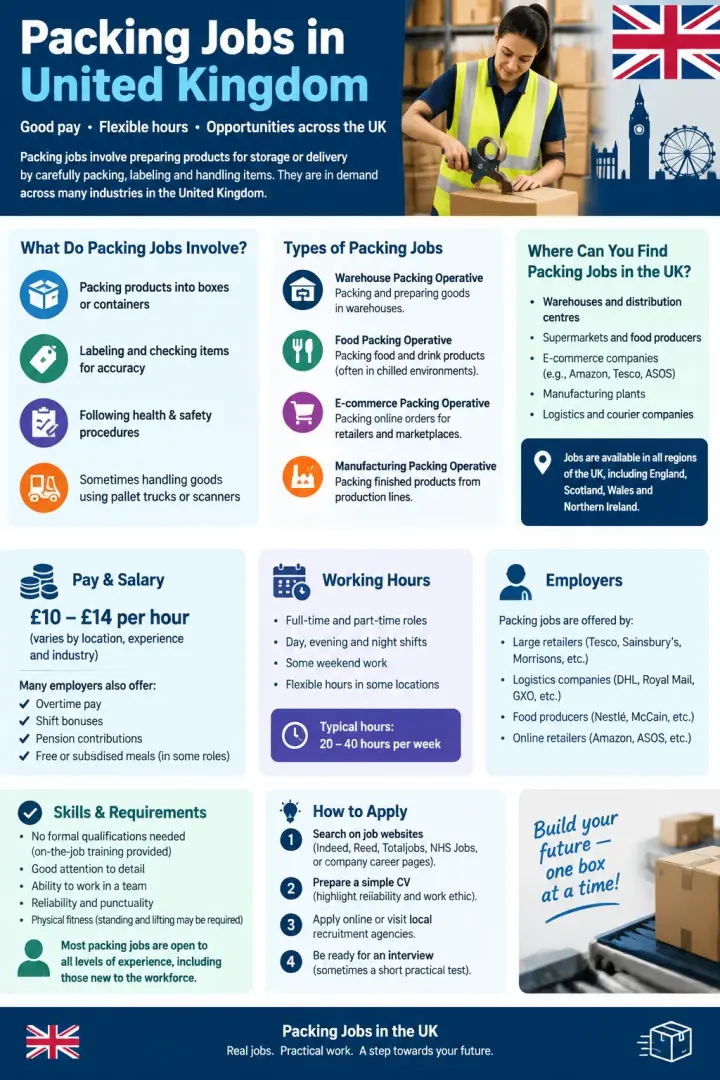
A packer in an online retail warehouse might fill customer orders, while someone in a food factory could work on a production line. Some jobs involve machinery and scanners; others are mostly done by hand.
Common duties include:
- Picking or collecting items for an order
- Checking product quantities and looking for damage
- Folding boxes and choosing suitable packaging
- Wrapping, bagging or boxing products
- Adding labels and scanning barcodes
- Keeping work areas clean and following safety rules
- Moving completed packages to a dispatch area
Job adverts don't always use the word “packer”. You may also see roles listed as warehouse operative, production operative, packing operative, order picker or fulfilment associate. Read the duties carefully, as some of these jobs involve much more than packing.
Types of Packing Jobs in the UK
Warehouse Packing Jobs
Warehouse packers prepare goods for delivery to customers, shops or other businesses. The work often involves using a handheld scanner, checking order details and packing items securely. Some positions combine picking and packing, so you could spend a fair amount of the shift walking.
These jobs are common around distribution centres, industrial estates and major transport routes. Shifts may include early mornings, evenings, nights or weekends.
Food Packing Jobs
Food packing roles can involve weighing, labelling and packing products on a production line. Employers usually provide hygiene and food safety training, and you may need to wear protective clothing, a hairnet or gloves.
Check the working environment before accepting a role. Some food factories are chilled, while others can be warm or noisy. The pace can also be quick, particularly when products have to be packed and dispatched on the same day.
Factory and Production Packing Jobs
Factories need packers for all sorts of products, from household goods to cosmetics and medical supplies. Depending on the role, you might inspect finished products, feed packaging into a machine or prepare boxes for shipping.
Accuracy matters here. A wrong label or damaged item can cause problems further down the line, so employers often value people who can stay focused on repetitive tasks.
Seasonal and Temporary Packing Jobs
Retailers and logistics companies often hire extra staff before Christmas or during other busy periods. Temporary jobs can be a useful way to earn money, try out a workplace or build experience. Some may lead to longer-term work, although that isn't guaranteed.
Agency work is common in this sector. Before starting, ask how long the assignment is expected to last, who will pay you and how much notice you'll get if shifts change.
Home Packing Jobs
You'll occasionally see adverts for packing products from home. Be careful: some are scams, especially if they ask you to pay upfront for a starter kit or promise unusually high earnings for very little work.
Check the business independently and be wary of anyone who asks for money or sensitive documents before explaining the job properly. Genuine home-based opportunities may exist, but don't assume an advert is genuine just because it appears online.
How Much Do Packing Jobs Pay in the UK?
Pay depends on the employer, location, shift pattern and responsibilities. Many entry-level packing roles pay at or near the applicable minimum wage, while some employers offer higher rates for night shifts, weekends, specialist duties or supervisory work.
UK minimum wage rates depend on your age and, in some cases, whether you're an apprentice. Rates can change, so check the current National Minimum Wage and National Living Wage guidance on GOV.UK rather than relying on an old advert. Most workers must receive at least the applicable minimum wage on average for their pay reference period, even if they're paid by the item or through an agency.
When comparing jobs, look beyond the headline hourly rate. Check:
- Whether the rate changes for nights, weekends or overtime
- Whether breaks are paid
- How many hours are guaranteed, if any
- How and when wages are paid
- Whether deductions will be made and what they're for
- Whether the advertised figure includes holiday pay or an attendance bonus
Honestly, a slightly higher hourly rate doesn't always mean a better deal if the commute is expensive or shifts are regularly cancelled. Work out what you'll take home after travel costs and consider how predictable the hours are.
Do You Need Experience or Qualifications?
Many entry-level packing jobs don't require formal qualifications. Employers often provide training on equipment, safety procedures and their packing system. That said, previous warehouse, retail, manufacturing or hospitality experience can help show that you're comfortable working as part of a team and keeping up with a busy workload.
Useful skills include:
- Attention to detail when checking items and labels
- Basic reading and numeracy for orders and quantities
- Good timekeeping and reliability
- The ability to follow instructions and safety procedures
- Teamwork and clear communication
- Comfort with repetitive tasks and a practical working environment
Some roles have physical demands, such as standing for long periods or moving boxes. An advert should give you an idea of what's involved, but it's worth asking about lifting requirements, breaks and any equipment provided. If you have a disability or health condition, you can discuss reasonable adjustments with the employer.
Where to Find Packing Jobs in the UK
Start with a few different sources rather than relying on one job board. You can search for local vacancies on the GOV.UK Find a job service, commercial job sites, recruitment agency websites and employers' own careers pages. Local businesses may advertise on their websites or social media too.
Try searches such as “packing jobs near me”, “warehouse packing jobs”, “food packing jobs” or “packing operative jobs in Manchester”. Add terms such as “part-time”, “night shift” or “temporary” if you have a particular schedule in mind.
Recruitment agencies can be useful when you want to start quickly. Ask whether they specialise in warehouse or production work, and make sure you understand the assignment details before agreeing. An employment agency generally cannot charge you a fee just for finding you work, although there are limited exceptions for certain types of work.
How to Apply for a Packing Job
You don't need an elaborate CV for most entry-level roles. A clear, one- or two-page CV that matches your experience to the advert is a good place to start.
1. Highlight Relevant Experience
Include work where you've handled stock, followed procedures, served customers or worked to deadlines. If you haven't had a paid job before, you can mention volunteering, school activities or other responsibilities that show you're dependable.
For example, instead of simply writing “worked in a shop”, you might say you unpacked deliveries, checked stock and kept the storage area tidy. Keep it accurate and specific.
2. Show That You Understand the Role
Read the advert and use relevant terms naturally in your application. If the employer mentions scanning, quality checks or shift work, explain any related experience you have. Don't claim to know how to use equipment you haven't been trained on.
3. Be Clear About Availability
Let the employer know which shifts you can work and when you could start. If public transport is part of your commute, check that it runs at the times you need. A 6am shift can look manageable until you discover the first bus doesn't arrive nearby until 6:30.
4. Prepare for a Short Interview or Assessment
Some employers arrange a phone call, site tour or practical assessment. You may be asked about your availability, how you follow instructions or what you'd do if you spotted a damaged product. A simple, honest answer is better than trying to guess what they want to hear.
Working Conditions and Your Rights
Packing work can be rewarding if you like staying active and seeing a clear result at the end of a shift. It can also be tiring. Depending on the site, you might work on your feet, repeat the same movements or follow productivity targets.
Your employer should explain the safety rules, provide appropriate training and supply any personal protective equipment needed for the job. Report faulty equipment, unsafe lifting practices or injuries promptly.
Workers in the UK also have employment rights, though the exact protections that apply can depend on employment status and circumstances. For example:
- Most workers are entitled to 5.6 weeks of paid holiday a year, with the amount adjusted for part-time hours. Bank holidays can be included in that entitlement.
- Workers usually have the right to an uninterrupted 20-minute rest break if they work more than six hours a day, although exceptions can apply.
- Working time is generally limited to an average of 48 hours a week, normally calculated over 17 weeks, unless an adult worker chooses to opt out or an exception applies.
- Agency workers have certain rights from the first day of an assignment, including access to shared facilities and information about vacancies. After 12 weeks in the same role with the same hirer, they generally qualify for equal treatment on basic working and employment conditions, subject to the rules.
If you're unsure about your situation, GOV.UK and Acas provide guidance on working hours, holiday pay and agency work. Keep copies of your contract, assignment details, payslips and shift records in case you need to check anything later.
How to Spot a Packing Job Scam
Most job adverts are legitimate, but it pays to slow down if something feels off. Be particularly cautious if someone:
- Asks you to pay a fee to secure an ordinary job interview or placement
- Offers unusually high pay without explaining the duties or hours
- Uses a personal email address while claiming to represent a large employer
- Pressures you to send bank details or identity documents before verifying who they are
- Asks you to receive parcels and forward them elsewhere without a clear, verifiable reason
Search for the company independently, use contact details from its official website and check that the vacancy is real. Employers will usually need proof of your right to work in the UK, but you should understand who is requesting your information and why before sharing it.
Are Packing Jobs Right for You?
A packing job could suit you if you prefer practical work, don't mind routine and want a role where training is often provided. It may be less appealing if you need a seated job, dislike shift work or find repetitive tasks difficult. Neither is a deal-breaker for every vacancy, so ask about the specific site and duties.
Before accepting an offer, confirm the pay, location, shift pattern, contract or assignment terms and expected start date. If the answers are clear and the work fits your circumstances, a packing role can be a solid starting point or a useful way to build experience in logistics and production.
Frequently Asked Questions
Can I get a packing job with no experience?
Yes. Many employers recruit entry-level packers and provide training. Focus your application on reliability, attention to detail, availability and any relevant experience, including volunteering.
Are there part-time packing jobs?
Yes, although availability depends on the employer and location. Search for part-time, weekend or flexible shifts, and check how many hours are actually offered before applying.
Are packing jobs available for people who need visa sponsorship?
Some UK employers sponsor overseas workers, but not every job or employer is eligible for sponsorship. Do not assume a packing vacancy qualifies. Check the current visa rules and eligible occupations on GOV.UK, and confirm whether the employer is a licensed sponsor.
What should I wear on my first day?
Ask the employer before you start. Comfortable clothes and suitable closed-toe footwear are often a sensible choice, but some sites require safety boots or specific clothing. The employer should explain what equipment or protective clothing it will provide.