


Plumber Jobs in the UK: Pay, Qualifications and How to Get Started
Plumbing can be a good career if you like practical work, solving problems and seeing the results of a job at the end of the day. One day you might be fixing a leaking tap; the next, you could be installing pipework on a new building site or helping a customer get their heating working again.
There are several ways into plumber jobs in the UK, from apprenticeships to retraining as an adult. There are also different paths once you're qualified: you could work for a company, join a maintenance team or build your own business.
Here's what the work involves, what you might earn and how to find a plumbing job that suits you.
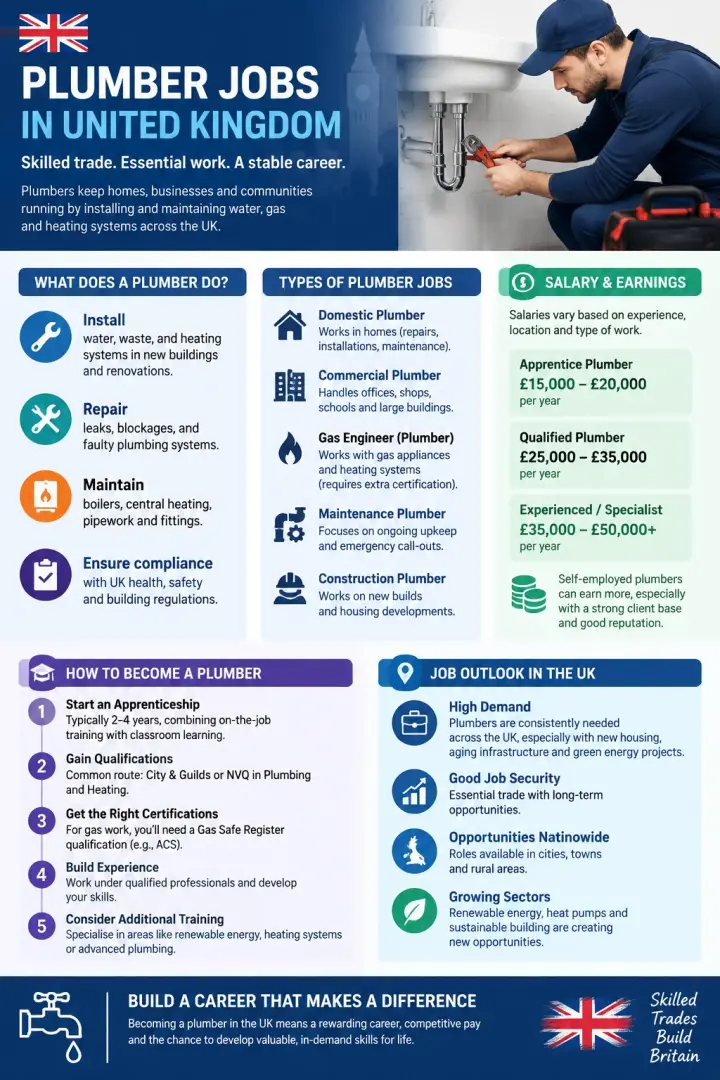
What does a plumber do?
Plumbers install, maintain and repair water systems, pipework and bathroom fittings. Depending on their training and the job, they may also work on heating systems, drainage and appliances.
Typical tasks can include:
- Finding and repairing leaks.
- Installing sinks, toilets, baths and showers.
- Fitting and replacing pipework.
- Maintaining hot and cold water systems.
- Reading plans and working out material requirements.
- Testing completed work and checking for faults.
- Explaining repairs and costs to customers.
Not every plumber works on boilers or gas appliances. Gas work requires separate competence and registration, which we'll cover below.
Types of plumber jobs
Job titles don't always tell the whole story, so read the description carefully. A maintenance plumber role, for example, might involve anything from small domestic repairs to looking after a large commercial building.
Domestic plumber
Domestic plumbers work in people's homes. The job might involve repairing leaks, fitting bathroom fixtures or responding to an emergency. You'll need to be comfortable speaking to customers and working in occupied properties.
Commercial plumber
Commercial plumbers work in places such as offices, shops, schools and hospitals. Systems can be larger and more complex than those in a typical home, and the work may be planned around the building's opening hours.
Construction site plumber
Site plumbers install systems in new builds and during major renovations. You might work alongside electricians, builders and other trades, often following drawings and a construction schedule.
Maintenance plumber
Maintenance roles focus on keeping existing systems working. Employers include housing associations, councils, facilities management companies and the NHS. Some jobs involve being on call or travelling between properties.
Heating engineer
Heating engineers specialise in heating systems, which may include boilers, radiators and heat pumps. Check the vacancy for the exact qualifications needed: plumbing experience alone doesn't automatically qualify you to carry out gas work.
How much do plumbers earn in the UK?
Pay varies by location, experience, employer and specialism. As a rough guide, a qualified employed plumber might earn around £28,000 to £40,000 a year. Experienced specialists, supervisors and plumbers who work overtime or emergency call-outs can earn more.
Apprentices generally earn less while they're training. Their pay depends on their age, the stage of their apprenticeship and the employer. Check the current minimum wage rules before accepting an offer, and remember that some employers pay above the minimum.
Self-employed plumbers set their own prices, but a high day rate isn't the same as take-home pay. You'll need to cover things like tools, a van, insurance, fuel, tax and unpaid time spent quoting for jobs. Work may also be quieter in some weeks than others.
Honestly, it's worth comparing the whole package rather than just the headline salary. Paid holiday, pension contributions, a company van, travel time and overtime rates can make a big difference.
How to become a plumber in the UK
The best route depends on your experience, age and where you live. Training and qualification arrangements differ across England, Scotland, Wales and Northern Ireland, so check the requirements with a local training provider or careers service.
1. Take a plumbing apprenticeship
An apprenticeship is a popular route because you earn while you learn. You'll usually work for an employer and spend time studying with a college or training provider. You can expect to build practical skills on real jobs as well as learn the technical side.
Apprenticeships often take around two to four years, although the exact length depends on the programme, your prior experience and your location. Entry requirements vary, but employers may ask for certain GCSEs or equivalent qualifications, particularly in English and maths.
Competition for places can be strong. If you find a vacancy you like, tailor your application to show that you're reliable, interested in practical work and willing to learn.
2. Study at college
Colleges offer plumbing courses at different levels, including courses for beginners. These can help you learn the basics and may be useful when applying for a trainee role or apprenticeship.
Before paying for or enrolling on a course, ask what it actually leads to. A classroom-based certificate or diploma on its own may not demonstrate the workplace competence an employer expects from a fully qualified plumber. You may also need supervised site experience and a work-based qualification or assessment.
3. Retrain as an adult
It's possible to move into plumbing after working in another field. Adult apprenticeships, college courses and trainee positions can all be worth exploring. Previous experience in construction, maintenance or customer service may help, but you'll still need the right training and practical experience.
Be cautious about courses promising that you'll become fully qualified in just a few weeks. Ask who awards the qualification, whether workplace assessment is included and what you'll need to do afterwards.
Do plumbers need a licence in the UK?
There isn't one general UK-wide plumbing licence that covers every plumbing job. Employers and customers will often look for relevant qualifications, practical experience and evidence that you understand applicable water regulations.
Some employers or construction sites may also ask for a recognised skills card. Check the vacancy and the relevant card scheme rather than assuming one card is legally required for every plumbing role.
What about Gas Safe registration?
If a job involves gas work, the rules are stricter. Gas businesses must be registered with the Gas Safe Register, and engineers must be competent and appropriately qualified for the specific gas work they carry out. Check an engineer's Gas Safe ID card to see which types of work they're registered to do.
WaterSafe is a separate, voluntary approval scheme for eligible plumbing businesses. It isn't the same as Gas Safe registration.
Skills employers look for
Qualifications matter, but employers also want someone who turns up, works safely and communicates well. Useful skills for plumbing jobs include:
- Practical ability: Being comfortable using tools and working carefully with fittings and pipework.
- Problem-solving: Tracing the cause of a fault instead of only treating the obvious symptom.
- Communication: Explaining the work clearly to customers, colleagues and other trades.
- Organisation: Managing appointments, materials and paperwork.
- Attention to detail: Measuring accurately and checking work for leaks.
- Physical stamina: Working on your feet and sometimes in tight or awkward spaces.
A full UK driving licence is requested in many roles, particularly where you'll travel between customers. Not every job needs one, though, so check the advert.
Where to find plumber jobs in the UK
Start with general job boards and search for variations such as plumber, plumbing engineer, maintenance plumber, plumbing apprentice and trainee plumber. Adding your town or county can help narrow down vacancies.
You can also look at:
- Local plumbing and heating companies' websites.
- Housing associations and council recruitment pages.
- NHS Jobs for estates and maintenance roles.
- Construction and facilities management employers.
- College careers teams and apprenticeship providers.
- Official apprenticeship services for your part of the UK.
For example, you can use Find an apprenticeship in England, Careers Wales, My World of Work in Scotland or nidirect in Northern Ireland to explore training and vacancies. Local employers don't always advertise every opportunity widely, so a polite email asking about trainee work may be worthwhile too.
How to apply for a plumbing job
Keep your CV clear and relevant. Put your qualifications, practical experience and any specialist training where an employer can find them quickly. If you're applying for your first role, include hands-on projects, work experience and transferable skills from previous jobs.
Before applying, check whether the advert asks for particular experience, a driving licence, an on-call rota or travel across a large area. At interview, be ready to talk about how you work safely, deal with customers and approach a problem you haven't seen before.
It's also fair to ask questions. Find out who supplies tools, whether travel time is paid, how overtime works and what training is available.
Employed or self-employed: which is better?
Employment can offer a steadier income, paid holiday, a workplace pension and support from a team. It may suit you if you want to develop your skills without also running a business.
Self-employment gives you more control over the jobs you take and the hours you work, but it comes with admin and financial risk. You'll need to find customers, prepare quotes, keep records and deal with tax. Depending on your work, you may also need to understand the Construction Industry Scheme.
If you're thinking about going self-employed, look into public liability insurance, vehicle cover and any other protection relevant to your work. Make sure you have the qualifications and registrations needed for the services you offer.
Plumber jobs: frequently asked questions
Can I become a plumber with no experience?
Yes. Apprenticeships, trainee roles and introductory college courses are designed for people starting out. You won't usually be expected to know everything on day one, but employers will want to see that you're keen to learn.
Is plumbing a physically demanding job?
It can be. You may need to lift equipment, kneel, climb stairs and work in confined spaces. The physical demands vary between roles, so ask about the day-to-day work before accepting a job.
Can a plumber install a heat pump?
A plumber may move into heat pump installation with suitable additional training and competence. Requirements depend on the work and the scheme or employer involved. Don't assume that a general plumbing qualification alone covers every part of an installation.
Is plumbing a good career in the UK?
It can be a rewarding choice if you enjoy practical work and don't mind dealing with unexpected problems. There are different routes and specialisms, but training takes commitment. Look at local vacancies, speak to a training provider and compare your options before deciding which path is right for you.