

Cleaning Staff Jobs in the UK: A Practical Guide
Cleaning staff jobs are found just about everywhere in the UK, from schools and hospitals to offices, hotels and private homes. If you're looking for work that keeps you active, offers a choice of shifts and doesn't always require previous experience, cleaning could be worth considering.
Some people take on a few hours a week around family commitments or another job. Others build a full-time career, moving into specialist cleaning, supervision or facilities management. The right role depends on what you need from your hours, pay and working environment.
Here's what to expect from cleaning jobs in the UK, where to find vacancies and how to give yourself a better chance of getting hired.
What Do Cleaning Staff Do?
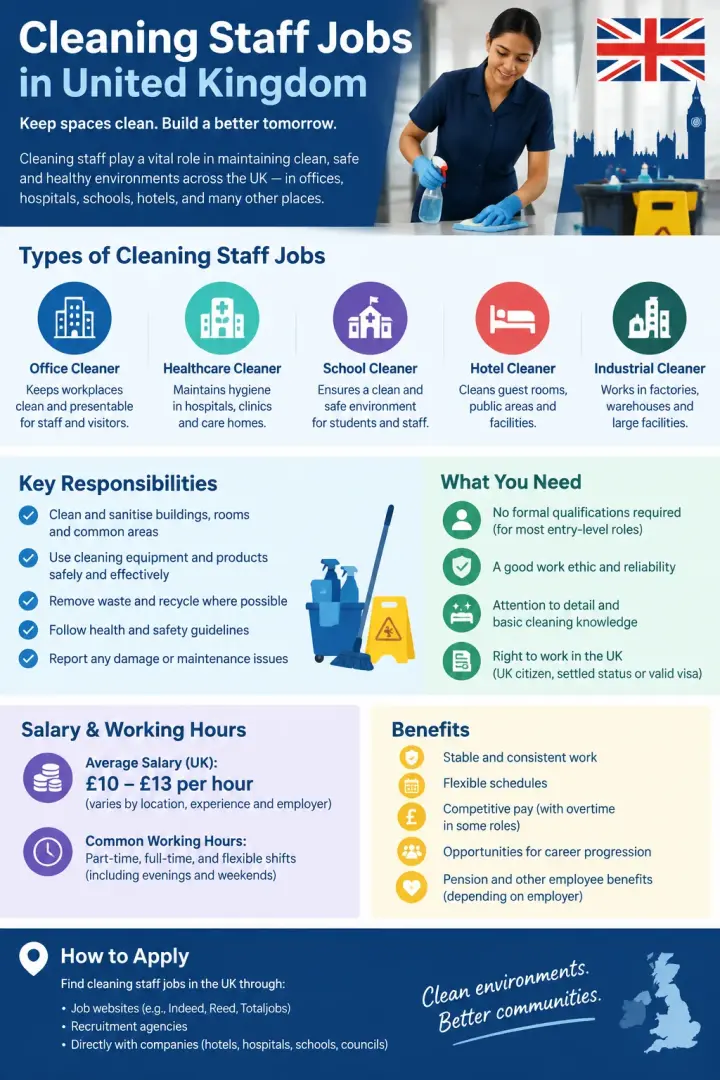
Cleaning staff keep buildings hygienic, safe and pleasant to use. The exact duties depend on the workplace, but a typical shift might include:
- Vacuuming carpets, sweeping floors and mopping hard surfaces
- Cleaning toilets, sinks, kitchens and shared areas
- Wiping desks, doors, handles and other frequently touched surfaces
- Emptying bins and replacing liners
- Restocking soap, toilet paper and other supplies
- Following cleaning schedules and reporting damage or maintenance issues
- Using cleaning products and equipment safely
In some jobs, you'll work alone and be responsible for a particular area. In others, you'll be part of a team with a supervisor. Hotel housekeeping, for example, often involves working through a list of rooms, while an office cleaner may have a set route through a building.
Types of Cleaning Jobs in the UK
There isn't just one kind of cleaning job. Before applying, think about the setting you'd feel comfortable in and the hours you can realistically work.
Office and Commercial Cleaner
Office cleaners look after desks, meeting rooms, kitchens, toilets and communal spaces. Many shifts take place early in the morning or in the evening, outside normal office hours. These jobs can suit people looking for part-time cleaning work, although daytime roles are available too.
Domestic Cleaner
Domestic cleaners work in private homes, either directly for clients or through an agency. Duties can include dusting, vacuuming, cleaning bathrooms and changing bed linen. Some clients request ironing or other household tasks, so check what's included before accepting a job.
If you work for yourself, you'll also need to manage bookings, payments, insurance and your tax responsibilities. That's different from being employed by a cleaning company, so make sure you understand the arrangement.
Hotel Housekeeper
Hotel housekeepers prepare guest rooms, change bedding, clean bathrooms and replenish supplies. The work can be physically demanding, especially when there's a quick turnaround between guests. Shifts often include weekends and bank holidays.
School Cleaner
School cleaners help keep classrooms, toilets, halls and dining areas clean. Work is often scheduled before or after pupils are on site. Some roles follow the school calendar, while others include cleaning during holidays, so it's worth checking whether a vacancy is term-time only.
Hospital and Healthcare Cleaner
Healthcare cleaning jobs require close attention to hygiene procedures. You might clean wards, clinics, corridors or offices and follow specific instructions to reduce the risk of infection. Employers usually provide training, and shifts can include evenings, nights and weekends.
Industrial and Specialist Cleaner
Specialist roles can involve factories, warehouses, food production sites, windows or deep cleaning after building work. Some require extra training, protective equipment or experience with machinery. Depending on the job, you may need a driving licence or be expected to travel between sites.
How Much Do Cleaning Staff Earn?
Pay varies by location, employer, shift pattern and the type of cleaning involved. Specialist work, night shifts or supervisory responsibilities may pay more than some entry-level roles, but that's not guaranteed. Always check the advertised hourly rate and whether travel time between sites is paid.
Most workers are entitled to at least the National Minimum Wage or National Living Wage, depending on their age and circumstances. Rates usually change each April, so check the current figures on GOV.UK rather than relying on an old job advert.
You may also see employers advertise the voluntary real Living Wage. This is different from the legal minimum and is set by the Living Wage Foundation.
When comparing offers, look beyond the headline rate. A job with reliable hours, paid travel or a shorter commute might work out better for you than one with a slightly higher hourly wage but unpredictable shifts.
Do You Need Qualifications or Experience?
For many entry-level cleaning staff jobs, formal qualifications aren't essential. Employers often provide training and look for people who are reliable, willing to learn and able to follow instructions. Experience helps, but you can still apply if you're new to the field.
Useful skills include:
- Good timekeeping and attendance
- Attention to detail
- Knowing how to work safely with cleaning products
- Managing your time and following a schedule
- Working independently or as part of a team
- Communicating clearly with supervisors, colleagues or clients
- Respecting privacy in workplaces and private homes
Cleaning can involve standing, bending, lifting and repetitive tasks. Read the job description to understand the physical requirements, and ask the employer about reasonable adjustments if you need them.
For some positions, an employer may ask for a criminal record check where the role is eligible, particularly in settings involving children or vulnerable adults. The type of check and process depend on the job and the part of the UK. Employers may also request references and proof of your right to work.
Where to Find Cleaning Staff Jobs
There are plenty of places to look for cleaner vacancies, whether you want a few hours locally or a full-time role with a larger employer.
- GOV.UK Find a Job: Search for vacancies by location, salary and job type.
- NHS Jobs: Look for healthcare cleaning, domestic assistant and housekeeping roles.
- Local council websites: Councils may advertise jobs in schools, public buildings and leisure centres.
- Job boards: Search sites such as Indeed and other recruitment platforms for local vacancies.
- Employer websites: Hotels, universities, facilities management companies and cleaning contractors often list roles directly.
- Recruitment agencies: Agencies may offer temporary, part-time or ongoing cleaning work.
- Local contacts: Community groups and word of mouth can be useful for finding domestic cleaning clients.
Try searching for more than just “cleaner”. Terms such as “cleaning operative”, “housekeeper”, “domestic assistant”, “school cleaner” and “part-time cleaning jobs” can bring up different results. Add your town or postcode to narrow the search.
Before sharing personal documents, check that the employer or agency is genuine. Be wary of anyone who asks you to pay upfront for a guaranteed job or sends you an offer without a proper application process.
How to Apply for a Cleaning Job
A straightforward CV is usually enough to get started. Keep it clear and relevant, and tailor it to the vacancy instead of sending the same version everywhere.
Show Your Relevant Experience
List any paid cleaning, housekeeping, hospitality, care or facilities work you've done. Include practical details: perhaps you followed a cleaning schedule, handled laundry, used equipment or worked to hygiene standards.
If you haven't had a cleaning job before, don't worry. You can mention transferable skills from other work, volunteering or caring responsibilities. For example, meeting deadlines, following instructions and keeping shared spaces tidy are all relevant.
Be Clear About Your Availability
Employers often need cover at specific times. If you can work early mornings, evenings or weekends, say so. Equally, be honest about the hours you can't do. There's no benefit in accepting a shift pattern you won't be able to maintain.
Prepare for the Interview
You may be asked how you'd organise a cleaning task, what you'd do if you found a spill, or how you'd handle a complaint. Keep your answers practical. For example, explain that you'd follow the site's safety procedure, use the right equipment and tell a supervisor when needed.
It's also a good idea to bring your questions. Ask about training, shift length, the number of sites you'll cover and who supplies your uniform and equipment.
Know Your Rights at Work
Whether you're working for a cleaning company, an agency or directly for an employer, take time to understand your contract and employment status. Your rights can differ depending on whether you're an employee, a worker or genuinely self-employed.
Most workers are entitled to paid holiday. The statutory minimum is generally 5.6 weeks a year, which is pro rata for part-time work; bank holidays can be included in that entitlement. Holiday pay rules can be different for irregular-hours and part-year workers, so check the details that apply to your contract.
Employers must also manage health and safety risks. That includes providing suitable training and, where required, personal protective equipment at no cost to employees. You should be told how to use chemicals safely and what to do if there's an accident or spill. Don't mix products unless you've been trained and instructed to do so.
If something about your pay, hours or treatment doesn't seem right, keep records and raise it with your employer or agency. Acas offers free guidance on workplace rights and resolving problems. For Northern Ireland, the Labour Relations Agency provides workplace advice.
Can You Get a Cleaning Job in the UK From Overseas?
You'll need permission to work in the UK before starting a job. An employer must check your right to work, and the documents or digital evidence you use depend on your immigration status.
Don't assume that an offer of cleaning work comes with visa sponsorship. Many general cleaning roles are not eligible for the Skilled Worker visa. Visa rules can change, and eligibility depends on the occupation, sponsor and other requirements, so check current guidance on GOV.UK before making plans or paying for anything.
Be especially cautious of advertisements promising a guaranteed visa in exchange for a fee. Check the employer independently and use official government guidance to understand your options.
How to Progress in a Cleaning Career
A cleaning job can be a starting point rather than a stopping point. Once you've gained experience, you might take on more responsibility as a team leader or supervisor. Other possibilities include specialist cleaning, quality checks, training new staff or moving into facilities management.
Ask your employer about training opportunities, including courses in equipment use, health and safety or supervisory skills. An apprenticeship or a relevant qualification may be useful for some career paths, though the right choice depends on the role you want next.
Questions to Ask Before Accepting a Job
Honestly, the small details can make a big difference to your working week. Before you say yes, make sure you know:
- What is the hourly rate, and when will you be paid?
- Are the hours guaranteed, or can they change each week?
- Is travel between work sites paid, and are expenses covered?
- Will you work alone or with a team?
- What training, uniform and equipment will be provided?
- How are holiday requests and sick absence handled?
- Who should you contact if there's a problem on shift?
Finding the Right Cleaning Job for You
Cleaning staff jobs can offer a practical route into work, a flexible second income or a longer-term career. Start by deciding which settings and hours suit you, then compare vacancies carefully and apply for roles that match your availability.
You don't need a perfect CV to begin. A clear application, a reliable attitude and a willingness to learn can go a long way. Check the contract, ask questions and choose a job that works for you as well as the employer.