
Getting started with welder work here
So you're looking at welder jobs in the United Kingdom and wondering where to even begin. It's not like the old days where you just showed up with a torch and hoped for the best. These days employers want proof you know your stuff plus safety tickets. From what I've seen lots of shops are crying out for people who can handle both manual and semi auto stuff.
Thing is the market changes fast depending on which part of the country you're in. Construction sites in the south always need hands while up north it's more about heavy engineering and oil work.
Pay that actually lands in your pocket
Average welder salary United Kingdom sits around thirty to thirty five grand for experienced folks. But skilled TIG welders in aerospace or pressure vessels can push past forty five easy. Overtime is where the real money shows up though. I've known lads pulling fifty plus when the big projects kick in.
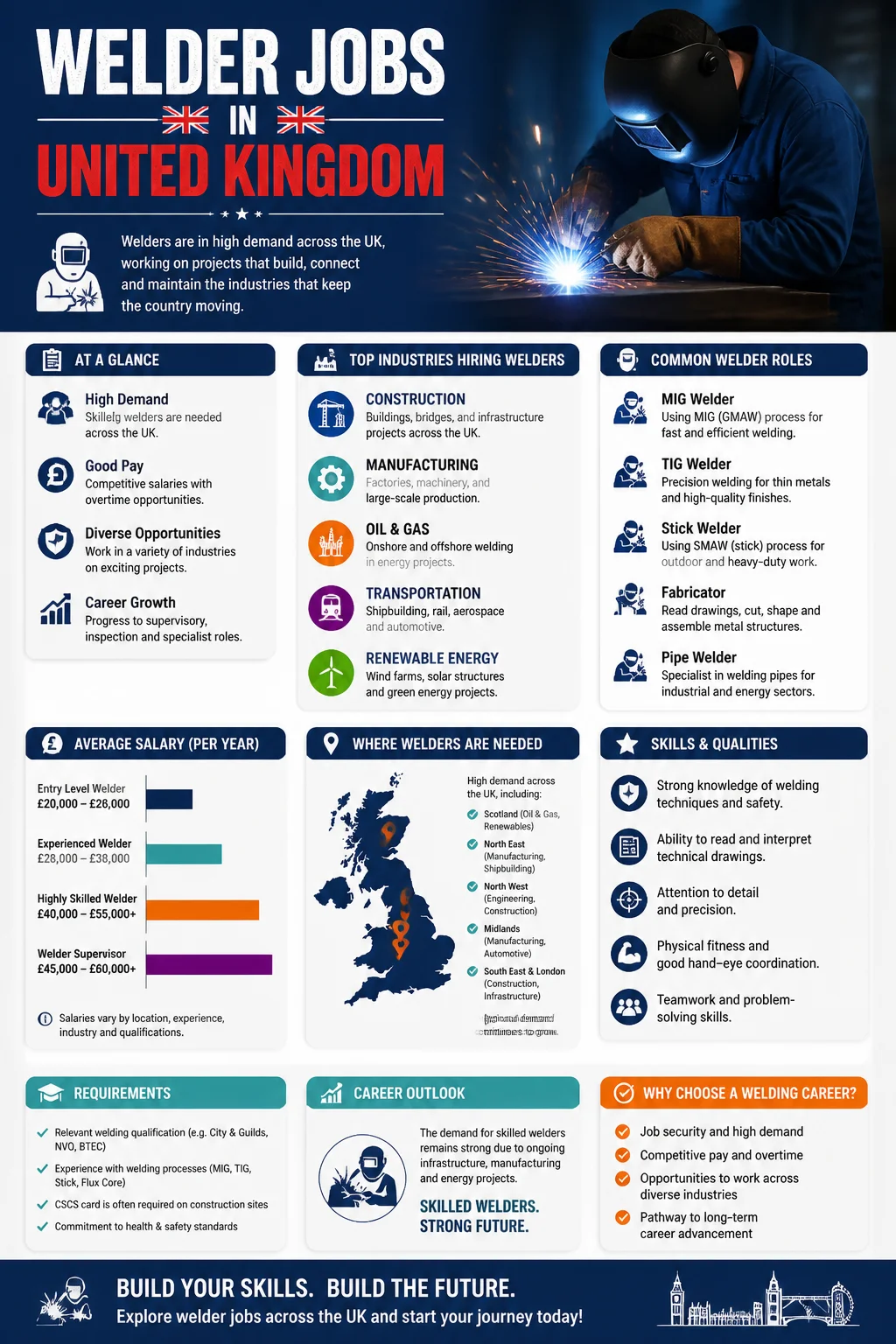
Not great if you're just starting though. Apprentices often start under twenty and have to grind for a couple years before rates climb. Still beats stacking shelves once you get qualified.
Where the work actually is right now
London and the south east stay busy with building work but the hours can be brutal with traffic. Manchester and Birmingham have solid manufacturing roles that pay steady without the commute stress. Scotland though that's where the big offshore money lives if you're willing to fly out to the rigs.
And don't sleep on Wales either. Some ship repair yards down there keep steady contracts going year round. Real talk the location matters more than most people admit when they're chasing welder jobs UK wide.
- Construction and fabrication yards
- Marine and offshore platforms
- Automotive and rail maintenance
- Power stations and refineries
Pick one industry and stick with it for a bit. Jumping around looks flaky on a CV.
Qualifications employers actually care about
You'll want at least a level two or three in welding and fabrication. CSWIP or ASME tickets open bigger doors though especially if you're after the higher paid gigs. Safety cards like CCNSG or PTS matter too depending on the site.
Honestly speaking some places will train you on the job if you already weld clean. But having the paper beforehand saves months of messing about.
Here's the thing though. Theory is one thing. Can you actually lay a bead straight under pressure? That's what bosses test in the interview weld.
How to land the role quicker
Apply direct on company sites rather than just firing CVs at agencies. Reed and Indeed work but follow up with a call. Makes you stand out. Tailor every application to mention specific processes they list in the ad.
Big difference when you show you've read the job spec instead of sending the same generic letter every time. And keep your portfolio photos handy. Nothing sells you faster than pictures of tidy work.
Interviews often include a practical test. Practice on whatever material they mention. Stainless and aluminum catch people out more than mild steel ever does.
Future proofing yourself
Automation is creeping in but good welders who can fix robots or work on weird alloys stay in demand. Learn to read drawings properly and you'll always have options. The UK keeps needing infrastructure work so the pipeline isn't drying up anytime soon.
From what I've seen the guys who diversify into inspection or supervision end up making the best long term money. Welding is hard on the body so having a plan B helps later on.