


Security Guard Jobs in the UK: A Practical Guide
Security guard jobs can offer a route into steady work without the need for a university degree. You might spend a shift looking after a busy shopping centre, checking visitors into an office building or patrolling a construction site. The work varies quite a bit, but most roles have one thing in common: you’re there to help keep people and property safe.
If you’re thinking about getting started, the biggest questions are usually about the SIA licence, pay and where to find genuine vacancies. Here’s what to know before you apply for security guard jobs in the UK.
What does a security guard do?
A security guard helps prevent incidents, responds when something goes wrong and reports anything that needs attention. The job isn’t just about standing at a door. Good communication and observation are often just as important as physical fitness.
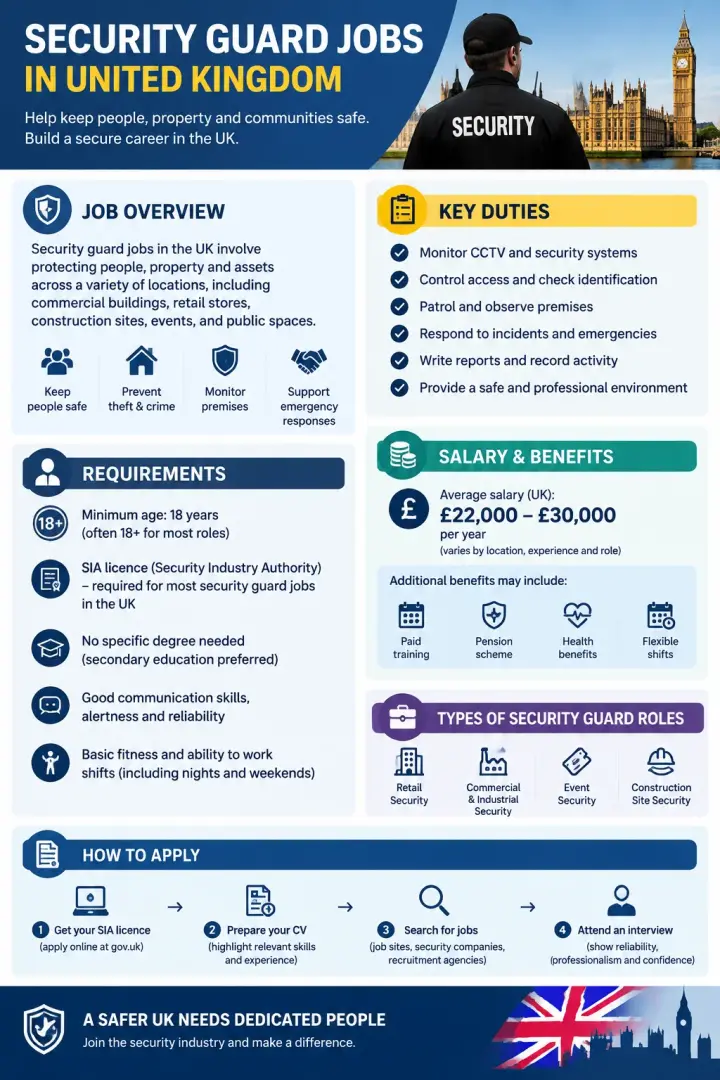
Depending on the site, a typical shift might include:
- Checking staff, visitors and deliveries in and out
- Patrolling buildings, car parks or outdoor areas
- Monitoring alarms and reporting faults
- Watching for theft, damage or other suspicious activity
- Helping visitors and answering questions
- Responding to incidents and calling emergency services when needed
- Writing clear reports and handing information over to the next shift
Some jobs are quiet for long stretches. Others involve dealing with the public all day. Honestly, the best fit depends on whether you enjoy a busy environment or prefer a more predictable site.
Types of security guard jobs
Retail security officer
Retail officers work in shops, supermarkets and shopping centres. They help deter theft, support staff and deal with incidents involving customers. You’ll need patience and confidence speaking to people, particularly when a situation is tense.
Corporate security officer
Corporate roles are often based in offices, banks and other business premises. Duties can include reception work, access control, patrols and responding to alarms. Employers may look for strong customer service skills and a smart, professional appearance.
Static security guard
A static guard is based at a particular site rather than travelling between locations. This could be a warehouse, construction site, factory or residential building. Some posts involve working alone, including overnight and at weekends.
Mobile patrol officer
Mobile officers travel between sites to carry out checks, lock or unlock premises and respond to alarms. A full driving licence is commonly required. Ask whether the employer supplies a vehicle and whether travel time is included in paid hours.
Event security and door supervision
Event work can involve checking entry, managing queues and helping keep crowds safe at concerts, sports grounds and festivals. Door supervisors may work at pubs, clubs and other venues. The licence needed depends on the activity, so check the role carefully rather than assuming every event job uses a security guard licence.
CCTV operator
CCTV roles involve monitoring cameras, recording incidents and passing information to colleagues or emergency services. Some public space surveillance work requires a separate SIA CCTV licence. A security guard licence alone doesn’t automatically cover every CCTV role.
Do you need an SIA licence to work as a security guard?
For many UK security guard jobs, yes. The Security Industry Authority, usually called the SIA, regulates private security licensing. Front-line security guarding carried out under a contract generally requires an appropriate SIA licence.
There are exceptions and different rules depending on the work and location. For example, some in-house guarding roles in Great Britain don’t require an SIA licence, while the rules in Northern Ireland are different. Always check the current guidance on GOV.UK and the details of the job before paying for training.
For front-line work, you must normally be at least 18 and have the appropriate licence-linked qualification before applying. The SIA also checks your identity, right to work and criminal record as part of the application process. A criminal conviction doesn’t automatically mean every application will be refused, but it’s worth checking the SIA’s published criteria before spending money.
A front-line SIA licence usually lasts three years. It’s your responsibility to renew it on time and meet the current training requirements. Renewal rules can change, so use the official SIA guidance rather than relying on an old course advert.
Security guard licence or door supervisor licence?
The right licence depends on what you’ll be doing. A front-line door supervisor licence can cover many security guarding activities, but a security guard licence doesn’t cover door supervision duties. CCTV public space surveillance may require its own licence.
If a vacancy mentions licensed premises, events or monitoring public spaces, ask the employer which licence is required. That small check could save you the cost of taking the wrong course.
How to become a security guard in the UK
1. Check that the role suits you
Look at several vacancies in your area before booking a course. Check shift patterns, travel distances and the skills employers ask for. Night shifts or lone working might suit some people well, but they’re not for everyone.
2. Choose an approved training provider
If you need an SIA licence, find a provider offering the relevant licence-linked qualification. Compare course dates, location, assessment arrangements and the full price. Make sure you understand whether first aid training is included or must be arranged separately.
Ask which awarding organisation provides the qualification and check the provider’s credentials. Be wary of anyone promising a guaranteed licence or claiming you can skip required training.
3. Complete the training and apply
After gaining the required qualification, apply through the official SIA service on GOV.UK. You’ll need to provide the requested documents and pay the application fee. Fees and processing times can change, so check the current information before you apply.
Some employers pay for training or help with the licence application, particularly when recruiting new starters. Others expect you to have a valid licence already. Read the advert closely and ask what costs, if any, you’ll need to cover.
4. Prepare for screening
Security employers often carry out pre-employment screening, which can include checking your identity, address and employment history. Keep contact details for previous employers handy and be ready to explain gaps honestly. The checks required can vary by role and employer.
How much do security guards earn in the UK?
Pay varies by location, employer, experience and shift pattern. As a rough guide, many general security guard vacancies advertise hourly rates in the low-to-mid teens, with some paying more for specialist duties, nights or work in higher-cost areas. Rates can change quickly, so compare current listings rather than relying on one average.
Look beyond the headline hourly rate. A job with a slightly higher rate isn’t always the better deal if the commute is long or the hours aren’t guaranteed. Check:
- Whether the contract guarantees a minimum number of hours
- Whether breaks are paid
- Rates for nights, weekends and bank holidays
- Overtime arrangements
- Holiday entitlement and pension contributions
- Whether the employer provides a uniform, equipment and training
- Travel costs and parking
Employers must pay at least the applicable National Minimum Wage or National Living Wage. Rates depend on age and are updated, so check the latest figures on GOV.UK when comparing offers.
Skills employers look for
You don’t need to have worked in security to bring useful skills to the job. Experience in retail, hospitality, customer service, facilities work or the armed forces can all be relevant.
- Communication: Giving clear instructions, listening and speaking calmly to visitors or colleagues.
- Observation: Noticing unusual behaviour, hazards or changes around a site.
- Reliability: Arriving on time, following procedures and completing patrols.
- Report writing: Recording facts clearly so another person can understand what happened.
- Conflict management: Staying calm and trying to reduce tension rather than escalating it.
- Basic IT: Using email, access systems or digital incident logs when required.
Physical requirements vary. Some posts involve long periods on your feet or regular patrols, while others are mainly desk-based. If you need an adjustment at work or during recruitment, discuss the requirements with the employer.
Where to find security guard jobs
Start with major job boards and the careers pages of security companies. You can also search for vacancies on employer websites for shopping centres, hospitals, universities, transport operators and facilities management businesses. Jobcentre Plus may be able to point you towards local opportunities or training support.
Useful search terms include:
- Security guard jobs near me
- SIA security officer jobs
- Retail security jobs
- Corporate security officer jobs
- Night security guard jobs
- Mobile security patrol jobs
- Trainee security officer jobs
Try searching for both “security guard” and “security officer”, as employers use both titles. You can also add your town or city and filter by full-time, part-time or weekend work.
Watch out for recruitment scams
Check that a company has a genuine website and contact details. Be cautious if someone offers you a job without a proper interview, asks you to transfer money to a personal account or pressures you to share sensitive documents through an unfamiliar link. Training and licence fees can be legitimate, but you should know exactly who you’re paying and why.
How to make your application stand out
Keep your CV clear and relevant. Put your SIA licence type and expiry date near the top if you already have one. Mention your driving licence where it matters, along with first aid qualifications and any experience using CCTV or access control systems.
If you’re new to security, focus on examples that show you can be trusted and deal with people. For instance, a retail worker might mention handling difficult customer situations, following cash-handling procedures or spotting a safety issue. Use your real experience rather than copying claims from a job advert.
At interview, be ready to explain how you’d respond to an alarm, an aggressive visitor or an incident you didn’t witness. Employers usually want to hear that you’d follow site procedures, communicate clearly, record the facts and call for support when needed. Don’t pretend you’d take risks or go beyond your training to look impressive.
What to ask before accepting a job
A security job can look good on paper but feel very different once you understand the rota. Before saying yes, ask:
- Where will I be based, and could I be moved between sites?
- What are the shift lengths and how much notice will I get of the rota?
- Will I be working alone, and what support is available?
- What training and site induction will I receive?
- Who pays for uniform, equipment and licence renewal?
- Are there guaranteed hours, and how is overtime paid?
These questions aren’t awkward. They help both you and the employer work out whether the role is a good match.
Career progression in security
Starting as a security officer can lead to supervisory or control room work. With experience and the right training, you might move into mobile response, site management, CCTV operations or security management. Some people specialise in sectors such as retail, corporate security or events.
Progression isn’t automatic, though. If it matters to you, ask employers about training, vacancies at other sites and how they promote staff. Keeping your licence current and building a reputation for dependable work can help when opportunities come up.
Frequently asked questions
Can I get a security guard job with no experience?
Yes. Some employers recruit beginners and provide an induction or support with training. You’ll still need the correct SIA licence if the work requires one. Customer service experience and a reliable work history can help your application.
Can I work part-time as a security guard?
Part-time, weekend and casual roles are available, particularly in retail and events. Check whether hours are guaranteed, as some casual jobs depend on site demand.
Can I work while waiting for my SIA licence?
Don’t assume you can start licensable duties before your licence is granted. There are limited circumstances where an employer may use an approved licence dispensation arrangement. Check with the employer and the SIA before starting work.
Is security work dangerous?
There can be risks, including confrontation, lone working and responding to emergencies. The level of risk depends on the site and duties. A responsible employer should explain the risks, provide appropriate training and have procedures for getting help.
What’s the best way to start?
Look at local vacancies first, then check which licence and qualification those roles actually require. Compare training providers, budget for any fees and apply through official channels. That way, you’re spending your time and money on a route that fits the jobs you want.