

Security Guard Jobs in New Zealand: A Practical Guide
Security guard jobs can be a good fit if you’re observant, dependable and comfortable dealing with different people. In New Zealand, guards work everywhere from shopping centres and construction sites to hospitals, offices and major events. Some roles are busy and public-facing; others involve quiet patrols and careful monitoring.
Getting started takes more than putting on a uniform, though. Most security guards need a Certificate of Approval, and employers often look for good communication skills, a clean and professional presentation, and the ability to stay calm under pressure.
Here’s what to know about security guard jobs in New Zealand, including the types of roles available, licensing, pay, training and where to look for vacancies.
What does a security guard do?
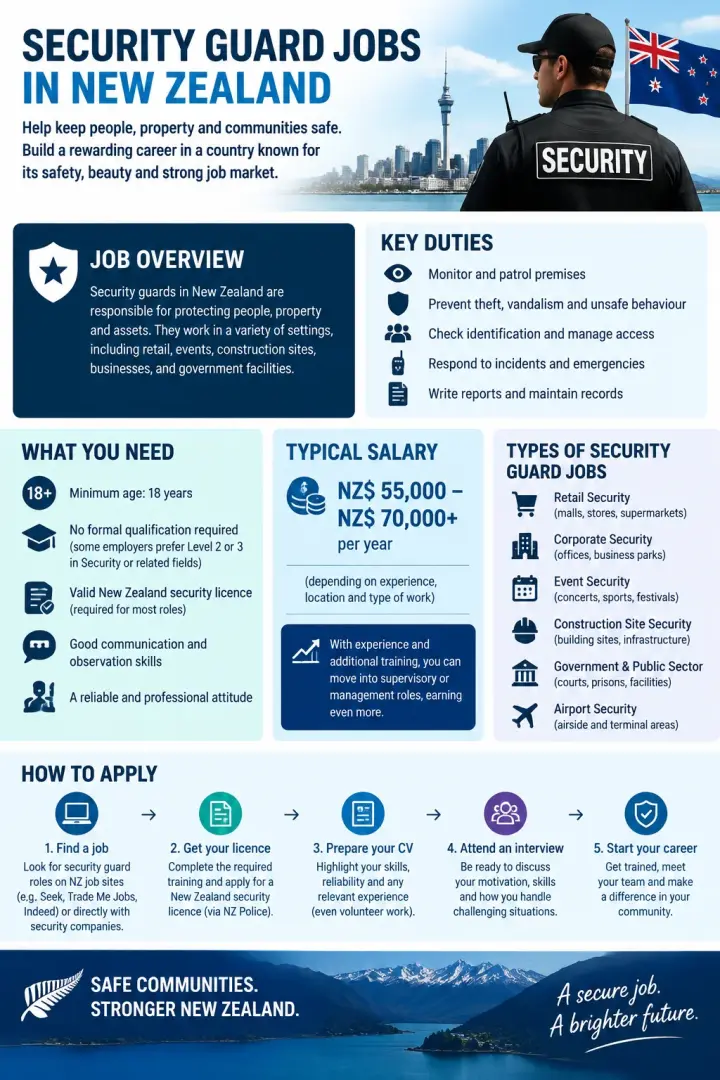
A security guard helps protect people, property and information. The exact job depends on the site and employer, but a typical shift might include checking entrances, patrolling buildings, monitoring cameras and responding to incidents.
Common duties include:
- Checking that doors, gates and restricted areas are secure
- Monitoring CCTV and alarm systems
- Signing visitors in and checking identification or access passes
- Patrolling a site on foot or in a vehicle
- Reporting hazards, suspicious activity or damage
- Helping visitors and answering questions
- Responding to emergencies and contacting police or emergency services when needed
- Writing clear incident reports and shift notes
Honestly, communication is a bigger part of the job than many people expect. A guard often needs to explain rules, calm a tense situation or help someone who’s lost. Physical fitness can matter, but so can patience and good judgement.
Types of security guard jobs in New Zealand
Static security guard
Static guards are assigned to a particular location, such as an office building, warehouse, school or construction site. They might control access, greet visitors, complete patrols and keep a record of anything unusual. These jobs can suit people who like getting to know one site and its procedures.
Mobile patrol officer
Mobile patrol officers travel between sites to check buildings, respond to alarms and report problems. A suitable driver licence is usually important, and employers may check your driving history. You’ll need to be comfortable working independently, sometimes overnight.
Retail security guard
Retail guards work in shops, malls and supermarkets. They may help prevent theft, support staff and respond to disruptive behaviour. These roles involve regular contact with the public, so a calm, respectful approach is essential.
Event security officer
Event security staff work at concerts, festivals, sports games and other gatherings. Duties can include checking tickets or access passes, helping with crowd movement and reporting safety concerns. Hours may be irregular, with plenty of evening and weekend work.
Security control room operator
Control room staff monitor cameras, alarms and communications. They may dispatch patrols, log incidents and coordinate responses. If you’re comfortable with computers and can stay focused for long periods, this could be worth exploring. Check the licensing requirements for the particular duties listed in the vacancy.
Do you need a security licence in New Zealand?
Most people working as security guards in New Zealand need a Certificate of Approval, often called a COA. The Ministry of Justice handles applications through the Private Security Personnel Licensing Authority. There are different licensing arrangements for security businesses and individuals, so check which requirements apply to the work you plan to do.
The application process includes suitability checks, and relevant training requirements can apply. Fees and processing times can change. Before accepting a role, ask the employer what certificate and training you’ll need, when you need them and whether the company helps with the application or costs.
For current information, look for private security licensing and Certificate of Approval guidance on the Ministry of Justice website. Don’t assume that a certificate from another country automatically allows you to work as a security guard in New Zealand.
What qualifications and skills do employers look for?
Entry-level security jobs don’t always require a degree or previous security experience. Employers may be more interested in whether you’re reliable, willing to learn and able to meet the licensing requirements.
Depending on the role, useful qualifications and skills include:
- A current Certificate of Approval, or eligibility to apply for one
- Security training relevant to the role and licensing requirements
- Clear spoken and written English
- Customer service and conflict de-escalation skills
- Basic computer skills for incident reports and site systems
- A current first aid certificate
- A driver licence for mobile patrol or multi-site work
- Physical fitness for walking, standing and site patrols
- Availability for nights, weekends or public holidays
Experience in hospitality, retail, reception, emergency services or the military may be useful, but it isn’t always essential. If you’re changing careers, think about times when you’ve dealt with difficult customers, followed safety procedures or worked independently.
How much do security guards earn in New Zealand?
Security guard pay varies by employer, location, shift pattern, experience and responsibilities. A casual event role, an overnight mobile patrol position and a supervisory job may all pay differently. Some employers advertise an hourly rate, while others list an annual salary.
When comparing jobs, look beyond the headline rate. Ask about guaranteed hours, overtime arrangements, allowances, paid training and whether travel between sites is covered. A slightly higher hourly rate may not go as far if the hours are unpredictable or you need to use your own vehicle.
At a minimum, employees must receive the applicable New Zealand minimum wage and their legal employment entitlements. Public holiday rules can also affect pay and time off. For up-to-date wage rates and employee rights, check Employment New Zealand.
Where to find security guard jobs in New Zealand
Start with major New Zealand job websites, including SEEK and Trade Me Jobs. Search using a few different terms because employers don’t all use the same title.
- Security guard
- Security officer
- Mobile patrol officer
- Retail security officer
- Event security
- CCTV operator or security control room operator
- Loss prevention officer
Try adding your location, such as Auckland, Wellington, Christchurch, Hamilton or Tauranga. Smaller towns can have opportunities too, particularly around industrial sites, hospitals, retail centres and seasonal events.
It’s also worth checking security company career pages directly. Some firms recruit for several sites at once and may offer training for suitable new starters. Set up job alerts so you can respond quickly when a suitable vacancy appears.
How to apply for a security guard job
1. Check the job requirements
Read the advertisement closely. Does the employer require an existing COA, a driver licence, first aid training or specific availability? Make sure you can meet the essential requirements before applying, and be honest about anything you’re still working towards.
2. Tailor your CV
Put relevant details near the top: your location, contact information, certificate status, licences and availability. In your work history, highlight reliability, customer service, accurate record-keeping and experience following procedures.
If you’re new to security, a short example can help. Instead of simply saying you have good communication skills, mention that you handled customer complaints, explained store policies or helped resolve issues on a busy shift.
3. Prepare for the interview
Employers may ask how you’d respond to an aggressive visitor, an unlocked door or a medical emergency. They’re generally looking for someone who can assess a situation, follow site procedures, communicate clearly and get help when needed—not someone eager to confront people.
It’s also sensible to ask questions of your own. Find out where you’ll work, whether shifts are fixed or rotating, who provides your uniform and how much site-specific training you’ll receive.
Working hours and conditions
Security is a 24-hour industry, so many positions involve early starts, overnight shifts, weekends or public holidays. You may work alone, as part of a team or alongside staff from the client’s business.
Some sites are indoors and relatively quiet. Others involve outdoor patrols, long periods on your feet or dealing with crowds. Before you accept an offer, ask for a realistic description of the site and shift pattern. A job that suits one person might be a poor fit for someone who needs a predictable daytime schedule.
You should receive a written employment agreement. Take time to read the sections on hours, pay, breaks, leave and any trial or probationary period. If anything is unclear, ask before signing.
Can overseas applicants work as security guards in New Zealand?
Overseas applicants need the right to work in New Zealand and must meet the relevant security licensing requirements. Having experience as a guard elsewhere can help your application, but it doesn’t replace immigration or New Zealand licensing requirements.
Check Immigration New Zealand for current visa rules and conditions. Job offers don’t automatically guarantee a visa, and requirements can change. Be cautious of anyone promising a guaranteed job or visa in exchange for money. Verify the employer independently and get advice from an appropriately licensed or exempt immigration adviser if you need help.
Career progression in security
A first security job can lead to other opportunities as you build experience. You might move into a senior guard or site supervisor position, train new staff, work in a control room or take on operations and scheduling responsibilities.
Some people specialise in areas such as retail loss prevention, event operations or electronic security. Each path has its own skills and, in some cases, separate licensing requirements. Ask employers about development opportunities and check the rules before taking on new types of work.
Frequently asked questions
Can I get a security guard job with no experience?
Yes, some employers hire entry-level candidates. You’ll still need to meet the relevant licensing and suitability requirements. Strong customer service skills, dependable attendance and flexibility with shifts can help you stand out.
Do security guards need to be physically strong?
Not every role calls for exceptional strength. Many require you to walk, stand for long periods or respond calmly to difficult situations. Check the physical requirements in the job description and ask the employer about the demands of the specific site.
Are there part-time security jobs?
Yes. Part-time and casual roles may be available, particularly for events, retail and weekend coverage. Hours can vary, so check whether the employer guarantees a minimum number of shifts.
What powers does a security guard have?
Security guards aren’t police officers. They must work within the law, their training and the site’s procedures. If you’re unsure how to handle an incident, follow your employer’s instructions and contact police or emergency services when appropriate.
If you’re ready to get started, look at a few vacancies in your area and compare their requirements. Then check the current Certificate of Approval guidance, update your CV and apply for roles that match your availability and strengths. It’s a practical way to see which part of the security industry feels right for you.