


Driver Jobs in the UK: A Practical Guide
Driving jobs are found in almost every part of the UK, from busy city centres to rural villages. Businesses need people to deliver parcels, move freight, transport passengers and keep local services running. If you enjoy being on the move and working independently, a driving job could be worth considering.
There’s no single route into the industry. Some roles need little more than a full car licence and a good attitude, while others call for specialist training, medical checks or an extra licence category. Here’s what to know before you start looking for driver jobs in the UK.
What types of driver jobs are available?
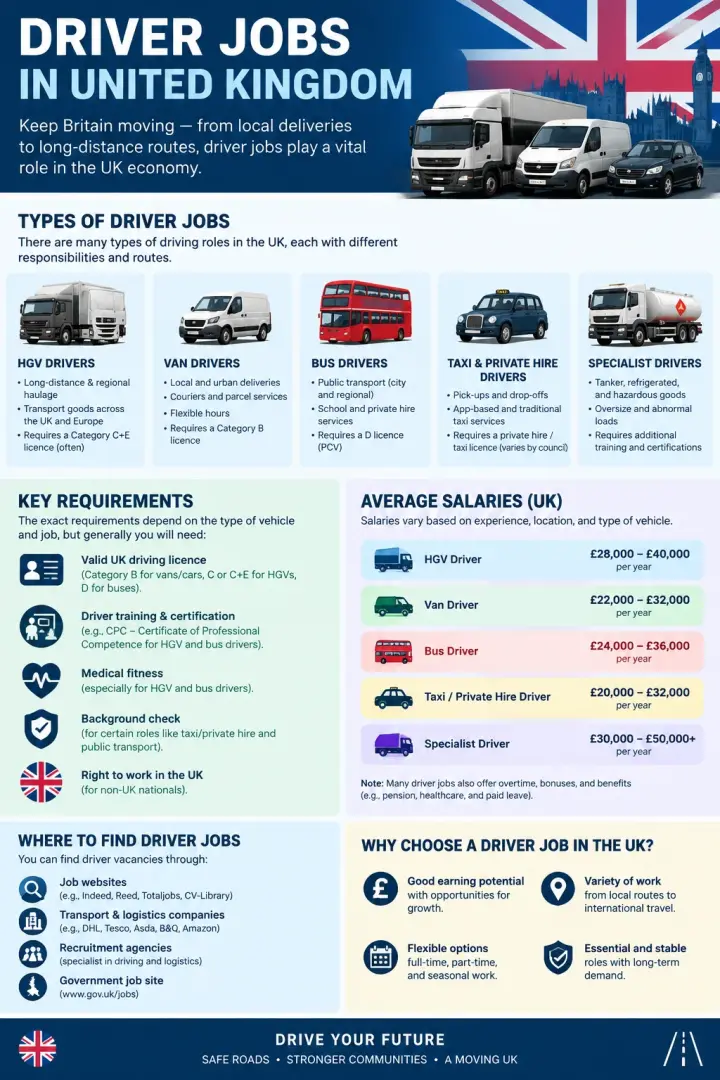
The right role depends on the vehicle you want to drive, the hours you can work and whether you prefer carrying goods or passengers. These are some of the most common options.
Delivery driver jobs
Delivery drivers transport parcels, groceries, takeaway food and other goods to homes and businesses. You might work for a supermarket, a courier company, a restaurant or a delivery platform.
Some employers provide a van and fuel. Others expect you to use your own vehicle, so check the costs before accepting an offer. The work can involve early starts, evening shifts, weekend hours and plenty of getting in and out of the vehicle.
Van driver jobs
Van drivers move everything from building supplies to medical products. Some cover a set local route, while others travel between cities or make collections as well as deliveries.
A standard category B car licence is enough for many vans up to 3.5 tonnes. Always check the vehicle’s permitted weight and the licence requirements in the advert, though. Loading, customer service and paperwork may be part of the day too.
HGV and lorry driver jobs
HGV drivers carry larger loads for supermarkets, manufacturers, construction firms and haulage companies. Jobs range from local daytime deliveries to long-distance routes with nights away from home.
These roles usually require an appropriate HGV licence and, for most professional drivers, a Driver Certificate of Professional Competence, often called Driver CPC. Training takes an investment of time and money, but some employers offer funded training or apprenticeships.
Bus and coach driver jobs
Bus drivers help people get to work, school, appointments and other everyday destinations. Coach drivers may work on longer trips, tours or private hire services.
You’ll need the correct passenger-carrying vehicle licence, and most professional bus and coach drivers also need Driver CPC. The job suits people who can stay calm in traffic and are comfortable dealing with passengers. Shift work is common.
Taxi and private hire driver jobs
Taxi and private hire drivers transport passengers on local journeys, airport runs and pre-booked trips. Licensing is handled by the relevant local authority or transport licensing body, and rules vary depending on where you plan to work.
Expect checks on your driving history and background, and possibly a medical assessment or local knowledge test. Private hire drivers and vehicles must also meet local licensing and insurance requirements.
Other driving roles
There are plenty of specialist jobs beyond parcel delivery and passenger transport. You could look into driving for community transport, vehicle recovery, plant hire or medical transport. Driving instructor roles are another option, although teaching learners requires a separate approval process.
What qualifications do you need for driver jobs?
Requirements depend on the role, vehicle and employer. Read the job advert carefully rather than assuming your existing licence covers every vehicle.
- Car licence: A full category B licence is commonly needed for car and many van driving jobs.
- HGV licence: Category C1 covers certain vehicles between 3.5 and 7.5 tonnes. Category C covers larger lorries, while C+E covers category C vehicles with a qualifying trailer.
- Bus or coach licence: Category D is used for larger passenger-carrying vehicles. Category D1 covers certain smaller vehicles, subject to the category’s limits.
- Driver CPC: Most professional lorry, bus and coach drivers need this qualification and must complete periodic training to keep it valid. Some exemptions apply.
- Other checks: Employers may ask for a licence check, references, a medical assessment or a criminal record check where appropriate. You’ll also need the right to work in the UK.
Licence rules can be detailed, especially for trailers, passenger vehicles and newer vehicle types. Check GOV.UK for the current requirements. In Northern Ireland, the Driver & Vehicle Agency provides licensing information and services.
How much do driver jobs pay in the UK?
Pay varies widely by location, vehicle, experience and working pattern. A local delivery job may advertise an hourly rate, while an HGV or bus role might quote an annual salary plus overtime or shift allowances. Taxi and courier earnings can depend on demand, hours worked and running costs.
Honestly, the headline figure isn’t always the best way to compare jobs. Before applying, look at:
- Whether breaks, waiting time and overtime are paid.
- How many hours you’re guaranteed and whether shifts change each week.
- Whether there are bonuses, night-shift rates or weekend premiums.
- Who pays for fuel, insurance, parking, tolls and vehicle maintenance.
- Whether you’re employed or self-employed, and what that means for holiday pay, tax and other costs.
If you’re self-employed, calculate what you could keep after expenses rather than focusing only on the amount paid per delivery or journey. If you’re employed, check the full benefits package as well as the rate of pay.
Where to find driver jobs near you
Start with searches such as “delivery driver jobs near me”, “van driver jobs UK” or “HGV driver jobs” followed by your town or postcode. General job boards can be useful, but it’s also worth checking employers’ own websites.
- Supermarkets: Look for home delivery and distribution roles.
- Courier and logistics companies: Search for parcel delivery, warehouse-to-store and long-distance driving vacancies.
- Bus and coach operators: Check local operators for trainee and qualified driver roles.
- Local councils and public services: Look for transport, waste collection and community service vacancies.
- Recruitment agencies: Some specialise in temporary, seasonal or permanent driving work.
Don’t overlook smaller local businesses. Builders’ merchants, pharmacies, wholesalers and catering suppliers may recruit drivers directly. If a company interests you, check its careers page or ask whether it has upcoming vacancies.
How to apply for a driving job
A clear CV can make it easier for an employer to see that you meet the requirements. You don’t need pages of detail, but you do need to make the relevant information easy to find.
1. Put your licence details near the top
List the categories you hold and any relevant qualifications, such as Driver CPC. Be accurate about endorsements and answer application questions honestly. Employers may check your licence before making an offer.
2. Highlight useful experience
Include previous driving work, delivery routes, vehicle checks, customer service and any experience handling goods safely. If you’re new to professional driving, mention transferable skills such as timekeeping, working independently and following instructions.
3. Tailor your application
A bus operator may value passenger service and communication skills, while a multi-drop courier employer may be more interested in route planning and accurate deliveries. Match your examples to the job advert without claiming experience you don’t have.
4. Prepare for the interview
Be ready to explain how you’d deal with delays, an unhappy customer or a vehicle fault. Some employers use a driving assessment, so bring any documents they request and allow time to get there.
What is working as a driver really like?
Driving can offer a degree of independence that’s hard to find in a desk job. You may get to know regular customers, explore different areas or settle into a familiar route. Depending on the employer, there may also be part-time, temporary or flexible shifts available.
There are challenges too. Traffic, bad weather and tight delivery windows can make a day unpredictable. Some jobs involve lifting, repetitive stops or long periods behind the wheel. Bus and taxi drivers also need patience when dealing with the public.
Ask what a typical shift looks like before accepting an offer. A job described as driving may also include loading, cleaning the vehicle, completing paperwork or making customer calls.
Driver safety and working hours
Safe driving matters more than rushing to meet a delivery target. Drivers should check their vehicle, report defects, secure loads properly and take the required breaks. Employers should explain their safety procedures and what to do if a vehicle isn’t roadworthy.
Driving-hours and working-time rules depend on the vehicle and type of journey. Some roles are covered by rules requiring tachograph records, while others follow different domestic rules. If you’re applying for an HGV, bus or coach job, make sure you understand which rules apply to your work and ask the employer how breaks and records are managed.
Can you become a driver with no experience?
Yes. Entry-level delivery and van jobs sometimes accept applicants without professional driving experience, provided they meet the licence and insurance requirements. Trainee bus driver jobs are another possible route, with some operators providing training for the relevant licence.
For HGV work, you’ll generally need to gain the right licence and qualifications first, unless you join a scheme that helps you train. Compare training costs carefully and check what’s included before paying a provider. If an employer funds your training, read the agreement so you understand any conditions attached.
Employee or self-employed driver: what’s the difference?
As an employee, you’ll normally receive pay through payroll and have employment rights, including paid holiday. A genuinely self-employed driver usually manages their own tax and may have more responsibility for a vehicle and other business costs. Some working arrangements are less straightforward, so don’t rely on a label in an advert alone.
Ask for the terms in writing and check your employment status if you’re unsure. Also make sure the insurance covers the work you’ll be doing. Ordinary private car insurance may not cover paid deliveries or carrying passengers for payment.
Frequently asked questions about UK driver jobs
Can I drive a van for work with a car licence?
Often, yes. A category B licence covers many vans up to 3.5 tonnes, but you should check the vehicle and your licence conditions before taking the job. Employers may also have their own insurance or experience requirements.
Are there part-time driving jobs?
Yes. Supermarket deliveries, community transport, courier work and passenger transport can all have part-time opportunities. Hours vary, and some roles may include evenings or weekends.
Do HGV drivers need Driver CPC?
Most people who drive lorries professionally need Driver CPC, although exemptions exist. Check the current GOV.UK guidance for your circumstances and vehicle.
Can I get a driving job if I have points on my licence?
Possibly. Employers and insurers set their own requirements, and the number and type of endorsements can matter. Be upfront when asked and check the vacancy’s conditions before applying.
Finding the right driving job
Start by deciding what matters most to you: regular hours, higher earning potential, local routes or the chance to train for a larger vehicle. Then compare the licence requirements, pay, expenses and day-to-day duties.
The best driver job isn’t necessarily the one with the biggest advertised rate. It’s the one that fits your circumstances, offers clear terms and lets you work safely. Take your time, ask questions and apply for roles that match the way you want to work.