

Welder Jobs in New Zealand: Pay, Skills and How to Get Hired
Welders help build and maintain everything from farm equipment and boats to commercial buildings and industrial machinery. If you enjoy practical work, solving problems and seeing a finished product at the end of the day, welding could be worth exploring.
Welder jobs in New Zealand range from entry-level workshop roles to specialist positions on construction sites, in shipyards and at industrial facilities. Some employers are happy to train the right person, while others need welders with specific qualifications and recent test results.
Here's a practical look at the work, the skills employers look for, potential pay and how to start your job search.
What Does a Welder Do?
A welder joins metal parts using heat and, depending on the process, filler material and shielding gas. The job is about more than making a neat weld. You may also need to read drawings, measure and cut materials, prepare surfaces, set up equipment and check the finished work.
Day-to-day tasks can include:
- Reading fabrication drawings and following job specifications
- Cutting, grinding and preparing metal components
- Setting up and operating welding equipment
- Using MIG, TIG or stick welding processes
- Inspecting welds and fixing defects
- Maintaining tools and keeping the work area safe
- Working with fabricators, fitters, engineers and site supervisors
Some jobs involve making new components in a workshop. Others focus on repairs, installation or maintenance at a customer's site. A job advertised as a fabricator welder often includes a substantial amount of measuring, cutting, fitting and assembly as well as welding.
Types of Welder Jobs in New Zealand
Fabricator welder
Fabricator welders make metal products and structures from drawings or templates. You might work on gates, handrails, trailers, machinery frames or larger structural components. Employers often want someone who can take a job from raw material through to a finished assembly.
MIG welder
MIG welding is common in fabrication and manufacturing. Jobs may involve mild steel, stainless steel or aluminium, depending on the workshop. Production roles can suit people who enjoy consistent, hands-on work, while general fabrication roles usually offer more variety.
TIG welder
TIG welding is often used when a clean, controlled weld is needed. You might see TIG jobs involving stainless steel pipework, food-processing equipment or aluminium. Employers may ask for evidence of experience with a particular material, thickness or welding position.
Structural steel welder
Structural welders work on components for buildings, bridges and other structures. The work may take place in a fabrication workshop, on a construction site or both. These jobs can involve formal welding procedures, inspections and competency tests.
Maintenance and repair welder
Maintenance welders repair equipment rather than only making new parts. The work can include machinery, agricultural equipment, vehicles and industrial plant. It helps to be adaptable: you may need to diagnose a problem, work around existing equipment and make repairs in less-than-perfect conditions.
Specialist welding roles
Experienced welders may move into pipe welding, marine fabrication or other specialist work. These roles can require specific process qualifications, safety training and proven experience. A good general welding background is useful, but it doesn't automatically qualify you for every specialist job.
How Much Do Welders Earn in New Zealand?
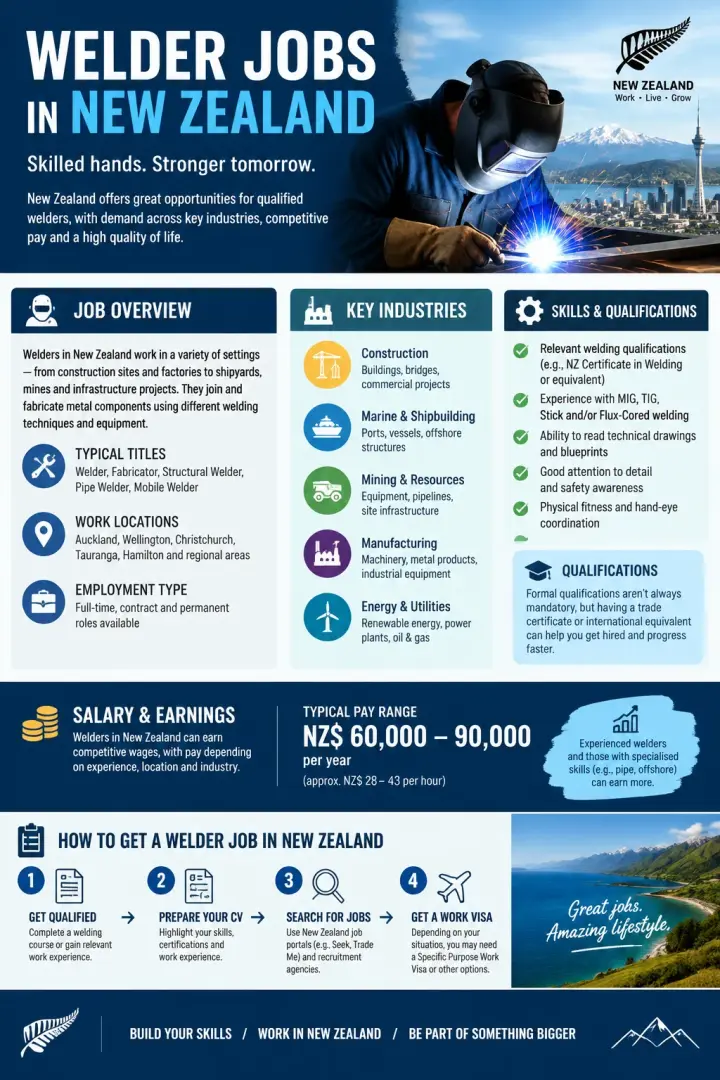
As a rough guide, many welding and fabrication jobs may pay around NZ$25 to NZ$40 an hour. Experienced or specialist welders can earn more, particularly when a role requires demanding skills, travel, shift work or recognised welding qualifications. Entry-level pay may be lower, and rates vary between employers and locations.
Treat that range as a starting point, not a guaranteed offer. Check current job advertisements for the type of work you're targeting. When comparing offers, look beyond the hourly rate and ask about:
- Guaranteed hours and the usual working week
- Overtime, weekend and night-shift rates
- Travel time, accommodation and allowances
- Whether tools, protective equipment and training are provided
- Whether the role is permanent, fixed-term or contract work
Contractor rates aren't directly comparable with employee wages. Contractors generally need to account for their own tax, insurance, equipment and unpaid time off. If you're considering contracting, make sure you understand the arrangement before accepting a rate.
Where Are Welding Jobs Available?
Welding work can be found throughout New Zealand, although the mix of jobs changes from region to region. Larger centres such as Auckland, Hamilton, Tauranga, Wellington and Christchurch have a range of construction, manufacturing and engineering businesses. Regional towns can also offer work in agriculture, transport, maintenance and general fabrication.
Coastal areas may have opportunities in marine fabrication and repair. Places with major industrial plants can have maintenance and shutdown work, though these roles may be temporary or require travel. Honestly, it's worth searching beyond the biggest cities if you're open to moving or working away from home.
Skills Employers Look For
Technical ability matters, but employers also want people who can follow instructions, work safely and produce consistent results. Useful skills for welder jobs include:
- Experience with the welding processes listed in the advertisement
- Ability to read drawings and understand measurements
- Metal preparation, cutting, grinding and fitting skills
- Knowledge of weld quality and common defects
- Attention to detail and a practical approach to problem-solving
- Reliability, communication and teamwork
- A willingness to follow site procedures and learn
Some jobs also ask for a driver's licence, forklift experience or the ability to work at heights. Don't assume every requirement is essential. If you meet most of the job description, it can still be worth applying and explaining where you're ready to learn.
Qualifications and Welding Tests
You don't need the same qualification for every welding job. Some employers hire trainees with limited experience, while others want a trade qualification, evidence of previous work or a current welding test for a particular process and material.
One route into the trade is an apprenticeship or other industry training in engineering fabrication. Training combines practical work with study and assessment. Relevant programmes and qualifications can change, so check current options with a training provider or employer and confirm that the qualification suits the work you want to do.
For jobs involving specified welding standards, an employer may ask you to pass a practical test or provide evidence of a recognised qualification. Requirements can vary by process, material, thickness, position and project standard. Ask the employer exactly what they need rather than assuming one certificate covers every kind of welding.
Can you get a welding job without experience?
Yes, entry-level opportunities can exist. Look for apprentice welder, trainee fabricator, workshop assistant and engineering trade assistant jobs. These roles may involve cleaning, cutting, grinding and helping experienced tradespeople before you take on more welding.
A pre-trade course can help you build basic skills and show commitment, but it isn't the only way in. A well-written application and a willingness to learn can also help you get a conversation with a workshop.
How to Find Welder Jobs in New Zealand
Start with job sites such as SEEK, Trade Me Jobs and LinkedIn. Search using several job titles because employers don't all describe the work in the same way. Try terms such as:
- Welder or welder fabricator
- MIG welder or TIG welder
- Engineering fabricator
- Structural steel welder
- Maintenance welder
- Apprentice welder or trade assistant
Set up alerts for your preferred location, but don't rely on alerts alone. Check engineering recruitment agencies and the websites of local fabrication, construction and manufacturing companies. Smaller workshops may also appreciate a direct enquiry, even when they haven't advertised a vacancy.
Keep a simple record of where you've applied and follow the employer's application instructions. If you contact a business directly, be brief: introduce yourself, explain your experience and ask whether they have any current or upcoming opportunities.
How to Make Your Welding CV Stand Out
I'd keep a welding CV straightforward and specific. An employer should be able to see quickly what you can weld, where you've worked and whether your experience matches the job.
Include the processes you've used, the materials you've worked with and the types of jobs you've completed. If you can read drawings, use workshop machinery or work to a particular procedure, say so. List relevant qualifications and test details accurately, including dates and any limitations where applicable.
For example, instead of writing only “experienced welder”, explain that you've used MIG welding to fabricate mild-steel frames, or TIG welding on stainless-steel components, if that's true. Specific information gives an employer a much clearer picture.
Some employers may invite you to a practical weld test. Ask what process and material you'll use, what protective equipment to bring and whether drawings or preparation will be part of the assessment. Be honest about your ability; it's better to discuss a skills gap than overstate your experience.
Safety and Working Conditions
Welding can involve hot metal, fumes, bright light, noise and fire risks. Conditions vary: a well-equipped workshop is different from a cramped repair site or an outdoor construction project. The job can also involve standing for long periods, lifting and working in awkward positions.
Safe work depends on suitable controls for the task. These can include effective ventilation or fume extraction, fire precautions, appropriate protective equipment and procedures for hot work. Confined-space work needs specific precautions and should only be carried out with the right training and controls.
Ask a prospective employer how they manage safety, provide equipment and train workers. WorkSafe New Zealand has guidance on welding risks and workplace responsibilities if you want to learn more.
Applying From Overseas
Overseas welders can apply for jobs in New Zealand, but you'll need the right to work before starting. The visa options and requirements depend on your circumstances, the employer and the role. Check current information with Immigration New Zealand rather than relying on an old job advertisement or social media post.
An employer may want to verify your experience, qualifications and practical skills. Prepare employment references, training records and details of welding tests. If your documents aren't in English, check whether translations are required for the relevant application.
Be cautious about anyone promising a guaranteed visa or job in exchange for a large payment. Verify the employer and use official Immigration New Zealand information to check the process.
Questions to Ask Before Accepting a Job
A quick conversation about the details can save surprises later. Before accepting an offer, ask:
- What materials and welding processes will I use most often?
- Is the work mainly in a workshop, on site or a mix of both?
- What hours are expected, and how is overtime paid?
- Will I need to travel or stay away from home?
- What tests, training and protective equipment are required?
- Is there a written employment agreement, and what does it include?
Employees in New Zealand have minimum employment rights, including annual holiday entitlements and applicable public holiday entitlements. Check Employment New Zealand for current guidance, and read your agreement before signing. If anything is unclear, ask for an explanation or independent advice.
Getting Started
There isn't one perfect route into welding. You might start as an apprentice, move into fabrication from a workshop support role or bring experience from another country. The best next step is to look at current jobs in your area, compare their requirements with your skills and identify any training or practical experience you need.
For experienced welders, a focused CV and clear test records can make applications easier. For beginners, a genuine interest in practical work and a willingness to learn can be a good place to start.