

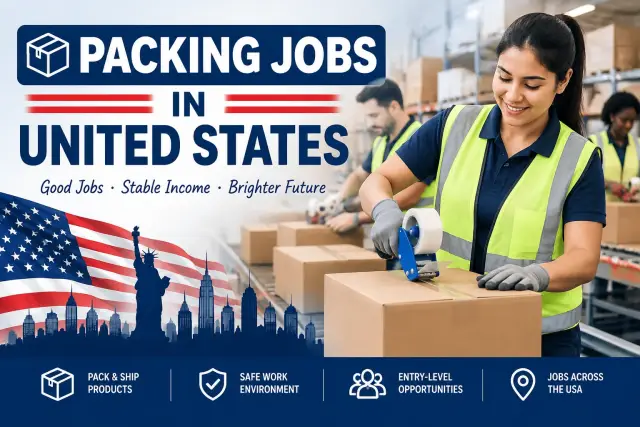
Packing Jobs in the United States: What to Know Before You Apply
Packing jobs can be a practical way to start working without a college degree. You might pack online orders in a warehouse, prepare food for shipping, or help a manufacturer get products ready for customers. Some positions are temporary, while others offer steady hours and room to move up.
But not every packing job looks the same. Pay, schedules, physical demands, and benefits can vary a lot from one employer to another. Here's a look at what these jobs involve, where to find them, and how to spot an opportunity that's worth your time.
What Are Packing Jobs?
Packers prepare products for storage, shipping, or sale. Depending on the workplace, that can mean putting items into boxes, adding protective materials, checking labels, sealing packages, or preparing pallets for pickup.
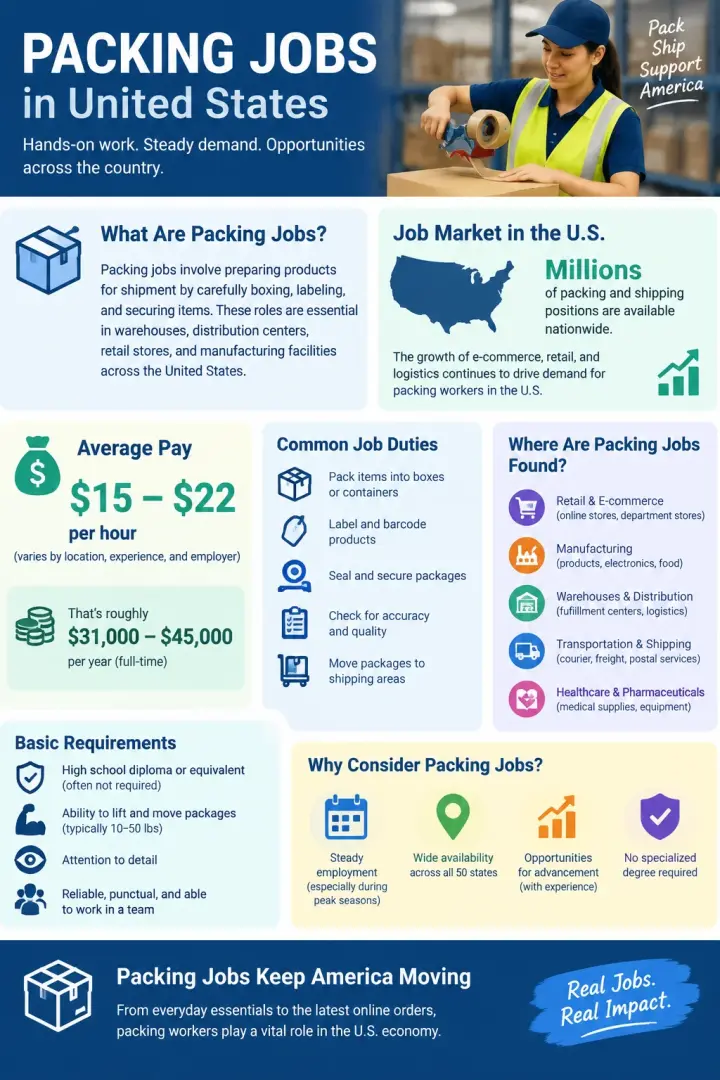
In a small business, one person might handle several of these steps. At a larger fulfillment center, each worker may focus on one part of the process. You'll usually work with a team and follow instructions for accuracy, safety, and speed.
Common packing job titles
Employers don't always use the same title for similar work. When searching for packing jobs, try these terms too:
- Warehouse packer or warehouse associate
- Picker and packer
- Order packer or fulfillment associate
- Production packer
- Food packer or packaging worker
- Shipping and receiving associate
- Packaging machine operator
Read the full description rather than relying on the title. A picker and packer may spend much of the day walking through a warehouse, while a production packer may work at a station on an assembly line.
What Does a Packer Do?
A typical shift starts with instructions about orders, safety, or production targets. From there, duties depend on what the company sells and how its operation is set up.
Common responsibilities include:
- Checking items against an order or packing list
- Choosing boxes, bags, and protective packaging
- Scanning products and printing shipping labels
- Inspecting items for damage or obvious defects
- Sealing packages and placing them on carts or conveyors
- Keeping the work area clean and reporting safety problems
- Recording completed orders or updating inventory systems
Accuracy matters as much as speed. Packing the wrong size, missing an item, or using the wrong label can cause a return or delay. Honestly, a good question to ask in an interview is how the employer balances speed targets with quality and safety.
Types of Packing Jobs
Warehouse and e-commerce packing
These workers prepare online orders for delivery. You may use a handheld scanner, follow instructions on a screen, and pack a variety of products throughout the day. Warehouses often hire for day, evening, and overnight shifts, with extra openings during busy shopping periods.
Food packing
Food packers sort, portion, label, or package food products. Some jobs involve refrigerated rooms, protective clothing, and strict hygiene procedures. Others take place in warmer production areas. Ask about the temperature, schedule, and protective equipment before accepting an offer.
Manufacturing and production packing
Manufacturers need packers for everything from household goods to industrial parts. Workers may inspect finished products and prepare them for shipment. Some jobs involve repetitive tasks or machinery, so training and clear safety procedures are important.
Seasonal and temporary packing
Retailers, fulfillment centers, and staffing agencies often hire extra workers ahead of holidays or other busy periods. A seasonal job can be useful if you need short-term income or want experience. Some temporary roles may lead to permanent offers, but that's not guaranteed. Ask about the expected end date and whether permanent openings are available.
How Much Do Packing Jobs Pay?
Pay for packing jobs in the United States depends on location, employer, industry, shift, and experience. A night shift may offer a premium, for example, while a specialized machine operator may earn more than an entry-level packer. Advertised rates can also include attendance bonuses or incentives that aren't guaranteed.
Instead of relying on one national number, compare current listings in your area and check wage data from sources such as the U.S. Bureau of Labor Statistics or CareerOneStop. Look for a job category that closely matches the actual duties; a machine operator and a hand packer may fall into different categories.
When comparing offers, check more than the headline rate:
- Is the listed pay the guaranteed base rate or does it include a bonus?
- How many hours are expected each week, and are they guaranteed?
- Does the job offer a shift differential for nights or weekends?
- Are benefits, paid time off, or holiday pay available?
- How much will commuting, parking, or required clothing cost?
Many packing workers are entitled to overtime pay under federal law, generally at one and a half times their regular rate for hours worked over 40 in a workweek. Rules and exceptions can vary, and some states provide additional protections. If you're unsure, check with the U.S. Department of Labor or your state labor agency.
Requirements and Skills for Packing Jobs
Many entry-level packing jobs offer on-the-job training and don't require a college degree. Some employers ask for a high school diploma or equivalent, while others focus on reliability and the ability to perform the work. Job-specific requirements should be listed in the posting.
Useful skills include:
- Attention to detail when checking orders and labels
- Basic reading and counting
- Comfort using a scanner or simple computer system
- Time management and the ability to follow instructions
- Communication with coworkers and supervisors
- Safe lifting and awareness of your surroundings
Physical requirements vary. One role may involve standing for long periods, repetitive hand movements, or lifting boxes; another may require more walking than lifting. Don't assume every packing job has the same weight requirement. Ask how often lifting is needed, what equipment is available, and whether tasks rotate.
If you need a workplace accommodation because of a disability, you can discuss your needs with the employer. The Americans with Disabilities Act may require covered employers to provide reasonable accommodations, depending on the circumstances.
Where to Find Packing Jobs Near You
Start with job boards and company career pages, then compare openings rather than applying to the first one you see. Try searching for your city or ZIP code along with phrases such as “warehouse packer,” “packing jobs near me,” or “entry-level fulfillment associate.”
Places to look include:
- Employer websites: Check retailers, manufacturers, food processors, and logistics companies directly.
- Job search sites: Filter by location, schedule, pay, and experience level.
- Staffing agencies: Agencies may offer temporary, temp-to-hire, and direct-hire roles. Ask who your employer will be and who handles pay and benefits.
- American Job Centers: These centers can help with job searches and training resources. Find one through CareerOneStop.
- Local hiring events: Warehouses and manufacturers sometimes interview candidates at job fairs or open houses.
When you find an appealing listing, check whether it's still posted on the company's official careers page. That can also help you confirm the application process and learn more about the workplace.
How to Apply for a Packing Job
1. Match your application to the role
Read the posting carefully and mention relevant skills you actually have. If you've stocked shelves, handled customer orders, cleaned work areas, or used a scanner, those experiences may be useful even if your job title wasn't “packer.”
2. Keep your resume simple
Include your contact information, recent work experience, relevant skills, and education or training. For a first job, you can include volunteer work, school activities, or other responsibilities that show reliability and attention to detail.
Use specific examples when you can. For instance, “checked outgoing orders for correct items and labels” tells an employer more than “hard worker.” Don't invent numbers or experience to make an application look stronger.
3. Prepare for the interview
Employers may ask about your availability, how you handle repetitive work, or what you'd do if you found a damaged item. Give straightforward answers and be honest about the shifts and physical tasks you can manage.
It's also your chance to ask questions. Consider these:
- What does a typical shift look like?
- How are new workers trained, and how long does training last?
- What are the productivity expectations?
- Is overtime required, and how much notice is usually given?
- Are schedules consistent from week to week?
- What equipment and protective gear does the company provide?
Watch Out for Packing Job Scams
Real packing jobs exist, but scammers also use attractive job ads to collect money or personal information. Be especially cautious of vague work-from-home packing offers that promise unusually high pay for simple tasks.
Warning signs include a request to pay upfront for equipment or training, a recruiter who only communicates through an unfamiliar messaging app, or an offer made without a proper application or interview. Be wary of anyone who sends you a check and asks you to return part of the money or buy supplies from a specific seller.
Verify the company through its official website and contact information before sharing sensitive details. Legitimate employers may need information for payroll and employment eligibility after an offer, but you don't need to send it to an unverified contact just because they ask. If you suspect a scam, report it to the Federal Trade Commission at ReportFraud.ftc.gov.
Safety and Working Conditions
Packing work can be tiring, particularly during long shifts or busy seasons. Repetitive motion, lifting, moving equipment, and crowded walkways are all things to pay attention to. A responsible employer should train workers on the tasks and equipment they'll use and provide required protective equipment.
Ask how to report damaged equipment, spills, or injuries. Take the breaks you're entitled to under applicable law and company policy, and speak up if instructions seem unsafe. Workers can learn about workplace safety rights and file a safety complaint with the Occupational Safety and Health Administration, or OSHA. State rules and programs may also apply.
Can a Packing Job Lead to a Career?
It can. A packing job may be a stepping stone into inventory control, shipping and receiving, quality inspection, machine operation, or team leadership. Some employers provide equipment training or offer internal job postings. Others may have fewer opportunities to advance, so it pays to ask before you join.
If you want to move up, learn how the operation fits together, ask about training, and keep a record of skills you've developed. A reliable track record and experience with inventory systems can help when applying for a different role, though promotions depend on openings and the employer's requirements.
Packing Jobs: Frequently Asked Questions
Do I need experience to get a packing job?
Not always. Many employers train entry-level workers. Experience in retail, food service, manufacturing, or another hands-on role can still be helpful because it may show that you're comfortable following procedures and working on a team.
Are part-time packing jobs available?
Yes, some employers offer part-time shifts, particularly during busy periods. Availability varies by location and company. Check whether the posted hours are fixed or whether you may be asked to work additional shifts.
Can I work as a packer from home?
Most packing jobs take place at a warehouse, factory, or production facility. Genuine home-based opportunities may exist, but they're less common. Research any offer carefully, especially if it asks you to pay a fee, receive and resend packages, or use your own bank account.
What should I bring on my first day?
Follow the employer's instructions. You may need identification and documents to complete employment eligibility verification, along with suitable clothing or closed-toe shoes. Ask ahead of time about safety footwear, protective gear, and whether lockers or water bottles are allowed.
A good packing job should offer clear information about pay, duties, training, and scheduling. Take a little time to compare those details, ask questions, and make sure the work fits your needs before you accept.