


Restaurant Jobs in Australia: A Practical Guide to Finding Work
Restaurant jobs can be a good way to earn money, learn useful skills and meet people from all walks of life. They’re also varied. You might be greeting guests at a busy city venue, making coffee at a neighbourhood café or preparing food in a regional pub kitchen.
Whether you’re looking for your first job, a flexible casual role or a long-term hospitality career, there are options across Australia. Here’s what to know about common restaurant jobs, pay, qualifications and finding a position that suits you.
What types of restaurant jobs are available?
Most restaurants have two main teams: front of house, which looks after guests, and back of house, which prepares the food. Some roles overlap, especially in smaller venues.
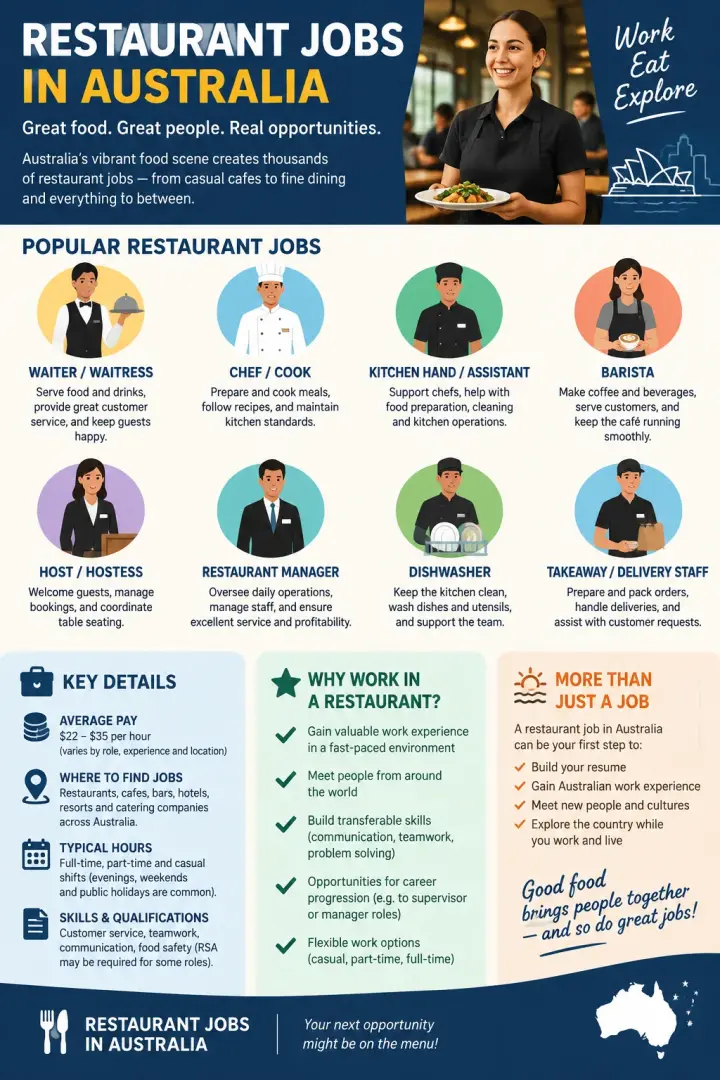
Waiter or waitress
Wait staff greet customers, explain menu items, take orders and serve food and drinks. They may also clear tables, handle payments and help set up the dining area.
Good communication matters more than having a perfect résumé. You’ll need to stay organised when several tables need attention at once and be comfortable spending much of your shift on your feet.
Barista
Baristas prepare coffee and other drinks, look after equipment and often serve customers at the counter. Cafés and restaurants may prefer someone who already knows how to use a commercial espresso machine, though some will train enthusiastic beginners.
A short barista course can help you practise, but it isn’t always required. If you’re new, look for an entry-level café role where making coffee is one part of the job.
Bartender
Bartenders make and serve drinks, manage the bar area and keep an eye on responsible alcohol service. Cocktail experience can help at some venues, while others are happy to teach the basics.
If the job involves serving alcohol, check the Responsible Service of Alcohol requirements in the state or territory where you’ll work. Training and recognition rules can differ depending on the location.
Kitchen hand or dishwasher
Kitchen hands wash dishes, clean equipment, help with basic food preparation and keep work areas tidy. It’s physical work and can get hectic, but it’s a common entry point for people who want restaurant experience without formal cooking qualifications.
Reliability goes a long way here. Showing up on time, following instructions and helping the team through a busy service can make you someone a venue wants to keep.
Cook or chef
Cooks and chefs prepare meals, manage ingredients and maintain food safety standards. Duties vary with experience: a junior cook might focus on prep, while a head chef could be responsible for menus, ordering, costs and the kitchen team.
Some cooks learn on the job. Many chefs complete a commercial cookery qualification or apprenticeship, combining training with paid work. If you’re considering that route, look into registered training organisations and apprenticeship arrangements in your state or territory.
Restaurant manager or supervisor
Managers and supervisors coordinate staff, rosters, customer service and day-to-day operations. Depending on the venue, they may also handle ordering, budgets, recruitment and complaints.
These roles usually call for hospitality experience. Starting as a team member and gradually taking on more responsibility is one practical way to move into management.
Do you need experience to work in a restaurant?
Not always. Many restaurants hire entry-level staff for roles such as kitchen hand, food runner or junior waiter. Employers may value a positive attitude, clear communication and availability during busy periods as much as previous restaurant work.
If you haven’t worked in hospitality, think about skills you’ve picked up elsewhere. Retail, volunteering, school activities and team sports can all show that you can work with people, follow directions and handle responsibilities.
Food safety knowledge is useful in any kitchen role. Some businesses need staff with particular food safety training or a food safety supervisor qualification. Requirements depend on the role, business and local rules, so check what the employer asks for rather than paying for a course you might not need.
Restaurant job pay and conditions in Australia
Pay varies depending on the job, age, experience, employment type and the industrial instrument that applies. Many hospitality workers are covered by an award, an enterprise agreement or another set of workplace rules. The Restaurant Industry Award may apply to some restaurant employees, but it doesn’t cover every hospitality job.
Casual employees generally receive a casual loading instead of some paid leave entitlements available to permanent employees. Depending on the applicable award or agreement and your circumstances, you may also be entitled to penalty rates for work at certain times, overtime or allowances.
Before accepting an offer, ask about:
- Your hourly rate or salary and how often you’ll be paid
- Whether the role is casual, part-time or full-time
- The expected hours and how the roster works
- Any applicable award or enterprise agreement
- Penalty rates, overtime and allowances
- Superannuation and any deductions from your pay
For current minimum rates and help identifying the right award, use the Fair Work Ombudsman’s pay and conditions information. Rates can change, so an old figure in a job ad or social media post isn’t a reliable guide.
What about tips?
Tipping is less common in Australia than in some other countries, and you shouldn’t assume it will make up a large part of your income. Ask whether the venue has a tipping policy and how tips are shared. Your employer must still meet the applicable pay requirements.
Are restaurant trial shifts paid?
A short unpaid trial may be lawful in limited circumstances when it’s needed to demonstrate skills, is directly supervised and lasts no longer than reasonably necessary. If you’re doing productive work beyond a legitimate skills demonstration, you may need to be paid.
Before a trial, ask how long it will last, what you’ll be doing and whether it’s paid. If something doesn’t sound right, check the Fair Work Ombudsman’s guidance.
Where to find restaurant jobs in Australia
Hospitality vacancies appear throughout the year, although demand can change with tourism, events and the season. Cities such as Sydney, Melbourne, Brisbane, Perth and Adelaide have a wide mix of venues. Regional towns and holiday destinations can also have opportunities, particularly during busy visitor periods.
Try a mix of approaches:
- Search job boards using terms such as “restaurant jobs near me”, “kitchen hand jobs” or “wait staff jobs”.
- Check restaurant and hospitality group websites for vacancies.
- Look at local community boards and hospitality groups, while taking care to verify the employer.
- Ask friends, classmates or former colleagues if they know of venues hiring.
- Visit local restaurants with a short résumé, ideally outside the lunch and dinner rush.
Honestly, timing matters when you walk in. A manager dealing with a full dining room probably won’t have much time to chat. A quieter afternoon can be a better chance to introduce yourself and ask whether they’re hiring.
How to apply for restaurant jobs
You don’t need a complicated application for every hospitality role. You do need to make it easy for an employer to see what you can offer and when you’re available.
1. Put together a clear résumé
Include your contact details, relevant work or volunteer experience, skills, qualifications and availability. If you’re applying for your first job, include school activities or other examples that show teamwork and responsibility.
List any relevant training, such as RSA or food safety training, and make sure the details are accurate. You can also mention languages you speak if they’re relevant to the venue.
2. Match your application to the role
For a front-of-house position, highlight customer service and communication. For a kitchen hand job, mention practical skills, attention to cleanliness and your ability to work in a team. Keep your message short and explain why you’re interested in that particular venue.
3. Be upfront about availability
Restaurants often need staff on evenings, weekends and public holidays. Being available for some of those shifts can help, but don’t promise hours you can’t reliably work. If you study or have another job, explain your regular commitments.
4. Prepare for the interview
Read the menu, learn a little about the venue and arrive on time. You may be asked how you’d handle a customer complaint, work under pressure or help a teammate during a rush. Simple, honest examples are usually more useful than rehearsed answers.
Restaurant jobs for students and working holiday makers
Casual restaurant work can fit around study or travel, but a “flexible” job can still mean late finishes and changing rosters. Ask how much notice you’ll get for shifts and whether the venue can accommodate your existing commitments.
If you hold a visa, check your current work conditions before accepting a job. Rules can vary by visa type and circumstances, including restrictions on hours or how long you can work for one employer. The Department of Home Affairs provides visa information and a way to check your conditions.
You’ll usually need to provide your tax file number to your employer. You may also be asked for superannuation fund details. Check the Australian Taxation Office’s information if you’re unsure how tax or super applies to you.
How to spot a good employer
A good restaurant job isn’t just about the menu or the hourly rate. It’s also about whether you’re treated fairly and given what you need to do the work safely.
Look for a venue that can explain the role, pay and roster clearly. During the interview or trial, notice how staff speak to one another and whether someone takes the time to explain expectations. Busy service can be stressful, but that doesn’t make unsafe or disrespectful behaviour acceptable.
Be cautious if an employer won’t discuss pay, asks you to pay for the job itself or expects you to work ongoing shifts for free. An Australian business number, or ABN, is not a substitute for employee entitlements if you’re actually being hired as an employee. If you’re unsure about an arrangement, seek advice before agreeing.
Can a restaurant job lead to a career?
Absolutely. Someone who starts as a kitchen hand might move into an apprenticeship. A food runner could become a waiter, supervisor or restaurant manager. You can also build skills that transfer to hotels, events, catering and other customer-facing industries.
If progression matters to you, ask about training when you apply. Not every small venue has a formal career program, but a manager may be willing to teach you new tasks once you’ve settled in. Let them know what you’d like to learn and be open to feedback.
Restaurant jobs in Australia: frequently asked questions
What is the easiest restaurant job to get with no experience?
Kitchen hand, dishwasher, food runner and some junior front-of-house roles are often open to beginners. Availability and willingness to learn can make a difference, though requirements vary between employers.
Can I work in a restaurant without an RSA?
Possibly. You may not need RSA training for a role that doesn’t involve serving alcohol, such as some kitchen jobs. If alcohol service is part of the position, check the rules for your state or territory and ask the employer what evidence they require.
Are restaurant jobs available part-time?
Yes. Restaurants hire casual, part-time and full-time workers. Read the offer carefully: casual and permanent part-time work have different arrangements and entitlements.
What should I wear to a restaurant job interview?
Choose clean, neat clothes that suit the venue. You don’t necessarily need a suit for a café or casual restaurant, but avoid turning up looking as though you’re headed to the beach. If you’ve been invited to a trial, ask whether you need enclosed, non-slip shoes or specific clothing.
Getting started
The best restaurant job is one that fits your availability, pays you correctly and gives you a chance to learn. Start with a simple résumé, apply to a few venues that interest you and ask questions about the conditions before you commit. Even an entry-level role can teach you skills you’ll use long after your first shift.