

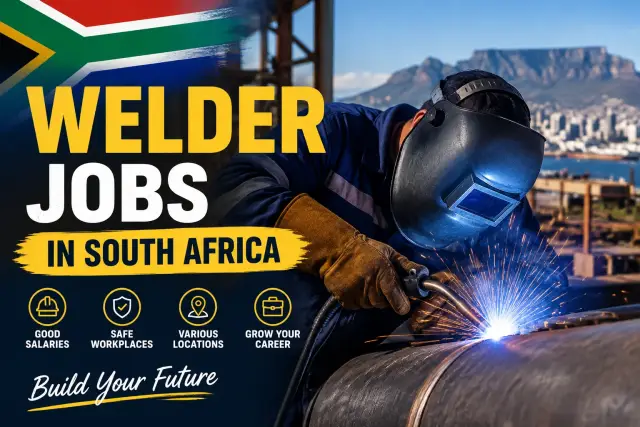
Welder Jobs in South Africa: Where to Find Work and How to Get Started
Welders help build and maintain everything from mine equipment and factory machinery to pipelines, bridges and steel structures. If you enjoy practical work, can follow instructions carefully and don't mind getting your hands dirty, welding could be a worthwhile career to explore.
Welder jobs in South Africa range from entry-level workshop positions to specialist roles on construction sites, at power stations and in heavy industry. Some employers need a qualified artisan, while others may hire assistants or trainees who are willing to learn.
Here's a practical look at the skills employers look for, possible earnings, training routes and places to search for work.
What Does a Welder Do?
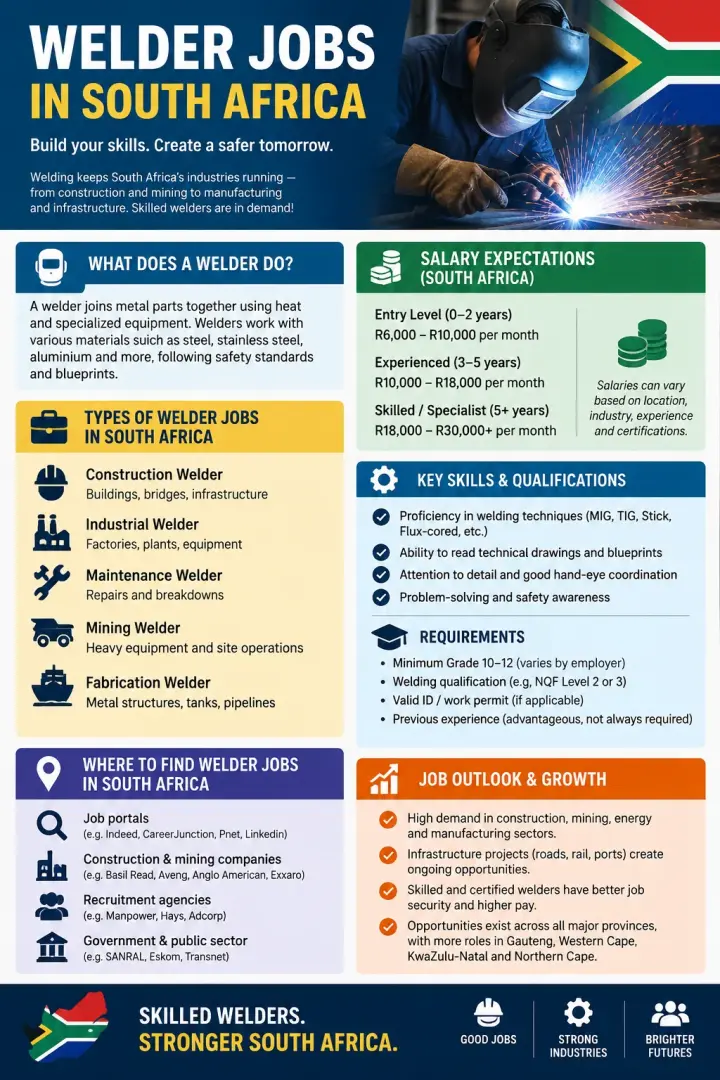
A welder joins metal parts using heat and, in many cases, filler material. The exact work depends on the job. You might repair a cracked piece of equipment, manufacture steel frames in a workshop or weld pipework on a large industrial project.
Typical responsibilities include:
- Reading drawings, specifications and job instructions.
- Measuring, cutting and preparing metal components.
- Setting up welding machines and choosing suitable materials.
- Joining metal using the welding process required for the job.
- Checking welds for visible defects and following quality procedures.
- Maintaining equipment and keeping the work area safe.
Welding can be physically demanding. Depending on the workplace, you may spend time standing, lifting, working outdoors or wearing protective equipment in hot conditions. Some roles involve shifts, overtime, travel or work at height.
Types of Welder Jobs in South Africa
Workshop welder
Workshop welders usually manufacture or repair metal components at a fixed location. Jobs may involve gates, trailers, tanks, steel frames or machine parts. This can be a good setting for building experience with tools, measurements and different fabrication tasks.
Fabricator welder
A fabricator welder does more than join metal. The role often includes reading drawings, measuring, cutting, bending and assembling components before welding them. Employers commonly look for people who can work accurately from plans.
Pipe welder
Pipe welders work on pipe systems used in industries such as petrochemicals, energy and manufacturing. These positions may require specific welding procedures, experience and practical tests. Some involve site work and tight project deadlines.
Maintenance welder
Maintenance welders repair machinery and structures to help keep operations running. You might find these roles in mines, factories, agricultural businesses and engineering workshops. The work can vary considerably from one day to the next.
Site or construction welder
Site welders work on projects such as buildings, bridges and industrial installations. The job may include travelling, working outdoors and following site-specific safety rules. Some projects require proof of competency for a particular type of weld.
Skills Employers Look For
Good welding starts with technique, but employers also value accuracy, reliability and a sensible approach to safety. Depending on the vacancy, useful skills include:
- Experience with processes such as stick welding, MIG or TIG.
- Understanding welding symbols and engineering drawings.
- Using measuring, cutting and grinding equipment.
- Preparing joints and checking the quality of finished work.
- Following written procedures and workplace safety rules.
- Working well with boilermakers, fitters, supervisors and other tradespeople.
You don't need every skill on this list for every vacancy. A small fabrication shop may have different requirements from a company working on pressure equipment. Read the job advert carefully and focus your application on the experience that matches it.
Qualifications and Training for Welders
There isn't one route into welding that fits every job. Some people start as welding assistants and gain workplace experience. Others enter a formal occupational training programme, apprenticeship or learnership, or study at a technical and vocational education and training (TVET) college.
For artisan positions, employers may ask for a relevant trade qualification and proof that you've passed a trade test. Requirements for admission to training and trade testing vary by programme and your previous experience, so check the current details with the provider or an accredited trade test centre.
When comparing courses, ask what practical training is included, what certificate or qualification you'll receive and whether the provider is accredited for the relevant programme. The Quality Council for Trades and Occupations (QCTO), the National Artisan Moderation Body and the South African Qualifications Authority (SAQA) are useful places to check information about qualifications and artisan training.
What about welding certificates?
Some specialist jobs require a welder qualification test for a particular process, material, position or welding procedure. These are often called welding tickets or coded welding qualifications. A general course certificate or trade qualification doesn't automatically meet every job-specific test requirement.
Before paying for a test, check what local employers are requesting and whether the qualification is suitable for the work you want to do. The Southern African Institute of Welding is one organisation to explore for welding-related training and certification information.
How Much Do Welders Earn in South Africa?
Welder pay varies widely by location, skill level, industry and contract. As a rough guide rather than a guaranteed rate, an entry-level or assistant role may pay around R8,000 to R15,000 a month, while experienced welders may see offers around R15,000 to R30,000 or more. Specialist project roles can pay more, particularly where overtime or allowances are involved.
Treat those figures as broad estimates, not official salary data. Actual offers can fall outside these ranges. Hourly rates also vary, and an attractive hourly figure doesn't always mean steady full-time work.
When comparing offers, check whether the amount is gross pay before deductions, how overtime is calculated, and whether transport, accommodation or meals are included. A job that requires you to relocate may have costs that aren't obvious from the advert.
Where to Find Welder Jobs in South Africa
Welding opportunities are spread across the country, although vacancies tend to cluster around industrial areas, mines, ports and construction projects.
- Gauteng: Look for engineering workshops, manufacturing businesses, construction contractors and maintenance companies around Johannesburg, Pretoria and the East Rand.
- KwaZulu-Natal: Durban and surrounding industrial areas offer potential opportunities in manufacturing, fabrication, logistics and port-related work.
- Western Cape: Cape Town and nearby areas have fabrication, construction, manufacturing and marine-related employers.
- Mpumalanga, Limpopo and North West: Mining, energy, plant maintenance and related contractors may advertise welding work.
- Eastern Cape and other provinces: Search for work in manufacturing, agriculture, construction and local engineering workshops.
Look on established job sites such as Pnet, CareerJunction, Indeed and LinkedIn, as well as company careers pages. Recruitment agencies that specialise in engineering or trades can also be useful. Local workshops may advertise on their websites or accept a CV directly, even when they don't have a listing online.
Try several search terms: “welder jobs”, “fabricator welder”, “coded welder”, “pipe welder”, “welding assistant” and “apprentice welder”, followed by your town or province. It's worth checking listings regularly because project vacancies can close quickly.
How to Apply for Welding Jobs
Put relevant details near the top of your CV
Keep your CV clear and easy to scan. Include your location, contact details, qualifications and the welding processes you've used. If you have a trade test certificate or job-specific welding qualifications, list them accurately, including relevant dates and details.
For each previous role, explain what you actually did. For example, mention whether you worked on structural steel, repaired equipment, read drawings or used MIG welding in a workshop. Be honest about your experience; a practical test can quickly show whether your skills match your CV.
Prepare your documents
Employers may ask for a CV, identity document, certificates, references and proof of qualifications. Depending on the role, they may also request a driver's licence or proof that you're eligible to work in South Africa. Keep clear copies ready, but don't send sensitive documents to an employer you haven't checked.
Get ready for a practical test
Many welding employers want to see your work before making an offer. Ask what process and material will be used, what position you'll weld in and what safety gear you should bring. Follow the instructions, prepare the joint properly and work safely rather than rushing to finish.
Can You Get a Welding Job With No Experience?
Yes, although your first position may be as an assistant, trainee or apprentice rather than a qualified welder. Look for welding assistant jobs, learnerships and entry-level opportunities at fabrication shops. A practical course can help you learn the basics, but check its quality and cost before enrolling.
If you're new, put any relevant school subjects, workshop projects, short courses and hands-on skills on your CV. Even experience with measuring, hand tools or basic metalwork can be worth mentioning. Ask local employers what they expect from a trainee and whether they offer supervised workplace learning.
Honestly, starting with the basics is better than claiming skills you haven't had the chance to practise. Employers need people who can learn, follow instructions and take safety seriously.
Safety on the Job
Welding involves hazards including fumes, electric shock, burns, fire, noise and eye damage. Employers should provide suitable safety procedures and equipment for the work, and workers need to follow them.
Depending on the task, protection may include a suitable welding helmet, gloves, protective clothing and respiratory protection. Ventilation and fume control matter too. Confined spaces, work at height and hot-work areas need specific precautions and authorisation where required. Don't start a task if you haven't been briefed on the risks or don't have the right equipment.
How to Avoid Job Scams
Be cautious of adverts promising unusually high pay for little experience or asking you to pay upfront to secure an interview or job. Verify the company through its official website or published contact details, and check that the recruiter and vacancy are genuine.
Don't share banking details or identity documents through an unverified link. If you're asked to pay for training, medical checks or equipment before an offer, independently confirm the arrangement with the employer first. When something feels rushed or secretive, take a step back and check.
Frequently Asked Questions About Welder Jobs
Do I need matric to become a welder?
Not every welding job or training route has the same education requirements. Some programmes and employers may ask for matric, while others accept different school grades or relevant experience. Check the entry requirements for the specific course or vacancy.
Is a trade test required for all welding jobs?
No. Some assistant, trainee and workshop positions may not require one. However, many qualified artisan roles ask for a relevant trade test, and specialist work may have additional testing requirements.
Which welding process should I learn?
Start by looking at vacancies in your area. Stick welding, MIG and TIG are all used in South Africa, but demand depends on the industry and type of work. A training provider or local employer can help you understand which skills are useful for your goals.
Can welders work on contract?
Yes. Some welders work permanently for one employer, while others take fixed-term or project contracts. Before accepting contract work, check the duration, working hours, pay terms, benefits and who covers travel or accommodation.
Taking the Next Step
A good place to start is to search for welding vacancies near you and make a list of the qualifications and skills that appear most often. Then compare those requirements with your current experience. Whether your next move is a trainee application, a practical course or a job-specific welding test, choose a step that supports the kind of work you want to do.