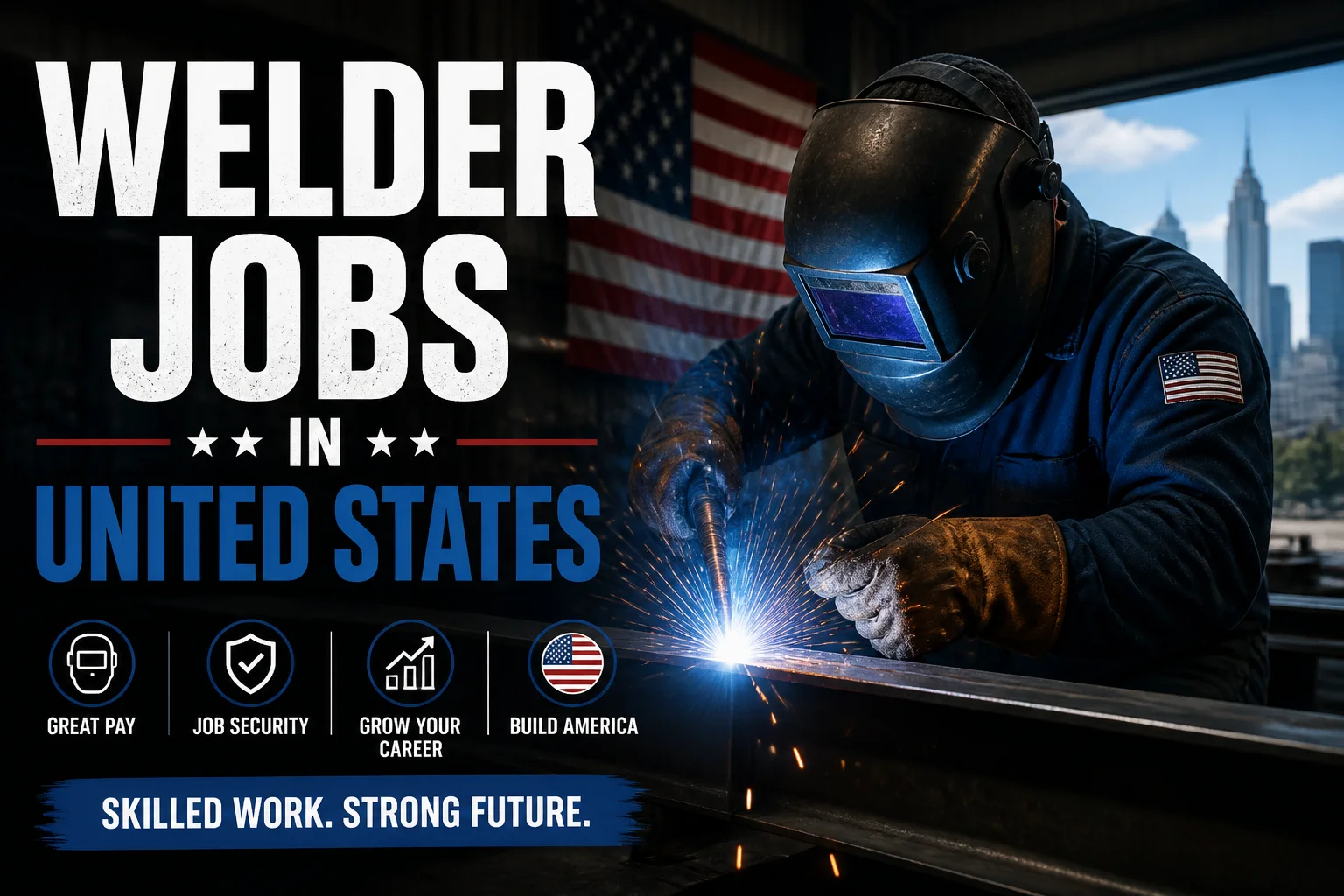
Welders, Cutters, and Welder Fitters
Company
Trade College
Location
Los Angeles, CA
Job Type
Full-time
Posted
4 days ago
Via
Jobrapido
Apply On
Job Description
What You Need to Know About Welder, Cutter, or Welder Fitter
Example of Welder, Cutter, or Welder Fitter Job Use hand-welding or flame-cutting equipment to weld or join metal components or to fill holes, indentations, or seams of fabricated metal products.
Welder, Cutter, or Welder Fitter Responsibilities
• Guide and direct flames or electrodes on or across workpieces to straighten, bend, melt, or build up metal.
• Develop templates and models for welding projects, using mathematical calculations based on blueprint information.
• Cut, contour, and bevel metal plates and structural shapes to dimensions as specified by blueprints, layouts, work orders, and templates, using powered saws, hand shears, or chipping knives.
• Gouge metals, using the air-arc gouging process.
• Connect and turn regulator valves to activate and adjust gas flow and pressure so that desired flames are obtained.
• Operate manual or semi-automatic welding equipment to fuse metal segments, using processes such as gas tungsten arc, gas metal arc, flux-cored arc, plasma arc, shielded metal arc, resistance welding, and submerged arc welding.
Skills Needed to be a Welder, Cutter, or Welder Fitter
Below is a list of the skills most Welders, Cutters, and Welder Fitters say are important on the job.
Critical Thinking: Using logic and reasoning to identify the strengths and weaknesses of alternative solutions, conclusions or approaches to problems.
Operation and Control: Controlling operations of equipment or systems.
Reading Comprehension: Understanding written sentences and paragraphs in work related documents.
Monitoring: Monitoring/Assessing performance of yourself, other individuals, or organizations to make improvements or take corrective action.
Active Listening: Giving full attention to what other people are saying, taking time to understand the points being made, asking questions as appropriate, and not interrupting at inappropriate times.
Speaking: Talking to others to convey information effectively.
Types of Welder, Cutter, or Welder Fitter JobsWhat Kind of Welder, Cutter, or Welder Fitter Job Opportunities Are There?
In the United States, there were 404,800 jobs for Welder, Cutter, or Welder Fitter in 2016. New jobs are being produced at a rate of 5.6% which is above the national average. The Bureau of Labor Statistics predicts 22,500 new jobs for Welder, Cutter, or Welder Fitter by 2026. The BLS estimates 45,800 yearly job openings in this field. The states with the most job growth for Welder, Cutter, or Welder Fitter are Rhode Island, Utah, and Nevada. Watch out if you plan on working in Vermont, Maine, or Ohio. These states have the worst job growth for this type of profession.
What is the Average Salary of a Welder, Cutter, or Welder Fitter
Welders, Cutters, and Welder Fitters make between $28,560 and $63,740 a year.
Welders, Cutters, and Welder Fitters who work in Alaska, District of Columbia, or Hawaii, make the highest salaries.
Below is a list of the median annual salaries for Welders, Cutters, and Welder Fitters in different U.S. states.What Tools & Technology do Welders, Cutters, and Welder Fitters Use?
Below is a list of the types of tools and technologies that Welders, Cutters, and Welder Fitters may use on a daily basis:
• Microsoft Excel
• Microsoft Office
• IBM Notes
• Recordkeeping software
• Scientific Software Group Filter Drain FD
Becoming a Welder, Cutter, or Welder Fitter
Education needed to be a Welder, Cutter, or Welder Fitter:
What work experience do I need to become a Welder, Cutter, or Welder Fitter?Who Employs Welders, Cutters, and Welder Fitters?
The paragraph below does not include a table, but notes approximately the number of Welders, Cutters, and Welder Fitters employed by various industries.
Related Careers
Those thinking about becoming a Welder, Cutter, or Welder Fitter might also be interested in the following careers:
Career changers with experience as a Welder, Cutter, or Welder Fitter sometimes find work in one of the following fields:
#J-18808-Ljbffr
Example of Welder, Cutter, or Welder Fitter Job Use hand-welding or flame-cutting equipment to weld or join metal components or to fill holes, indentations, or seams of fabricated metal products.
Welder, Cutter, or Welder Fitter Responsibilities
• Guide and direct flames or electrodes on or across workpieces to straighten, bend, melt, or build up metal.
• Develop templates and models for welding projects, using mathematical calculations based on blueprint information.
• Cut, contour, and bevel metal plates and structural shapes to dimensions as specified by blueprints, layouts, work orders, and templates, using powered saws, hand shears, or chipping knives.
• Gouge metals, using the air-arc gouging process.
• Connect and turn regulator valves to activate and adjust gas flow and pressure so that desired flames are obtained.
• Operate manual or semi-automatic welding equipment to fuse metal segments, using processes such as gas tungsten arc, gas metal arc, flux-cored arc, plasma arc, shielded metal arc, resistance welding, and submerged arc welding.
Skills Needed to be a Welder, Cutter, or Welder Fitter
Below is a list of the skills most Welders, Cutters, and Welder Fitters say are important on the job.
Critical Thinking: Using logic and reasoning to identify the strengths and weaknesses of alternative solutions, conclusions or approaches to problems.
Operation and Control: Controlling operations of equipment or systems.
Reading Comprehension: Understanding written sentences and paragraphs in work related documents.
Monitoring: Monitoring/Assessing performance of yourself, other individuals, or organizations to make improvements or take corrective action.
Active Listening: Giving full attention to what other people are saying, taking time to understand the points being made, asking questions as appropriate, and not interrupting at inappropriate times.
Speaking: Talking to others to convey information effectively.
Types of Welder, Cutter, or Welder Fitter JobsWhat Kind of Welder, Cutter, or Welder Fitter Job Opportunities Are There?
In the United States, there were 404,800 jobs for Welder, Cutter, or Welder Fitter in 2016. New jobs are being produced at a rate of 5.6% which is above the national average. The Bureau of Labor Statistics predicts 22,500 new jobs for Welder, Cutter, or Welder Fitter by 2026. The BLS estimates 45,800 yearly job openings in this field. The states with the most job growth for Welder, Cutter, or Welder Fitter are Rhode Island, Utah, and Nevada. Watch out if you plan on working in Vermont, Maine, or Ohio. These states have the worst job growth for this type of profession.
What is the Average Salary of a Welder, Cutter, or Welder Fitter
Welders, Cutters, and Welder Fitters make between $28,560 and $63,740 a year.
Welders, Cutters, and Welder Fitters who work in Alaska, District of Columbia, or Hawaii, make the highest salaries.
Below is a list of the median annual salaries for Welders, Cutters, and Welder Fitters in different U.S. states.What Tools & Technology do Welders, Cutters, and Welder Fitters Use?
Below is a list of the types of tools and technologies that Welders, Cutters, and Welder Fitters may use on a daily basis:
• Microsoft Excel
• Microsoft Office
• IBM Notes
• Recordkeeping software
• Scientific Software Group Filter Drain FD
Becoming a Welder, Cutter, or Welder Fitter
Education needed to be a Welder, Cutter, or Welder Fitter:
What work experience do I need to become a Welder, Cutter, or Welder Fitter?Who Employs Welders, Cutters, and Welder Fitters?
The paragraph below does not include a table, but notes approximately the number of Welders, Cutters, and Welder Fitters employed by various industries.
Related Careers
Those thinking about becoming a Welder, Cutter, or Welder Fitter might also be interested in the following careers:
Career changers with experience as a Welder, Cutter, or Welder Fitter sometimes find work in one of the following fields:
#J-18808-Ljbffr
Frequently Asked Questions
Quick answers about Welder Jobs
What is the median hourly wage for welders in the United States as of 2026?
As per the U.S. Department of Labor, the median hourly wage for welders, cutters, solderers, and brazers is $25.22 as of May 2026 data. Welders in manufacturing earn $26.15 per hour on average while those in construction receive $24.80 per hour. Overtime pay at 1.5 times the regular rate applies after 40 hours per week under the Fair Labor Standards Act.
What certifications and experience are required to qualify for welder jobs in the United States?
As per the U.S. Department of Labor, welders must complete a high school diploma or equivalent plus a postsecondary welding program lasting 6 to 18 months. AWS Certified Welder credential and 2,000 hours of documented experience are required for most positions in structural welding. Employers in shipbuilding and aerospace require additional ASME Section IX qualifications.
What are the standard working hours and paid leave entitlements for welders in the United States?
As per the U.S. Department of Labor, full-time welders work 40 hours per week with overtime required after 40 hours. Workers receive at least 10 paid holidays and accrue 10 days of paid sick leave annually under the Families First Coronavirus Response Act extensions. Union contracts in construction add 15 days of paid vacation after one year.
How are federal income taxes calculated on welder wages in the United States for 2026?
As per the Internal Revenue Service, welders earning $52,500 annually in 2026 pay 12% federal income tax on income between $11,601 and $47,150 plus 22% on the amount above $47,150. Social Security tax is withheld at 6.2% up to the $168,600 wage base. Employers must issue Form W-2 by January 31 each year.