

Driver Jobs in the Philippines: A Practical Guide for Job Seekers
Looking for a driver job in the Philippines? There are opportunities in many places, from delivery companies and warehouses to households, hotels, and construction sites. Some employers need drivers for short trips around a city, while others are looking for people who can handle long-distance routes or larger vehicles.
The right job depends on more than knowing how to drive. Your licence, experience, preferred schedule, and comfort with different vehicles all matter. Here’s a practical guide to the types of driver jobs available, common requirements, pay questions, and ways to find a legitimate opening.
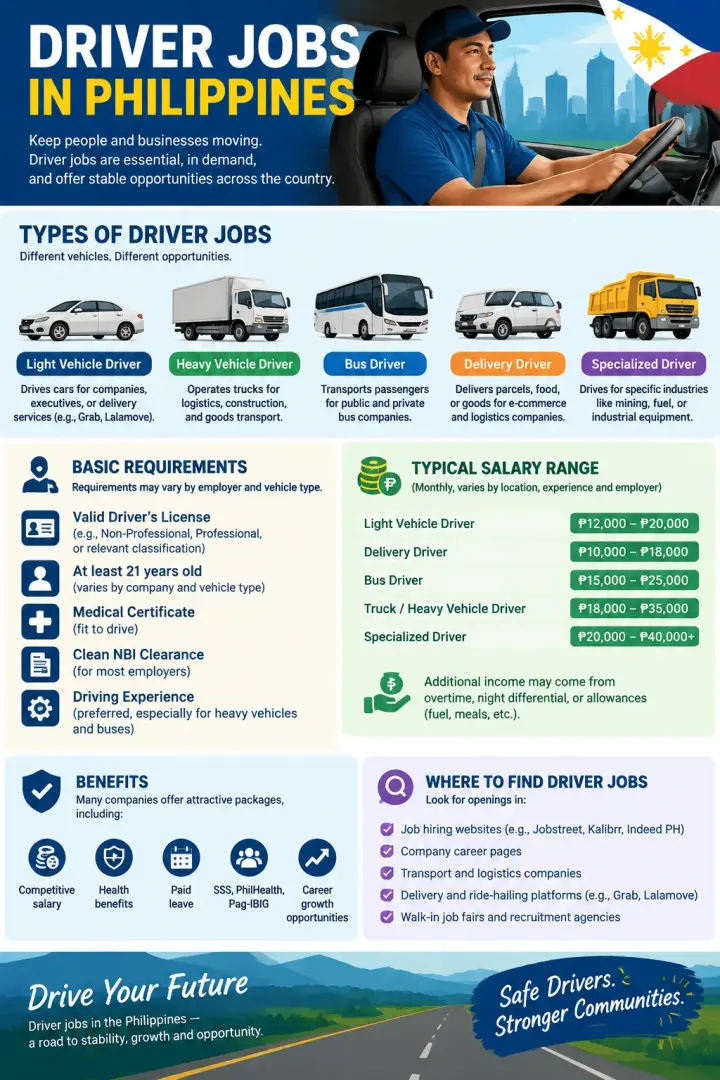
Types of Driver Jobs in the Philippines
Job ads use different titles, so it helps to search for more than just “driver.” These are some of the most common roles you’ll come across.
Company Driver
A company driver usually transports employees, documents, equipment, or clients. Depending on the employer, the job might involve airport pickups, deliveries between offices, or trips to meetings. You may also be expected to keep the vehicle clean, monitor its condition, and maintain a trip log.
This role can suit someone who wants a more predictable routine, although overtime and weekend trips are possible. Check whether you’ll drive a sedan, van, pickup, or another vehicle, and make sure your licence covers it.
Delivery Driver
Delivery drivers transport parcels, food, groceries, or business supplies. Some work directly for an employer, while others work through delivery platforms or contractors. Vehicles can range from motorcycles to vans and small trucks.
Expect frequent stops, navigation through traffic, and contact with customers. Some roles also involve collecting payments, handling returns, or lifting packages. Before accepting an offer, ask who pays for fuel, mobile data, maintenance, and any required equipment.
Truck Driver
Truck drivers move goods between warehouses, ports, stores, and other locations. Jobs range from local delivery routes to long-haul trips across provinces. Employers may look for experience with a specific truck size, transmission, or type of cargo.
These positions can involve loading supervision, trip reports, and vehicle inspections. If you’re considering long-distance work, ask about rest periods, overnight arrangements, allowances, and whether you’ll have a helper.
Family or Personal Driver
A family driver takes household members to work, school, appointments, and other destinations. Reliability, discretion, and patience are often just as important as driving experience. Some families also ask drivers to handle errands or basic vehicle upkeep.
Be clear about the schedule before you start. Ask whether the position is stay-in or stay-out, how rest days work, and what happens when trips run late. It’s also worth confirming which duties are included so there are fewer surprises later.
Bus, Van, and Shuttle Driver
These drivers transport passengers on routes for schools, hotels, offices, tourism businesses, or public transport operators. The work calls for careful driving, good communication, and attention to passenger safety. Depending on the service, you may need experience with larger vehicles or early-morning and late-night shifts.
Ride-Hailing and Transport Network Vehicle Service Driver
Some drivers work with a transport network vehicle service, or TNVS, through an accredited platform or operator. The arrangements can vary: a driver may use an operator’s vehicle or apply under another permitted setup.
Don’t assume that a private car and a driver’s licence are all you need. Check current Land Transportation Franchising and Regulatory Board (LTFRB) rules, platform requirements, vehicle documents, and any accreditation requirements before spending money or signing an agreement.
Common Requirements for Driver Jobs
Requirements differ by employer and vehicle, but most job ads ask for a valid Land Transportation Office (LTO) driver’s licence that matches the work. Read the posting carefully, especially if it mentions a professional driver’s licence or particular Driver’s License (DL) codes.
- Valid driver’s licence: Your licence should authorize you to drive the vehicle required for the job. Check the DL codes and conditions shown on your card.
- Relevant driving experience: Employers may ask how long you’ve driven and whether you’ve handled similar vehicles, routes, or passengers.
- Safe driving record: Some companies request information about violations or accidents and may conduct their own checks.
- Basic vehicle knowledge: Knowing how to check tires, lights, fluids, and warning signs is useful in many roles.
- Navigation skills: Familiarity with local roads and navigation apps can help, especially for delivery and company driver jobs.
- Documents and clearances: An employer may request valid IDs, a résumé, references, medical results, or a police or NBI clearance.
For larger or specialized vehicles, employers may also ask for training or a TESDA qualification relevant to the role. Requirements can change, so verify current licensing rules with the LTO and ask the employer exactly which documents are needed.
How Much Do Drivers Earn in the Philippines?
There isn’t one standard salary for every driver. Pay depends on location, employer, vehicle, experience, schedule, and whether the arrangement is employment, contracting, or platform-based work. A Metro Manila company driver, a provincial delivery rider, and a long-haul truck driver may have very different pay structures.
Some job ads list a monthly salary. Others offer daily pay, a trip-based rate, commissions, or a combination. A higher advertised amount may depend on completing a certain number of trips or working long hours, so ask how the figure is calculated.
For employees, applicable minimum wage rates vary by region and can change. Check the current wage order from the relevant Regional Tripartite Wages and Productivity Board rather than relying on an old salary figure online. Overtime, holiday pay, and other benefits also depend on the employment arrangement and applicable rules.
Questions to Ask About Pay and Benefits
- Is the stated amount basic pay, or does it include allowances and incentives?
- How are overtime, holidays, night work, and extra trips handled?
- How often will I be paid, and what deductions will appear on my payslip?
- Does the company cover fuel, tolls, parking, meals, or overnight expenses?
- Who pays for vehicle repairs, maintenance, uniforms, and mobile data?
- Am I being hired as an employee or engaged under another arrangement?
Employees may be entitled to benefits such as 13th-month pay and statutory coverage under SSS, PhilHealth, and Pag-IBIG, subject to the applicable rules. Ask the employer how contributions and benefits will be handled. If you’re unsure about your rights, the Department of Labor and Employment (DOLE) is a useful starting point.
Where to Find Driver Jobs in the Philippines
Start with a few search terms that match your experience and location. Try “company driver jobs in Quezon City,” “delivery driver hiring Cebu,” or “truck driver jobs Davao.” Include the vehicle type if it matters, such as van, six-wheeler, or motorcycle.
- Online job sites: Look for established job boards with recent listings and clear employer details.
- Company career pages: Logistics providers, retailers, hotels, schools, and transport companies may post openings directly.
- Local networks: Friends, former colleagues, and community contacts can point you toward openings, but verify the employer yourself.
- Government employment services: Check your local Public Employment Service Office (PESO) for vacancies and job fairs.
- Social media groups: These can be useful for local leads, but be extra careful with unverified posts and recruiters.
Apply to jobs that match your licence and experience instead of sending the same application everywhere. A short, relevant application often makes it easier for an employer to see why you’re a good fit.
How to Prepare Your Driver Résumé
Your résumé doesn’t need to be fancy. It should make the important details easy to find. Start with your contact information, location, licence details, and a short summary of the driving work you’ve done.
For each previous job, include the employer, dates, vehicle type, usual routes, and main duties. If you’ve handled passenger pickups, deliveries, cash collection, trip logs, or basic maintenance checks, mention those where relevant. Be honest about your experience; a practical driving test will quickly show whether you can handle the vehicle.
If you’re applying for your first professional driving role, focus on relevant training, vehicle familiarity, navigation skills, and any work that shows reliability. You can also include references who can speak about your work habits, provided they’ve agreed to be contacted.
What to Expect During the Application Process
An employer may start with a phone interview, then ask you to submit documents or attend an in-person interview. Many companies also conduct a driving test. The test might cover parking, reversing, road awareness, and how you inspect or operate the vehicle.
Before the interview, review the job description and prepare to explain your previous routes and responsibilities. Bring the documents the employer requests, but keep control of your original IDs. You can ask why a document is needed and how your information will be used.
Honestly, the interview is also your chance to assess the job. Ask about the vehicle’s condition, reporting arrangements, schedule, assigned routes, and what happens if a vehicle breaks down. A clear answer can tell you a lot about how the employer operates.
How to Avoid Driver Job Scams
Real opportunities shouldn’t require you to rush into sending money or handing over sensitive information to an unknown person. Be cautious if a recruiter promises unusually high pay for little work, refuses to identify the employer, or insists on communicating only through a personal account.
- Verify the company through its official website or published contact details.
- Be wary of upfront “processing,” reservation, or training fees, especially when there’s no clear written explanation.
- Don’t send bank passwords, one-time passwords, or unnecessary financial information.
- Check the work location and interview details independently.
- Read the contract before signing, and keep a copy of what you agree to.
- Never surrender your original licence or other identification as a condition of employment.
If a fee or deduction is mentioned, ask what it covers, whether it’s refundable, and whether it’s permitted. When something feels off, take time to verify it before proceeding.
Frequently Asked Questions About Driver Jobs
Can I apply for a driver job without experience?
Some employers accept applicants with limited work experience, especially for entry-level roles. You’ll still need the appropriate valid licence and must meet the employer’s requirements. Training, a good driving test, and a clear record can help your application.
Do I need my own vehicle?
Not always. Company, family, and truck driver roles often use an employer-provided vehicle. Some delivery or platform opportunities may require your own vehicle or offer a rental arrangement. Check the costs and terms before accepting.
What should I check before accepting an offer?
Review the pay structure, working hours, rest days, benefits, vehicle responsibilities, and any deductions. Ask for unclear terms to be explained in writing. Make sure the licence you hold covers the vehicle you’ll be expected to drive.
Finding the Right Driver Job
A good driver job should fit your skills and provide clear terms, not just an attractive salary in an ad. Check your licence, prepare a straightforward résumé, and compare the full package before deciding. With a bit of research and the right questions, you’ll be better placed to find a role that works for you.