


Restaurant Jobs in New Zealand: A Practical Guide
Looking for a restaurant job in New Zealand? Whether you’re after your first part-time role, a seasonal job or the next step in a hospitality career, there are plenty of places to start. Restaurants, cafés, bars, hotels and catering companies all need people who can help create a good experience for customers.
The work can be busy, social and sometimes tiring. It can also be a great way to build practical skills, meet people and move into new roles. Here’s what to know about restaurant jobs in New Zealand, including where to look, what employers want and how to check an offer.
What Restaurant Jobs Are Available in New Zealand?
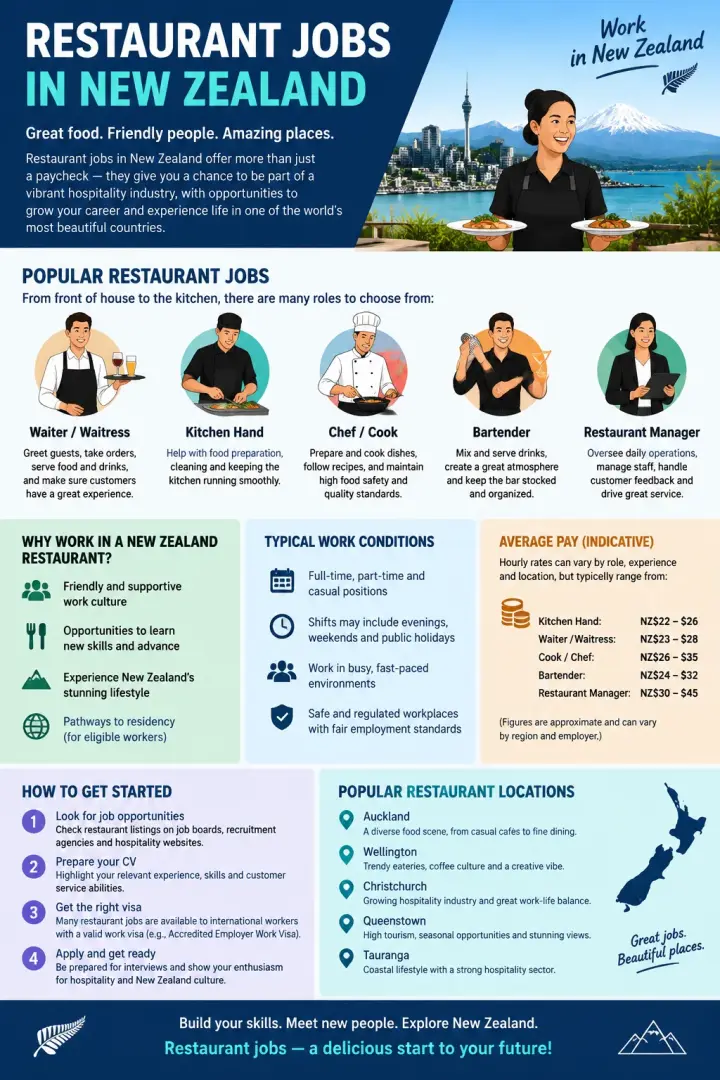
Restaurant work covers much more than waiting tables. Some jobs are customer-facing, while others keep the kitchen and business running behind the scenes.
Front-of-house jobs
Front-of-house staff look after customers from the moment they arrive. Common roles include:
- Waiter or waitress: Takes orders, serves food and drinks, and helps customers throughout their meal.
- Host: Welcomes guests, manages bookings and helps organise tables.
- Barista: Makes coffee and other drinks, often in a café or casual restaurant.
- Bartender: Prepares drinks, serves customers and follows alcohol service rules.
- Restaurant supervisor: Supports the team, handles customer concerns and helps manage shifts.
- Restaurant manager: Oversees staffing, service, stock and other parts of the business.
These roles suit people who enjoy working with others, communicating clearly and staying calm when things get busy. Barista and bartending jobs may require experience, although some employers provide training.
Kitchen jobs
Kitchen teams prepare food, keep work areas clean and make sure orders go out efficiently. Job titles you might see include:
- Kitchen hand or kitchen assistant: Helps with washing dishes, cleaning and basic food preparation.
- Cook: Prepares dishes according to the restaurant’s menu and procedures.
- Commis chef: Works in a junior chef role while building skills under more experienced staff.
- Chef de partie: Takes responsibility for a particular section of the kitchen.
- Sous chef or head chef: Leads kitchen operations, menus and team management.
A kitchen hand role can be a useful entry point if you don’t have much experience. Chef positions usually call for stronger cooking skills and may require formal training or relevant work history.
Where to Find Restaurant Jobs in New Zealand
Start with popular job websites such as SEEK, Trade Me Jobs and Indeed. Student Job Search can also be useful if you’re eligible. Search using both broad and specific terms, such as “restaurant jobs Auckland”, “kitchen hand Wellington” or “part-time waiter Christchurch”.
It’s worth checking restaurant websites and social media pages too. Some businesses advertise directly, especially when they need someone quickly. Local community groups can help you find smaller employers, but be careful with listings that don’t clearly identify the business.
You can also ask in person. Bring a tidy CV and visit outside the lunch or dinner rush, when a manager is more likely to have a minute to talk. Not every restaurant accepts walk-in applications, but asking politely doesn’t hurt.
Locations to consider
Major cities such as Auckland, Wellington and Christchurch have a wide range of restaurants, from neighbourhood cafés to large hotels. Tourist destinations, including Queenstown, Rotorua and the Bay of Islands, may have seasonal opportunities as visitor numbers change.
Smaller towns can have openings too, particularly during holidays and busy summer periods. Before moving for a job, look into accommodation costs and transport. A role in a popular tourist area might sound exciting, but housing can be expensive or hard to find.
Do You Need Experience to Work in a Restaurant?
Not always. Plenty of employers hire beginners for kitchen hand, runner, host and junior front-of-house positions. A good attitude, reliability and willingness to learn can count for a lot.
If you’ve worked in retail, volunteered at an event or helped run a school fundraiser, mention it. Those experiences can show that you’re comfortable talking to people, following instructions or working as part of a team.
For specialist jobs, employers may ask for specific experience. A café might want a barista who can adjust a grinder and make consistent coffee, while a restaurant hiring a chef will probably want to know what kinds of food and kitchen environments you’ve worked with.
Food safety knowledge is helpful in many roles. Alcohol-related roles can involve additional legal requirements, particularly for managers. If you’re interested in becoming a duty manager, check the current requirements with your local council and the relevant licensing authorities rather than assuming every bar job needs the same certificate.
Skills Restaurant Employers Look For
You don’t need to be perfect at everything on day one. Still, these skills can make your application stand out:
- Communication: Listening carefully, asking questions and explaining things clearly to customers and coworkers.
- Teamwork: Helping others during a rush and keeping the kitchen and front-of-house team informed.
- Reliability: Arriving on time, turning up for scheduled shifts and giving notice if something changes.
- Attention to detail: Getting orders right and taking allergies and dietary requests seriously.
- Cleanliness: Following the workplace’s food safety and cleaning procedures.
- Adaptability: Switching tasks when the restaurant gets busy or plans change.
Honestly, a calm, helpful approach can matter just as much as a polished CV for an entry-level job. If you make a mistake, being honest and asking how to fix it is better than trying to hide it.
How Much Do Restaurant Jobs Pay in New Zealand?
Pay varies by role, experience, location and employer. A kitchen hand or entry-level server may earn a different rate from an experienced chef or restaurant manager. Some jobs advertise an hourly rate, while others offer an annual salary.
New Zealand has legal minimum wage rates, which can change. Check the current rates and whether the adult, starting-out or training minimum wage applies to you on the Employment New Zealand website. Most employees aged 16 and over must receive at least the applicable minimum wage for each hour worked.
When comparing offers, ask about guaranteed hours, evening or weekend shifts and how often you’ll be paid. A higher hourly rate doesn’t necessarily mean higher weekly earnings if the hours aren’t consistent. Also check whether your pay is before tax; advertised rates usually are.
Tipping isn’t generally expected in New Zealand in the same way it is in some other countries. If a restaurant receives tips, ask how they’re shared and recorded. Tips can have tax implications, so check Inland Revenue guidance if you’re unsure.
Full-Time, Part-Time, Casual and Seasonal Work
Restaurant schedules can look very different from a standard office week. You may be asked to work evenings, weekends, public holidays or split shifts, depending on the business.
- Full-time roles: Usually offer more regular hours, though the exact schedule depends on the employment agreement.
- Part-time roles: Offer fewer hours and can suit people balancing work with study or other commitments.
- Casual roles: Generally involve work offered as needed, without an ongoing commitment to regular hours. Check the agreement and how the arrangement works in practice.
- Fixed-term or seasonal roles: Run for a limited period or until a specified event. A genuine reason for the fixed term must be included in the agreement.
Before accepting, ask what a typical roster looks like and how far ahead shifts are confirmed. If you need certain days off or rely on public transport, it’s better to discuss that early.
Your Rights When Working in a New Zealand Restaurant
Hospitality workers have employment rights, just like workers in other industries. Before you start, your employer must provide a written employment agreement. Read it carefully, keep a copy and ask about anything you don’t understand.
Here are a few things worth checking:
- Pay: Your agreement should explain your pay and when you’ll receive it. Keep your own record of hours and compare it with your payslips.
- Breaks: Employees are entitled to paid rest breaks and unpaid meal breaks, with the number and timing depending on the length of the work period.
- Annual holidays: Most employees become entitled to at least four weeks of paid annual holidays after 12 months of continuous employment. Different arrangements can apply in limited circumstances.
- Public holidays: If you work on a public holiday, you’re generally entitled to at least time and a half. You may also be entitled to an alternative holiday if it would otherwise have been a working day for you.
- Sick leave: Eligible employees generally become entitled to 10 days of paid sick leave after six months, subject to the legal eligibility rules.
- Trial periods: A valid 90-day trial must be agreed to in writing before employment begins and must meet legal requirements. It’s not the same thing as an unpaid work shift.
If an employer asks you to do a trial shift or training, clarify the duties, hours and pay before you agree. Don’t assume that productive work can be unpaid just because it’s called a trial. Employment New Zealand offers current guidance and help if you’re concerned about an arrangement.
Can International Workers Apply for Restaurant Jobs?
International applicants can work in hospitality if they have the right to work in New Zealand and meet the conditions of their visa. Those conditions vary, so check your own visa carefully. A visitor visa generally doesn’t allow you to work for a New Zealand employer.
Some people may be eligible for a working holiday visa, depending on their citizenship and the rules of the relevant scheme. Others may need a different work visa. Immigration New Zealand is the best source for current visa eligibility, employer requirements and application details.
Be cautious if anyone promises a guaranteed visa or asks for money in exchange for a job offer. Check the employer and recruitment arrangement independently, and get licensed immigration advice when needed. Don’t hand over your passport or pay a fee without understanding exactly why it’s being requested.
How to Write a CV for a Restaurant Job
Keep your CV clear and relevant. You don’t need to list every task you’ve ever done. Focus on the experience and qualities that match the job ad.
- Start with your name, contact details and a short summary of the role you’re looking for.
- List recent work experience, including the business, your job title and dates.
- Add practical details, such as handling customer orders, using a point-of-sale system or preparing food.
- Include relevant training or certificates, if you have them.
- Mention your availability and work rights if they’re useful to the employer.
- Provide referees or say they’re available on request, if you have people who can speak about your work.
If you’re applying for your first job, include school activities, volunteering or other responsibilities that show you’re dependable. Tailor your CV to each role: a kitchen hand application should highlight different strengths from a restaurant manager application.
Preparing for a Restaurant Job Interview
Restaurant interviews are often relaxed, but it’s still worth preparing. Look at the menu, learn a little about the business and think about why you want the role. Wear clean, tidy clothes and arrive on time.
You might be asked how you’d deal with a busy service, an unhappy customer or a mistake in an order. Give a simple, honest answer. If you haven’t worked in hospitality before, use an example from school, volunteering or another job.
Bring a few questions of your own. For example: What training is provided? How are shifts rostered? What does a typical busy night look like? Their answers can help you work out whether the job is right for you, too.
Restaurant Jobs in New Zealand: Frequently Asked Questions
Can I get a restaurant job with no experience?
Yes. Entry-level roles such as kitchen hand, food runner and host may be open to beginners. Look for ads that mention training, and highlight transferable skills in your application.
Are restaurant jobs available for students?
Yes. Part-time and casual restaurant jobs can work around study, although evening and weekend availability is often useful. International students should check the work conditions attached to their visa.
Do I need a qualification to work in a restaurant?
Not for every role. Employers often train entry-level staff on the job. Some chef, management or specialist positions may require experience, training or particular qualifications.
What’s the best way to get hired quickly?
Apply to several suitable jobs, make your availability clear and respond promptly when an employer contacts you. Check job boards regularly and consider approaching local restaurants outside their busiest hours. Never skip checking the employment agreement just because you need to start quickly.
Ready to Start Your Search?
Restaurant jobs in New Zealand can be a good fit whether you want flexible work or a long-term hospitality career. Start with roles that match your skills and availability, put together a straightforward CV and ask questions before accepting an offer. The right workplace should be a place where you can learn, contribute and be treated fairly.