


Carpenter Jobs in India: Skills, Salary and How to Get Started
Carpentry is a hands-on trade with opportunities across India, from small furniture workshops to large construction sites. If you enjoy working with tools, solving practical problems and seeing a finished product take shape, a carpenter job could be worth exploring.
The work isn't limited to making tables and chairs. Carpenters also fit doors, install modular kitchens, build wardrobes, create timber frameworks and repair damaged furniture. Some work for contractors or factories, while others take independent jobs in their local area.
Here's a practical look at carpenter jobs in India, including the skills employers look for, possible earnings and ways to find work.
What Does a Carpenter Do?
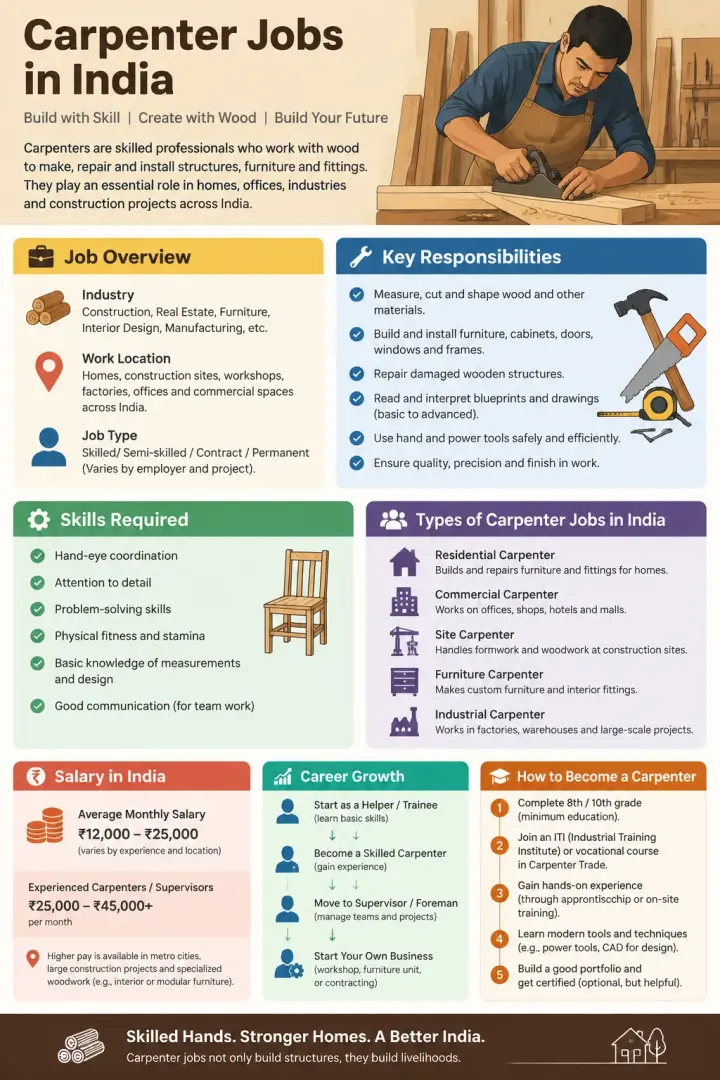
A carpenter measures, cuts, shapes, assembles and installs wood or wood-based materials. The exact duties depend on the job. A furniture carpenter may spend most of the day in a workshop, while a site carpenter travels between homes, offices and construction projects.
Common responsibilities include:
- Reading drawings, sketches or instructions from a customer or supervisor.
- Measuring spaces and marking materials before cutting.
- Working with timber, plywood, MDF, laminates and other materials.
- Making and installing doors, windows, cabinets, shelves and furniture.
- Using hand tools and powered equipment safely.
- Fitting hinges, locks, handles, channels and other hardware.
- Repairing damaged wooden fittings and checking the quality of finished work.
In a small workshop, one person might handle several of these tasks. At a larger company, the work may be divided among specialists.
Types of Carpenter Jobs in India
Furniture Carpenter
Furniture carpenters make and repair items such as beds, tables, chairs and cupboards. They may work for furniture manufacturers, local workshops or individual customers. Attention to measurements and finishing matters because even a small mistake can affect how a piece looks or functions.
Construction or Site Carpenter
Site carpenters work on buildings and other construction projects. Depending on their experience and the employer's needs, they may help with door frames, partitions, shuttering or temporary structures. The work can involve travel, outdoor conditions and coordination with other trades.
Interior and Modular Furniture Carpenter
These carpenters install wardrobes, kitchen cabinets, wall panels and other interior fittings. They often work with plywood, MDF, laminates and ready-made hardware. Accurate measurements are especially important when fitting cabinets around uneven walls, pipes or electrical points.
Finishing Carpenter
A finishing carpenter focuses on visible details, such as trims, mouldings, doors and fitted furniture. Employers and clients often look for neat joints, consistent alignment and a clean final appearance.
Maintenance and Repair Carpenter
Hotels, offices, schools, housing societies and maintenance companies may hire carpenters to repair furniture, doors and fixtures. These jobs can suit people who enjoy varied work and are comfortable diagnosing problems on site.
Self-Employed Carpenter
Independent carpenters find their own customers, quote for work and manage materials and payments. It can offer flexibility, but income may change from month to month. You'll also need to account for travel, tools, helpers and the time spent finding new projects.
Carpenter Salary in India
Carpenter earnings vary widely by city, experience, employer and type of work. A helper in a small workshop won't usually earn the same as an experienced modular furniture installer or a contractor managing a team.
As a rough guide, a beginner or helper might find monthly pay around ₹12,000 to ₹18,000, while an experienced employed carpenter may earn around ₹18,000 to ₹35,000 or more. Skilled specialists and independent contractors can earn more, but their income may not be steady. These are illustrative ranges, not guaranteed rates.
Some carpenters are paid a monthly salary, while others work on daily wages, piece rates or project contracts. Before accepting an offer, check whether it includes overtime, accommodation, meals, travel or any benefits. For freelance work, remember that the amount a client pays is not the same as your profit: materials, transport, tools and labour may all come out of it.
Skills Needed for Carpenter Jobs
You don't need to know everything on day one. Many carpenters build their skills by working alongside experienced tradespeople. Still, a few basics make a big difference.
- Measurement and basic maths: You'll need to measure accurately, calculate quantities and understand dimensions in millimetres, inches or feet.
- Tool handling: Familiarity with saws, drills, planes, chisels, measuring tapes and other tools helps you work efficiently and safely.
- Understanding materials: Timber, plywood, MDF and laminates behave differently. Knowing which material suits a job can reduce waste and callbacks.
- Reading drawings: Basic plans and sketches help you understand dimensions, layouts and installation details.
- Problem-solving: Walls aren't always straight, measurements can change, and hardware sometimes needs adjustment. Practical thinking helps.
- Communication: You'll need to understand instructions, discuss requirements and keep customers or supervisors informed.
- Physical fitness: The job can involve lifting, standing, bending and working in awkward spaces.
Honestly, reliability is a skill worth mentioning too. Turning up when promised, keeping the work area tidy and finishing agreed tasks can help you earn repeat business.
Education and Training for Carpenters
There isn't one fixed route into carpentry in India. Some people learn informally as helpers, while others join a vocational course or apprenticeship. Employers may set their own education and experience requirements.
Learn as a Helper
Joining a local workshop or working with an experienced carpenter can be a practical starting point. You'll get to observe how materials are measured, cut and assembled. Ask about pay, working hours, safety equipment and what you'll be expected to do before you start.
Explore ITI and Vocational Courses
Some Industrial Training Institutes and vocational training centres offer carpentry or related trades. Course availability, duration, fees and entry requirements can differ by institute and state. Check the latest details directly with the institute or the relevant state training authority.
Look for Apprenticeships
An apprenticeship can combine workplace learning with structured training. Look for current openings on the official Apprenticeship India portal and read the eligibility criteria carefully. Available trades, locations and stipends can change, so confirm the details in each listing.
Keep Building Your Skills
Once you're comfortable with the basics, learning about modular fittings, power tools, surface finishing or reading detailed drawings can open up more types of work. Choose training based on the jobs available in your area and the kind of work you enjoy.
How to Find Carpenter Jobs in India
Start with a clear idea of the work you can do and where you're willing to travel. Then try a mix of online applications and local contacts.
- Visit nearby workshops and furniture makers: Ask whether they need a helper, apprentice or experienced carpenter.
- Contact contractors and interior firms: Construction contractors, modular kitchen installers and interior design companies may need site workers.
- Check job portals: Search for terms such as carpenter jobs, furniture carpenter, site carpenter and carpenter helper, followed by your city.
- Use the National Career Service portal: Look for relevant vacancies and verify employer details before applying.
- Ask your network: Hardware shops, material suppliers and other tradespeople may know about local openings.
- Show your work: Keep clear photos of projects you've completed, with the customer's permission.
Job searches can be different in Mumbai, Delhi, Bengaluru, Hyderabad, Chennai or a smaller town. In bigger cities, interior and modular installation firms may advertise online. In other places, local workshops and word of mouth may be just as useful.
How to Apply for a Carpenter Job
A simple resume is enough for many roles. Include your name, contact details, location, years of experience and the types of work you can handle. Mention tools, materials and fittings you're familiar with, along with any relevant training or apprenticeship.
If you're new, be honest about it. List any workshop practice, course projects or experience helping with repairs. Photos can help, but don't claim someone else's work as your own.
During an interview or trial, the employer may ask you to measure, mark, cut or assemble a basic piece. Listen carefully, ask questions if the instructions aren't clear and follow safety procedures. Speed matters on a job, but accuracy and safe handling matter too.
Safety Tips for Carpentry Work
Carpentry involves sharp tools, dust, noise and sometimes heavy materials. Follow the site's safety rules and get training before using unfamiliar equipment.
- Use suitable eye protection, hearing protection and respiratory protection for the task.
- Check tools, guards and electrical cables before use; report damaged equipment.
- Secure materials before cutting or drilling, and keep hands clear of blades.
- Control wood dust with appropriate extraction and ventilation where available.
- Lift heavy sheets and furniture with help or suitable equipment when needed.
- Keep walkways clear and store sharp tools safely.
If you're working on a construction site, ask about site-specific safety training and protective equipment before starting.
Starting an Independent Carpentry Business
Working independently can be rewarding, but good carpentry is only part of the job. You'll also need to price work, buy materials, schedule projects and communicate with customers.
Start by deciding which services you can deliver confidently, such as furniture repairs, door installation or custom cabinets. For each job, give the customer a written estimate that explains the scope, material specifications, labour charges, payment stages and expected timeline. If a quote is based on square feet, make clear how the area is measured and what the rate includes.
Keep records of payments and expenses, and check applicable local registration, tax and business requirements as your work grows. A local accountant or business adviser can help you understand what applies to your situation.
Avoiding Job Scams
Be cautious if someone promises a guaranteed carpenter job in exchange for an upfront fee, or asks for sensitive documents before explaining the role. Verify the company, work location, pay and contact details through an independent source. Never share bank passwords or one-time passwords with a recruiter.
Frequently Asked Questions
Can I become a carpenter without a degree?
Yes. A college degree is not generally required for many carpentry roles. You may be able to start as a helper, take vocational training or apply for an apprenticeship. Individual employers can have their own requirements.
How long does it take to learn carpentry?
It depends on the training route and the kind of work you want to do. You can learn basic tasks while assisting an experienced carpenter, but becoming confident with measurements, tools and complex installations takes consistent practice.
Are carpenter jobs available for freshers?
Yes, some workshops and contractors hire helpers or trainees with little or no experience. Look for entry-level listings and be ready to explain your interest in the trade and willingness to learn.
Which cities have carpenter job opportunities?
Carpenters work across India, including in major cities, growing towns and rural areas. Opportunities depend on local construction, furniture manufacturing, renovations and demand for repairs.
What should I check before accepting a carpenter job?
Confirm the pay rate, working hours, location, duties, payment schedule and who provides tools and safety equipment. If accommodation or travel is promised, get those details clearly in writing where possible.
Finding Your Next Opportunity
Carpenter jobs can offer several paths, whether you want to join a workshop, specialise in interiors or eventually take on your own customers. Start with the skills you have, look for a safe place to learn, and build a record of reliable work. Over time, careful measurements and good customer relationships can be just as valuable as the tools in your kit.