

Plumber Jobs in Canada Can Be Solid Work
Honestly speaking if you're eyeing plumber jobs in Canada the money's decent once you get going. In my experience folks start as apprentices and build up from there without needing a fancy degree or anything. Thing is it depends where you land and how much you're willing to hustle in those first years.
Pay varies a ton across provinces. Alberta tends to come out on top with experienced plumbers pulling in around 40 bucks an hour or more on good sites. Ontario's not far behind especially in the GTA but the cost of living eats some of that up quick. Out east in places like Nova Scotia it starts lower but you might enjoy the slower pace.
How Training Actually Works
You don't just wake up one day and call yourself a plumber. Most start with a pre-apprenticeship program at a local college then find a sponsor for on-the-job hours. Red Seal endorsement helps big time if you want to move around provinces later. It's four years of schooling mixed with work usually.
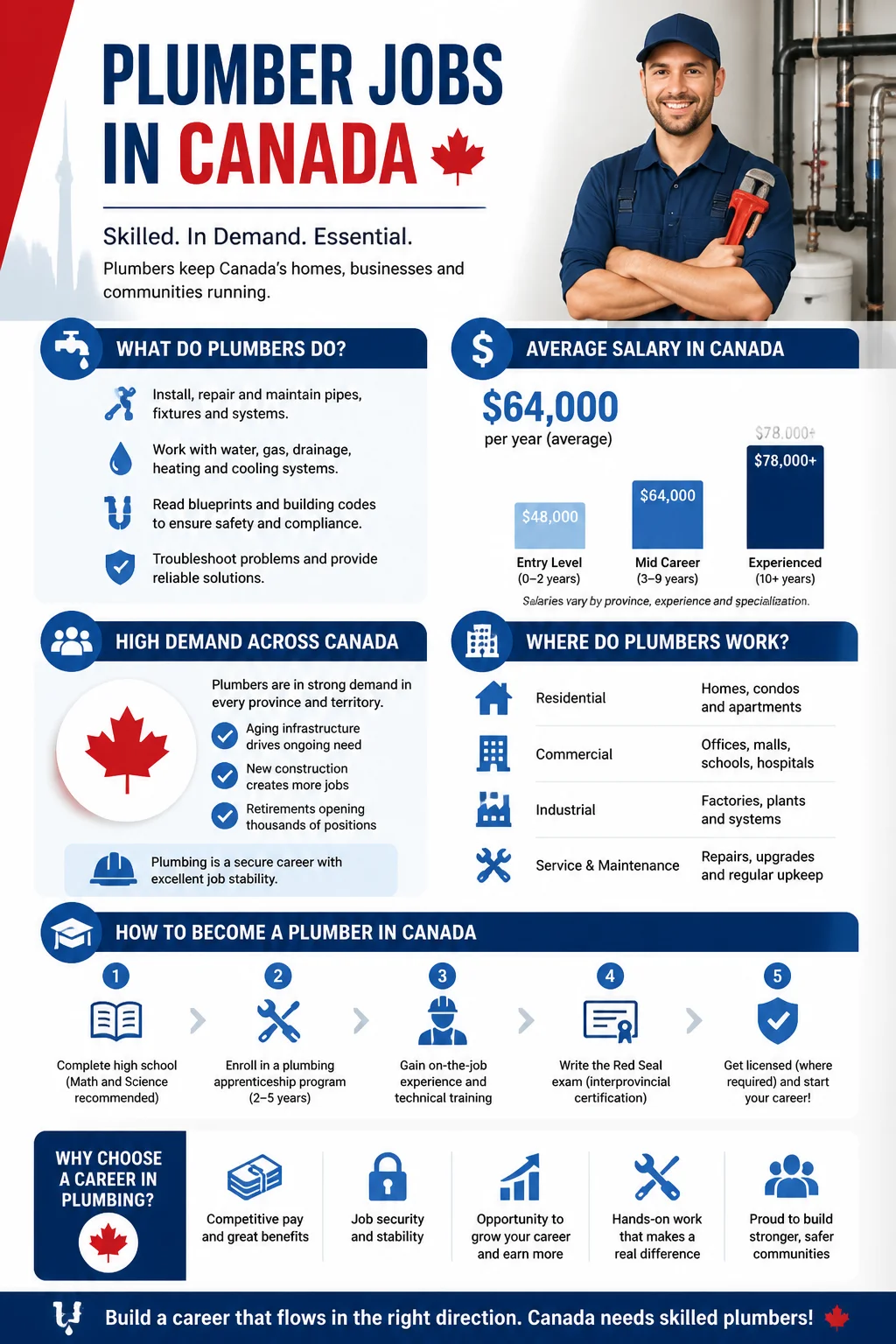
Look I knew a guy who skipped some classroom time by working under a licensed pro right away. He still had to log those hours though. Not gonna lie the exams can trip people up if you're not studying the codes.
- High school diploma or equivalent is the basic entry
- Math and physics help more than you'd think
- Physical fitness matters because you're on your feet and lifting all day
Job Market Realities Right Now
Canada always needs plumbers thanks to all the new builds and old houses needing fixes. Vancouver and Toronto have constant demand but competition's stiff too. Smaller cities sometimes have easier entry if you don't mind relocating.
From what I've seen union gigs offer better benefits and steady hours while private shops might let you keep more cash per job. Both have their ups and downs though. Big difference if you value overtime or predictable shifts.
Here's the thing remote work isn't a thing here. You're on site or in people's homes so travel time adds up fast in big provinces.
Daily Grind and What to Expect
A typical day starts early with a toolbox check then heading to whatever job's lined up. Some days it's straightforward repairs others involve digging trenches or dealing with frozen pipes in winter. Honestly the variety keeps it from getting boring fast.
Customers can be hit or miss. Some appreciate the work and tip well. Others complain about the price even when it's fair. You learn to shrug it off after a while.
Tools get expensive quick so budget for quality stuff that lasts. A good wrench set and camera for inspections pay for themselves in time saved.
Getting Hired Tips From Experience
Networking beats cold applications most times. Ask around at supply houses or chat with other trades guys on site. They often know who's hiring before postings go up.
Build a simple resume that lists your hours and any specialties like gas fitting. References from past sponsors carry weight here. Don't overthink the cover letter just keep it short and real.
Immigrants sometimes need extra steps for credentials but Red Seal can help bridge that gap. Provinces like Saskatchewan have programs aimed at bringing in skilled workers too.
Challenges Nobody Talks About Much
Weather plays a role especially in the prairies or north. Winter jobs mean working in the cold which wears on you after a few seasons. Summers bring their own heat issues on roofs or in attics.
Back pain hits plenty of guys who skip proper lifting form. I always tell new folks to stretch and use knee pads early on before problems start.
Job security feels good until economic dips slow construction. That's when service calls and maintenance keep you afloat instead.
So if plumbing sounds like your thing start by checking local apprenticeship offices. They point you in the right direction better than online searches alone. It worked for plenty of people I know.