


Driver Jobs in Canada: A Practical Guide to Finding Work
Driver jobs in Canada come in all shapes and sizes. You might spend your day delivering parcels around a city, driving a school bus, hauling freight between provinces or bringing groceries to customers. Some roles let you sleep at home every night. Others involve long stretches on the road.
If you're looking for driving work, the best place to start is with the kind of vehicle you want to drive and the licence you already have. From there, you can compare employers, schedules and pay arrangements before applying.
This guide covers common driving jobs in Canada, licensing basics, where to find openings and what to ask before accepting an offer.
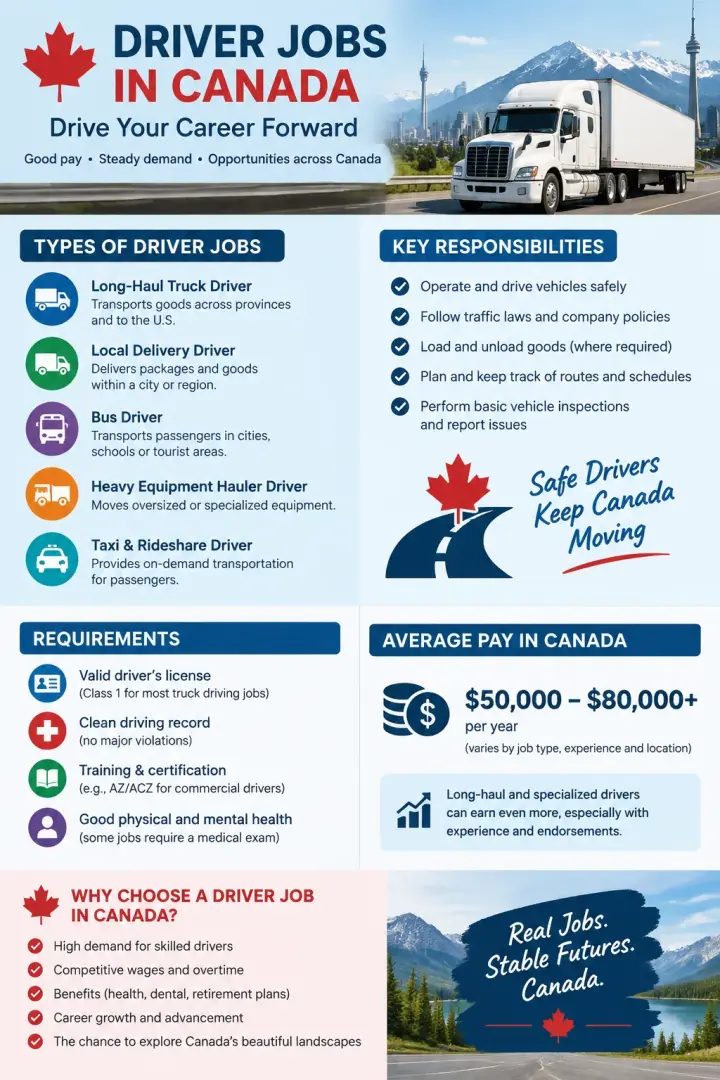
Types of Driver Jobs in Canada
Not every driving job requires a commercial truck licence. Some employers hire drivers with a regular passenger vehicle licence, while others need specialized training and experience.
Delivery driver jobs
Delivery drivers bring parcels, food, groceries, furniture and other goods to homes or businesses. Depending on the job, you might drive a company van, a larger delivery truck or your own vehicle.
Local delivery work can be a good fit if you want a predictable service area and prefer being home at night. That said, the work isn't always just driving. Loading packages, climbing stairs, finding parking and meeting delivery targets can take up a big part of the day.
Before applying, check whether the employer provides the vehicle and pays for fuel. If you're expected to use your own car, those costs can make a real difference to your take-home income.
Truck driver jobs
Truck drivers move goods between warehouses, stores, construction sites, ports and other destinations. Jobs range from local routes to long-haul trips across Canada or into the United States.
Common options include:
- Local trucking, often with daily home time
- Regional routes covering a larger area
- Long-haul freight with overnight trips
- Flatbed, refrigerated or tanker hauling
- Dump truck and construction-related driving
Truck driving requirements depend on the vehicle, the province or territory and the type of load. Some jobs also call for experience with trailers, load securement or specialized equipment.
Bus driver jobs
Bus drivers work for school transportation companies, public transit systems, tour operators and private shuttle services. Along with driving safely, they're responsible for helping passengers and following set routes or schedules.
School bus roles may offer a split shift, with work in the morning and afternoon. Transit and coach jobs can involve evenings, weekends or holidays. Employers may require a passenger-vehicle licence class, a medical assessment, training and background checks, depending on the position and location.
Taxi and rideshare driver jobs
Taxi and rideshare work can appeal to people who want a more flexible schedule. Requirements vary by municipality, province and platform, so check the rules where you plan to work. You may need a particular licence, vehicle inspection, insurance coverage or local permit.
It's worth looking closely at the numbers before you start. Fuel, insurance, maintenance, cleaning and platform fees can reduce what you keep. Driving during busy periods may help, but demand and earnings aren't guaranteed.
Courier and specialized driving jobs
Courier drivers handle documents, medical supplies, parcels and other time-sensitive deliveries. Other specialized roles include tow truck operation, waste collection and accessible transportation. These jobs can require extra training, endorsements or customer-service skills.
What Licence Do You Need to Drive for Work?
Canada doesn't use one licence system for every province and territory. Licence classes and requirements vary, so always check with the licensing authority where you live and with the employer advertising the job.
A regular passenger vehicle licence may be enough for some car and small-van delivery jobs. Larger trucks, tractor-trailers and buses generally require a commercial licence in the appropriate class. For example, a tractor-trailer licence is called Class A in Ontario and Class 1 in several western provinces.
Depending on the role and location, you may also need:
- A medical examination or vision test
- Written and road tests
- Approved commercial driver training
- An air brake endorsement
- A clean or acceptable driver abstract
- Additional training for the goods or passengers you carry
Some provinces require mandatory entry-level training for certain commercial licences. Requirements can change, so check the current rules before paying for a course. Also ask training schools what their fees include, whether testing is separate and what happens if you need another attempt.
If you're moving to Canada or have a licence from another country, don't assume it can be exchanged directly for the Canadian licence you need. Contact your provincial or territorial licensing authority to understand the exchange process and any testing requirements.
How Much Do Driver Jobs Pay in Canada?
Driver pay varies widely. The vehicle, location, schedule, experience and employment arrangement all matter. A local delivery job paid by the hour can look very different from a long-haul position paid by distance or a rideshare role with variable earnings.
Instead of relying on a single national salary figure, look up current listings and wage information for your occupation and region on Canada's Job Bank. Compare several ads, and check whether the rate shown is hourly, annual, per trip or per kilometre.
When comparing offers, ask about:
- Paid training and orientation
- Overtime eligibility and how it's calculated
- Waiting time, loading time and layover pay
- Benefits, vacation and sick leave
- Bonuses and the conditions for earning them
- Fuel, insurance and vehicle expenses
Honestly, a higher advertised rate isn't always the better deal. If one employer pays for loading and waiting while another doesn't, the lower-looking rate could still lead to better earnings for your actual hours.
Employment and overtime rules depend on the job and whether the employer falls under federal or provincial employment standards. Interprovincial trucking is often federally regulated, while many other driving jobs fall under provincial rules. Check the applicable standards if you're unsure.
Where to Find Driver Jobs in Canada
Start with a few sources rather than applying to the first listing you see. Search using the job title, city and licence class you have or plan to get.
- Canada's Job Bank: Search for openings and explore wage information by occupation and region.
- Employer websites: Check careers pages for trucking companies, courier services, retailers, transit agencies and school bus operators.
- Job boards: Use established Canadian job sites and set alerts for terms such as “delivery driver,” “Class 1 driver” or “school bus driver.”
- Local contacts: Ask training schools, professional contacts and local employers about openings.
- Staffing agencies: Some agencies recruit for delivery, warehouse and commercial driving roles. Verify the agency before sharing personal documents.
Try searches like “driver jobs in Toronto,” “truck driver jobs in Alberta” or “delivery driver jobs in Vancouver.” If you're open to different locations, compare housing costs and commute times alongside the advertised pay.
How to Apply for a Driving Job
A straightforward application usually works best. Employers want to know whether you're qualified, reliable and comfortable with the work the role involves.
1. Put your licence details near the top
List your province, licence class and any relevant endorsements. If you have air brake certification or training for a particular vehicle, make it easy to find. Don't claim a qualification you haven't earned.
2. Show relevant experience
Include the vehicles you've driven, the kinds of routes you've handled and any related tasks, such as loading, inspections or customer deliveries. If you're new to professional driving, mention relevant training and other work that demonstrates reliability or customer service.
3. Prepare your documents
An employer may ask for a driver abstract, references or proof of training. Some positions require a criminal record check or medical information through an appropriate process. Ask what is needed and how your information will be handled before sending sensitive documents.
4. Read the job description carefully
Check the schedule, physical requirements and travel expectations. A job described as local may still involve early starts, overtime or occasional overnight trips. If anything is unclear, ask before the interview.
Questions to Ask Before Accepting an Offer
A driving job affects more than your paycheque. It also shapes your daily routine, time at home and out-of-pocket costs. These questions can help you spot details that may not appear in the ad:
- Am I an employee or an independent contractor?
- Who provides and maintains the vehicle?
- What hours are paid, including loading, waiting and training?
- How often will I be home overnight?
- Are routes assigned in advance, and can schedules change?
- What insurance coverage applies while I'm working?
- What safety procedures are in place for bad weather or vehicle problems?
- Are there deductions or costs I should know about?
If you're considering contractor work, understand your responsibility for taxes, expenses and insurance. The label in a contract isn't necessarily the only factor that determines employment status. When in doubt, get advice from the relevant government agency or a qualified professional.
Driving Safely in Canadian Conditions
Winter deserves a mention. Snow, freezing rain, reduced visibility and long distances can make a familiar route much harder. Before taking a job, ask how the company handles winter tires, trip planning, roadside assistance and decisions to delay a trip when conditions are unsafe.
Commercial drivers also need to follow applicable hours-of-service and recordkeeping rules. These rules vary by operation and jurisdiction, so get clear training from your employer rather than guessing. Pre-trip inspections, secure loads and enough rest are part of the job, not optional extras.
Watch Out for Job Scams
Legitimate-looking driving ads can be used to collect personal information or money. Be cautious if someone promises a guaranteed job or immigration status, pressures you to act immediately, or asks you to pay for an offer. Verify the company through its official website and contact details.
Don't send banking information, identity documents or payment to an unverified recruiter. For immigration or work permit questions, use official Government of Canada resources or speak with an authorized immigration representative.
Frequently Asked Questions
Can I get a driver job in Canada without experience?
Yes, some employers hire new drivers, especially for certain delivery and entry-level roles. You'll still need the appropriate licence and must meet the employer's insurance and safety requirements. Some commercial employers offer training, but others ask for previous experience.
Do I need my own vehicle for a delivery job?
Not always. Some companies supply a van or truck; others expect you to use your own vehicle. Confirm who pays for fuel, maintenance and insurance before accepting the job.
Can newcomers apply for driver jobs in Canada?
Newcomers can apply if they have authorization to work in Canada and meet the licence and employer requirements. Licence exchange rules and commercial training requirements vary by province or territory. A job offer alone doesn't guarantee a work permit.
Which driver jobs let you stay close to home?
Local delivery, municipal transit, school bus and some local trucking jobs may offer regular home time. Schedules still vary, so ask about shifts, overtime and overnight work when you interview.
Finding the Right Driving Job
Start with your licence, the hours you want and the distance you're willing to travel. Then compare the full offer—not just the headline pay. A few good questions about expenses, safety and scheduling can help you find a driving job that fits your life as well as your skills.