

Cleaning Staff Jobs in Australia: What to Expect and How to Apply
Cleaning staff jobs are available across Australia, from small offices and local schools to hotels, hospitals and large industrial sites. Some roles offer a straightforward entry point for people with little experience. Others call for specialist training, security checks or the ability to work with particular equipment.
If you’re looking for steady work, a casual shift or a way to get started in a new industry, cleaning can be worth considering. The key is knowing what the job actually involves, checking the pay and conditions, and finding a workplace that treats its staff fairly.
What Do Cleaning Staff Do?
Cleaning staff keep indoor and outdoor spaces clean, safe and ready to use. The exact tasks depend on the workplace. An office cleaner’s shift will look quite different from a hospital cleaner’s day or a hotel room attendant’s workload.
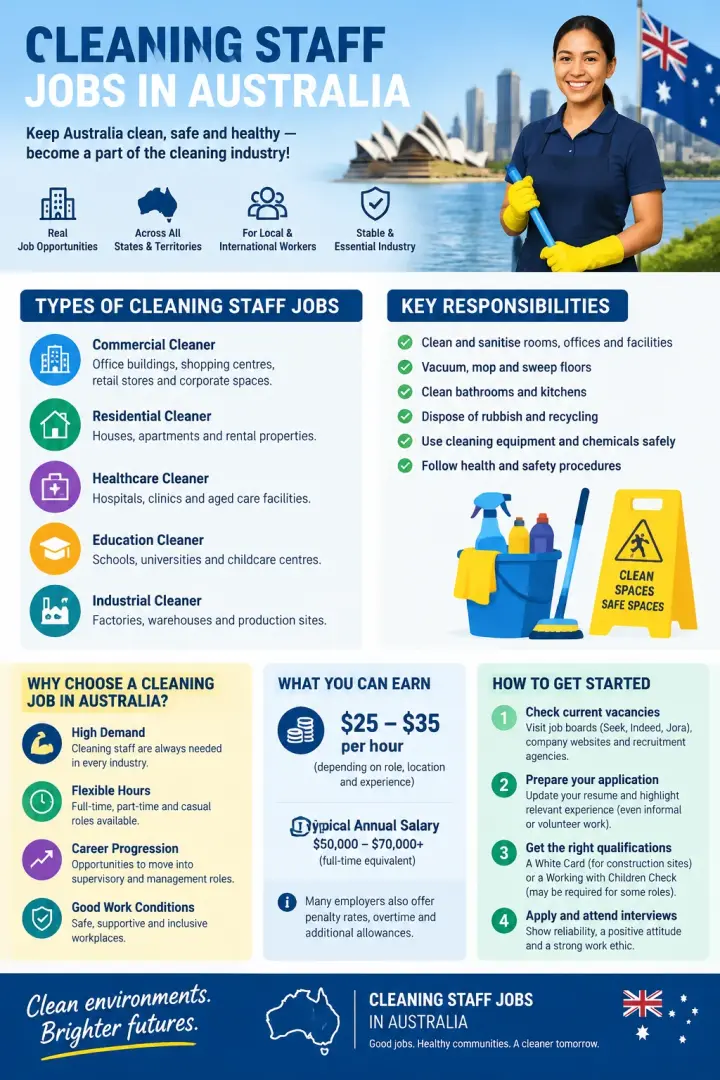
Common duties include:
- Vacuuming, sweeping and mopping floors
- Dusting desks, shelves and other surfaces
- Cleaning and restocking bathrooms
- Emptying bins and replacing liners
- Wiping down kitchens, break rooms and shared areas
- Cleaning windows and glass surfaces
- Using cleaning products and equipment safely
- Reporting damage, spills or maintenance issues
Some jobs also involve laundry, changing bed linen, operating floor scrubbers or following detailed hygiene procedures. It’s physical work, so employers often look for people who can stay on their feet, move between rooms and handle repetitive tasks.
Types of Cleaning Jobs in Australia
There’s more variety in this field than people sometimes expect. Before applying, think about the setting and schedule that would suit you best.
Office and commercial cleaning
Commercial cleaners work in offices, shops, warehouses and other business premises. Shifts may take place early in the morning or after staff have gone home. Duties usually include floors, bathrooms, kitchens, desks and bins.
These jobs can suit people who prefer a regular routine or want shifts outside standard business hours. You may work alone at a small site or as part of a team at a larger one.
Hotel housekeeping and room attendant jobs
Hotel cleaners and room attendants prepare guest rooms and keep shared spaces tidy. Tasks often include making beds, replacing towels, cleaning bathrooms and checking that supplies are stocked.
Hotels can be busy on weekends and public holidays. Room attendants may also have a set number of rooms to prepare during a shift, so it’s worth asking about workload and training before accepting a job.
School and childcare cleaning
School cleaners help maintain classrooms, bathrooms, halls and other facilities. Many shifts take place before or after students are on site, although hours vary. Childcare centres also need thorough cleaning of play areas and shared surfaces.
Depending on the role and location, you may need a Working with Children Check or another state or territory clearance. The employer should tell you which checks apply.
Hospital and aged care cleaning
Cleaners in hospitals, medical centres and aged care facilities follow site-specific hygiene and infection-control procedures. This may include using designated products, handling waste correctly and cleaning high-touch areas more frequently.
These roles can involve extra training and screening. Some positions in disability services may also require an NDIS Worker Screening Check, depending on the role and applicable rules.
Domestic cleaning
Domestic cleaners work in private homes, doing tasks such as vacuuming, mopping, bathroom cleaning and kitchen cleaning. Some are employed by cleaning businesses, while others run their own business.
Travel between homes is common, so check whether you need a driver’s licence, a car or your own equipment. If you’re considering contracting, make sure you understand the difference between being an employee and operating a genuine business.
Industrial and specialist cleaning
Industrial cleaners may work in factories, construction sites or other demanding environments. Specialist roles can include carpet cleaning, window cleaning or operating commercial machinery. Depending on the work, you may need additional training, a licence or a site-specific safety induction.
Do You Need Experience or Qualifications?
Many entry-level cleaning jobs in Australia don’t require formal qualifications. Employers may provide training on products, equipment and site procedures. That said, a reliable attitude and willingness to learn matter just as much as a polished résumé.
Useful skills include:
- Attention to detail
- Good time management
- Clear communication
- Following instructions and safety procedures
- Working independently or as part of a team
- Physical fitness for the duties involved
- Respecting privacy and securing client property
If you’ve worked in hospitality, retail, caring or another hands-on role, you may already have relevant skills. Even experience keeping shared spaces clean in a volunteer role can help demonstrate your approach.
For some jobs, a police check, right-to-work documents, references or a driver’s licence may be requested. Ask which requirements are essential before paying for a check or course.
Cleaning Staff Pay and Employment Conditions
Cleaning wages in Australia depend on the role, employer, location, employment type and the award or agreement that applies. There isn’t one reliable hourly rate for every cleaner, and advertised figures can change. Some listings show a casual rate that includes casual loading, while others quote a base rate.
When comparing offers, check:
- Whether the role is full-time, part-time or casual
- The hourly rate and whether casual loading is included
- Any applicable weekend, public holiday or night penalty rates
- Minimum shift lengths and relevant allowances
- Whether travel between sites is part of paid work
- Leave entitlements and superannuation
- Which award or enterprise agreement covers the job
The Fair Work Ombudsman website has current information on minimum pay, awards and workplace entitlements. The Cleaning Services Award covers many cleaning roles, but it doesn’t cover every cleaner. For example, a cleaner employed directly by a hotel or another type of business may be covered by a different award or agreement. Check the details of your own job rather than assuming one rate applies everywhere.
Permanent employees and casual employees have different entitlements. If an advertisement is unclear, ask for the employment terms in writing. Honestly, a quick conversation about pay and hours before you start can save a lot of confusion later.
Where to Find Cleaning Jobs in Australia
Cleaning vacancies are advertised by employers, recruitment agencies and government employment services. Try several sources instead of relying on just one.
- Workforce Australia: Search for vacancies and employment support services.
- Job websites: Look on sites such as SEEK, Indeed and Jora using your suburb or postcode.
- Company websites: Check the careers pages of cleaning contractors, hotels, hospitals, universities and aged care providers.
- Local businesses: Smaller cleaning companies may advertise on community noticeboards or accept direct enquiries.
- Personal contacts: Let friends and former colleagues know what hours and locations you’re available for.
Try search terms such as “cleaning jobs near me”, “office cleaner jobs”, “hotel housekeeping jobs” and “school cleaner jobs”. Add your city or suburb to narrow the results. If you’re looking in a regional area, include nearby towns and check how far you’d need to travel between sites.
One quick note: if you see the same vacancy on several sites, apply through the employer’s preferred channel and keep a record of where you sent your details.
How to Apply for Cleaning Staff Jobs
A good application doesn’t need to be fancy. It needs to show that you can do the work, turn up on time and follow instructions.
Make your résumé relevant
Put your contact details, location and availability near the top. Include previous jobs, the tasks you performed and any relevant training. If you have cleaning experience, be specific: mention the types of sites, equipment or procedures you’ve used.
New to paid cleaning work? Focus on transferable skills. For example, a hospitality role might show that you can maintain hygiene standards, work quickly and handle busy periods.
Write a short, practical cover note
Explain which role you’re applying for and why it suits you. Mention your availability, relevant experience and any requirements you meet, such as holding a driver’s licence. Keep it honest: if you haven’t used a floor machine before, say you’re willing to learn rather than claiming experience you don’t have.
Prepare for the interview
An employer might ask how you prioritise tasks, what you’d do if you found a spill, or how you’d handle a customer complaint. They may also ask about weekend availability and whether you’re comfortable working alone.
Bring questions of your own. Ask who provides equipment, how training works, how many sites you’ll visit and what a typical shift looks like.
Safety and Working Conditions
Cleaning can involve wet floors, manual handling, chemicals and equipment. A responsible employer should explain the hazards, provide appropriate training and supply any required personal protective equipment for the work.
Read product labels and follow the workplace’s instructions. Never mix cleaning chemicals unless the product instructions and workplace procedures specifically allow it. Some combinations, including bleach and ammonia, can release dangerous fumes.
If you’re unsure how to use a product or machine, ask before starting. You should also know how to report hazards, injuries and faulty equipment. Work health and safety rules are administered by state and territory regulators, so check your local regulator if you need guidance.
Employee or Contractor: What’s the Difference?
Some cleaning businesses hire employees; others engage independent contractors. The label in an advertisement isn’t enough on its own to determine the arrangement. The actual terms and how the work is performed matter.
If you’re offered contractor work, ask about payment, insurance, equipment, invoicing and who sets the schedule. Having an Australian Business Number, or ABN, can be relevant when running a genuine business, but an employer shouldn’t simply require one to avoid employee obligations.
If the arrangement doesn’t sound clear, check guidance from the Fair Work Ombudsman and the Australian Taxation Office. You can also seek independent advice before signing a contract.
How to Spot a Questionable Job Advertisement
Most employers are simply looking for dependable staff, but it’s still sensible to check an offer carefully. Be cautious if someone asks you to pay an upfront fee to secure a job, requests sensitive financial information before there’s a legitimate reason, or promises unusually high pay without explaining the work.
Look up the business independently, confirm who will employ you and ask for written details of the role. If you’re asked to complete a trial, clarify what it involves and whether it should be paid. The Fair Work Ombudsman has guidance on unpaid work trials.
Career Progression for Cleaners
Cleaning doesn’t have to be a stopgap. With experience, you may be able to move into team leader, supervisor, quality assurance or site management roles. Others choose specialist work or build a cleaning business of their own.
If progression matters to you, ask prospective employers whether they provide training, support with equipment skills or opportunities to supervise a team. A workplace that invests in its staff can make a real difference over time.
Frequently Asked Questions About Cleaning Jobs
Can I get a cleaning job with no experience?
Yes. Many entry-level positions provide on-the-job training. Show that you’re reliable, willing to learn and available for the advertised hours. Skills from hospitality, retail or other practical work can also strengthen your application.
Are cleaning jobs available part-time or on weekends?
Yes. Cleaning businesses hire for full-time, part-time and casual roles. Early mornings, evenings and weekends are common in some settings, but schedules vary by employer and site.
Do I need a police check to work as a cleaner?
Not always. Some employers request one because staff work in private homes, secure buildings or sensitive environments. Other roles may require additional checks. Confirm the requirements with the employer before applying or paying for screening.
Can international students apply for cleaning jobs?
International students with permission to work may be able to apply. Check your visa conditions, including any limits on working hours, through the Department of Home Affairs. Employers must also check that workers have the right to work in Australia.
What should I bring to a cleaning job interview?
Bring a copy of your résumé, contact details for referees and any relevant licences or certificates. The employer may also ask for identification and evidence of your right to work. It’s fine to ask in advance what documents they need.
Ready to Start Your Search?
Start by deciding which settings, hours and travel distances work for you. Then compare vacancies, tailor your résumé and check the pay and conditions before accepting an offer. Whether you’re after your first cleaning job or a move into specialist work, there are opportunities across Australia for people who take pride in doing the job well.