


Packing staff jobs keep products moving, from fresh fruit headed to market to online orders on their way to customers. If you're looking for work in South Africa and prefer a practical, hands-on role, packing could be a useful place to start. Some employers welcome applicants with little or no experience, while others look for warehouse, food-handling or machine-operating skills.
Here's what the work involves, where to look for vacancies and how to put together an application that stands out for the right reasons.
What are packing staff jobs?
Packing staff prepare goods for storage, transport or sale. Depending on the workplace, you might put products into boxes, check labels, count items, seal containers or prepare orders for delivery. Job titles vary, so you may also see vacancies advertised as packer, warehouse packer, production packer, order picker and packer, or packaging assistant.
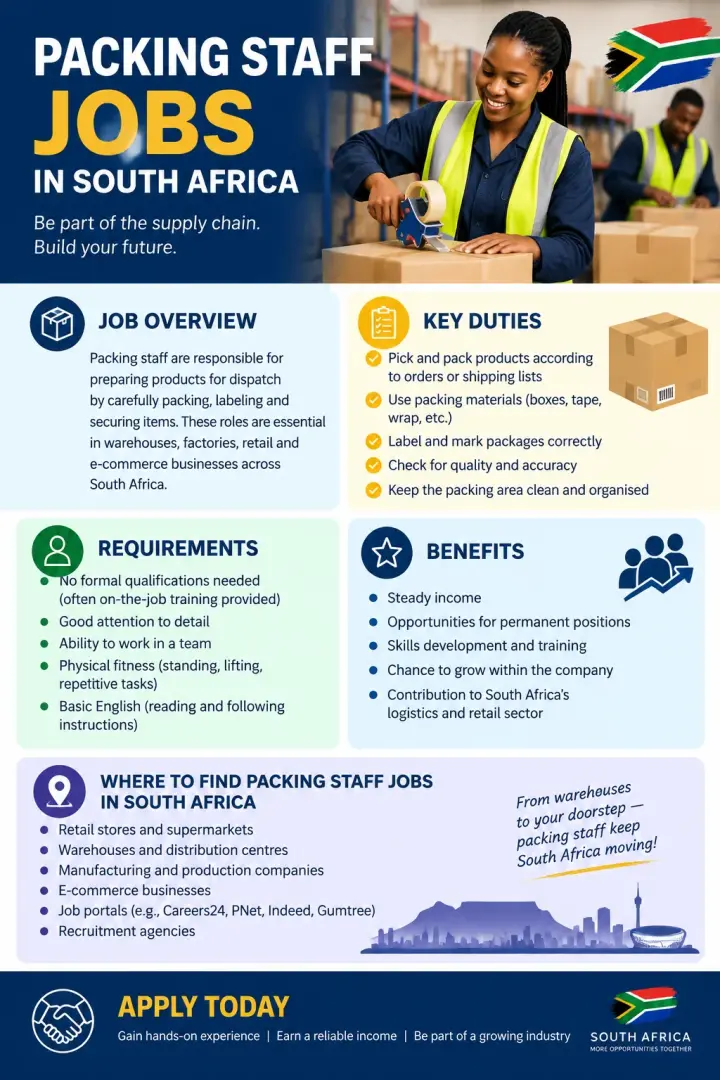
Not every packing job is the same. A fruit packer on a farm will have a different day from someone packing clothing in a distribution centre. Some roles involve standing at a production line, while others include walking through a warehouse to collect items for customer orders.
What does a packer do?
The daily tasks depend on the employer and the product, but packing staff commonly:
- Count, sort and pack items according to instructions.
- Check products for damage, defects or incorrect quantities.
- Fold boxes, seal packages and attach labels.
- Pick items from shelves and prepare customer orders.
- Keep workstations clean and follow hygiene rules.
- Use simple equipment, such as scales, scanners or sealing machines, after receiving training.
- Report damaged goods, safety concerns or stock shortages to a supervisor.
- Help meet daily production or dispatch targets.
Accuracy matters as much as speed. A parcel sent to the wrong address or a box packed with the wrong items creates extra work for everyone. Honestly, being dependable and paying attention to the small details can make a real difference in this kind of job.
Types of packing jobs in South Africa
Warehouse and distribution packers
Warehouse packers prepare stock for shops, businesses or individual customers. You might work with a handheld scanner, check an order list and pack goods for dispatch. Some positions combine picking and packing, so expect to spend time on your feet and possibly move between shelves throughout the shift.
Food and fresh produce packers
Food packing jobs can be found at farms, packhouses, food factories and distribution facilities. Tasks may include sorting fruit, packing vegetables, checking dates or sealing prepared products. Hygiene is especially important, and some workplaces require protective clothing or work in cool environments.
Fresh produce work can be seasonal. A vacancy linked to a harvest may last for a limited period, so check the expected start and end dates before accepting an offer.
Factory and production packers
Production packers work alongside manufacturing teams to package finished goods. Products might include cleaning supplies, household items or cosmetics. Depending on the job, you'll check packaging, place items into cartons and keep an eye out for damaged goods. Some factories run day and night shifts.
E-commerce order packers
Online retailers and fulfilment centres need staff to prepare individual orders. These roles often involve checking product codes, packing items securely and printing or attaching delivery labels. Order volumes can rise around sales events and holidays, which may create temporary opportunities.
Specialised packaging roles
Some employers pack products with strict handling requirements, including medical supplies or pharmaceuticals. These positions may require particular training, experience or documented procedures. Read the job advert carefully rather than assuming every packing role is entry-level.
Where to find packing jobs in South Africa
Vacancies appear across the country, especially near industrial areas, farms, ports and distribution hubs. Gauteng has many warehouses and manufacturing businesses, while the Western Cape has opportunities in agriculture, food production and logistics. KwaZulu-Natal also has warehouse, manufacturing and distribution employers, including around Durban.
Try a few different ways to find current openings:
- Search established job sites for “packing staff jobs”, “packer vacancies” and “picker and packer jobs”.
- Check company career pages for supermarkets, manufacturers, farms and logistics businesses.
- Look at verified recruitment agencies that place warehouse or factory staff.
- Ask about vacancies at local industrial parks, packhouses and employment offices.
- Use your network. Friends, neighbours and former colleagues may know which employers are hiring.
It helps to add your location to your search. For example, try “packing jobs in Johannesburg”, “packer jobs in Cape Town” or “warehouse packer vacancies in Durban”. Also search nearby towns and industrial areas if you're able to travel there.
Qualifications and skills employers look for
Some entry-level packing jobs don't require a formal qualification, while others ask for Grade 10, matric or previous experience. Requirements vary, so use the advert as your guide. If you don't meet every preferred requirement, you can still consider applying when you meet the essential ones.
Useful skills include:
- Attention to detail: Checking quantities, labels and product condition.
- Basic numeracy: Counting stock and following simple instructions.
- Reliability: Arriving on time and completing assigned work.
- Teamwork: Working with colleagues and communicating problems clearly.
- Physical readiness: Standing, walking or lifting within the requirements of the role.
- Safety awareness: Following workplace procedures and using equipment correctly.
If you've used a barcode scanner, worked on a production line or followed food-safety procedures, mention it. Employers may also value experience from retail, cleaning, farming or other hands-on work when it shows you can follow instructions and work as part of a team.
How much do packing staff earn?
Pay varies by location, employer, industry, experience and whether the job is permanent, temporary or seasonal. Some vacancies advertise an hourly rate, while others give a daily, weekly or monthly amount. Shift patterns, overtime and benefits can also affect what you take home.
South Africa's national minimum wage is reviewed and may change, and particular rules can apply in some sectors. Check the current rate and any relevant sector-specific rules with the Department of Employment and Labour before comparing an offer. Don't assume that two jobs with the same monthly figure have the same hours or benefits.
Before accepting a position, ask for the pay rate, normal hours, overtime arrangements, payment frequency and any deductions in writing. If transport or meals are offered, clarify whether they're free or deducted from your pay.
Working hours and conditions
Packing work can involve early starts, late shifts, weekends or public holidays, depending on the business. You may work in a busy warehouse, a refrigerated area, a factory or an outdoor-adjacent packhouse. Ask about the environment and whether the role involves lifting or repetitive movements.
Employers should provide a safe working environment and explain relevant procedures. Follow training, wear required protective equipment and report hazards or injuries promptly. Don't use machinery you haven't been trained or authorised to operate.
Employment conditions, including working time, leave and overtime, are governed by South African labour law, though the rules and their application can differ by circumstance. If you're unsure about an offer or your rights, contact the Department of Employment and Labour for guidance.
How to apply for packing staff jobs
1. Prepare a clear CV
Keep your CV easy to read and tailored to the vacancy. Include your contact details, location, education, work history and relevant skills. List the tasks you actually performed rather than relying on a job title alone. For example, “checked and packed customer orders” tells an employer more than simply writing “assistant”.
If you haven't had a formal job, include relevant school activities, volunteering or practical work that demonstrates reliability, teamwork or basic counting. Be honest about your experience and qualifications.
2. Follow the application instructions
Some employers ask you to apply online; others accept email applications or CVs at a specific location. Send the requested documents, use the job reference number if one is provided and double-check your phone number. A short message saying which position you're applying for is usually enough unless the advert asks for a cover letter.
3. Prepare for the interview
You may be asked whether you can work shifts, how you handle repetitive tasks or what you'd do if you noticed a damaged product. Give straightforward answers and use examples where you can. Ask about transport, training, the contract and the expected start date too.
If a physical task or assessment is part of recruitment, ask what it involves and let the employer know about any accommodation you may need.
How to spot packing job scams
Real job searches can be stressful, and scammers take advantage of that. Be cautious if someone promises immediate employment but pressures you to act before you can check the details.
- Be wary of requests to pay an upfront fee for a job, interview, uniform or placement.
- Check the employer's official website and contact details independently.
- Look closely at email addresses and messages with vague job descriptions or unrealistic pay.
- Don't share banking details, copies of identity documents or other sensitive information until you've verified who is requesting them and why.
- Never share your banking password or one-time PIN.
If something feels off, pause and verify it. You can contact the company using a number from its official website rather than the number in a suspicious message.
Frequently asked questions
Can I get a packing job without experience?
Yes, some employers offer entry-level packing positions and provide on-the-job training. Highlight transferable skills such as punctuality, teamwork, counting and following instructions. Check each advert, because some roles do require previous experience.
Do I need matric to work as a packer?
Not always. Education requirements differ between employers and positions. Some ask for matric, while others accept a lower grade or focus on practical skills and experience.
Are packing jobs permanent or temporary?
Both are available. Warehouses and factories may hire permanent staff, while farms and retailers may recruit temporary or seasonal workers during busy periods. Confirm the contract length and employment conditions before you accept.
What's the difference between a picker and a packer?
A picker collects the correct items from storage; a packer checks and prepares those items for dispatch. Some employers combine both duties in one role, often called a picker and packer.
Getting started
Start with a simple, accurate CV and search for vacancies close enough to reach reliably. Compare the duties, hours and pay before applying, and keep track of the applications you send. Packing staff jobs in South Africa can be a starting point for building experience in warehousing, production or logistics, but the right opportunity is one that fits your circumstances and offers clear, fair terms.