

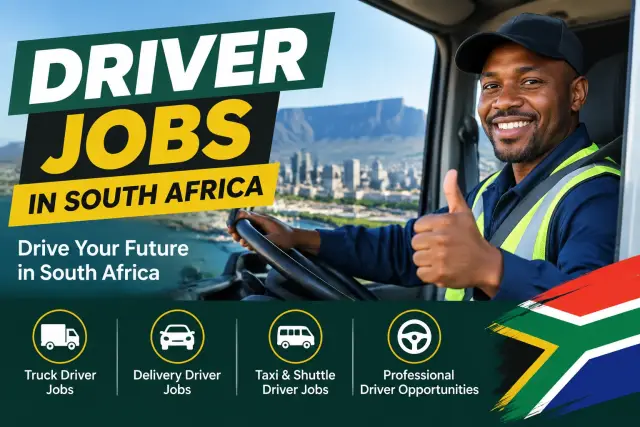
Driver jobs in South Africa can be a good fit if you enjoy being on the road, working independently and dealing with different people. Opportunities range from local deliveries and courier work to long-distance trucking, passenger transport and specialist vehicle operations.
The right job depends on more than the licence in your wallet. Employers also look at your driving record, experience, reliability and, for certain roles, whether you have a valid Professional Driving Permit (PrDP). Here’s what to know before you start applying.
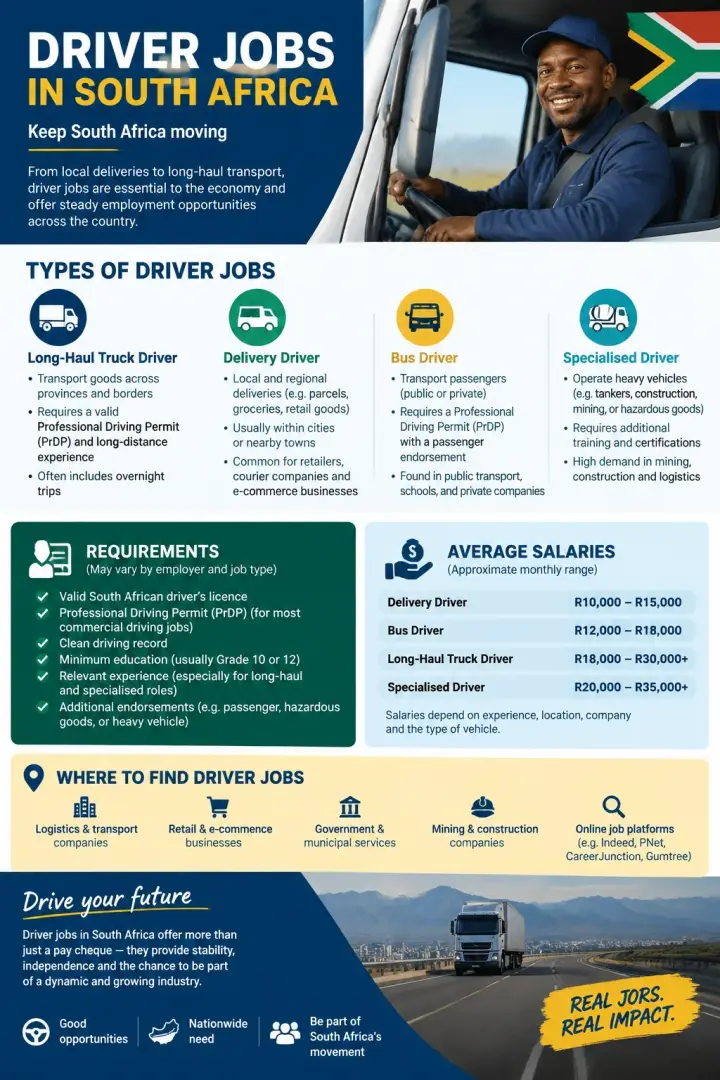
Types of driver jobs in South Africa
Not every driving job involves a big truck or nights away from home. Some roles keep you close to your neighbourhood, while others take you across provinces or even into neighbouring countries.
Delivery driver jobs
Delivery drivers transport goods to homes, offices, shops and warehouses. You might deliver groceries, parcels, furniture, building supplies or restaurant orders. Depending on the employer and vehicle, a Code B, C1 or another suitable licence may be required.
These jobs often involve more than driving. You may need to load goods, follow a delivery schedule, collect signatures and deal with customers. Physical fitness helps when packages are heavy.
Courier driver jobs
Courier drivers usually handle multiple collections and deliveries in a day. You’ll need to plan routes, use a smartphone or scanner and keep parcels secure. Some companies provide a vehicle, while others advertise roles for drivers with their own reliable car, bakkie or motorbike.
If you’re using your own vehicle, ask who pays for fuel, insurance, servicing and repairs. A payment that sounds attractive can look very different once those costs come off.
Truck driver jobs
Truck drivers move freight for retailers, manufacturers, construction companies and logistics businesses. Work can include local distribution, regional routes or long-distance trips. Some positions require overnight stays, weekend work or early starts.
The licence you need depends on the truck and trailer combination. Heavy articulated vehicle jobs commonly require a Code EC licence, relevant experience and a PrDP where applicable. Employers may also ask for knowledge of vehicle inspections, load safety and delivery paperwork.
Bus, taxi and shuttle driver jobs
Passenger transport roles include bus driving, staff shuttles, school transport, tourism transfers and other paid passenger services. These jobs suit people who can stay calm in traffic and communicate well with passengers.
A suitable licence is essential, and a PrDP is required for many professional passenger transport roles. Employers may also have their own rules on experience, background checks and familiarity with local routes.
Chauffeur and ride-hailing jobs
Chauffeurs and ride-hailing drivers transport individuals or small groups. Punctuality, a clean vehicle and good customer service matter just as much as confident driving. Hours can be flexible, although evenings, weekends and busy periods may offer more work.
Before signing up with a platform or transport company, check its vehicle standards, permit requirements, insurance conditions and commission structure. Local operating rules may also apply.
Specialist driver jobs
Some employers need drivers for tankers, refrigerated vehicles, vehicle recovery, construction sites or hazardous goods. These roles can require extra training and experience. Don’t assume that holding a heavy vehicle licence alone qualifies you to transport every type of load.
Which driving licence do you need?
South African driving licence codes cover different vehicle types and weights. Always check the exact vehicle and job advertisement before applying. As a general guide:
- Code B: For light motor vehicles with a gross vehicle mass of up to 3,500 kg, subject to the relevant licence conditions.
- Code EB: Commonly used for light vehicles towing a heavier trailer, within the limits of the licence.
- Code C1: For certain medium-sized vehicles with a gross vehicle mass above 3,500 kg and up to 16,000 kg.
- Code C: For heavy motor vehicles, including vehicles above 16,000 kg gross vehicle mass.
- Code EC1 or EC: For qualifying articulated or vehicle-and-trailer combinations. The correct code depends on the vehicle combination and its weight.
Motorcycle delivery jobs require an appropriate motorcycle licence. If you’re unsure whether your licence covers a particular vehicle or trailer, confirm the details with a driving licence testing centre before accepting the job.
What is a Professional Driving Permit?
A PrDP is an additional permit for certain professional driving activities. It doesn’t replace your driving licence: you must still hold the correct licence for the vehicle.
You may need a PrDP when driving certain goods vehicles, transporting passengers for reward or carrying dangerous goods. The requirements depend on the vehicle, the load and the work you do. Check the job listing and confirm current rules with a driving licence testing centre or the official eNaTIS website.
The application process can include a medical assessment and background checks, depending on the permit category. Fees and processing times may vary, so ask your local centre what documents you need and how long the process is likely to take. Keep track of the expiry date if you already have a permit.
What employers look for in a driver
A valid licence gets you considered, but employers are also hiring someone they can trust with a vehicle, stock and sometimes passengers. Common requirements include:
- The correct, valid driving licence and a PrDP if the role requires one.
- A reliable driving history and relevant experience.
- Knowledge of road safety and basic vehicle checks.
- Good time management and the ability to follow routes or schedules.
- Clear communication with customers, dispatchers and colleagues.
- Careful handling of goods, paperwork and proof of delivery.
- Willingness to work shifts, weekends or overtime when required.
Some employers request a criminal record check, references or a driving assessment. Others may expect you to use navigation apps, delivery software or a handheld scanner. Read each advert closely rather than sending the same application everywhere.
How much do drivers earn in South Africa?
Driver pay varies widely. A local delivery driver’s package may look very different from a long-distance truck driver’s, and two jobs with the same title can have different hours and benefits.
Before accepting an offer, find out whether the amount advertised is a basic salary, an hourly rate, a per-trip payment or an estimate that includes commission and tips. Also ask about overtime, night work, allowances, deductions and benefits.
For owner-driver and platform work, calculate your likely take-home amount after fuel, vehicle finance, maintenance, tyres, insurance, data and any platform fees. Honestly, the headline figure is only part of the picture.
Employees should check the applicable minimum wage and employment conditions for their role. Rules can differ by sector and change over time, so consult the Department of Employment and Labour or get advice if anything in the offer is unclear.
Where to find driver jobs
Driver vacancies are advertised throughout South Africa, with opportunities around major cities, industrial areas, ports and distribution hubs. Johannesburg, Pretoria, Cape Town, Durban and Gqeberha are common places to search, but smaller towns also need delivery, passenger and agricultural drivers.
Try a mix of these sources:
- Online job boards and professional networking sites.
- Careers pages for logistics companies, retailers and courier services.
- Local recruitment agencies that place transport and warehouse staff.
- Supermarkets, wholesalers, construction suppliers and nearby businesses.
- Community noticeboards and local job groups, with careful checks for scams.
- Referrals from people who already work in transport.
Use specific search terms such as “Code 10 driver jobs”, “Code 14 truck driver jobs”, “delivery driver with own vehicle” or “driver jobs with PrDP”. Older licence code names are still commonly used in adverts, so check the actual licence requirements rather than relying on the search term alone.
How to apply for driver jobs
1. Put your licence details near the top of your CV
List your licence code, whether you have a PrDP and the types of vehicles you’ve driven. Include relevant experience with deliveries, passengers, long-distance routes, trailers or specialist loads. Don’t claim qualifications you don’t have.
2. Show what you did in previous roles
Instead of simply writing “driver”, describe the work. For example, mention whether you completed daily deliveries, checked loads, handled customer paperwork or kept a vehicle inspection log. If you have no formal driving experience, include other work that shows reliability, customer service or timekeeping.
3. Keep your documents ready
Employers may ask for your CV, identity document, driving licence, PrDP and references. Have clear copies available, but share personal documents only after checking that the employer and vacancy are legitimate.
4. Prepare for the interview or driving test
Be ready to explain your driving experience, the routes you know and how you handle delays, breakdowns or difficult customers. An employer may also ask you to complete a practical assessment or a basic vehicle inspection.
How to spot a driver job scam
Fake job ads can appear on social media, messaging groups and even legitimate-looking websites. Be cautious if someone asks you to pay upfront for a guaranteed job, training, a uniform or a vehicle release before you’ve verified the company.
Look up the business independently and contact it using the details on its official website. Be wary of vague job descriptions, unusually high pay for little work, pressure to act immediately or requests for banking information at the start of the process. Never share a bank PIN or one-time password.
Questions to ask before accepting a job
- What vehicle will I drive, and is my licence valid for it?
- Do I need a PrDP or any additional training?
- What are the normal hours, routes and expected overtime?
- Is the pay fixed, hourly, per trip or based on commission?
- Who pays for fuel, tolls, insurance and vehicle maintenance?
- Will I be an employee or an independent contractor?
- Am I expected to load goods or stay away overnight?
- What happens if the vehicle breaks down or a delivery is delayed?
Get the important terms in writing. A clear conversation now can save you a lot of frustration later.
Frequently asked questions about driver jobs
Can I get a driver job without experience?
Yes. Some entry-level delivery and assistant roles accept applicants with a valid licence and a good attitude. Competition can be strong, so highlight any customer service, navigation or time-management experience you have.
Do all driver jobs require a PrDP?
No. Whether you need one depends on the vehicle and the type of work. Check the requirements for the specific role, especially if you’ll transport passengers, dangerous goods or goods in a qualifying vehicle.
Can I work as a driver with my own car?
Some courier, delivery and ride-hailing opportunities allow it. You’ll usually need to meet the company’s vehicle and insurance requirements. Compare the earnings with your running costs before committing.
How can I improve my chances of getting hired?
Keep your licence and any required permit valid, tailor your CV to the vehicle and role, and apply through reputable employers. If you’re aiming for heavy vehicle or specialist work, build relevant experience and look into the appropriate training before applying.
There’s no single best driver job for everyone. Think about the hours you want, the vehicle you’re qualified to drive and the costs you’re prepared to carry. Then focus your search on roles that fit—and ask questions before you sign.