

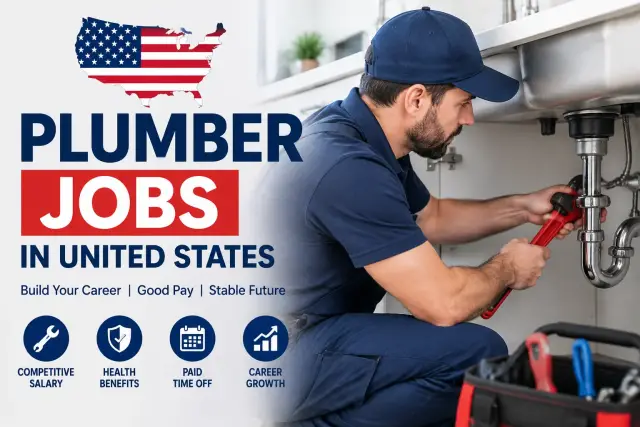
Plumber Jobs in the United States: Pay, Training, and How to Get Hired
Plumber jobs can be a good fit if you like working with your hands, solving problems, and seeing the results of your work at the end of the day. One day you might be fixing a leaking water heater. The next, you could be installing pipes in a new apartment building or helping a business get its water back on.
Plumbing can also offer a path into a skilled trade without necessarily spending four years in college. But it isn't a shortcut to easy money. Training takes time, licensing rules vary, and some jobs come with early mornings, cramped spaces, and emergency calls.
Here's what to know about finding plumber jobs in the United States, from entry-level opportunities to pay, apprenticeships, and career growth.
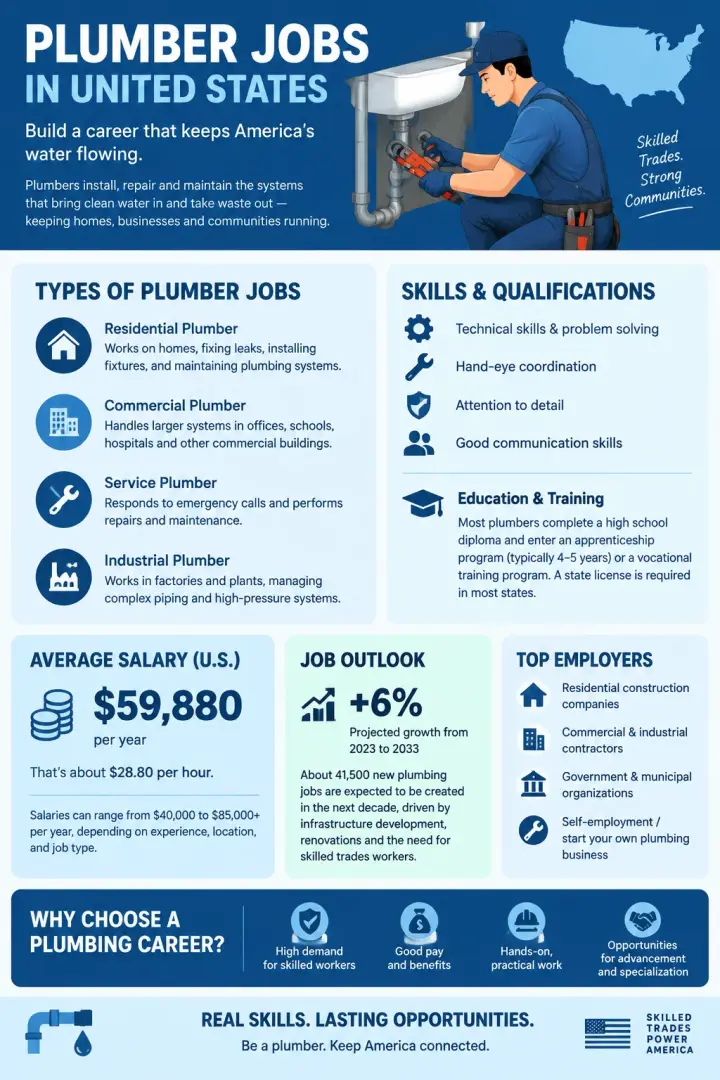
What Does a Plumber Do?
Plumbers install, repair, and maintain systems that carry water, waste, and, in some cases, gas. Their work ranges from small household repairs to large construction projects.
A plumber's daily tasks depend on the job, but they often include:
- Installing pipes, fittings, faucets, toilets, and water heaters
- Finding and repairing leaks or damaged pipes
- Clearing drains and diagnosing sewer line problems
- Reading blueprints and following building codes
- Testing systems for leaks and proper operation
- Explaining repair options and costs to customers
- Keeping tools, work areas, and vehicles organized
Some plumbers mainly work in homes. Others spend their days on construction sites, in hospitals, at factories, or in commercial buildings. The setting can make a big difference in your schedule and the skills you'll use most.
Types of Plumber Jobs
Residential plumber
Residential plumbers work in houses, apartments, and other homes. They handle repairs and replacements, as well as plumbing installations for new construction and remodels. If you enjoy talking to customers and tackling a different problem each day, this could be a good fit.
Commercial plumber
Commercial plumbers work on systems in places like offices, schools, restaurants, and shopping centers. These jobs can involve larger pipe systems, more fixtures, and projects that require coordination with other trades.
Service and repair plumber
Service plumbers respond to problems such as clogs, leaks, and broken water heaters. Many work directly with customers, so communication matters just as much as knowing your way around a pipe wrench. Some service roles include on-call or after-hours shifts.
Construction plumber
Construction plumbers install plumbing systems in new buildings or during major renovations. They're often part of a larger crew and may work alongside electricians, HVAC technicians, and other contractors.
Apprentice plumber
Apprentice plumbers learn the trade while working under qualified supervision. They help with installations and repairs, learn safety practices, and build the experience needed for the next stage of their careers. Apprenticeship is one of the most common routes into plumbing.
How Much Do Plumber Jobs Pay?
Plumber pay varies a lot by location, experience, employer, specialty, and schedule. An apprentice generally earns less than an experienced licensed plumber, while overtime and emergency calls can add to earnings. Union agreements and benefits can also affect the total value of a job offer.
As a rough illustration, some entry-level plumbing jobs may pay around $18 to $25 an hour, while experienced plumbers may earn $30 to $45 an hour or more. These aren't guaranteed rates, and actual offers can fall outside those ranges. High-cost areas may pay more, but living expenses can be higher too.
When comparing offers, look beyond the hourly rate. Ask about health insurance, retirement plans, paid time off, overtime, on-call pay, and whether the employer provides a vehicle, tools, or training. A job with a slightly lower base rate may still be the better deal once you add up the benefits.
For a broader pay reference, check the U.S. Bureau of Labor Statistics Occupational Outlook Handbook for plumbers, pipefitters, and steamfitters. Its figures cover a group of related occupations, so they won't tell you exactly what a particular plumbing job pays.
How to Become a Plumber in the United States
1. Finish high school or earn an equivalent credential
Many apprenticeship programs and employers ask for a high school diploma or equivalent. Basic math, reading, and problem-solving skills come in handy when measuring pipe, reading plans, and calculating material needs.
2. Explore apprenticeship and training options
Plumbing apprenticeships combine paid work with classroom instruction. Programs may be offered through contractors, unions, trade associations, or other approved sponsors. Many take several years to complete, depending on the program and local requirements.
Some people start with a vocational or community college program before applying for an apprenticeship. That's one option, but it isn't the only one. Before paying for a course, ask local employers and licensing authorities whether it will help meet the requirements in your area.
3. Build supervised experience
As an apprentice, you'll usually work under an experienced plumber while learning how to install, maintain, and repair systems safely. Keep track of your work hours and training records. You may need documentation when you apply for a license or move to another employer.
4. Check your licensing requirements
Plumbing licensing rules differ by state and sometimes by city or county. Many places require documented experience, an exam, or both before you can work independently as a journeyman plumber. The name of the license and the work it permits can vary too.
Don't assume a license automatically transfers when you move. Check with the state licensing board and the local building department where you plan to work. They can explain current requirements, application fees, and any reciprocity agreements.
5. Consider advanced credentials
With more experience, you may be able to pursue a master plumber license, a specialty credential, or a supervisory role. Requirements vary, so look up the rules before planning your next step. If you want to run your own business, you may also need a contractor license, insurance, and local permits.
Do You Need Experience to Get a Plumbing Job?
Not always. Apprentice and plumber helper jobs are designed for people who are still learning. Employers may care more about reliability, willingness to learn, basic tool familiarity, and the ability to work safely than a long list of plumbing jobs.
That said, entry-level openings can be competitive. A pre-apprenticeship course, construction experience, or a basic safety class may help you stand out. Some employers also require a valid driver's license, a background check, or a drug screening. Read each listing carefully rather than assuming every company has the same requirements.
Skills Employers Look For
Technical skills matter, but plumbing is also a job where showing up on time and communicating clearly can make a real difference. Common skills and qualities include:
- Practical problem-solving: Figuring out where a leak or blockage starts, not just treating the obvious symptom.
- Mechanical ability: Using hand tools, power tools, and testing equipment correctly.
- Physical readiness: Handling lifting, kneeling, climbing, and work in tight spaces as the job requires.
- Communication: Explaining problems to customers and coordinating with coworkers.
- Attention to detail: Taking accurate measurements and following plans, codes, and safety procedures.
- Dependability: Arriving on time, keeping commitments, and taking responsibility for your work.
One note about the list above: you don't need to be an expert in everything before applying for an apprenticeship. Employers expect apprentices to learn. Being honest about what you know is better than pretending you've done work you haven't.
Where to Find Plumber Jobs Near You
Start with job boards, but don't stop there. Some of the best leads come from local employers and training programs that hire regularly.
- Local plumbing companies: Check company career pages or contact shops directly about helper and apprentice openings.
- Union apprenticeship programs: Look for local training opportunities and ask about application dates and requirements.
- Registered apprenticeships: Search the U.S. Department of Labor's Apprenticeship.gov website for programs in your area.
- Construction contractors: Mechanical and construction firms may hire plumbing apprentices and experienced plumbers for larger projects.
- Schools and workforce centers: Community colleges, trade schools, and American Job Centers may know about local openings.
- Job search sites: Try searches such as “plumber jobs near me,” “plumbing apprentice jobs,” or “licensed plumber jobs” along with your city or state.
Before applying, check whether a listing is for service, new construction, or another specialty. Those jobs can have very different schedules and expectations, even when the titles look similar.
How to Apply for Plumbing Jobs
A straightforward résumé is usually enough. Put your relevant experience near the top, including construction work, maintenance, customer service, or any hands-on training. List your license and number if applicable, along with certifications, apprenticeship hours, and a valid driver's license if the employer asks for one.
If you're new to the trade, describe what you can bring to the crew. Maybe you've used hand tools, worked outdoors in different weather, or held a job where safety and punctuality mattered. Be specific without stretching the truth.
During the interview, ask questions that help you understand the actual job:
- What kind of plumbing work does the team do most often?
- Who supervises and trains apprentices?
- Are evenings, weekends, or on-call shifts required?
- How are overtime and emergency calls paid?
- Which tools or equipment will I need to provide?
- Does the company help pay for training, exams, or license renewal?
Honestly, those details can matter as much as the job title. A clear training plan and a supportive crew can make a big difference when you're starting out.
Working Conditions: The Good and the Tough Parts
Plumbing offers variety, practical skills, and the chance to earn while you train. You may also have opportunities to specialize, lead a crew, or eventually start a business. For people who don't want to sit at a desk all day, that variety is a big draw.
On the other hand, the work can be physically demanding. Plumbers may deal with dirty water, hot equipment, sharp tools, awkward spaces, and changing weather. Some service jobs require nights or weekends, and construction schedules can shift. Safety training and proper protective equipment matter on every job, not just the obviously dangerous ones.
It's worth asking about the day-to-day work before accepting an offer. A residential service position with emergency calls may feel very different from a weekday job on a commercial construction crew.
Career Growth for Plumbers
Many plumbers begin as helpers or apprentices and work toward a journeyman license where one is required. With more experience and the right credentials, they may become master plumbers, crew leaders, estimators, inspectors, project managers, or business owners.
Specializing can open doors too. Depending on local rules and training, plumbers may focus on areas such as commercial systems, backflow prevention, water heaters, or service diagnostics. Before investing in a credential, check whether local employers value it and whether it's required for the work you want to do.
Frequently Asked Questions About Plumber Jobs
How long does it take to become a plumber?
Many apprenticeships take several years, often around four to five, but the timeline depends on the program and local licensing requirements. Prior training or experience may count in some places. Check with your program sponsor and licensing authority for the details.
Can I become a plumber without going to college?
Yes. Many plumbers enter the trade through an apprenticeship rather than a four-year college degree. Apprenticeships still include classroom instruction, and some people choose to take courses at a trade school or community college.
Are plumber jobs available without a license?
Helper and apprentice positions may be available to people who aren't yet licensed, although registration or supervision may be required. Independent plumbing work is regulated in many locations. Check state and local rules before accepting a role or offering services on your own.
Is plumbing a good career?
It can be, especially if you enjoy hands-on work and don't mind a job that can be physically demanding. Pay, training, benefits, and schedules vary, so compare employers and talk to working plumbers in your area before deciding.
Start Your Search for Plumber Jobs
Whether you're looking for your first apprentice position or you're an experienced plumber ready for a change, start by checking local requirements and comparing the kinds of work available. Look closely at pay, benefits, training, and scheduling—not just the headline hourly rate.
If you're new, search for plumbing apprenticeships and helper jobs in your area, then reach out to local contractors or training programs. A few good questions now can help you find a job that fits where you want to go.