

Driver Jobs in the United States: A Practical Guide
Driver jobs come in all shapes and sizes. You might deliver packages around your neighborhood, drive a school bus, haul freight across the country, or bring groceries to people’s doors. Some roles get you home every evening. Others have you on the road for days or weeks.
The right fit depends on more than whether you like driving. Your schedule, license, pay expectations, and comfort with physical work all matter. Here’s a practical look at driver jobs in the United States, what they typically require, and how to find one that works for you.
What Do Driver Jobs Involve?
At the most basic level, drivers transport people or goods safely from one place to another. But the work often includes much more than time behind the wheel.
Depending on the job, you may load and unload products, check a vehicle before a trip, follow a delivery route, keep records, collect signatures, or help passengers get on and off. Some employers provide the vehicle and fuel. Others expect you to use your own car and cover certain expenses yourself.
Before applying, read the full job description. A position advertised as a driving job might also involve lifting heavy packages, working weekends, or making dozens of stops a day.
Popular Types of Driver Jobs
Delivery Driver Jobs
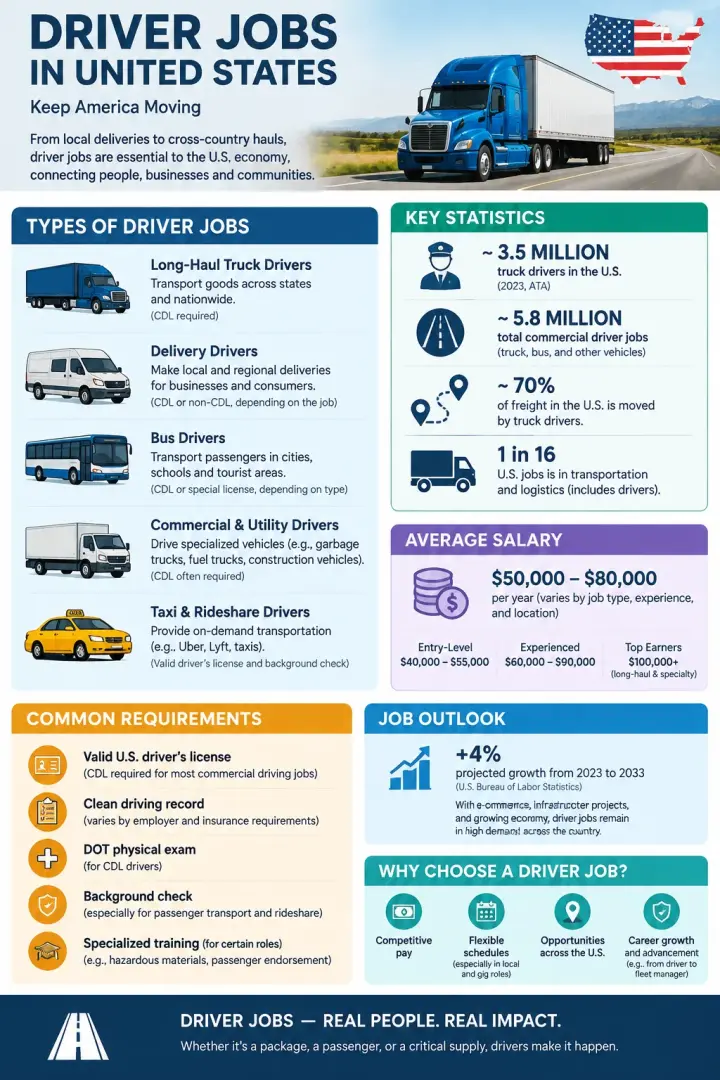
Delivery drivers transport packages, food, groceries, furniture, and other goods. Employers range from local restaurants and retailers to national shipping companies. Some drivers follow a set route, while others receive jobs through an app.
Requirements vary. A pizza delivery job may call for a valid driver’s license, a reliable car, and insurance. A package delivery company might provide a van but require you to pass a background check and meet physical requirements.
Delivery work can be a good option if you want local driving, but check how many stops you’ll make and whether loading is part of the job. Ask about evening, weekend, and holiday schedules too.
Truck Driver Jobs
Truck drivers move freight between warehouses, stores, factories, ports, and other locations. Many heavy truck jobs require a commercial driver’s license, or CDL.
Common truck driving schedules include:
- Local: Drivers usually work within a limited area and may return home each day.
- Regional: Routes cover a broader area, often across several states, with home time varying by employer.
- Over-the-road: Long-haul drivers travel farther and may spend extended periods away from home.
Truck driving can offer steady work, but schedules and working conditions vary a lot. Ask about wait times, loading duties, overnight stays, and how often drivers actually get home.
Bus Driver Jobs
Bus drivers transport passengers on school, city, shuttle, charter, and other routes. The job calls for patience, attention to safety, and the ability to work with the public.
Many bus positions require a CDL with a passenger endorsement. School bus drivers generally need a school bus endorsement as well, along with state and local screening or training. Some employers help new hires get the required credentials.
Schedules can be appealing if they match your life. School bus routes, for example, often run in the morning and afternoon, but the break between routes may be unpaid. Ask whether field trips, summer work, or extra hours are available.
Rideshare and Taxi Driver Jobs
Rideshare and taxi drivers take passengers to destinations ranging from airports to local appointments. App-based work may offer more control over when you log on, while taxi and chauffeur jobs can have set shifts or company-specific rules.
Requirements depend on the company and location. You may need to meet vehicle standards, pass a background check, and carry appropriate insurance. Some cities also require permits or special licenses.
Flexibility is useful, but don’t confuse the amount passengers pay with the amount you keep. Vehicle costs, platform fees, taxes, and time spent waiting for trips can all affect your earnings.
Other Driving Jobs to Consider
There are plenty of roles beyond the usual delivery and trucking listings. Depending on your experience and location, you might look for:
- Medical courier jobs transporting specimens or supplies
- Non-emergency medical transportation driver jobs
- Airport, hotel, or parking shuttle driver jobs
- Furniture and appliance delivery jobs
- Construction vehicle and dump truck driver jobs
- Moving company driver jobs
- Private chauffeur jobs
Each role has its own requirements. A medical courier may need to follow handling procedures, for example, while a moving driver may spend a significant part of the day lifting furniture.
Do You Need a CDL for a Driver Job?
No. Many delivery, rideshare, and courier positions can be done with a regular driver’s license. But you may need a CDL to operate certain large vehicles, transport enough passengers, or carry certain hazardous materials.
CDL classes are based on the type and size of vehicle and, in some cases, what it carries. For example, many large trucks with a gross vehicle weight rating of 26,001 pounds or more require a CDL. Passenger vehicles designed to transport 16 or more people, including the driver, generally require one too. Vehicle combinations and hazardous materials have additional rules.
Don’t assume a box truck never requires a CDL. Check the vehicle’s weight rating and the job requirements. State rules can also differ, so confirm the details with your state driver licensing agency.
How to Get a CDL
The process varies by state, but it generally includes studying the state CDL manual, passing knowledge tests, obtaining a commercial learner’s permit, practicing, and passing a skills test. You may also need a medical examiner’s certificate and additional endorsements.
Federal entry-level driver training requirements apply to certain first-time CDL applicants and people seeking particular upgrades or endorsements. Your state licensing agency and training provider can explain which steps apply to you.
For most interstate commercial driving, drivers must be at least 21. Some states allow qualifying drivers as young as 18 to drive commercially within the state. Other age, insurance, and employer requirements may apply.
Common Requirements for Driver Jobs
Even jobs that don’t require a CDL may have conditions you’ll need to meet. Depending on the position, an employer might ask for:
- A valid driver’s license and an acceptable driving record
- Proof of authorization to work in the United States
- A background check or drug test
- A vehicle inspection, if you’ll use your own car
- Auto insurance that covers the type of driving you’ll do
- The ability to lift packages or assist passengers
- A medical examination or certificate for applicable commercial driving roles
CDL jobs may also involve federal drug and alcohol testing and Drug and Alcohol Clearinghouse checks. Don’t assume state cannabis laws override federal rules for federally regulated drivers.
A less-than-perfect driving record doesn’t automatically rule out every job. Employers have different standards, so read the requirements carefully and answer application questions honestly.
How Much Do Driver Jobs Pay?
Driver pay varies widely by location, experience, vehicle, employer, and schedule. A local delivery driver paid hourly has a different pay setup from a long-haul trucker paid by the mile or an independent app-based driver paid per trip.
When comparing offers, look beyond the headline rate. Ask how pay is calculated and what happens during time spent waiting, loading, attending training, or driving back from a delivery. For an hourly position, check whether overtime is available and how it’s handled. Overtime rules and exemptions depend on the job and applicable law.
For app-based work or jobs that use your own vehicle, estimate your take-home earnings after fuel or charging, maintenance, tires, insurance, parking, and taxes. Those costs can make a big difference.
For current pay information, check recent listings in your area and wage data from the U.S. Bureau of Labor Statistics. Compare the same type of role in the same region whenever possible.
Employee or Independent Contractor?
Some driver jobs are employee positions, while others are offered as independent contractor work. The distinction can affect taxes, benefits, insurance, and who pays for equipment and expenses.
An employee may have access to benefits such as health insurance, paid time off, or retirement contributions, depending on the employer and eligibility. An independent contractor generally handles more of their own business expenses and tax obligations. The actual classification depends on applicable law and the working relationship, not just the label in an ad.
Before accepting an offer, ask for the pay terms in writing. If you’ll use your own vehicle, contact your insurer to confirm you have the right coverage. A personal auto policy may not cover every kind of commercial or app-based driving.
Where to Find Driver Jobs Near You
Start with job boards, company career pages, local delivery businesses, school districts, transit agencies, and trucking companies. Staffing agencies can also be useful for finding temporary or entry-level driving work.
Try searches that match both your location and the type of work you want, such as:
- Delivery driver jobs near me
- Local CDL driver jobs in your city
- Non-CDL driver jobs near me
- School bus driver jobs in your county
- Medical courier driver jobs in your state
- Part-time driver jobs with company vehicle
Don’t skip smaller employers. A local pharmacy, distributor, furniture store, or transportation company may have openings that receive fewer applications than a national listing.
How to Apply for Driver Jobs
Make it easy for an employer to see that you meet the requirements. Put your license type, relevant endorsements, and driving experience near the top of your resume. If you’ve worked with delivery apps, route software, handheld scanners, or customer service, include those skills too.
For a CDL role, mention the equipment you’ve operated and the kinds of routes you’ve handled. For a delivery role, highlight reliable attendance, safe driving, and any experience making frequent stops or handling packages.
New to paid driving? You can still point to related experience, such as warehouse work, customer service, route planning, or jobs that required careful time management. Just be honest about what you have and haven’t done.
Questions to Ask Before Accepting
An interview is your chance to check whether the job suits you. Honestly, a few clear questions can save you from surprises later:
- What does a typical shift and route look like?
- Is the pay hourly, per mile, per stop, or per trip?
- Is training paid, and are there any repayment agreements?
- Who pays for fuel, insurance, tolls, maintenance, and parking?
- How much loading, lifting, or passenger assistance is required?
- How often will I work nights, weekends, or holidays?
- What benefits are available, and when do they start?
Watch Out for Driver Job Scams
Be cautious if a recruiter promises unusually high pay for very little work, pressures you to act immediately, or asks you to send money before you’ve verified the company. A fake employer might also offer to send a check and ask you to return part of it.
Check the company’s official website and contact information independently. Don’t share sensitive documents or bank details until you’ve confirmed that the hiring process is legitimate. If a paid training program is involved, get its costs and terms in writing and research the provider before committing.
Finding the Right Driving Job
The best driver job isn’t necessarily the one with the highest advertised pay. It’s the one that fits your license, schedule, physical abilities, and financial needs. A local route might be worth more to you than a long-haul job if being home every night is the priority.
Start by narrowing down the type of driving you want to do. Then compare a few real listings, check the requirements, and ask about the details that affect your day-to-day life. Whether you’re looking for an entry-level delivery job or planning a CDL career, a little research can help you make a better move.