

Cleaning Staff Jobs in the United States: What to Know Before You Apply
Cleaning staff jobs keep workplaces, hotels, schools, hospitals, and other buildings safe and welcoming. They can also be a practical way to enter the workforce, find part-time hours, or build a career in facilities management.
Some positions require little or no previous experience, while others call for specialized training. If you're looking for cleaning staff jobs in the United States, here's what to expect from the work, where to find openings, and how to make your application stand out.
What Do Cleaning Staff Members Do?
Cleaning staff handle the day-to-day tasks that keep indoor spaces clean and orderly. The exact duties depend on the employer. An office cleaner might focus on desks and common areas, while a hotel housekeeper prepares guest rooms for new arrivals.
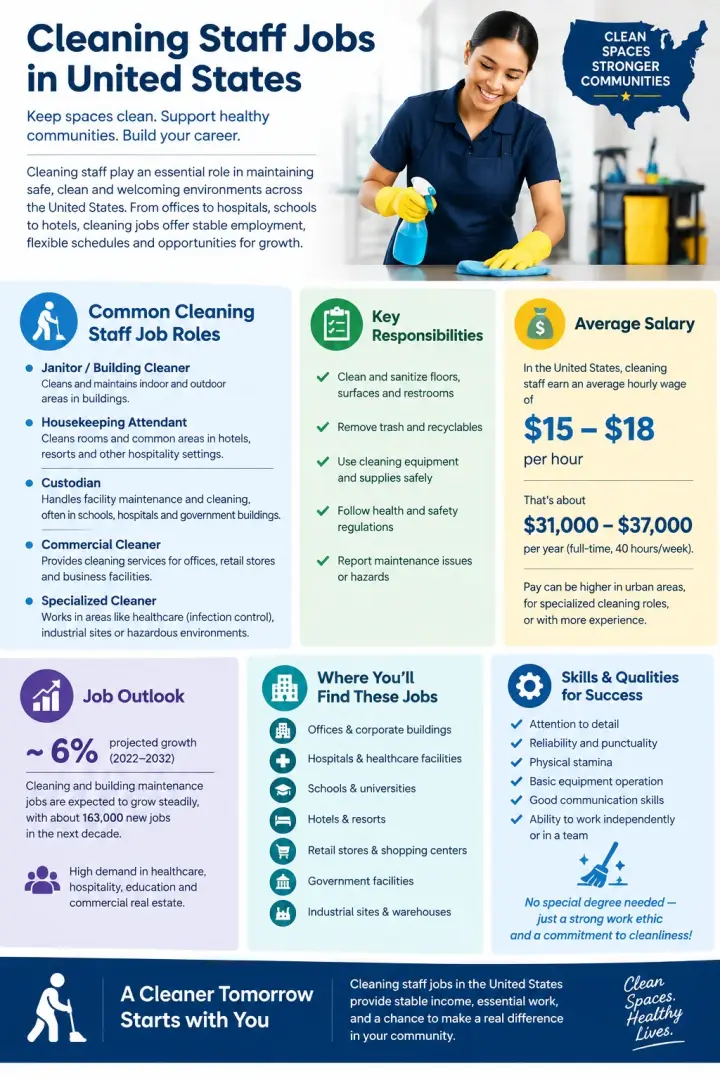
Common responsibilities include:
- Sweeping, mopping, and vacuuming floors
- Cleaning and disinfecting bathrooms and high-touch surfaces
- Emptying trash and replacing liners
- Dusting furniture, shelves, and fixtures
- Restocking soap, paper towels, and other supplies
- Reporting damaged equipment or maintenance issues
- Following workplace safety and cleaning procedures
Some jobs also involve washing windows, using floor-care machines, moving light furniture, or maintaining outdoor areas. Always check the job description: two roles with the same title can have very different workloads.
Types of Cleaning Staff Jobs
Office and Commercial Cleaner
Commercial cleaners work in offices, retail stores, banks, and other business properties. Many clean after employees or customers leave, so evening and overnight shifts are common. Duties often include trash removal, floor care, bathrooms, and shared spaces.
Hotel Housekeeper
Hotel housekeepers clean guest rooms and public areas. They may change linens, make beds, restock toiletries, and report lost items or damage. The pace can be fast, especially when many guests check out at once. Weekend and holiday availability is often useful.
Hospital and Healthcare Environmental Services Worker
Healthcare cleaning staff, often called environmental services or EVS workers, clean patient rooms and other areas according to facility procedures. These roles may involve additional infection-control training and specific rules for protective equipment. Workers should only handle hazardous materials when they're trained and authorized to do so.
School or University Custodian
School custodians clean classrooms, restrooms, cafeterias, and hallways. They may also help set up rooms or report maintenance problems. Some positions follow the school calendar, while others are year-round. Public school jobs may have formal application and background-check requirements.
Residential Cleaner
Residential cleaners work in houses and apartments, either for a cleaning company or directly for clients. The job might include kitchens, bathrooms, bedrooms, and living areas. If you're considering independent work, remember to account for supplies, travel time, insurance, taxes, and the time spent finding customers.
Specialized Cleaner
Some cleaners focus on areas such as post-construction cleanup, carpet cleaning, industrial facilities, or floor restoration. These jobs may require equipment training, a driver's license, or experience with particular materials. The extra skills can open up more opportunities, but they also come with additional safety responsibilities.
Cleaning Staff Pay and Benefits in the US
Pay varies widely by location, employer, experience, shift, and type of facility. A hospital cleaner in a large city may earn a different rate from a part-time office cleaner in a smaller town. Specialized work and overnight schedules can sometimes pay more, but that's not guaranteed.
For a reliable starting point, look up the latest wage estimates for janitors and cleaners or maids and housekeeping cleaners on the US Bureau of Labor Statistics website. Then compare those figures with current job postings in your area. Local listings are often more useful when you're deciding whether a particular offer makes sense.
Don't look at the hourly rate alone. Ask whether the position includes:
- Paid training and paid time off
- Health insurance or retirement benefits
- Overtime pay when applicable
- Evening, overnight, or weekend shift differentials
- Uniforms, equipment, or supply allowances
- Guaranteed hours or a predictable schedule
Under federal law, covered nonexempt employees generally must receive overtime pay at one and a half times their regular rate for hours over 40 in a workweek. State laws can provide additional protections. If you're unsure how a job is classified or paid, ask the employer and check your state labor department's guidance.
Skills and Qualifications Employers Look For
Many entry-level cleaning jobs provide on-the-job training and don't require a college degree. Some employers prefer a high school diploma or equivalent, but requirements vary. More than anything, hiring managers often want someone dependable who can follow instructions and work safely.
Useful skills include:
- Reliability: Arriving on time and completing assigned work.
- Attention to detail: Noticing missed areas and following a checklist.
- Time management: Finishing tasks within a shift without skipping safety steps.
- Communication: Reporting supply shortages, damage, and hazards promptly.
- Physical stamina: Standing, walking, bending, or lifting as the job requires.
- Customer service: Being respectful around guests, residents, or building staff.
Experience with commercial floor machines, cleaning products, or inventory systems can help. So can speaking another language, depending on the workplace. But don't let a long wish list discourage you from applying if the employer offers training and you meet the stated requirements.
Health and Safety on the Job
Cleaning work can involve slippery floors, repetitive movements, chemicals, and equipment. A good employer should explain the hazards, provide appropriate training, and supply required protective equipment.
Read product labels and follow the facility's procedures. Never mix bleach with ammonia or other cleaning products; dangerous gases can result. Use wet-floor signs where needed, and tell a supervisor if equipment is damaged or you don't have the protection required for a task.
If you encounter a needle, blood, or another potentially hazardous material, don't improvise. Follow the workplace procedure and contact the appropriate trained person. The Occupational Safety and Health Administration, known as OSHA, offers information about chemical hazards, protective equipment, and workers' rights.
Where to Find Cleaning Staff Jobs
Start with a few job titles rather than searching only for “cleaning staff.” Employers use different names for similar work, including janitor, custodian, housekeeper, commercial cleaner, EVS technician, and building cleaner.
Places to search include:
- General job boards and local classified listings
- Hotel, hospital, school district, and university career pages
- Commercial cleaning and facilities management company websites
- State workforce agency websites and American Job Centers
- Staffing agencies that recruit for facilities or hospitality roles
- Local community organizations and employee referrals
Filter by location, shift, and full-time or part-time hours. If you rely on public transportation, check the route before applying. A night shift may look ideal until you realize the last bus leaves before your shift ends.
How to Apply With Little or No Experience
You don't need a perfect work history to apply for an entry-level role. Focus on the experience you do have. Retail, food service, childcare, warehouse work, and volunteer roles can all show that you know how to follow procedures, stay organized, and work as part of a team.
Keep your resume simple. List your contact information, relevant work or volunteer experience, availability, and useful skills. Use clear examples rather than vague claims. For instance, if it's true, you might write: “Cleaned and restocked customer areas during closing shifts.”
Before sending an application, check that it matches the job posting. Mention experience with restrooms, floor care, guest rooms, or cleaning equipment only if you've actually done that work. If you haven't, say you're willing to learn.
Prepare for the Interview
Employers may ask how you organize a cleaning route, handle a complaint, or respond when you find a hazard. Think of a few real examples that show you're dependable and careful. It's also fine to explain how you'd ask a supervisor for guidance when you're unsure.
Bring your availability and any questions about the role. You may be asked to provide references or complete a background check, depending on the position and applicable law. Employers must also verify work authorization for employees in the United States.
Questions to Ask Before Accepting a Job
Honestly, a clear conversation about expectations can prevent a lot of frustration later. Consider asking:
- What areas will I clean, and how much time is allowed for each?
- What are the regular hours, and how often do schedules change?
- Is training paid, and who provides supplies and protective equipment?
- Will I work alone or with a team?
- Are there lifting requirements or other physical demands?
- How are overtime, holidays, and missed breaks handled?
- What opportunities are there to move into a lead or supervisor role?
Get the pay rate, schedule, and key terms in writing when possible. Be cautious of anyone who asks you to pay upfront for a guaranteed job or sends a check and asks you to return part of the money. Verify the company through its official website or a trusted phone number before sharing sensitive personal information.
Career Growth for Cleaning Staff
A cleaning job can be a long-term role or a starting point for something else. With experience, workers may become team leads, housekeeping supervisors, EVS supervisors, or facilities coordinators. Training in floor care, equipment operation, inventory, or workplace safety can also help you qualify for more specialized positions.
If advancement matters to you, ask prospective employers how they promote staff and whether they pay for training. A job with a supportive supervisor and a realistic workload can be worth considering alongside the hourly rate.
Cleaning Staff Jobs: Frequently Asked Questions
Do I need experience to get a cleaning job?
Not always. Many employers hire entry-level cleaners and teach their procedures on the job. Specialized or supervisory roles are more likely to require experience.
Are part-time cleaning jobs available?
Yes. Part-time opportunities are common in offices, homes, hotels, and other settings. Shifts may be early in the morning, in the evening, overnight, or on weekends.
What should I wear to a cleaning job interview?
Choose clean, neat, comfortable clothing and closed-toe shoes. You don't usually need formal business attire, but check for any instructions from the employer.
Is cleaning work physically demanding?
It can be. Many roles involve standing, walking, bending, and repeated movements. Ask about the specific duties and lifting requirements so you can decide whether the job is a good fit.
There are plenty of ways into this field. Start by searching for roles that fit your schedule and abilities, compare the full compensation package, and ask questions about training and safety. The right cleaning staff job should offer clear expectations as well as a paycheck.