
Plumber jobs in Thailand aren't what most folks picture
From what I've seen, folks land plumbing gigs pretty quick once they know where to look. Bangkok has the bulk of openings. But smaller spots like Chiang Mai pull in steady work too if you don't mind the slower pace.
Pay starts around 15k to 25k baht a month for starters. Experienced hands pull in more, especially on big condo projects. Thing is, overtime and side calls add up fast.
How to actually get hired
You'll need basic Thai or at least some English that the boss understands. Many crews mix both. Certifications help but aren't always required if you can prove you know your way around pipes and leaks.
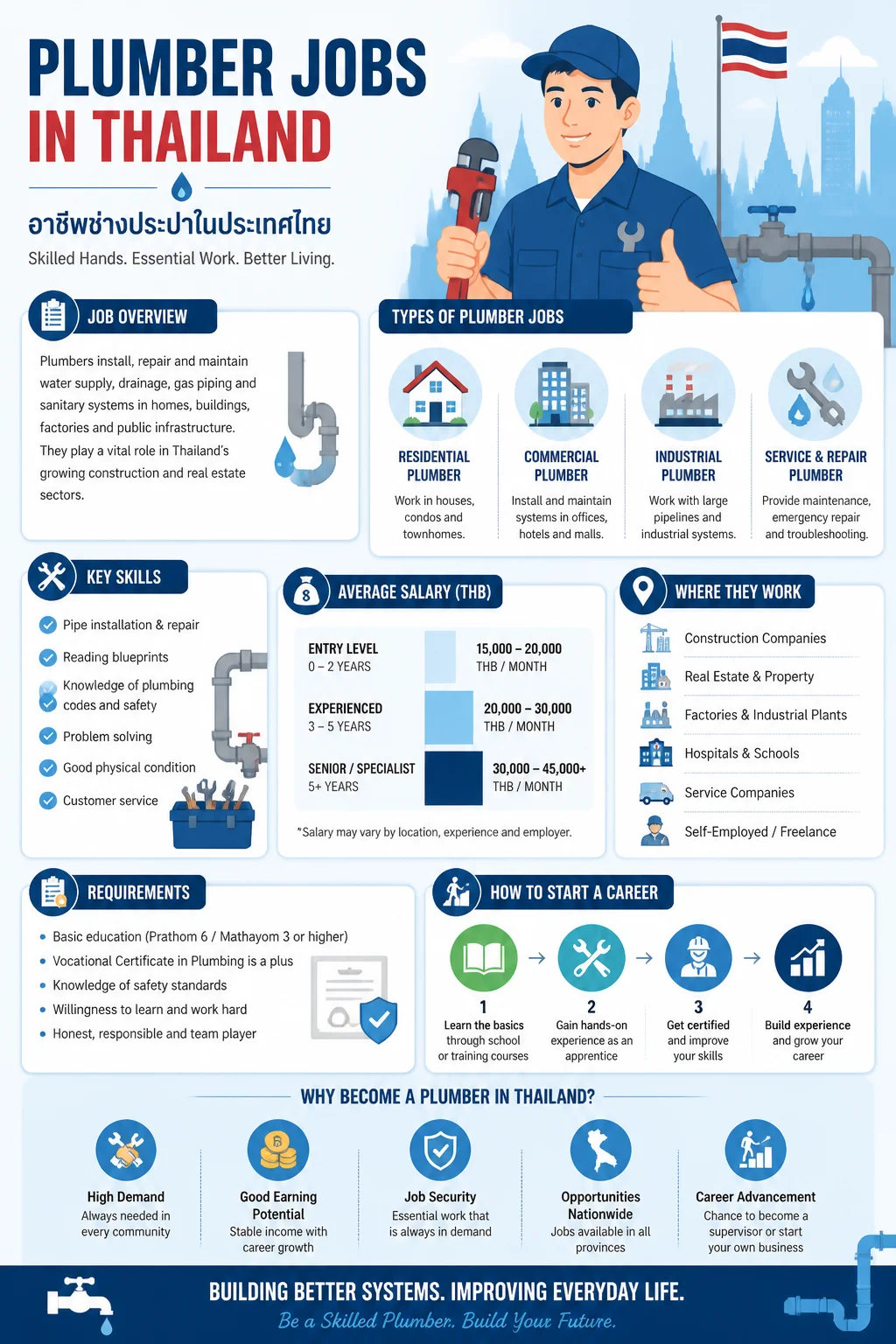
Look on Facebook groups first. Job boards like JobsDB pop up with listings every week. Walk into hardware stores and ask too – old school but it works.
And don't forget word of mouth. One good job leads to the next three. I've heard that from plenty of guys already out there.
Daily life on the job
Mornings start early. Heat hits hard by ten so most crews knock out the heavy stuff before lunch. Tools get left all over if you're not organized. Not great when you're rushing between sites.
Uniforms are simple – usually just a company shirt and boots. Some places supply them. Others expect you to handle it yourself.
Short sentence. Then you get a full day of climbing ladders and tight spaces mixed with customer chats that can drag on.
Visa stuff and staying legal
Work permits matter. Many start on tourist visas then switch over once the job is solid. It's a hassle but worth it to avoid headaches later. Employers sometimes help with the paperwork.
Real talk, some small outfits skip it. Risky though if inspectors show up.
Big difference between freelance calls and full time crew spots. Freelance gives freedom. Steady work gives benefits like housing help in some cases.
- Check expat forums for recent visa tips
- Bring proof of past experience
- Learn a few Thai tool names before interviews
Is it worth it long term
Depends what you want. Thailand keeps costs low so savings build if you're careful. But the work stays physical. Knees and backs take a beating after a few years.
Some move into teaching apprentices or starting their own small crew. That path opens once you know the local suppliers and quirks of Thai plumbing codes.
Honestly speaking, the scene changes slow. New buildings go up all the time so demand stays decent. Just don't expect fancy offices or desk work ever.