

Electrician Jobs in Thailand: Where to Start
I've been chatting with a few mates who moved over for trade work, and electrician gigs pop up more than you'd think. Thailand's building boom keeps rolling, especially in Bangkok and the tourist spots down south. From what I've seen, demand stays steady for guys who can handle wiring, AC installs, and solar setups.
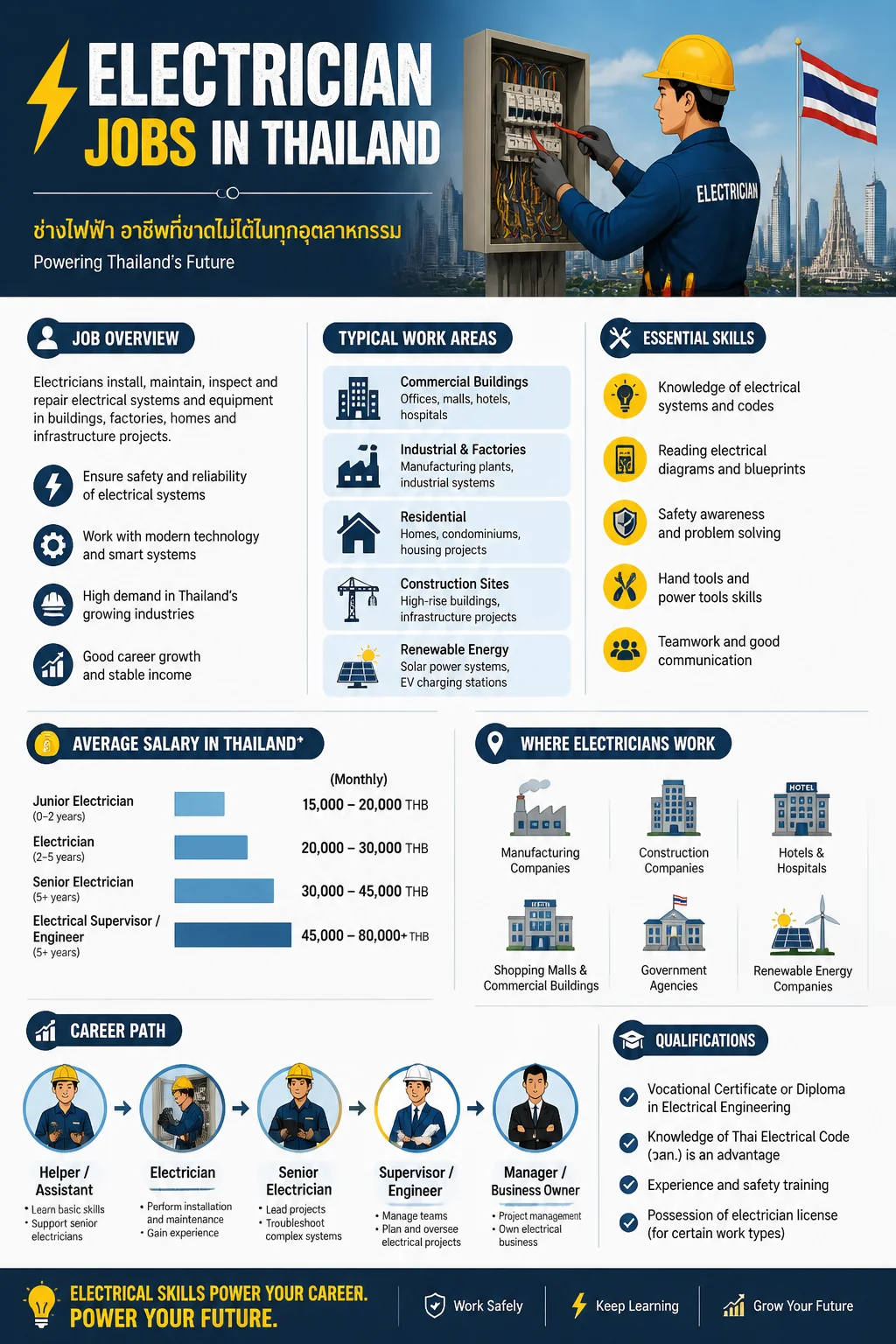
Pay ain't amazing compared to back home but the cost of living helps balance it. Entry level might pull in 25k to 35k baht a month. With experience and some local certs, you can push past 50k pretty quick. Overtime on big projects adds up fast too.
Do You Need a Visa for This?
Work permit is non-negotiable if you're foreign. Most companies sort it once you land the role, but expect some paperwork hassle. Teaching English is the easy visa route for some, yet electrician work needs the proper labor approval. Look into BOI companies if you want smoother sailing.
Honestly speaking, smaller shops sometimes skip the full process at first. Not gonna lie, that's risky and can bite you later during checks. Always push for legit paperwork from day one.
Where the Jobs Actually Are
Bangkok has the most openings, no surprise there. Industrial zones around Rayong and Chonburi need maintenance electricians constantly. Phuket and Pattaya pull in residential and hotel work because of all the new builds and renos.
- Construction sites - big money but long hours
- Maintenance roles at factories
- Freelance house calls in expat areas
- Solar panel installs popping up everywhere now
Thing is, speaking basic Thai helps a ton on job sites. English alone works in international firms, but daily Thai makes life easier.
Skills That Get You Hired Fast
Local employers want Thai electrical standards knowledge plus whatever you bring from abroad. PLC experience or VFD work stands out. Solar and EV charger know-how is turning into a real plus lately.
I've noticed guys with their own tools get picked quicker. Not required, but it shows you're serious. Safety certs like those from the Thai labor department can open extra doors too.
Networking happens mostly through Facebook groups and word of mouth. Agencies exist but they take a cut. Direct applications on Thai job boards sometimes pay off better.
Daily Life on the Job
Hours run standard 8 to 5 with occasional weekends on urgent calls. Heat hits hard, so outdoor work means early starts. Many crews knock off by midday when possible.
Getting along with Thai coworkers matters more than you might expect. Learn a few phrases, show respect to the boss, and things flow smoother. Food on sites is usually cheap and tasty.
Big difference from Western sites is the pace. It can feel slower at first, but you adapt. Projects still finish, just not always in a rush.