

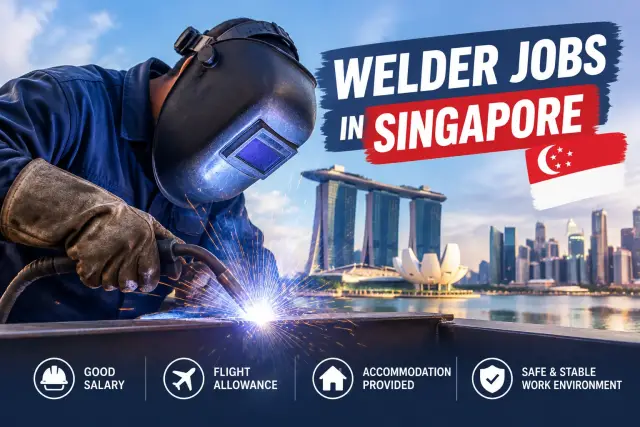
Welder Jobs in Singapore: A Practical Guide
Looking for a welder job in Singapore? There are opportunities across construction, shipyards, manufacturing, engineering workshops and other industries that need people who can join metal safely and accurately. Some jobs involve making new parts. Others focus on repairs, maintenance or installing structures on site.
Pay and working conditions can vary quite a bit. A workshop role with regular hours may look very different from a shipyard job with shift work, overtime and outdoor conditions. Here's what to know before you apply.
What Does a Welder Do?
A welder joins metal parts using heat and a suitable welding process. The job is about more than making a weld look neat: the finished joint needs to meet the strength, safety and quality requirements for the project.
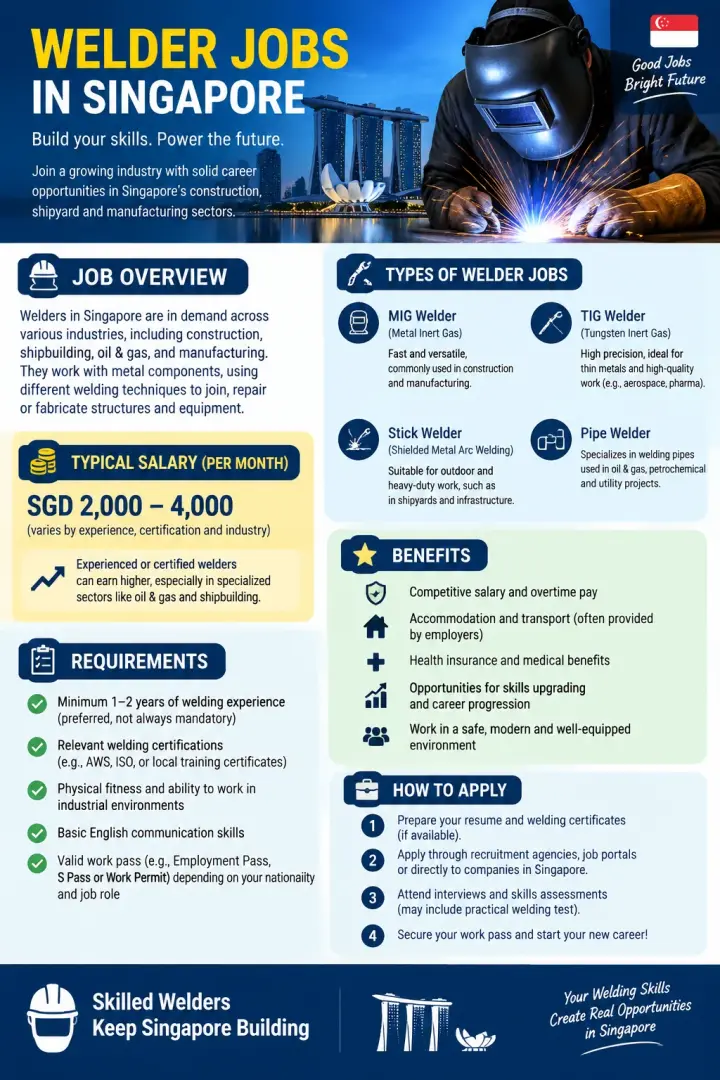
Depending on the employer, a welder's day might include:
- Reading drawings, measurements and welding instructions.
- Preparing metal surfaces and setting up equipment.
- Cutting, fitting and joining pipes, plates or structural components.
- Checking welds for visible defects and correcting problems.
- Working with fitters, supervisors and quality inspectors.
- Keeping the work area safe and maintaining tools.
Some employers combine welding with fabrication. That means you may also measure, cut, grind and assemble parts before welding them. Read the job description carefully so you know what's expected.
Types of Welder Jobs in Singapore
Structural welder
Structural welders work on steel frames, beams, supports and other metal structures. Jobs can be based in fabrication yards or on construction sites. You may need to work outdoors, at height or in awkward positions, depending on the project.
Pipe welder
Pipe welders join and repair pipework used in industrial plants, building systems and other facilities. These jobs can require precise work in restricted spaces and may involve welding tests for particular pipe sizes, materials and positions.
Shipyard and marine welder
Singapore's marine industry hires welders for vessel construction, repair and maintenance. Work may involve hulls, decks, piping or other components. Expect job requirements to vary between shipyards and projects, including whether the role involves shifts or outdoor work.
Fabrication and workshop welder
Workshop welders make or repair items such as frames, gates, machinery parts and equipment. These jobs can be a good fit if you enjoy hands-on work and want to build broader fabrication skills. Some workshops handle small custom jobs; others produce components in larger quantities.
Maintenance and repair welder
Maintenance welders help keep equipment and structures in usable condition. The work may involve diagnosing damage, preparing worn parts and carrying out repairs. Some roles include shutdowns, call-outs or travel between worksites.
Common Welding Skills Employers Look For
Job ads may use process names or abbreviations. You don't need to master every method before applying, but you should be clear about the ones you can use confidently.
- MIG or MAG welding: Often used in fabrication and production work. Employers may also refer to the process as GMAW.
- TIG welding: Used when a controlled, precise weld is needed. It's also known as GTAW.
- Stick welding: Commonly called SMAW or arc welding in job ads. It can be useful for construction and repair work.
- Flux-cored arc welding: Often listed as FCAW and used in fabrication, structural and marine work.
Beyond the process itself, employers may ask about your experience with stainless steel, carbon steel or aluminium. The thickness of the material, the welding position and the type of joint matter too. Be specific on your CV rather than simply writing that you can weld.
Welder Salary in Singapore
As a rough guide, some entry-level welding jobs may offer around S$1,800 to S$2,500 per month, while experienced welders may see offers around S$2,500 to S$4,000 or more. Specialised pipe welding, demanding site work and supervisory responsibilities can attract higher pay.
These are indicative monthly figures, not guaranteed rates. Actual offers depend on the employer, skills, certifications, industry and hours worked. A job ad may include overtime or allowances in its advertised figure, so ask whether the amount is basic salary or expected total pay.
When comparing offers, check:
- Basic monthly salary and how often it's paid.
- Normal working hours, shift arrangements and rest days.
- Whether overtime is available, required and paid separately.
- Site, transport, meal or other allowances, if any.
- Annual leave, medical benefits and other employment terms.
Honestly, a higher advertised number isn't always the better deal if it depends on long overtime hours. Compare the full package and the schedule you can realistically keep.
Qualifications and Certifications
Not every welder job requires a diploma. For many roles, practical ability, relevant experience and passing a welding test matter a great deal. That said, formal training can help beginners learn safe working habits and give employers a clearer picture of their skills.
Depending on the job, employers may look for:
- Training in welding, metal fabrication or a related engineering trade.
- Experience reading technical drawings and following welding procedures.
- A practical welding test for the required process, material and position.
- Welder qualification records that meet the project's specified standard.
- Safety training relevant to the worksite and tasks.
Some projects refer to standards such as ASME Section IX, AWS D1.1 or ISO 9606. A qualification for one process, material or position doesn't automatically cover every job. Ask the employer which test or qualification is required and whether your existing record is suitable.
In Singapore, you can explore relevant courses through providers such as ITE and SkillsFuture Singapore-approved training providers. Check the course content, entry requirements and current funding eligibility directly with the provider before enrolling.
How to Start a Welding Career
1. Learn the basics
If you're new to the trade, look for an introductory welding or fabrication course with practical training. You'll want time on equipment, not just classroom lessons. Learn about protective equipment, material preparation and safe handling as well as the welding process.
2. Apply for trainee or junior roles
Search for terms such as trainee welder, junior welder, welding assistant and fabrication assistant. A role that includes fitting, grinding and basic workshop tasks can help you understand how a finished job comes together.
3. Build a record of your work
Keep a list of the processes, materials and positions you've used. Record any training, tests and projects you can discuss with an employer. If you take photos of your work, get permission first and avoid sharing confidential project details.
4. Develop a specialisation
Once you've got a solid foundation, you might focus on pipe welding, stainless steel work, structural fabrication or another area. Choose based on the work you enjoy and the requirements you see in job ads, rather than paying for a qualification you may not need.
Where to Find Welder Jobs in Singapore
Start with job portals such as MyCareersFuture, JobStreet and Indeed, as well as company career pages. Engineering contractors, fabrication workshops, shipyards and maintenance companies may also advertise vacancies directly.
Try different search terms to find roles that match your skills:
- Welder jobs Singapore
- TIG welder or MIG welder Singapore
- Pipe welder jobs Singapore
- Shipyard welder jobs Singapore
- Structural welder or fabrication welder
- Welder fitter or welding technician
Check the location as well as the job title. Industrial worksites can mean a long commute or an early start, and some employers provide transport only from selected pickup points.
Tips for Your CV and Welding Test
Keep your CV straightforward. List the welding processes you've used, the materials you've worked with and the industries or projects you're familiar with. Include valid qualifications and relevant safety training, along with dates where useful.
For each previous role, explain what you actually did. For example, mention whether you fabricated frames, welded pipe joints or repaired machinery. If you're a beginner, include course projects and practical training instead.
Before a practical test, ask what process, material and position will be tested, and what protective equipment you should bring. Follow the instructions, prepare the joint properly and don't rush. A neat-looking weld matters, but the employer may also assess preparation, consistency and safe working habits.
Work Passes and Employment Terms
If you're a foreign candidate, don't assume every vacancy is open to every nationality or pass type. Work pass eligibility depends on the role, the employer and current Ministry of Manpower requirements. The employer is generally responsible for applying for the appropriate work pass and meeting its obligations.
Before accepting an offer, ask for the written employment terms and check them against what you've discussed. You can verify current work pass rules and employment rights on the Ministry of Manpower website. Be cautious about anyone who asks for money to guarantee a job or pass, and check that any employment agency you use is licensed.
For eligible employees, CPF contributions and employment protections depend on factors such as residency status and the applicable rules. Overtime entitlements also depend on whether the employee is covered by the relevant provisions of the Employment Act. Check your situation rather than relying on a verbal promise.
Safety on the Job
Welding comes with real hazards, including fumes, burns, fire, electric shock and eye injuries. A good employer should have suitable safety procedures and equipment for the task.
Ask about ventilation, protective gear and how hot work is controlled. Some sites require a hot-work permit. Confined-space work and work at height can also require specific precautions and training. If something doesn't look safe, raise it with your supervisor before starting.
Is a Welder Job Right for You?
Welding can be rewarding if you like practical work, solving problems and seeing a finished result. It also calls for patience, attention to detail and a willingness to keep learning. The work can be physically demanding, and some jobs involve heat, noise, shifts or challenging positions.
Start by comparing a few vacancies, noting the skills they ask for and the conditions they offer. Then focus your training and applications on the kind of work you actually want to do. A strong foundation and a clear, honest CV can take you a long way.