

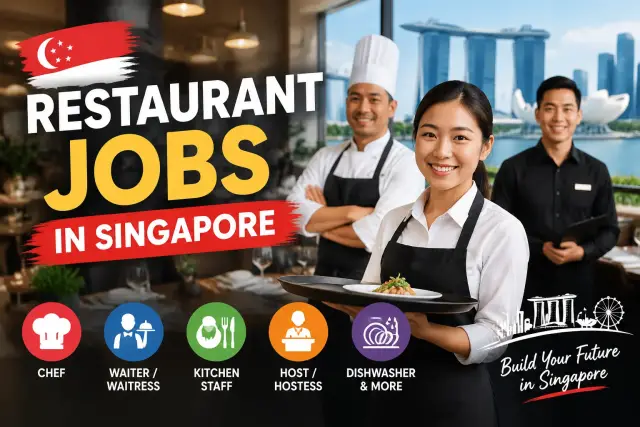
Restaurant Jobs in Singapore: A Practical Guide to Getting Hired
Singapore’s restaurant scene is full of possibilities, whether you’re looking for your first part-time job, a kitchen apprenticeship or a step up into management. From neighbourhood cafés and hawker stalls to hotel restaurants and fine-dining kitchens, there are plenty of different places to build a career.
But not every restaurant job looks the same. Pay, schedules and responsibilities can vary a lot, so it’s worth knowing what to ask before you accept an offer. Here’s a guide to restaurant jobs in Singapore, including common roles, hiring requirements and ways to make your application stand out.
What Types of Restaurant Jobs Are Available?
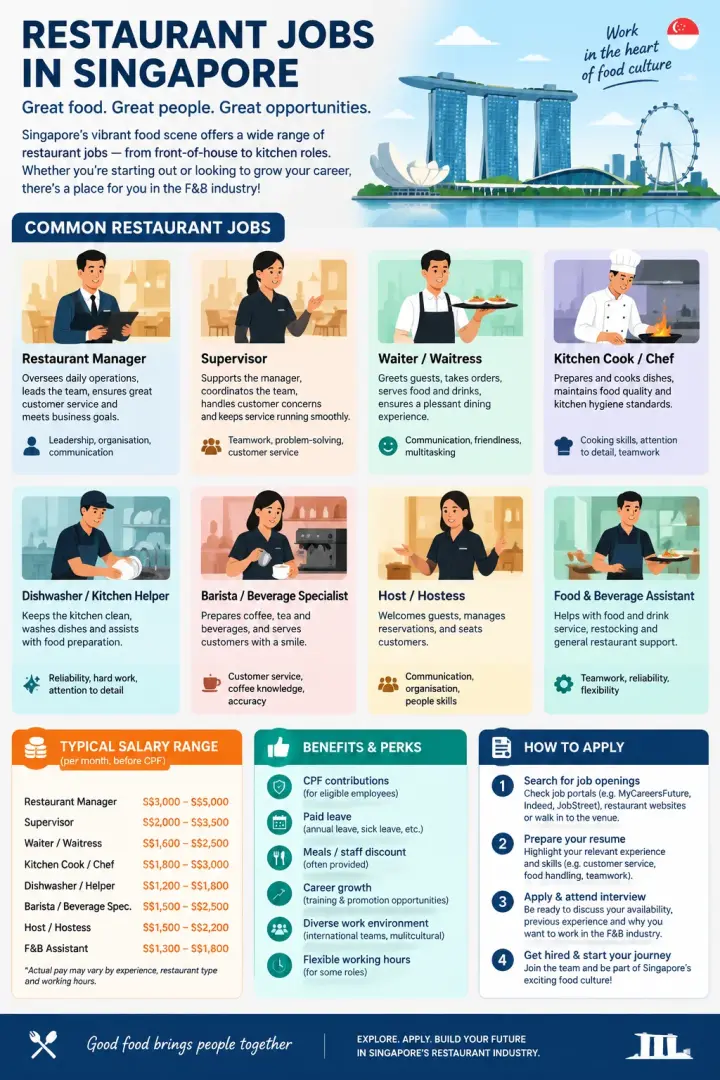
Most restaurant roles fall into three broad groups: front of house, kitchen and management. Some smaller businesses expect staff to help across several areas, while larger restaurants may have more specialised positions.
Front-of-house jobs
Front-of-house staff look after the guest experience. You might greet customers, take orders, serve food, handle payments or answer questions about the menu. Common job titles include:
- Waiter or service crew
- Host or hostess
- Cashier
- Barista or bartender
- Restaurant supervisor
These jobs can suit people who enjoy talking to others and staying active. You don’t always need experience for an entry-level position, though good communication and a calm attitude help when the restaurant gets busy.
Kitchen jobs
Kitchen staff prepare ingredients, cook dishes, maintain equipment and keep work areas clean. Depending on the restaurant, you might find openings for:
- Kitchen assistant or kitchen crew
- Commis chef or junior cook
- Chef de partie
- Sous chef or head chef
- Pastry cook or baker
- Dishwasher or steward
Entry-level kitchen roles can be a good starting point if you want to learn on the job. Senior positions usually call for stronger cooking skills, experience managing service and the ability to lead a team.
Restaurant management jobs
Supervisors and managers handle the day-to-day running of a restaurant. Their work may include scheduling, training, stock control, customer complaints and sales reporting. In a smaller outlet, a manager might also jump in to serve tables or help with closing duties.
If you’re applying for a management role, be ready to explain how you’ve handled staffing problems, busy service periods or customer feedback. Specific examples are much more useful than simply saying you’re a good leader.
Where Can You Work in Singapore’s Food and Beverage Industry?
Restaurant jobs aren’t limited to traditional sit-down restaurants. Your options include cafés, quick-service chains, food courts, hotel restaurants, catering businesses and bars. You’ll also find openings in shopping malls, business districts, tourist areas and neighbourhood estates.
Each setting has its own pace. A café may have an early morning rush, while a hotel restaurant might operate through breakfast, lunch and dinner. A restaurant in a mall may be busiest on weekends and public holidays. Think about the hours and travel time that work for you, not just the job title.
Restaurant Job Salaries in Singapore
Pay depends on the role, experience, employer and working hours. A job advertisement may show a basic monthly salary, an hourly rate or a total package that includes allowances. Those numbers aren’t always directly comparable.
Before accepting an offer, ask for a breakdown of:
- Basic salary or hourly rate
- Overtime pay, if applicable
- Meal, transport or shift allowances
- Bonuses and any service charge distribution
- Salary payment date and deductions
Honestly, it’s easy to focus on the headline figure and miss the details. A higher advertised amount might depend on overtime or incentives, so check what you can expect to earn during a normal working month.
Singapore’s Progressive Wage requirements may apply to eligible food services workers. The applicable rates and conditions depend on the role and employer, and they can change. Check the Ministry of Manpower, or MOM, website for the latest requirements rather than relying on an old salary guide.
What Are the Working Hours Like?
Many restaurant jobs involve shifts, including evenings, weekends and public holidays. You may also see split shifts, where you work during lunch and return for dinner service. Some venues offer regular schedules, but others change their rosters from week to week.
Ask how far in advance the roster is published, how breaks are arranged and whether you’ll need to stay after closing for cleaning or stock work. If you depend on public transport, check whether your shift ends early enough for you to get home.
Employment rights in Singapore depend on factors such as your job and employment arrangement. The Employment Act covers many employees, while additional rules on matters such as hours of work, rest days and overtime apply to eligible employees under Part IV of the Act. MOM’s website explains who is covered and how the rules work.
Part-Time Restaurant Jobs in Singapore
Part-time restaurant work can be a practical option for students, people returning to work or anyone who needs a more flexible schedule. Typical roles include service crew, cashier, kitchen assistant and barista. Some restaurants also hire temporary staff for events or busy periods.
Before you say yes, check the minimum number of shifts, whether training is paid and how much notice you need to give when changing your availability. Ask for the hourly rate and expected hours in writing, too. Part-time employees may be entitled to certain benefits under Singapore’s employment rules, so check the details that apply to your arrangement.
Do You Need Experience or Qualifications?
Not always. Many employers train new service crew and kitchen assistants, especially when applicants show that they’re reliable and willing to learn. That said, some roles need specific skills or certifications.
Food safety training
If your job involves handling food, you may need to complete the required food safety training. In Singapore, food handlers generally need to pass the Food Safety Course Level 1 and meet applicable refresher training requirements. Check with the employer and the Singapore Food Agency for current rules and approved training providers.
Ask whether the employer arranges and pays for the course, and whether you need to complete it before your first shift. Don’t assume every restaurant role has the same training requirements.
Skills employers look for
Even if you haven’t worked in a restaurant before, you may already have useful skills from school, volunteering, retail or other jobs. Employers often look for:
- Clear communication and polite customer service
- Punctuality and reliability
- Teamwork during busy periods
- Attention to cleanliness and food safety
- Comfort with standing and moving for long periods
- Basic cash handling or point-of-sale experience
- A willingness to learn the menu and follow instructions
For kitchen roles, knife skills, ingredient preparation and experience with a particular cuisine can help. For senior jobs, employers may also want to see experience with rostering, ordering, cost control or staff training.
Can Foreigners Apply for Restaurant Jobs in Singapore?
Foreign applicants need a valid work pass that permits them to work for the relevant employer and in the approved role. A visitor pass does not give you permission to work. Employers also need to meet the applicable work pass requirements, which can vary by pass type, job and applicant.
If you’re applying from overseas, ask the employer which pass they intend to apply for and when the application will be submitted. Check the latest conditions directly with MOM. Don’t start work until the appropriate permission is in place.
How to Find Restaurant Jobs in Singapore
There are several useful ways to look for openings. Try more than one, especially if you have a preferred location or need a particular schedule.
- Search job portals using terms such as “restaurant service crew”, “kitchen assistant” or “part-time F&B jobs Singapore”.
- Check restaurant groups’ own careers pages for current vacancies.
- Visit restaurants you like and ask politely whether they’re hiring.
- Look at listings on MyCareersFuture and other employment platforms.
- Ask friends, classmates or former colleagues about openings they know.
- Attend job fairs and hiring events where you can speak directly with employers.
Use location filters to narrow your search. A job that looks great on paper can feel very different when the commute takes an hour each way, particularly after a late shift.
How to Write a Restaurant Job Resume
Keep your resume clear and easy to scan. For an entry-level role, one page is often enough. Include your contact details, work history, relevant skills and availability. Add food safety training or other relevant certificates if you have them.
Focus on what you did, not just where you worked. For example, instead of writing “worked in retail”, you could say that you handled payments, answered customer questions and helped the team during busy periods. If you have no formal work history, include school activities, volunteering or projects that show responsibility and teamwork.
Tailor your application to the role. A café may value coffee-making experience, while a busy family restaurant may care more about your ability to manage tables and work weekend shifts. Be honest about your experience; restaurants can train skills, but trust matters from day one.
How to Prepare for a Restaurant Job Interview
Read the job description and take a look at the restaurant’s menu before the interview. You don’t need to memorise every dish, but knowing what kind of food and service the business offers shows that you’re interested.
Be ready for questions like:
- Why do you want to work at this restaurant?
- What would you do if a customer complained about their meal?
- How do you handle a busy shift?
- Are you available on weekends or public holidays?
- Have you worked with food, customers or a point-of-sale system before?
Give a short, real example where you can. If you haven’t dealt with a restaurant complaint, explain how you’d listen, stay polite and get a supervisor when needed. It’s also fine to ask about training, shift patterns and what a typical day looks like.
Questions to Ask Before You Accept an Offer
An interview goes both ways. These questions can help you understand the job and avoid surprises:
- What are the basic pay rate and expected weekly hours?
- How are overtime, public holidays and rest days handled?
- Is the advertised salary inclusive of allowances or incentives?
- Are meals or transport allowances provided?
- Who pays for required training and uniforms?
- What duties will I be expected to do during opening and closing?
- How much notice is required if I decide to leave?
Read your written terms carefully. Ask about anything you don’t understand before signing, including probation, notice periods and deductions. For Singapore citizens and permanent residents, check how Central Provident Fund contributions apply to your employment as well.
How to Avoid Job Scams
Be cautious if a recruiter promises unusually high pay for very little work, pressures you to decide immediately or asks you to transfer money before you receive a proper offer. Verify the restaurant’s contact details independently and make sure you know who your employer is.
Don’t share banking credentials or one-time passwords. If an agency is involved, check its details through MOM’s employment agency directory. When in doubt, pause and contact the restaurant using a number from its official website.
Building a Long-Term Restaurant Career
A restaurant job can be more than a short-term way to earn money. A service crew member might move into a supervisor role, while a kitchen assistant could train as a cook and eventually lead a section. Some people go on to work in catering, hospitality management or their own food business.
Look for employers that offer useful training and give staff a chance to take on more responsibility. Ask experienced teammates questions, learn how the whole operation works and keep a record of the skills you develop. Small steps, like learning stock control or training a new colleague, can make your next application stronger.
Ready to Apply?
Start with the roles that fit your skills and schedule, then compare employers carefully. Whether you want a part-time café job or a full-time kitchen career, the best offer isn’t just about the title. Look at the pay details, training, commute and people you’ll be working with. A good fit can make all the difference when service gets busy.