

Plumber Jobs in Singapore: A Practical Career Guide
Plumbers keep Singapore's homes, offices, restaurants and industrial buildings running. When a pipe leaks or a bathroom fitting stops working, someone needs to find the problem and fix it. That makes plumbing a practical career for people who enjoy hands-on work and solving problems.
Whether you're looking for your first plumber job in Singapore or hoping to move into a senior role, it's worth understanding what employers expect, how pay can vary and when a PUB licence is needed. Here's a straightforward guide to getting started.
What Does a Plumber Do in Singapore?
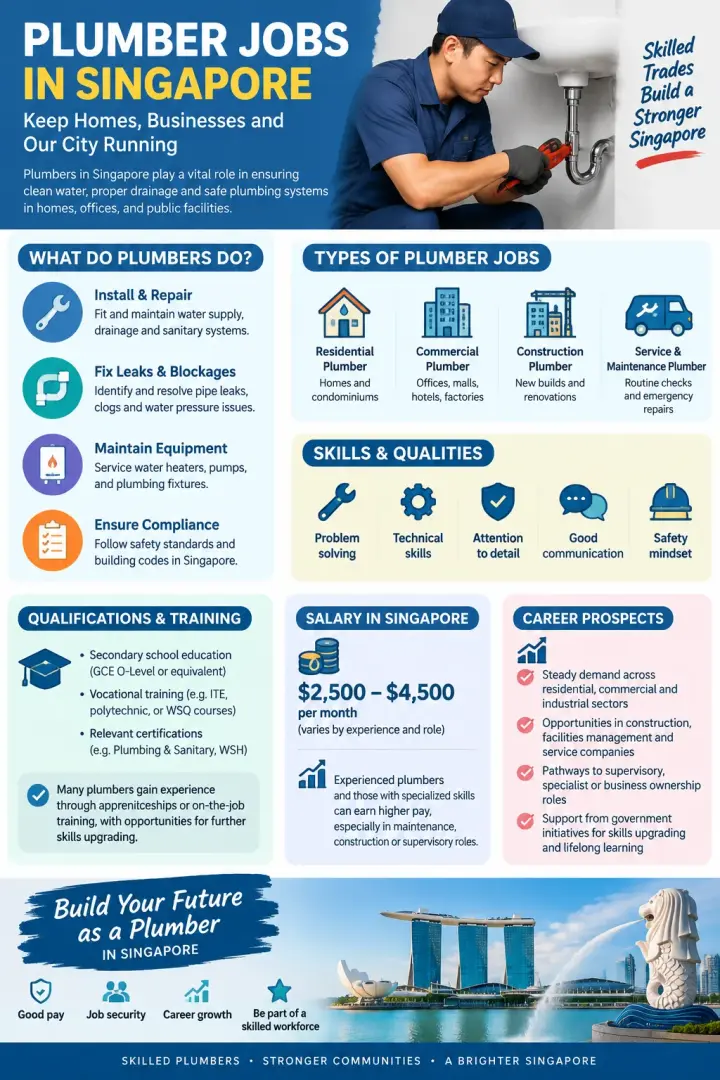
A plumber installs, maintains and repairs water and sanitary systems. The exact work depends on the employer. A residential plumber might spend the day fixing leaks and replacing taps, while a construction plumber could be installing pipes in a new building.
Common plumbing job duties include:
- Finding and repairing water leaks
- Installing and replacing pipes, taps, valves and fittings
- Clearing blocked toilets, sinks and drainage pipes
- Installing sanitary fixtures and water heaters
- Reading drawings and following installation plans
- Testing systems and checking completed work
- Explaining problems and repair options to customers
- Following workplace safety rules and applicable PUB requirements
Some plumbers work regular hours on construction or maintenance teams. Others handle emergency calls, which can mean evenings, weekends or public holidays. If you're applying for a service role, ask about the on-call schedule before accepting an offer.
Types of Plumber Jobs in Singapore
Residential service plumber
Residential plumbers work in HDB flats, condominiums and landed homes. Jobs can range from a dripping tap to a leaking pipe behind a wall. You'll need practical repair skills, but you'll also spend time speaking with customers, explaining costs and keeping the work area tidy.
Commercial and facilities maintenance plumber
Shopping malls, hotels, hospitals and office buildings all need plumbing maintenance. These jobs may involve scheduled inspections, responding to faults and coordinating with other facilities staff. Shift work is possible, especially in buildings that operate around the clock.
Construction plumber
Construction plumbers install pipes and fixtures in new developments or renovation projects. The work often involves reading drawings, measuring and cutting pipes, and working alongside other trades. You'll need to be comfortable with site rules, physical work and changing project schedules.
Industrial plumber or pipefitter
Industrial roles can involve larger pipe systems, plant equipment and more demanding safety procedures. Some employers distinguish between plumbing and pipefitting, so read the job description carefully. Experience with particular materials, machinery or industrial sites may be required.
Plumbing supervisor
Supervisors coordinate workers, check workmanship, manage materials and help keep projects on schedule. These positions usually require several years of relevant experience. Depending on the role and the work involved, employers may also look for specific qualifications or licensing.
Plumber Salary in Singapore
Plumber pay in Singapore depends on experience, qualifications, working hours and the type of employer. Residential service work, construction projects and specialist maintenance roles can pay differently. A job advertisement may also list basic salary separately from overtime, transport or on-call allowances.
As a rough guide, entry-level plumbing assistants may see offers around S$1,800 to S$2,800 a month, while experienced plumbers may find roles around S$2,800 to S$4,500 or more. Supervisory and specialist positions can pay more. These aren't guaranteed rates, so compare current job listings and look closely at the full package.
Before accepting an offer, I'd suggest asking:
- Is the advertised amount basic salary or does it include allowances?
- How are overtime, emergency calls and public holiday work handled?
- Is transport provided between job sites?
- Who pays for tools, uniforms and safety equipment?
- Are there training opportunities or a path to a higher-skilled role?
Keep a copy of your employment terms and check the Ministry of Manpower (MOM) website if you need help understanding salary, working hours, overtime or leave rules. Entitlements can depend on your role and circumstances.
Do You Need a Licence to Work as a Plumber?
Not every plumbing job requires you to personally hold a licence. For example, an assistant may work as part of a team under the appropriate supervision. However, certain regulated water service and sanitary plumbing work must be carried out or supervised by a plumber licensed by PUB, Singapore's national water agency, as applicable.
If a listing asks for a PUB Licensed Plumber, don't assume general repair experience is enough. Check PUB's current licensing requirements, including the relevant qualifications, experience and application process. Employers should also be clear about what work you'll be doing and who is responsible for regulated work.
Planning to run your own plumbing business? Take time to understand both the licensing rules and the requirements for operating a business in Singapore. Holding a business registration is not a substitute for a plumbing licence where one is required.
Skills Employers Look for in Plumbers
You don't need to know everything on day one, especially when applying for a helper or trainee role. But employers will want to see that you're reliable, willing to learn and comfortable with practical work.
- Practical repair skills: Knowing how to use tools, identify faulty parts and carry out basic installations is a good start.
- Problem-solving: The visible leak isn't always the source of the problem. A good plumber checks before deciding what to replace.
- Safety awareness: Jobs may involve power tools, slippery areas, heavy materials or work at height. Some settings require additional training and permits.
- Communication: You'll need to understand instructions, report issues and sometimes explain repairs to customers.
- Physical stamina: Plumbing can involve lifting, kneeling, climbing and working in tight spaces.
- Attention to detail: Accurate measurements and careful testing help prevent leaks and callbacks.
Note that job requirements vary. A driving licence can be useful for mobile service roles, but it isn't required for every position. Some employers also value the ability to read technical drawings or use a phone app to record completed jobs.
How to Become a Plumber in Singapore
1. Look for an entry-level opportunity
Search for titles such as plumbing assistant, plumber helper, maintenance technician or trainee plumber. These roles can help you learn tool use, pipe fittings, basic repairs and site safety while working with experienced colleagues.
2. Build relevant technical skills
Look into relevant courses offered by established training providers, including ITE and other approved providers. Depending on your goals and eligibility, SkillsFuture resources may help you explore training options and funding. Check course details carefully: a short course can be useful, but it doesn't automatically qualify you for every plumbing job or a PUB licence.
3. Get experience across different jobs
Once you've mastered the basics, try to gain experience with installations, maintenance, troubleshooting and customer service. Keep a record of the types of work you've done and any training completed. That makes updating your resume much easier when you're ready for the next step.
4. Explore licensing or specialist work
If your long-term goal is to become a licensed plumber or move into supervision, check the latest PUB requirements early. You can then plan your training and experience around those requirements instead of guessing what you'll need later.
Where to Find Plumber Jobs in Singapore
Start with job portals such as MyCareersFuture, Jobstreet and Indeed, and check the careers pages of plumbing contractors, construction firms and facilities management companies. Local contacts can help too: let former colleagues, trainers and friends know what type of work you're looking for.
Try different search terms to widen your results:
- Plumber jobs Singapore
- Plumbing technician Singapore
- Plumber assistant or plumber helper
- Building maintenance plumber
- PUB Licensed Plumber
- Plumbing supervisor
Read the location and schedule carefully. A role advertised as being in Singapore may involve travelling between multiple sites, standby duties or an early start. There's nothing wrong with that, but it's better to know before the interview.
How to Apply for a Plumbing Job
Keep your resume clear and focused. Include your contact details, relevant work history, training and licences. For each previous job, describe the work you actually did rather than using a vague title alone. For example, mention leak detection, fixture installation, drainage work or preventive maintenance if those were part of your role.
If you're new to plumbing, include other relevant experience. Work in building maintenance, construction, mechanical repair or customer service can show useful skills. You can also mention safety courses and your willingness to learn, without claiming qualifications you don't have.
At the interview, be ready to talk through a repair you've handled or explain how you'd approach a problem. Employers may ask about tools, safety habits, availability and whether you're comfortable travelling to job sites. Honestly, a clear answer about what you know and what you still need to learn is better than pretending you can do everything.
Can Foreign Workers Apply for Plumber Jobs in Singapore?
Foreign applicants may be considered for plumbing roles, but they need a valid work pass and must meet the applicable MOM requirements. The employer generally applies for the relevant pass, and eligibility can depend on factors such as the occupation, sector, salary and employer quota.
Rules can change, so check MOM's official website for current information. Before paying any recruitment-related fees or handing over documents, verify the employer and, if an agency is involved, check that it is licensed through MOM. Be cautious of anyone promising a guaranteed work pass or asking for unexplained payments.
Is Plumbing a Good Career in Singapore?
Plumbing can be a good fit if you like practical work, don't mind getting your hands dirty and enjoy seeing a problem through to a finished repair. It also offers different directions: you might prefer customer-facing service calls, large construction projects or steady facilities maintenance.
The trade has its challenges. Some jobs are physically demanding, and emergency work can disrupt your schedule. Still, if you're willing to build your skills, follow safety procedures and keep learning, there are opportunities to progress from assistant to experienced plumber, supervisor or a suitably licensed professional.
Frequently Asked Questions About Plumber Jobs
Can I become a plumber with no experience?
Yes, some employers hire plumbing assistants or trainees without previous plumbing experience. You'll still need to meet the employer's requirements, and relevant safety training or a technical course may improve your chances.
Do plumbers in Singapore work on weekends?
Some do, particularly in emergency repair, facilities maintenance and shift-based roles. Other positions follow a more regular schedule. Ask about working hours, standby arrangements and overtime before accepting an offer.
What's the difference between a plumber and a plumbing assistant?
A plumbing assistant generally supports more experienced workers by preparing tools and materials, helping with installations and keeping the site organised. A plumber typically takes on more responsibility for diagnosing problems and completing work, within the limits of their qualifications and applicable regulations.
How can I increase my earning potential as a plumber?
Build solid repair and installation skills, gain experience with different systems and consider relevant technical training. Depending on your career goals, meeting PUB licensing requirements or moving into specialist or supervisory work may open up more opportunities. Compare roles based on total compensation as well as the basic salary.
Ready to start looking? Check current plumber job listings in Singapore, shortlist roles that match your experience and ask clear questions about training, licensing and working hours. A little research upfront can help you find a job that suits you for the long run.