

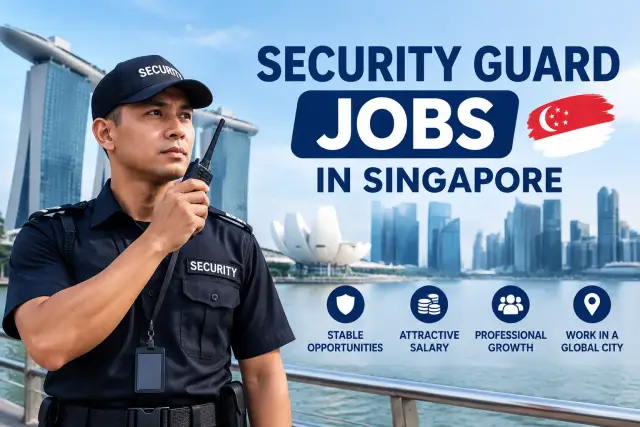
Security Guard Jobs in Singapore: What to Know Before You Apply
Security guard jobs in Singapore can be a good fit if you're observant, dependable and comfortable dealing with people. You might work at a condominium, shopping mall, office building, hotel or industrial site. Some roles are quiet and routine. Others involve busy entrances, regular patrols and plenty of interaction with visitors.
One thing to know from the start: security work in Singapore is regulated. You'll generally need a valid security officer licence and the required training before carrying out licensed security duties. Here's what the work involves, how to get started and what to check before accepting a job.
What Does a Security Guard Do?
In Singapore, job ads often use the title “security officer” rather than “security guard”. The day-to-day duties depend on the site and employer, but the main aim is the same: help keep people and property safe.
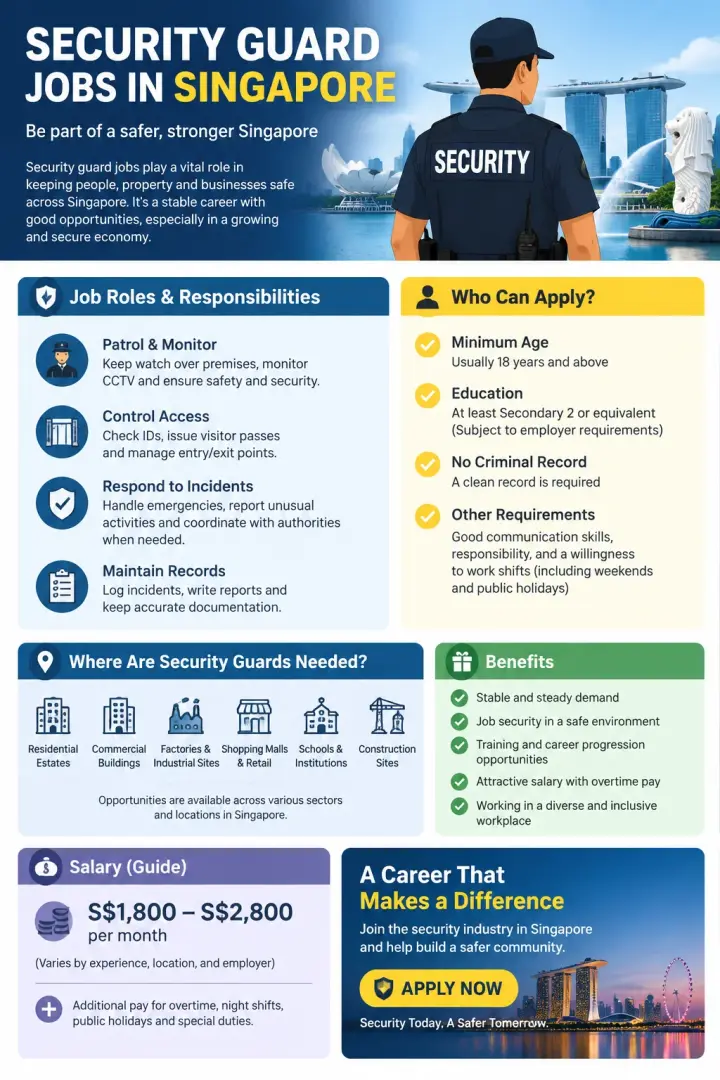
Typical responsibilities include:
- Checking visitors, contractors and vehicles at entry points
- Patrolling buildings and surrounding areas
- Monitoring CCTV and alarm systems
- Recording incidents and writing reports
- Responding to safety or security concerns
- Helping during emergencies and contacting the appropriate services
- Explaining site rules and assisting residents, staff or visitors
Despite what some people expect, the job isn't just about standing at a gate. You'll need to notice unusual activity, stay calm when someone is upset and keep clear records. At some sites, customer service is a big part of the role too.
Where Can Security Officers Work in Singapore?
Security agencies recruit officers for all kinds of properties. When comparing vacancies, look beyond the job title and ask what the actual assignment is like.
Condominiums and residential estates
Condo security officers manage visitor access, check deliveries, conduct patrols and respond to residents' concerns. You may spend a lot of time speaking with residents, visitors and delivery riders, so patience and good communication help.
Office buildings and commercial properties
These roles can involve managing access cards, registering visitors, monitoring cameras and checking the premises after office hours. Some buildings are busiest on weekdays, while others need round-the-clock coverage.
Shopping malls and hotels
Public-facing sites can be lively. Officers may assist shoppers or guests, patrol common areas and respond to incidents. You'll need to be comfortable approaching people politely and following the site's procedures.
Factories, warehouses and industrial sites
At an industrial site, duties may include checking vehicles, controlling access to restricted areas and following workplace safety rules. Ask about the location and transport options, especially if your shift starts early or ends late.
Events and other assignments
Event-related work may involve crowd management, access checks and helping people find their way. Some assignments are temporary, so check the contract carefully if you're looking for a stable, long-term job.
Requirements for Security Guard Jobs in Singapore
Requirements vary by position, but employers commonly look for reliability, communication skills and the ability to follow instructions. Some roles also involve long periods of standing, walking or working outdoors.
For regulated security duties, you'll need the appropriate security officer licence issued by the Singapore Police Force's Police Licensing and Regulatory Department (PLRD). Licensing involves eligibility and background checks. Training requirements also apply, and the exact steps can change, so check the latest information on the Singapore Police Force website before applying.
If you're not a Singapore citizen or permanent resident, don't assume that any work pass allows you to take a security job. Eligibility depends on your circumstances and the relevant licensing and employment rules. Check with PLRD and the Ministry of Manpower (MOM), and ask the employer what documentation is needed.
Do you need previous experience?
Not always. Some agencies hire people who are new to the industry and explain how to complete the required licensing and training steps. Entry-level vacancies are worth considering if you're changing careers or returning to work.
For supervisory or specialised positions, employers may ask for relevant experience, additional training or a particular security rank. Read the job description rather than assuming every opening has the same requirements.
What training is needed?
Security officers must meet the training requirements associated with their licence and role. These can include approved Workforce Skills Qualifications (WSQ) security courses. The current requirements and available funding may change, so confirm the required modules and approved training providers before paying for a course.
It's also worth asking a prospective employer whether it arranges training, covers course fees or offers support while you complete the process. Get the details in writing, including any conditions attached to that support.
Security Guard Salary in Singapore
Pay for security jobs varies by rank, experience, employer, location and working hours. A job ad may show a monthly gross salary that includes overtime or allowances, rather than the basic salary alone. Honestly, that's one of the easiest details to miss when comparing offers.
Before accepting a role, ask for a breakdown of:
- Monthly basic salary
- Expected working hours and number of shifts
- Overtime arrangements and applicable rates
- Fixed and variable allowances
- Rest days, public holiday arrangements and leave
- Central Provident Fund (CPF) contributions, where applicable
Eligible Singapore citizens and permanent residents in covered security roles may come under the Security Progressive Wage Model, which sets wage and training requirements. The applicable wage depends on factors such as the worker's role and the current requirements. Check MOM's latest guidance rather than relying on an old salary table.
If overtime is a regular part of the advertised pay, ask what happens when fewer overtime hours are available. A higher headline figure isn't always the better deal if it requires considerably longer hours.
Working Hours and Shift Patterns
Security is needed at all hours, so many positions involve shifts. Depending on the site, you may work during the day, overnight, on weekends or on public holidays. Some roles advertise 12-hour shifts, but the schedule and break arrangements vary.
Before you sign, check the normal working hours in your contract, how the roster is planned and whether you'll be assigned to one location or moved between sites. Also ask when you can expect your rest days and how much notice you'll get for roster changes.
Employment rules on working hours, overtime and rest days depend on the circumstances and whether you're covered by the relevant provisions of the Employment Act. MOM's website is the best place to check the current rules or clarify a concern.
How to Find Security Guard Jobs in Singapore
You can search for vacancies through MyCareersFuture, established job portals, security agencies' own websites and career events. Try search terms such as “security officer Singapore”, “condo security officer”, “security supervisor” or “night shift security officer”.
When reviewing a listing, look for the actual work location, salary breakdown, shift pattern and licence requirements. A convenient site can make a big difference when you're travelling home after a late shift.
Before applying or sharing sensitive documents, check that the employer is genuine. If the role is offered through a security agency, you can check the agency's licence status through official Singapore Police Force resources. If an employment agency is involved, check its registration through MOM's employment agency directory.
Watch out for job scams
Be cautious if someone offers you a job without a proper interview, asks for money to guarantee placement or pressures you to share banking credentials. Don't send an OTP to anyone. Verify the company's contact details independently, and be wary of requests to transfer money to a personal account.
Legitimate recruitment and training arrangements should be clear. Ask what any fee is for, who receives it and whether it is permitted before agreeing to pay.
How to Apply for a Security Officer Job
The exact process depends on your situation, but these steps are a useful starting point:
- Check your eligibility for a security officer licence and for employment in Singapore.
- Review the current licensing and training requirements on the Singapore Police Force website.
- Look for suitable vacancies and check the employer or agency.
- Prepare a simple resume highlighting relevant work, language skills and customer service experience.
- Ask about the licence application, training arrangements, worksite and pay.
- Complete the required steps and make sure your licence is valid before performing licensed duties.
If you've worked in retail, hospitality, logistics or the military, mention skills that carry over, such as handling difficult situations, keeping records or following safety procedures. You don't have to make your resume fancy; clear and accurate is better.
Questions to Ask at the Interview
An interview is your chance to find out whether the job suits you too. Consider asking:
- Where will I be deployed, and could the location change?
- What are the usual shift hours and rest days?
- How much of the advertised salary is basic pay?
- Are overtime and allowances included in the figure shown?
- What training or licensing support does the company provide?
- Who pays for uniforms, equipment and required courses?
- What are the duties at this particular site?
- What opportunities are there to progress to a higher rank?
Ask for your key employment terms and contract to review before accepting. If anything sounds different from the job ad, clarify it rather than hoping it'll work out later.
Career Progression in the Security Industry
A security officer job doesn't have to be a dead end. With experience and the relevant training, you may be able to move into senior, supervisory or management roles. Some officers develop skills in areas such as operations, incident reporting, technology or team supervision.
Progression depends on the employer, available positions and the requirements for each rank. If advancement matters to you, ask how the agency supports training and promotions before joining.
Frequently Asked Questions
Can I become a security officer in Singapore without experience?
Yes, some employers consider applicants without previous security experience. You'll still need to meet the applicable licensing and training requirements before performing licensed security work.
Is a security officer licence required?
Generally, yes. People carrying out regulated security officer duties need the appropriate valid licence. Check the Singapore Police Force's current guidance for details and any applicable exceptions.
Are part-time security jobs available?
Some employers offer part-time or temporary assignments, although availability varies. Ask about guaranteed hours, shift commitments, pay and licensing requirements before accepting.
What skills make a good security officer?
Being observant, punctual and calm under pressure goes a long way. Clear communication, accurate reporting and the ability to treat people respectfully are useful at almost any site.
Where can I check the latest rules?
For licensing and security agency information, start with the Singapore Police Force. For employment conditions, work passes and the Security Progressive Wage Model, check MOM. Requirements can change, so it's worth checking the official guidance before you apply.