

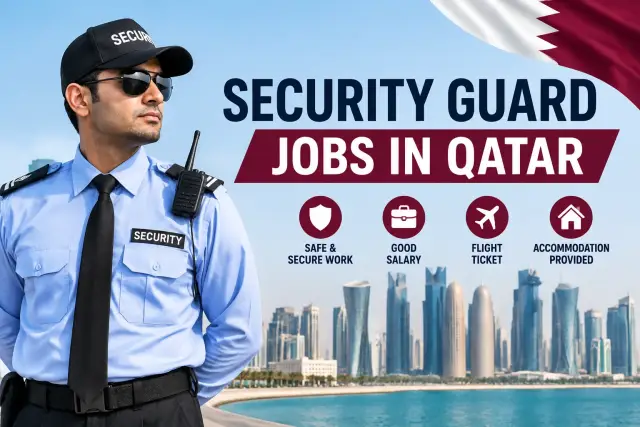
Security Guard Jobs in Qatar: A Practical Guide
Security guard jobs in Qatar attract applicants from many countries, as well as people already living in the country. You’ll find these roles in places like hotels, residential compounds, shopping malls, construction sites, offices and event venues.
The work can be rewarding if you’re observant, dependable and comfortable dealing with people. But before accepting an offer, it’s worth looking beyond the job title. Pay, accommodation, working hours and visa arrangements can vary a lot from one employer to another.
Here’s a practical guide to finding security guard jobs in Qatar, understanding common requirements and checking whether an offer is right for you.
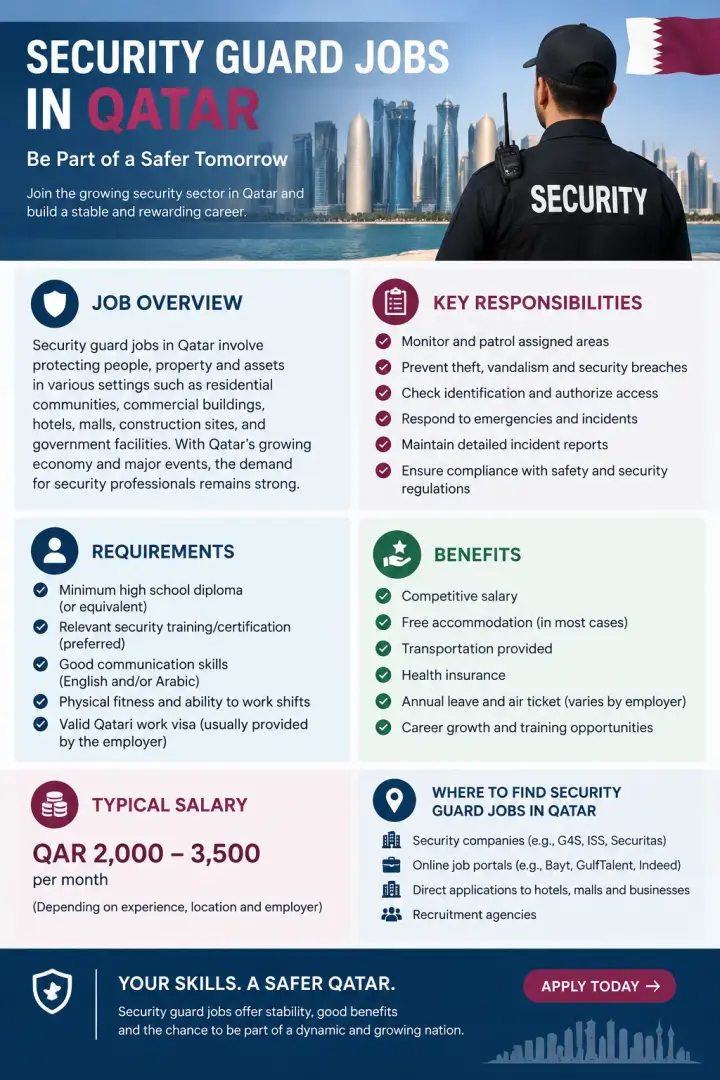
What Does a Security Guard Do in Qatar?
A security guard helps protect people, property and the workplace. The exact duties depend on the location. A guard at a hotel may spend much of the day helping visitors, while someone at a construction site might focus more on access control and patrols.
Common responsibilities include:
- Checking entrances and confirming that visitors are authorized to enter.
- Patrolling buildings, parking areas and outdoor spaces.
- Watching CCTV monitors when assigned and trained to do so.
- Recording incidents, visitor details and other relevant information.
- Responding to alarms and reporting hazards to a supervisor.
- Helping visitors find their way and answering basic questions.
- Following emergency procedures during fires, medical incidents or evacuations.
- Working with site management, emergency services or police when required.
Good security work isn’t just about standing at a gate. You need to stay alert, communicate calmly and follow instructions, even when a situation gets stressful.
Where Can You Find Security Guard Jobs in Qatar?
Qatar has security roles across several industries. Some positions are hired directly by the organization, while others are filled through licensed security companies.
Hotels and hospitality
Hotel security guards may check entrances, assist guests and monitor public areas. Polite communication and a professional appearance matter here because guards often interact with visitors throughout their shifts.
Shopping malls and retail
These roles can involve monitoring entrances, helping with crowd control, reporting suspicious activity and assisting during emergencies. Shifts may include evenings, weekends and public holidays.
Residential compounds and buildings
Residential guards often manage visitor access, monitor deliveries and report maintenance or safety concerns. Being courteous and consistent is important when you see the same residents every day.
Construction sites and industrial facilities
At these sites, guards may check vehicles, protect equipment and make sure only authorized workers enter. Outdoor duties can mean working in hot conditions, so ask about breaks, drinking water and heat-safety arrangements.
Events, offices and other locations
Security staff may also work at exhibitions, sports events, corporate offices, warehouses and educational facilities. Event work can be temporary, while office and residential positions may offer more regular assignments.
Requirements for Security Guard Jobs in Qatar
There’s no single list that applies to every vacancy. Employers set their own hiring criteria, and some roles may have additional licensing, training or site-access requirements. Always check the job advertisement and ask the employer what’s needed for the specific position.
Common requirements include:
- A valid passport for overseas applicants and the appropriate work authorization.
- A basic education, with some employers asking for a high school certificate.
- Basic spoken and written English. Arabic or another language can be an advantage.
- Physical fitness suitable for the duties, such as standing, walking or patrolling.
- A clean background or police clearance when requested.
- Previous security, military, police, hospitality or customer service experience for certain roles.
- Willingness to work shifts and follow workplace procedures.
Some employers provide training after hiring. Others prefer applicants with previous security experience or relevant certificates. Certain private security roles may also require approvals or training under rules set by Qatar’s Ministry of Interior. Ask the employer who handles these steps and whether there are any costs you’re expected to pay.
Don’t assume that every advertisement asking for experience rules out a beginner. If the posting doesn’t say experience is essential, highlight transferable skills such as punctuality, communication, recordkeeping and customer service.
Security Guard Salary in Qatar
Security guard salaries in Qatar vary by employer, experience, working hours, location and benefits. A vacancy may advertise a basic salary, a total package or a figure that includes allowances. Those aren’t always the same thing, so ask for a written breakdown.
Qatar’s general minimum wage is QAR 1,000 per month. Employers must also provide suitable accommodation and food or pay minimum allowances of QAR 500 for accommodation and QAR 300 for food, respectively. These are minimum requirements, not a typical security guard salary or a guarantee that every offer will be attractive.
When comparing offers, check:
- Monthly basic salary and the currency used in the contract.
- Whether accommodation and meals are provided or paid as allowances.
- Transport to and from the work site.
- Normal working hours, rest days and overtime arrangements.
- Health coverage, annual leave and any other contractual benefits.
- Whether the employer makes any permitted deductions and what they cover.
Honestly, a higher headline salary doesn’t always mean a better deal. A job with a slightly lower cash figure but decent accommodation and transport could leave you with more money at the end of the month. Look at the whole package and your likely expenses.
Working Hours and Conditions
Security work often involves rotating shifts, nights, weekends or public holidays. Ask for the expected schedule before signing, including how breaks, weekly rest and overtime will work in practice.
Under Qatar’s Labour Law, the general limit is eight working hours a day or 48 hours a week, reduced to six hours a day or 36 hours a week during Ramadan. Overtime rules and exceptions can apply depending on the work and circumstances. A long shift shown on a roster may also include breaks, so ask the employer to explain how working time is counted.
For outdoor jobs, find out how the employer manages heat exposure. Qatar has seasonal restrictions on certain outdoor work during the hottest part of the day, alongside heat-stress requirements. Check the current Ministry of Labour guidance, since dates, hours and rules can change.
Visa and Work Permit Information
If you’re applying from outside Qatar, you’ll generally need a work visa and residence arrangements linked to a legitimate employer. The employer normally handles the employment-related process, although you may need to provide documents, attend a medical examination or complete steps in your home country.
Depending on your nationality and where you apply, a Qatar Visa Center may be involved in parts of the process. Confirm the procedure through official Qatar government channels and your prospective employer.
Don’t travel on a tourist or visit visa with the assumption that you can simply start working. Make sure you have the correct authorization before beginning a job.
Before you travel or resign from an existing position, ask for a written offer and review the contract carefully. Your name, job title, salary, benefits and employer details should match what you were promised.
How to Apply for Security Guard Jobs in Qatar
1. Prepare a straightforward CV
Keep your CV clear and easy to read. Include your contact details, work history, education, languages and relevant training. If you have security experience, mention the type of site you worked at and your main duties.
For example, instead of writing only “security guard,” you could describe experience with visitor registration, patrols, incident reporting or CCTV monitoring. Be truthful about your qualifications and language skills.
2. Search reliable job sources
Look for vacancies on established job platforms such as LinkedIn, Bayt, Indeed and Qatar Living, as well as the career pages of hotels, facilities management companies and security providers. You can also ask trusted contacts about openings, but still verify the employer independently.
Useful search terms include “security guard jobs in Qatar,” “CCTV operator Qatar,” “hotel security guard Doha” and “security officer vacancies Qatar.” Check when each listing was posted and whether applications are still open.
3. Tailor each application
Read the vacancy carefully and adjust your CV to show the skills that match. A hotel may value guest service experience, while a warehouse may want someone familiar with access logs and vehicle checks.
Follow the application instructions and include only the documents requested. Avoid sending sensitive identity or banking information until you’ve checked that the employer and request are legitimate.
4. Prepare for the interview
An interviewer may ask how you’d handle an unauthorized visitor, a fire alarm or a disagreement at an entrance. Keep your answers practical: stay calm, follow site procedures, report the situation and avoid putting yourself or others at unnecessary risk.
You may also be asked about shift work, English communication and previous experience. If you don’t know an answer, it’s better to be honest than to invent experience.
How to Spot a Security Job Scam
Job scams can target people who are eager to work abroad. Be especially careful if someone offers a job without a proper interview, pressures you to send money quickly or refuses to provide a written contract.
Warning signs include:
- Promises of unusually high pay with no clear job duties.
- A recruiter asking for large upfront payments for a guaranteed job or visa.
- Messages from unofficial email addresses with inconsistent company details.
- Requests to transfer money to a personal account.
- A contract that differs from the offer you were originally sent.
- Instructions to enter Qatar as a visitor and start work immediately.
Recruitment fees should not be charged to workers by recruiters under Qatar’s labour rules. If someone asks you to pay, pause and verify the request with the employer and relevant authorities. Check the company’s official website, use independently found contact details and keep copies of your application and contract.
Questions to Ask Before Accepting an Offer
A few direct questions can save you a lot of trouble later. Ask for answers in writing where possible:
- What is the basic monthly salary, and when will it be paid?
- Are accommodation, food and transport provided or paid as allowances?
- Where will I work, and can I be moved between sites?
- What are the normal shift hours, breaks and weekly rest day?
- How is overtime approved and paid?
- Who arranges the work visa, medical checks and required training?
- What does the contract say about leave and the probation period?
- Who can I contact if I have a pay or workplace concern?
Take your time reading the answers. If a recruiter tells you the details will be settled after you arrive, ask for clarification before making a commitment.
Career Growth for Security Guards
Entry-level security work can be a starting point for other roles. With experience and the right training, you may be able to apply for positions such as CCTV operator, team leader, security supervisor or control room operator.
Improving your English, learning to write clear incident reports and gaining first-aid or fire-safety training can help. Before paying for a course, ask employers whether the qualification is recognized for the jobs you want.
Frequently Asked Questions
Can I get a security guard job in Qatar without experience?
Yes, some employers consider entry-level applicants and provide training. Requirements vary, so look for vacancies that don’t list previous security experience as mandatory. Customer service, reliability and communication skills can strengthen your application.
Is English required for security guard jobs in Qatar?
Many employers ask for basic English because guards may need to speak with visitors, understand instructions and write reports. The level required depends on the role. Arabic and other languages can also be useful.
Do security guard jobs in Qatar include accommodation?
Some do, but not every package is the same. Ask whether accommodation is provided and what it’s like. If the employer doesn’t provide suitable accommodation, the applicable minimum housing allowance must be paid.
Can I change employers in Qatar?
Qatar has removed the general requirement for a no-objection certificate to change employers. Notice periods and other legal procedures can still apply. Check the latest Ministry of Labour guidance and your contract before taking any action.
How can I report a problem with my employer?
Keep copies of your contract, payslips and relevant messages. You can contact Qatar’s Ministry of Labour or use its official complaints channels for employment-related concerns. Your embassy may also be able to provide consular guidance.
Before You Apply
There are opportunities for security guards in Qatar, but a good job is about more than getting an offer. Verify the employer, understand the full package and make sure the work and visa arrangements are legitimate.
Rules and hiring requirements can change, so check current information with Qatar’s Ministry of Labour, Ministry of Interior and other relevant official sources before making your final decision.