

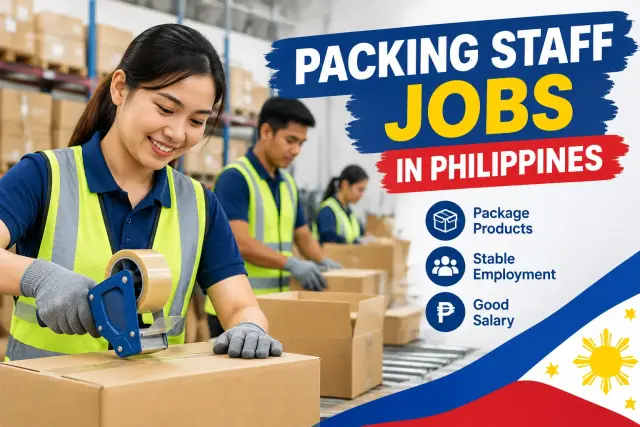
Packing Staff Jobs in the Philippines: A Practical Guide
If you're looking for a job that doesn't always require a college degree, packing staff work is worth considering. These roles are available in warehouses, factories, food production facilities, retail businesses, and online stores across the Philippines. Some employers welcome first-time job seekers, while others prefer applicants with experience in production or logistics.
Packing work can be a good fit if you're organized, comfortable with routine tasks, and able to stay focused during a busy shift. Here's what the job involves, where to look for vacancies, and how to prepare your application.
What Does a Packing Staff Member Do?
A packing staff member prepares products for storage, delivery, or sale. The exact duties depend on the employer. You might be sealing food products in a factory, packing online orders in a warehouse, or checking finished goods before they're shipped to stores.
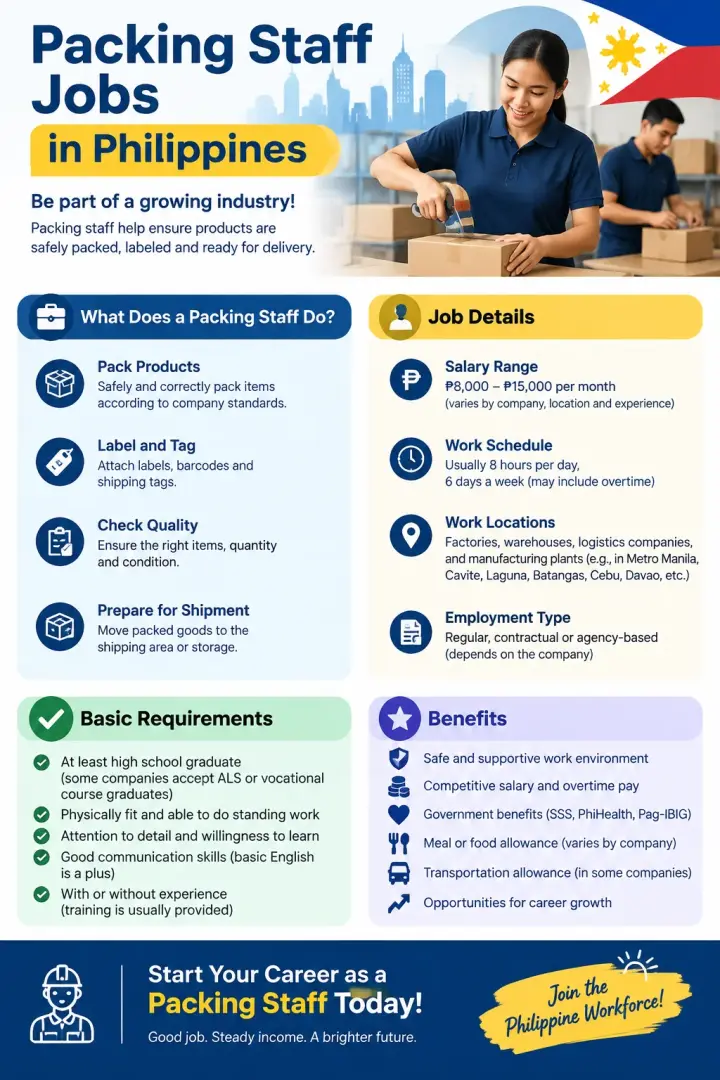
Common packing staff duties include:
- Checking items against an order list or packing instructions.
- Counting products and inspecting them for visible damage or defects.
- Placing items in boxes, pouches, containers, or other packaging.
- Sealing packages and attaching labels, barcodes, or shipping details.
- Recording packed quantities and reporting missing or damaged items.
- Keeping the work area clean and following safety rules.
- Moving packed goods to a storage or dispatch area.
Some jobs involve operating simple packing equipment or using a barcode scanner. Training is often provided, but it's sensible to ask about the equipment and daily targets during the interview.
Where Can You Find Packing Staff Jobs in the Philippines?
Packing jobs are found in several industries, so don't limit your search to one job title. Employers may use terms such as packer, production packer, warehouse packer, or packaging assistant.
Warehouses and logistics companies
Warehouse packers prepare items for delivery to customers or stores. The job may include picking products from shelves, checking orders, printing labels, and sorting parcels. Demand can increase during major online sales and holiday periods, when employers may hire temporary or seasonal staff.
Food and beverage production
Food packers work with products such as snacks, baked goods, frozen items, or beverages. Cleanliness matters, and you may need to wear a hairnet, gloves, mask, or other protective equipment. Some employers require health-related documents before you start, depending on the role and local rules.
Factories and manufacturing plants
Manufacturing businesses hire packing staff to prepare finished goods, such as cosmetics, household products, electronics, and clothing. You might work on a production line and follow specific instructions for each product.
Online sellers and retail businesses
Smaller businesses also need help packing orders. These roles may include wrapping fragile items, checking customer details, and coordinating parcels for courier pickup. Depending on the employer, you might handle inventory or assist with other store tasks too.
Common Requirements for Packing Staff Jobs
Requirements vary, so read each job post carefully. Some entry-level positions accept applicants with no previous experience, while others ask for a high school or senior high school education. Employers may also prefer candidates who have worked in a warehouse, factory, or food-handling environment.
Many employers look for these qualities:
- Attention to detail: You need to spot wrong items, damaged packaging, and incorrect labels.
- Physical ability: The work may involve standing for long periods, repeated movements, or lifting items within the job's stated limits.
- Basic counting and reading skills: You'll often follow written instructions and check quantities.
- Reliability: Showing up on time and following your schedule matters when a team has orders to complete.
- Teamwork: Packers often work alongside pickers, machine operators, quality checkers, and supervisors.
- Willingness to learn: Different products have different packing, hygiene, and safety requirements.
If a listing doesn't clearly explain its physical demands or schedule, ask before accepting an offer. A job that involves light parcel packing can be quite different from one that requires moving heavy boxes throughout the day.
How Much Do Packing Staff Earn in the Philippines?
Packing staff pay depends on the location, industry, employer, schedule, and type of contract. A warehouse role in Metro Manila, for example, may offer a different rate from a similar position in another region. Experience and additional responsibilities can also affect pay.
Rather than relying on a single advertised average, compare current job postings in your area. Check whether the amount shown is a daily or monthly rate and whether it includes allowances. Also ask how overtime, rest-day work, and holiday work are paid when they apply.
Minimum wage rates differ by region and may depend on factors such as industry or establishment size. You can check the applicable wage order through your regional wage board or the National Wages and Productivity Commission. If an offer is unclear, ask the employer for a written breakdown before deciding.
Benefits and Employment Terms to Check
Eligible employees in the Philippines generally have access to statutory benefits and protections. Your exact entitlement depends on your employment arrangement and applicable rules, so review the offer and ask questions if anything is missing.
Items worth checking include:
- Social Security System (SSS), PhilHealth, and Pag-IBIG Fund registration and contributions, as applicable.
- 13th-month pay for eligible rank-and-file employees who have worked at least one month during the calendar year, generally calculated based on basic salary earned.
- Applicable pay for overtime, holidays, and rest days.
- Work schedule, break times, and days off.
- Leave benefits and any company-provided allowances.
- Contract duration, probationary terms, and the name of your actual employer.
Some vacancies are offered directly by a company, while others are filled through an agency. Agency-hired roles aren't automatically a bad choice, but you should know who employs you, where you'll report, and who handles payroll and benefits.
How to Find Legitimate Packing Staff Vacancies
Start with job platforms, company career pages, and local employment offices. Public Employment Service Offices, or PESOs, can be a useful source of local vacancies and job fair information. You can also check postings from businesses near industrial parks, warehouses, and commercial areas.
Try searching for these terms along with your city or province:
- Packing staff hiring near me
- Warehouse packer jobs Philippines
- Food packer hiring
- Production packer no experience
- Packaging assistant jobs
- Online shop packer hiring
Location matters more than it might seem. A slightly higher wage can quickly be offset by a long commute or expensive transport, especially if the role has changing shifts. Check the worksite address and transport options before applying.
Watch out for recruitment scams
Be cautious if a recruiter promises guaranteed employment, pressures you to send money immediately, or refuses to give a company address and written job details. Verify the employer using official contact information rather than relying only on a social media profile or private message.
Don't hand over your original identity documents for someone else to keep, and be careful about sharing personal information before you've checked who you're dealing with. For overseas packing jobs, verify the recruitment agency and job order through the Department of Migrant Workers. For local agency vacancies, check the agency's credentials with the Department of Labor and Employment when in doubt.
How to Apply for a Packing Staff Job
You don't need a complicated resume for an entry-level packing role. A clear, honest application that matches the job requirements is more useful than a long list of unrelated details.
1. Prepare a simple resume
Include your name, contact details, location, education, relevant skills, and work history. If you've worked in a store, food stall, warehouse, or family business, describe tasks that relate to packing: counting stock, preparing orders, checking products, or keeping a work area clean.
No formal work experience yet? Mention practical skills from school, training, volunteer work, or projects if they're relevant. For example, you might note that you helped organize supplies or completed tasks as part of a team. Don't claim experience or certifications you don't have.
2. Gather the documents requested
Employers may ask for a valid ID, resume, and other pre-employment documents. Depending on the job, they may request government membership details, a clearance, a medical certificate, or food-handling requirements. Wait for a legitimate employer's instructions before paying for documents you may not need.
3. Prepare for the interview
Interview questions are often straightforward. You might be asked whether you can work shifts, follow production targets, stand for extended periods, or start on a certain date. Be honest about your availability and any limitations.
It helps to ask questions too. Find out what a typical shift looks like, how much lifting is involved, whether protective equipment is provided, and how performance is measured. You can also ask who to contact if there's a payroll concern.
What Is It Like to Work as a Packer?
Packing can be repetitive, and busy days may involve standing for hours while keeping up with an order target. That doesn't mean every workplace is the same. A small online shop may offer a varied day, while a large production line may have more specialized tasks and fixed procedures.
The best way to judge a role is to ask about the actual conditions. A clear training process, safe equipment, reasonable instructions, and a supervisor who answers questions can make a real difference. If possible, speak with current or former employees, while remembering that individual experiences can vary.
Can Packing Staff Advance to Other Jobs?
Yes. Packing work can help you build experience in inventory, quality checks, workplace safety, and order fulfillment. With training and a good work record, you may be able to apply for roles such as warehouse assistant, inventory clerk, quality control aide, team leader, or logistics coordinator. Advancement isn't guaranteed, but learning how the wider operation works can give you more options.
If you're interested in moving up, ask your supervisor about available training. Keep a record of new responsibilities and equipment you've learned to use so you can update your resume when another opportunity comes along.
Frequently Asked Questions
Can I apply for packing staff jobs without experience?
Yes. Some employers hire applicants without packing experience and provide training. Look for listings marked entry-level or no experience required, and highlight skills such as accuracy, punctuality, and teamwork.
Do I need a college degree to become a packer?
Not always. Many packing positions don't require a college degree, though educational requirements differ by employer. Check the specific vacancy before applying.
Are packing staff jobs full-time or part-time?
Both exist. You may also find contractual, seasonal, or project-based roles, particularly during busy sales periods. Confirm the schedule and contract length before accepting an offer.
What should I check before accepting a packing job?
Review the pay, work location, shift schedule, physical requirements, benefits, contract terms, and employer details. If anything doesn't match what was advertised, ask for clarification in writing.
Packing staff jobs can be a practical starting point for a career in manufacturing or logistics. Take time to compare vacancies, verify the employer, and choose a role whose pay and working conditions fit your needs.