


Security Guard Jobs in the Philippines: A Guide for Applicants
Security guard jobs are a common starting point for Filipinos who want steady work in a role that involves protecting people and property. You might see guards at shopping malls, offices, warehouses, schools, hospitals, and residential buildings. The work can be demanding, but it can also lead to supervisory roles and other opportunities in the security industry.
If you're thinking about applying, it helps to understand what the job involves, how licensing works, and what to check before accepting an offer. Here's a practical guide to finding security guard jobs in the Philippines.
What Does a Security Guard Do?
A security guard helps maintain safety and order at an assigned location. The exact duties depend on the post. A guard at a condominium, for example, may spend much of the shift checking visitors, while someone assigned to a warehouse may monitor deliveries and patrol storage areas.
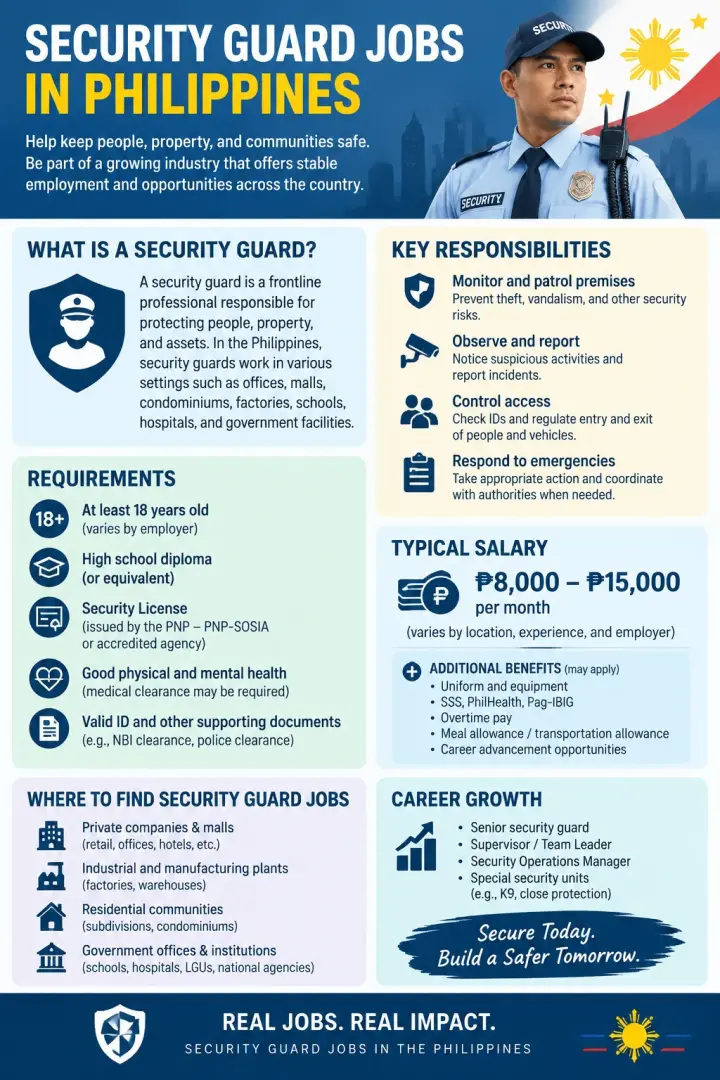
Common responsibilities include:
- Checking IDs, visitor logs, and entry passes
- Patrolling buildings, parking areas, and other assigned locations
- Monitoring CCTV or alarm systems when assigned and trained to do so
- Reporting suspicious activity, damage, or safety hazards
- Responding to incidents and following emergency procedures
- Writing incident reports and maintaining logbooks
- Helping visitors, employees, and residents with directions or basic concerns
Not every position involves carrying a firearm. An armed post has additional legal and training requirements, so don't assume that a regular security guard license alone gives you permission to carry one.
Types of Security Guard Jobs in the Philippines
Job titles and assignments vary by employer, but these are some of the posts you'll commonly find.
Mall and Retail Security
Mall guards manage entrances, assist customers, and help keep busy public areas orderly. Retail assignments can involve long periods of standing and frequent interaction with shoppers. You may also need to work weekends and holidays, when stores are busiest.
Condominium and Residential Security
These guards monitor entrances, record visitors, and respond to residents' concerns. Good communication matters here: you'll often deal with the same people every day, and you'll need to enforce building rules politely but consistently.
Office and Corporate Security
Office security guards may check employee IDs, manage guest access, and monitor building activity. Some assignments include reception duties or CCTV monitoring. Depending on the building, shifts may be quieter at night but still require regular patrols and careful reporting.
Warehouse and Industrial Security
Warehouses, factories, and logistics facilities need guards to monitor gates, deliveries, equipment, and restricted areas. The work may involve outdoor posts, vehicle inspections, or rotating shifts. Ask about the physical demands and safety equipment before accepting an assignment.
Specialized Security Roles
Some employers hire guards for hospitals, schools, hotels, events, and other specialized locations. These posts may require extra training or experience. With time, guards can also apply for team leader, detachment commander, or security supervisor positions, subject to the employer's requirements and applicable rules.
Security Guard Requirements in the Philippines
Requirements vary by agency, employer, and assignment. Job ads often ask for applicants who can communicate clearly, follow instructions, write basic reports, and handle the physical demands of the post. Some employers prefer applicants with previous security experience, while others accept first-time job seekers who meet the training and licensing requirements.
Depending on the vacancy, you may be asked for:
- A résumé or application form
- Valid identification and proof of education
- Barangay, police, or NBI clearance, as requested
- Medical or fitness examination results
- Security training certificates
- A valid license or other credentials required for the position
- Previous employment certificates or references, if applicable
Check the current requirements with the hiring agency and the Philippine National Police's Supervisory Office for Security and Investigation Agencies, commonly called PNP SOSIA. Rules and document requirements can change, and an individual job posting may include additional conditions.
How to Become a Security Guard
1. Check the Current Licensing Requirements
Private security personnel in the Philippines are regulated under the Private Security Services Industry Act, Republic Act No. 11917, and its implementing rules. Before paying for training or submitting an application, verify the current qualifications and licensing process with PNP SOSIA or the relevant PNP office.
Ask which documents you need, whether your training provider is recognized, and how to apply for or renew the appropriate license. Keep copies of your receipts and submitted documents.
2. Complete the Required Training
Applicants generally need to complete the required security training through a properly authorized training provider. Training can cover topics such as guard duties, observation, reporting, emergency response, and the legal responsibilities of security personnel.
Before enrolling, ask for the full course cost, schedule, location, and any additional expenses. Confirm the provider's authority with the appropriate regulator rather than relying only on a social media advertisement.
3. Prepare Your Documents
Gather the documents listed by the employer and licensing office. If you're still processing a clearance or certificate, be honest about its status. Some agencies may accept an initial application while you complete the remaining steps, but deployment will depend on meeting the applicable requirements.
4. Apply to a Licensed Security Agency or Employer
Many guards are hired by private security agencies and then assigned to client sites. Check that an agency is authorized to operate, and ask who your employer will be. This matters when you need to raise questions about pay, schedules, benefits, or reassignment.
5. Review the Offer Before You Start
Ask for the job terms in writing. Check your assigned location, shift schedule, basic pay, pay dates, benefits, and any deductions. If a recruiter promises an assignment or rate that isn't reflected in the paperwork, ask for clarification before signing.
Security Guard Salary and Benefits
There isn't one fixed salary for every security guard in the Philippines. Pay can differ by region, employer, assignment, experience, and the number and timing of hours worked. Rates may also change when a regional wage board issues a new wage order.
When comparing offers, look beyond the headline monthly figure. Ask whether it represents basic pay alone or includes expected overtime, holiday pay, allowances, or other amounts. Overtime isn't guaranteed, so a figure that depends heavily on extra hours may not reflect your regular earnings.
For covered employees, applicable benefits and pay rules may include:
- At least the applicable minimum wage for the region and establishment
- Overtime pay for qualifying work beyond normal working hours
- Night shift differential for qualifying work performed between 10 p.m. and 6 a.m.
- Holiday pay or premium pay when applicable
- 13th-month pay, subject to eligibility rules
- SSS, PhilHealth, and Pag-IBIG coverage and contributions under applicable rules
- Leave benefits required by law, subject to eligibility and any better employer policy
The amount you receive depends on the circumstances and applicable rules. Check the latest wage order from the relevant Regional Tripartite Wages and Productivity Board, and contact the Department of Labor and Employment (DOLE) if you need help understanding a labor concern.
Also ask how uniforms, equipment, training, and other expenses are handled. Don't assume every deduction is permitted. Request an explanation and keep your payslips so you can check your earnings and deductions each payday.
Where to Find Security Guard Jobs
You can find vacancies in Metro Manila, Cebu, Davao, and many other areas where businesses and residential developments need security. Local opportunities may also be available near transport terminals, industrial estates, schools, and commercial centers.
Try these places when looking for openings:
- Licensed security agencies and their official recruitment pages
- Established online job boards
- Company career pages and verified social media accounts
- Local Public Employment Service Offices, or PESOs
- Job fairs organized by local governments or employers
- Referrals from people you trust, followed by your own checks
Search using terms such as “security guard hiring near me,” “security guard jobs in Manila,” or “security guard hiring Cebu.” Add your preferred city or municipality to narrow the results. Check the posting date too; an old listing may no longer be open.
How to Make Your Application Stand Out
A clear, honest résumé is more useful than a long one filled with vague claims. Include your contact details, training, relevant licenses, work history, and practical skills. If you're a first-time applicant, mention experience that shows reliability, such as customer service, inventory work, or volunteer duties.
For an interview, be ready to explain how you would handle a difficult visitor, report an incident, or respond to an emergency. Employers often look for calm judgment as well as physical fitness. Arrive on time, bring the requested documents, and be straightforward about the shifts and locations you can accept.
Here's a simple example of a résumé summary you can adapt:
“Trained security applicant with strong attention to detail and customer service experience. Comfortable following site procedures, maintaining records, and working rotating shifts. Seeking a security guard position where I can support a safe and orderly environment.”
Only include training, licenses, and skills you actually have. If your license is still being processed, say so rather than presenting it as complete.
Questions to Ask Before Accepting a Job
It's easy to focus on getting hired and forget the details of the assignment. These questions can help you understand what you're agreeing to:
- Where will I be assigned, and could the location change?
- What are the shift length, rest days, and rotation schedule?
- What is the basic pay, and how are overtime and holidays calculated?
- Who provides the uniform and equipment, and are there any deductions?
- When will I receive my written terms of employment and payslips?
- Who should I contact if there's a payroll issue or safety concern?
- Is the post armed or unarmed, and what credentials does it require?
Don't be embarrassed to ask. A legitimate employer should be able to explain the position and its terms clearly.
How to Avoid Fake Security Guard Job Offers
Be cautious with recruiters who promise immediate deployment but won't identify the agency or provide a verifiable office address. Pressure to transfer money quickly, vague job details, and requests for sensitive information through unfamiliar accounts are all reasons to pause.
Verify the agency through official channels, contact it using independently confirmed details, and ask for an official receipt for any legitimate payment. Avoid handing over original documents unless there's a valid reason and you understand when they'll be returned. If something feels off, step back and check before proceeding.
Security Guard Jobs: Frequently Asked Questions
Can I apply for a security guard job without experience?
Some agencies accept applicants without previous guard experience. You'll still need to meet the applicable qualifications, training, and licensing requirements. Entry-level job postings should explain whether experience is required.
Do security guards always work 12-hour shifts?
No. Schedules vary by employer and post. Some assignments involve long or rotating shifts, so ask for the actual schedule and how any overtime will be handled before accepting the job.
Do I need a firearm to work as a security guard?
No. There are both armed and unarmed assignments. Armed work is subject to separate requirements, so ask the employer and confirm the applicable rules with the PNP.
Can a security guard become a supervisor?
Yes. Experience, good reporting skills, training, and a reliable work record can help you qualify for supervisory opportunities. The exact qualifications depend on the position, employer, and applicable regulations.
What should I do if my pay seems wrong?
Start by reviewing your payslips, attendance records, employment terms, and the applicable wage order. Ask your employer or agency for a breakdown. If the issue isn't resolved, you can seek guidance from DOLE.
Finding the Right Security Guard Job
The best security guard job isn't necessarily the first opening you find. Look for an authorized employer, a manageable assignment, clear written terms, and pay that follows the applicable rules. With the right training and a careful job search, you can find a post that fits your needs and gives you room to grow.