

Electrician Jobs in the Philippines: A Practical Career Guide
Electricians help keep homes, offices, factories, and construction sites running safely. If you enjoy hands-on work, solving problems, and learning how electrical systems operate, this could be a career worth exploring.
Electrician jobs in the Philippines range from entry-level helper positions to specialized maintenance and industrial roles. Some workers build their careers locally, while others gain experience before applying for jobs overseas.
Here’s what to know about the work, training, qualifications, salary, and job search.
What Does an Electrician Do?
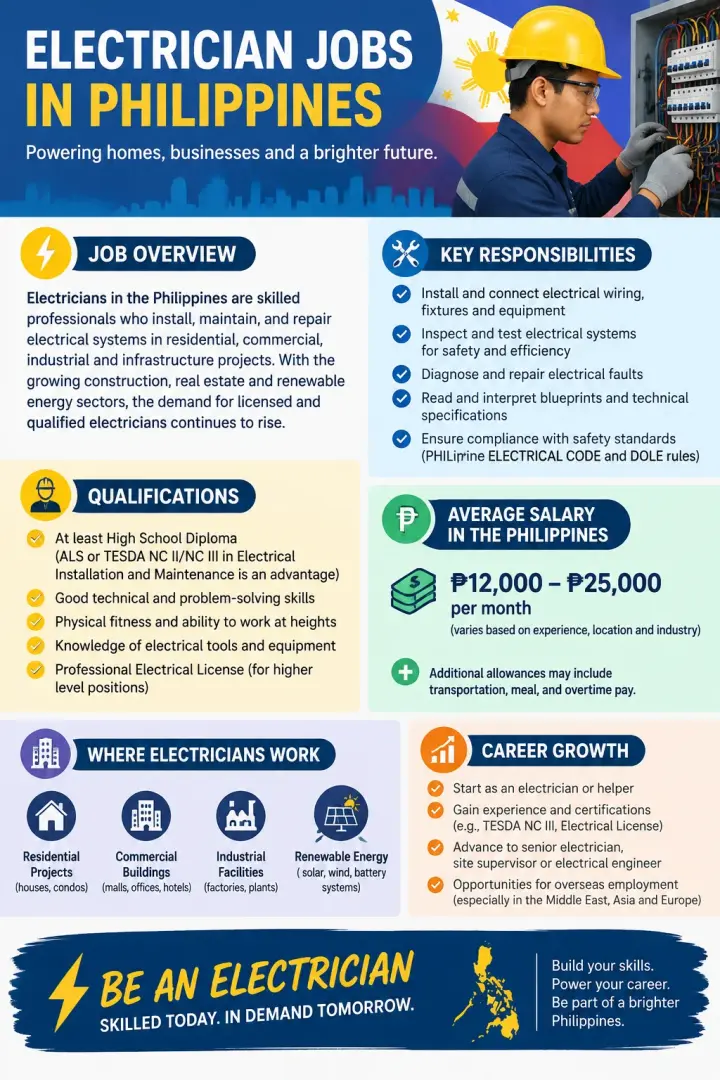
An electrician installs, maintains, and repairs electrical wiring and equipment. The exact duties depend on the workplace. A residential electrician might install outlets and lighting, while an industrial electrician may work on motors, control panels, and production equipment.
Common responsibilities include:
- Reading electrical plans, diagrams, and work instructions
- Installing wiring, switches, outlets, lighting, and circuit breakers
- Inspecting and testing electrical systems
- Finding faults and repairing or replacing damaged components
- Using meters and other tools to check electrical conditions
- Following safety procedures and applicable electrical codes
- Documenting completed work and reporting equipment problems
It’s physical work. Depending on the job, you may spend time on your feet, climb ladders, work in confined spaces, or respond to urgent breakdowns. You’ll also need to communicate clearly with supervisors, customers, and other tradespeople.
Types of Electrician Jobs in the Philippines
Residential Electrician
Residential electricians work on houses, apartments, and other living spaces. Their tasks can include installing lights and outlets, checking faulty circuits, and helping with renovations or new builds. Good customer service matters because you’ll often work directly with homeowners or tenants.
Commercial Electrician
Commercial electricians work in places like offices, malls, hotels, restaurants, and schools. These jobs may involve larger lighting and power systems, scheduled maintenance, and coordination with building administrators or construction teams.
Industrial Electrician
Industrial electricians maintain electrical equipment in factories, plants, warehouses, and other industrial facilities. They may troubleshoot motors, controls, and machinery. Employers often look for experience with industrial systems, and some positions require additional training.
Maintenance Electrician
Maintenance electricians inspect and repair equipment to help prevent disruptions. They can work in hospitals, condominiums, hotels, manufacturing plants, and commercial buildings. Shift work or on-call duties may be part of the job, so check the schedule before accepting an offer.
Construction Electrician
Construction electricians install electrical systems in new buildings or projects undergoing major renovation. They work alongside other trades and follow project plans, specifications, and site safety rules. Employment may be tied to the length of a project.
Electrician Helper or Apprentice
Entry-level helpers assist experienced workers by preparing materials, organizing tools, and supporting installations. It can be a useful way to learn, but beginners should receive proper supervision and safety instruction. Don’t assume every helper vacancy is a formal apprenticeship; ask about the training arrangement.
Electrician Salary in the Philippines
There’s no single salary for electricians in the Philippines. Pay varies by location, employer, experience, qualifications, schedule, and the type of work. Industrial maintenance and specialized technical jobs may pay more than basic entry-level roles, but that isn’t guaranteed.
When comparing electrician job vacancies, look beyond the advertised monthly pay. Ask about:
- Whether the rate is daily or monthly, and how many days or hours it covers
- Overtime, night shift, rest day, and holiday pay, where applicable
- Allowances for transportation, meals, accommodation, or site work
- Required contributions and benefits
- Whether tools, uniforms, and protective equipment are provided
- Whether the position is regular, fixed-term, or project-based
Private-sector rank-and-file employees who meet the legal requirements are generally entitled to 13th-month pay. Other benefits and wage rules depend on the employment arrangement and applicable law. Regional minimum wages also differ, so check the current wage order for the workplace through the relevant wage board.
Honestly, a higher-looking daily rate isn’t always the better deal. Travel costs, irregular workdays, and unpaid time between projects can make a real difference to what you take home.
How to Become an Electrician in the Philippines
1. Build Your Basic Skills
Start with practical math, measurement, basic electrical concepts, and the ability to read instructions and diagrams. Careful work habits matter too. Electrical work isn’t a good place to guess or rush.
Some employers accept applicants with a high school education, while others prefer a technical-vocational course or relevant experience. Read each job posting closely rather than assuming every vacancy has the same requirements.
2. Explore TESDA Training
TESDA-accredited training programs can provide a structured starting point. One qualification commonly requested in job ads is Electrical Installation and Maintenance NC II, often shortened to EIM NC II.
Training and assessment are separate matters: completing a course does not automatically mean you have earned a National Certificate. To obtain a certificate, a candidate must meet the assessment requirements. Check with TESDA or an accredited provider for current schedules, costs, eligibility, and assessment details.
Before enrolling, confirm that the program and assessment center are accredited for the qualification you want. Ask what hands-on practice is included and whether scholarships are available.
3. Gain Supervised Experience
Look for helper roles, supervised on-the-job training, or entry-level positions where you can learn from qualified workers. Experience with installation, troubleshooting, preventive maintenance, and safe use of tools can make your resume stronger.
Keep a simple record of your projects, tasks, training, and certificates. It’ll be useful when you apply for a new role or need to explain your experience in an interview.
4. Understand When a PRC License Is Required
Some electrical positions and responsibilities require a professional license. In the Philippines, the Professional Regulation Commission regulates Registered Electrical Engineers and Registered Master Electricians under the applicable law. These credentials have specific education, experience, examination, and registration requirements.
A TESDA National Certificate and a PRC license are different credentials; one should not be treated as an automatic substitute for the other. Check the duties in the job posting and consult the PRC for current requirements. Don’t take on work or sign documents that require a license you don’t hold.
5. Keep Learning
As you gain experience, you might choose to focus on building maintenance, industrial controls, solar installations, or another area. Employers may also value training in equipment-specific maintenance, safety procedures, and reading technical drawings. Choose courses that match the jobs you actually want.
Skills Employers Look For
Technical knowledge gets attention, but employers also want people they can trust on a worksite. Useful skills include:
- Electrical fundamentals: Understanding circuits, wiring, and common electrical components
- Troubleshooting: Finding the cause of a problem instead of replacing parts at random
- Plan reading: Following electrical drawings, diagrams, and specifications
- Tool use: Using and caring for appropriate tools and test instruments
- Safety awareness: Recognizing hazards and following site procedures
- Communication: Explaining issues and working well with a team
- Reliability: Showing up on time, documenting work, and following instructions
If you’re just starting out, you don’t need to claim expertise in everything. Be clear about what you’ve practiced, what you can do under supervision, and what you’re still learning.
Where to Find Electrician Hiring Opportunities
Electrician vacancies appear in many industries across the Philippines. Try a mix of these sources:
- Online job boards and company career pages
- Local Public Employment Service Offices, or PESOs
- Construction and electrical contractors
- Factories, warehouses, hotels, hospitals, and property management companies
- TESDA training centers and their employment referral networks
- Job fairs and referrals from former trainers or coworkers
Search using several job titles, such as “electrician,” “maintenance electrician,” “industrial electrician,” “electrical technician,” and “electrician helper.” Add your city or province to narrow the results. Check the actual duties and qualifications because titles can mean different things to different employers.
How to Apply for an Electrician Job
Keep your resume straightforward. Include your contact details, location, work history, relevant training, certificates, and any license you hold. For each past role, describe the equipment or systems you worked with and the tasks you performed.
If you’re a fresh graduate or have limited experience, mention relevant training projects and supervised practical work. Be specific without exaggerating. For example, “assisted with installing lighting circuits during supervised training” is more helpful than a long list of skills you haven’t used.
Employers may ask for copies of certificates, identification, references, or other documents. Requirements vary, so confirm what’s needed before submitting sensitive personal information.
Questions to Ask at the Interview
- What electrical systems and equipment will I work on?
- Who will supervise me, and what training is provided?
- Is the work based at one site or across multiple locations?
- What are the schedule, overtime expectations, and employment terms?
- What protective equipment and tools does the company provide?
- Is a TESDA certificate, PRC license, or specific experience required?
These questions help you judge whether the job fits your skills and whether the employer takes safety seriously.
Can Filipino Electricians Work Abroad?
Yes. Electricians with suitable qualifications and experience may find opportunities overseas, depending on the destination country and employer. Requirements can include trade assessments, documented work experience, medical checks, language skills, or a local license. A Philippine certificate or license may not automatically be recognized abroad.
Before applying, check the agency’s status and the job details through the Department of Migrant Workers (DMW). Verify the contract, salary, work location, and permitted fees. Be cautious of recruiters who promise guaranteed deployment, pressure you to pay immediately, or cannot provide verifiable job information.
Electrical Safety on the Job
Electrical hazards can cause serious injury or death. Follow your employer’s safety procedures, applicable Philippine Electrical Code requirements, and the instructions for the equipment you’re using. Workers should be trained and authorized for the tasks they perform.
Depending on the job, safe practice may include isolating energy sources, using lockout and tagout procedures, verifying that equipment is de-energized with an appropriate tester, and wearing suitable protective equipment. If you’re unsure whether a task is safe or within your training, stop and ask a qualified supervisor.
Frequently Asked Questions About Electrician Jobs
Do I need a college degree to become an electrician?
Not every electrician job requires a college degree. Some entry-level roles accept technical-vocational training or relevant experience. However, education and licensing requirements differ by role, and professional electrical engineering positions have their own requirements.
Is TESDA EIM NC II required for every electrician job?
No. Requirements depend on the employer and the position. Many job ads request EIM NC II or another relevant qualification, while others place more emphasis on experience or require a PRC credential for the duties involved.
Can I apply without experience?
Yes. Look for electrician helper, trainee, or other entry-level vacancies. Training and practical exercises can help your application, but be honest about your experience and look for a role with proper supervision.
Are electrician jobs physically demanding?
They can be. Some jobs involve ladders, lifting, long periods of standing, outdoor work, or confined spaces. Ask about the actual working conditions and schedule before accepting an offer.
Getting Started
A good first step is to compare local job postings and note the qualifications employers request. Then look for relevant training, build supervised experience, and keep safety at the center of your work. Whether you want a steady maintenance role or hope to specialize later, a solid foundation can open up more options over time.