

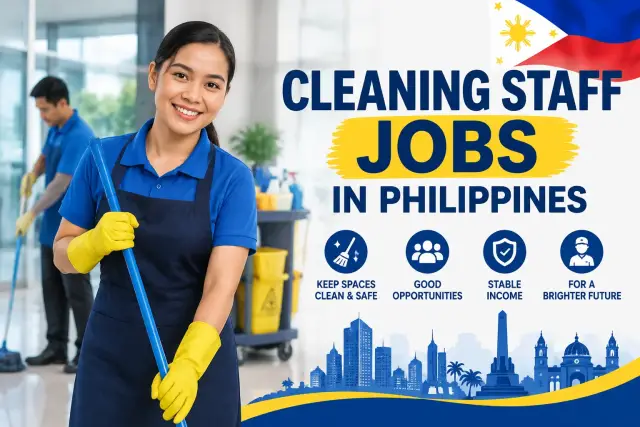
Cleaning Staff Jobs in the Philippines: A Practical Guide
Cleaning staff jobs are available in offices, hotels, hospitals, shopping malls, schools, and homes across the Philippines. If you're looking for a job that doesn't always require a college degree, cleaning work can be a good place to start. It can also lead to supervisory roles or specialized work as you gain experience.
Here's what to know about the work, qualifications, pay, benefits, and where to look for legitimate openings.
What Does a Cleaning Staff Member Do?
Cleaning staff keep workplaces and other spaces clean, orderly, and safe to use. The exact duties depend on the employer. A hotel room attendant, for example, has a different daily routine from someone cleaning an office building.
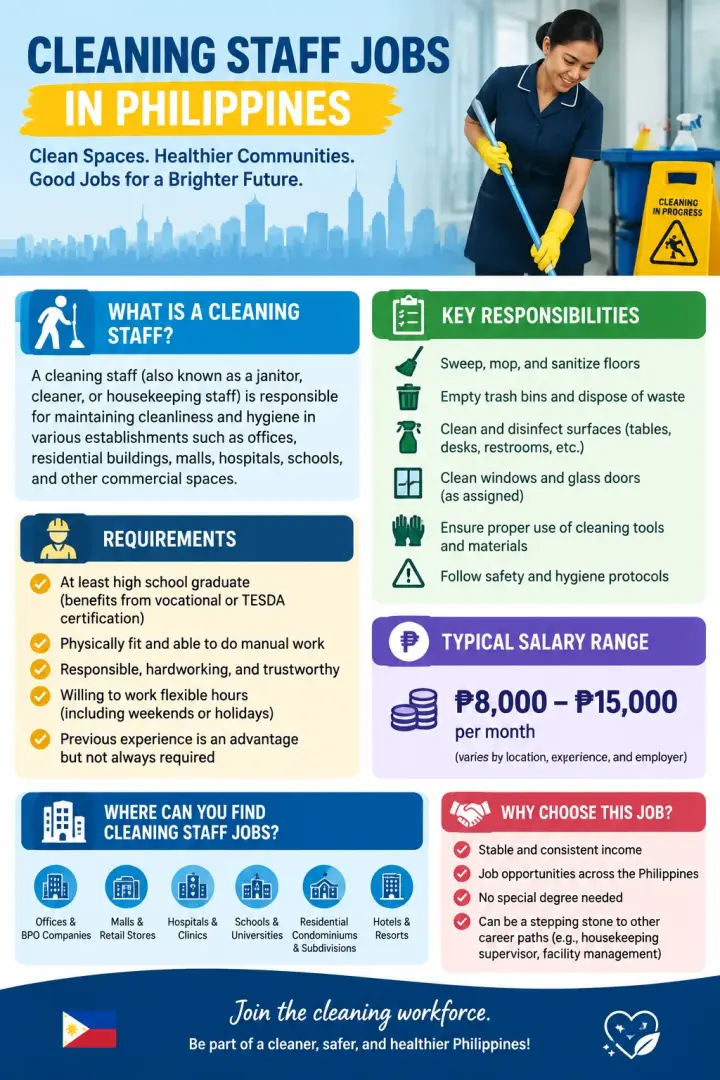
Common responsibilities include:
- Sweeping, mopping, and vacuuming floors
- Dusting desks, shelves, furniture, and other surfaces
- Cleaning and disinfecting toilets and washrooms
- Emptying trash bins and separating waste when required
- Wiping windows, mirrors, doors, and frequently touched surfaces
- Restocking soap, tissue, and other supplies
- Reporting broken equipment, leaks, or safety concerns
- Following schedules and using cleaning products safely
Some jobs also involve making beds, washing dishes, doing laundry, or operating floor-cleaning machines. Before accepting an offer, ask for a clear list of duties. A job advertised simply as a cleaner may include tasks you didn't expect.
Where Can You Find Cleaning Staff Jobs?
Employers hire cleaners in many parts of the country, from Metro Manila and Cebu to smaller cities and towns. Your schedule, workplace, and responsibilities will depend on the type of job you choose.
Offices and commercial buildings
Office cleaners usually look after work areas, meeting rooms, pantries, hallways, and restrooms. Some work before employees arrive or after they leave, so early morning, evening, and night shifts are common.
Hotels and resorts
Hotel housekeeping staff clean guest rooms, change linens, replenish toiletries, and prepare rooms for arriving guests. Attention to detail matters here because employers often follow specific room-cleaning checklists. Weekend and holiday work may be part of the schedule.
Hospitals and clinics
Healthcare facilities need cleaners who can follow strict hygiene and waste-handling procedures. Depending on the role, you may receive training on protective equipment, disinfectants, and areas that need special care. These jobs can be physically demanding and may involve shifting schedules.
Malls, schools, and other facilities
Large facilities hire janitors, utility workers, and maintenance support staff to clean shared spaces. Tasks can include cleaning food courts, corridors, classrooms, or outdoor areas. Job titles vary, so try searching for more than just cleaning staff.
Private homes
Residential cleaners may be hired for regular housekeeping or occasional deep cleaning. Some household workers live with their employers, while others travel to work each day. Ask about the schedule, meals, accommodation, rest days, and full scope of work before agreeing to the job. Different rules may apply to household workers under the Kasambahay Law.
Qualifications and Skills Employers Look For
Many entry-level cleaning jobs don't require a college degree. Some employers ask for a high school diploma, while others focus more on reliability and willingness to learn. Check each job posting because requirements differ.
Useful skills include:
- Attention to detail and the ability to follow instructions
- Time management, especially when cleaning several areas on a schedule
- Basic knowledge of cleaning tools and products
- Physical stamina for standing, walking, bending, and lifting
- Respect for privacy and care around other people's belongings
- Good communication with supervisors, co-workers, and customers
- Willingness to follow workplace safety procedures
Previous cleaning experience can help, but don't assume you need a formal job history to apply. Experience maintaining a home, helping in a family business, or doing community work may be relevant. Be honest about what you've done and focus on skills you can demonstrate.
Is TESDA training required?
TESDA training is not required for every cleaning staff job. Still, a relevant course or qualification, such as Housekeeping NC II, may help you prepare for hotel housekeeping and similar roles. Training and assessment availability can vary by location, so check the TESDA website or contact an accredited training center for current details, costs, and possible scholarships.
Cleaning Staff Salary in the Philippines
Cleaning staff pay depends on the location, employer, schedule, experience, and type of work. A hotel room attendant, part-time residential cleaner, and full-time janitor hired through a service provider may all have different pay arrangements.
For employees covered by minimum wage rules, applicable minimum wages are generally set by region and can change. Look up the latest wage order for your workplace through the National Wages and Productivity Commission or the appropriate Regional Tripartite Wages and Productivity Board. Don't rely on an old salary post without checking its date.
When comparing offers, ask:
- Is the pay stated per day, per month, per hour, or per cleaning job?
- How many days and hours are included?
- Are overtime, night shift, rest day, and holiday work paid as applicable?
- Are there deductions, and what are they for?
- Is transportation, a uniform, or accommodation provided?
- Who is the actual employer: the establishment or a service contractor?
Honestly, a higher daily rate doesn't always mean a better offer if the commute is expensive or the work schedule is unpredictable. Look at the whole arrangement, not just the number in the advertisement.
Benefits and Employment Rights to Check
Eligible employees may be entitled to statutory benefits and protections, including Social Security System (SSS), PhilHealth, and Pag-IBIG Fund coverage, as well as 13th-month pay. Overtime, holiday pay, night shift differential, leave, and other benefits may apply depending on the worker's status and the circumstances.
For example, 13th-month pay generally applies to eligible rank-and-file employees who have worked for at least one month during the calendar year. Household workers and other categories can be subject to specific rules, so check the terms that apply to your job rather than assuming every arrangement is identical.
Ask for a written contract or clear written terms before you start. Keep copies of your agreement, payslips, and records of hours worked. If you're unsure about your rights or an employer's deductions, contact the Department of Labor and Employment (DOLE) for guidance.
How to Apply for Cleaning Staff Jobs
1. Search using different job titles
Employers don't all use the same wording. Try searching for cleaning staff, janitor, utility worker, housekeeper, room attendant, housekeeping attendant, or building cleaner. Add your city or province to find openings closer to home.
You can check established job websites, company career pages, hotel websites, local government job fairs, and your Public Employment Service Office (PESO). Community groups can also be useful, but verify any posting before sharing personal information.
2. Prepare a simple resume
Your resume doesn't need to be fancy. Keep it clear and include your contact details, location, education, relevant experience, skills, and training. If you have references, ask their permission before sharing their contact information.
For an entry-level application, a short skills section might mention safe use of cleaning supplies, time management, and willingness to work shifts. Only list skills you actually have.
3. Get your documents ready
Requirements vary, but employers may ask for valid identification, a resume, proof of education or training, and employment-related records. Some positions may require a medical exam or clearances. Ask the employer which documents are needed, when they're needed, and who will pay for any required checks.
4. Prepare for the interview
An interviewer may ask about your previous work, availability, preferred shift, or how you'd handle a cleaning task. You could also be asked what you'd do if you found a guest's lost item. Give straightforward answers and be ready to explain how you work safely and follow instructions.
It's also your chance to ask questions. Find out about the work location, assigned duties, rest days, pay schedule, protective equipment, and who supervises the team.
How to Spot a Suspicious Job Offer
Job scams can appear on social media, messaging apps, and even legitimate-looking websites. Be careful if someone promises a guaranteed job immediately, pressures you to send money, or refuses to provide an office address and written details.
- Verify the company through its official website or a contact number you found independently.
- Be cautious about sending identity documents to an unverified person or account.
- Don't pay a recruiter just because they claim a payment will secure the job.
- Ask for a written breakdown of any legitimate costs and who is responsible for them.
- Check the employer and recruiter before attending an interview at an unfamiliar location.
If you're considering a cleaning job overseas, verify the recruitment agency and job order through the Department of Migrant Workers (DMW). Overseas recruitment has its own rules and processes, so don't assume that a local job posting or a social media message is enough proof.
Safety Tips for Cleaning Work
Cleaning can involve wet floors, heavy lifting, sharp objects, and chemicals. Employers should provide appropriate training and protective equipment for the work. If you aren't sure how to use a product or machine, ask your supervisor before using it.
- Read product labels and follow the instructions.
- Never mix bleach with ammonia or other cleaning products; dangerous fumes can result.
- Use gloves and other protective equipment appropriate to the task.
- Place warning signs around wet floors when required.
- Report damaged equipment, spills, and unsafe conditions promptly.
- Follow workplace procedures for handling waste and sharp objects.
You shouldn't have to guess about hazardous tasks. Ask for proper instructions, especially in hospitals or other workplaces with special cleaning procedures.
Can a Cleaning Job Lead to Career Growth?
Yes. With experience, you may be able to move into a senior cleaner, team leader, housekeeping supervisor, or facilities support role. Hotel workers might build skills in room inspection, inventory, guest service, and team scheduling. Additional training can also help you qualify for more specialized positions.
A practical first step is to ask your supervisor what the next role requires. Keeping a record of training, good attendance, and responsibilities you've taken on can help when you're ready to apply for a promotion or a new job.
Frequently Asked Questions
Can I apply for a cleaning job without experience?
Yes. Some employers hire entry-level applicants and provide on-the-job training. Read the requirements carefully and highlight relevant skills, such as following instructions, keeping spaces organized, and working reliably.
Are cleaning staff jobs available as part-time work?
Yes. Some homes, offices, and cleaning service providers offer part-time or project-based work. Confirm the expected hours, payment schedule, and employment terms before accepting.
What's the difference between a janitor and a housekeeper?
The titles sometimes overlap. A janitor commonly cleans shared areas in buildings, while a housekeeper may clean guest rooms, homes, or other living spaces. The actual job description matters more than the title.
Where should I report a problem with pay or working conditions?
You can seek guidance from DOLE or its nearest regional or field office. Keep your contract, payslips, messages, and other relevant records so you can explain the issue clearly.
Getting Started
Cleaning staff jobs in the Philippines can suit people who like practical work and take pride in keeping spaces comfortable for others. Start by looking for openings near you, preparing a straightforward resume, and checking each employer carefully. Before saying yes, make sure you understand the duties, pay, schedule, and benefits.