


Plumber Jobs in New Zealand: A Practical Guide
Looking for a plumbing job in New Zealand? Whether you're leaving school, changing careers or bringing experience from overseas, plumbing can offer hands-on work and a range of ways to build your career.
Plumbers work on everything from leaking taps and hot water systems to pipework in new homes and commercial buildings. It's a practical trade, but there's more to it than turning a wrench. You'll need to understand safety rules, communicate with customers and follow New Zealand's licensing requirements.
Here's what to know about plumber jobs in New Zealand, including qualifications, apprenticeships, pay and where to look for work.
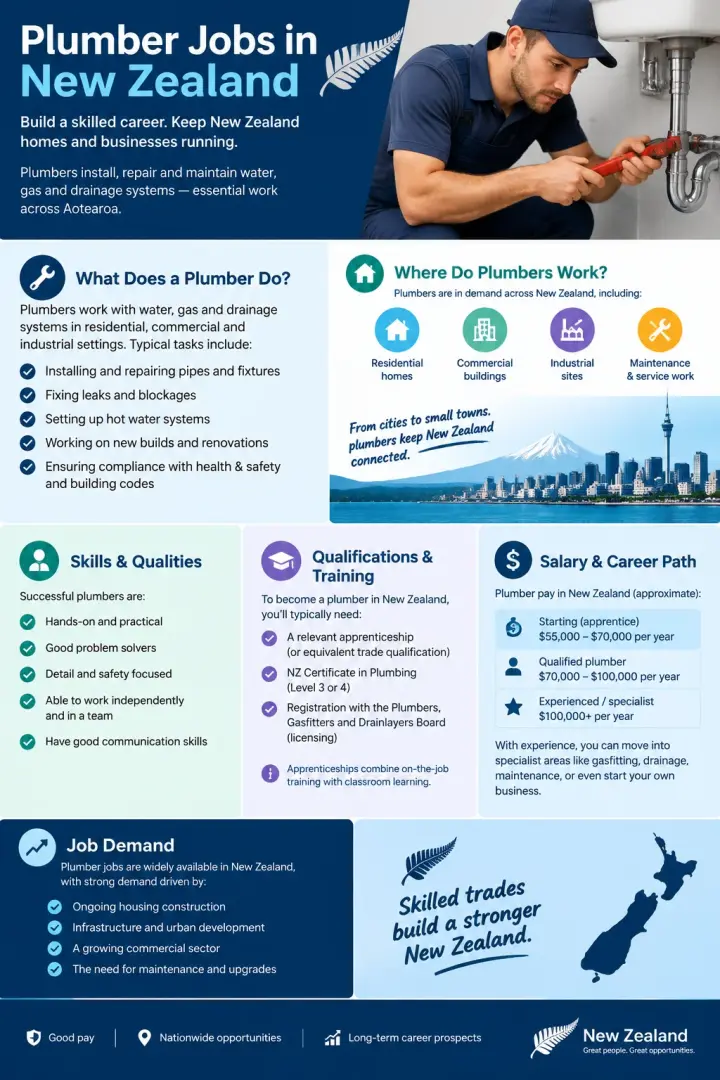
What Does a Plumber Do?
Plumbers install, maintain and repair water and sanitary plumbing systems. The exact work depends on the employer and the job. One day you might be replacing a hot water cylinder; the next, you could be helping fit out a new apartment building.
Typical plumbing duties include:
- Installing and repairing water pipes, taps, toilets and fixtures.
- Finding and fixing leaks or blocked plumbing systems.
- Fitting and maintaining hot water systems.
- Reading plans and measuring pipework for new builds.
- Testing installations and checking that work meets applicable requirements.
- Explaining problems, repair options and costs to customers.
- Keeping tools, vehicles and worksites safe and organised.
Some businesses also offer gasfitting and drainlaying. These are separate regulated trades in New Zealand, so being a plumber doesn't automatically mean you're authorised to do all three. Always check the qualifications and licence required for the work.
Types of Plumbing Jobs in New Zealand
Residential plumber
Residential plumbers work in homes, rental properties and small developments. Jobs can involve renovations, new builds, maintenance and emergency repairs. If you enjoy meeting people and solving different problems throughout the day, this could be a good fit.
Commercial plumber
Commercial plumbing jobs often involve offices, schools, shops, hospitals or larger construction projects. You may work as part of a bigger team and spend more time following detailed plans and coordinating with other trades.
Maintenance and service plumber
Service plumbers respond to faults, carry out repairs and maintain existing systems. Employers may include plumbing companies, facilities management businesses and organisations with large property portfolios. Some roles involve an on-call roster or after-hours work.
New-build plumber
New-build work focuses on installing plumbing as a property is being constructed. You'll usually work alongside builders, electricians and other tradespeople, so timing and communication matter.
Apprentice plumber
Apprentices learn on the job while working towards a relevant qualification. It's a paid pathway into the trade, although apprentice rates are generally lower than those for experienced plumbers. You'll work under the required supervision while developing your skills.
How to Become a Plumber in New Zealand
Plumbing is a regulated trade in New Zealand. The Plumbers, Gasfitters and Drainlayers Board, usually called the PGDB, sets out the registration and licensing requirements. Before accepting or carrying out work, make sure you understand what you're authorised to do.
1. Find an apprenticeship or training pathway
Many people start by finding an employer willing to take them on as an apprentice. You'll combine practical work with formal training and assessments. A pre-trade course can help you build basic skills and meet employers, but it isn't the same as completing an apprenticeship or gaining a licence.
Ask prospective employers or training providers about the qualification, the length of training, supervision and any study costs. The right pathway can depend on your existing experience and the type of work you want to do.
2. Complete the required training and assessments
You'll need to complete the relevant plumbing qualification and meet the PGDB's requirements for registration. These can include examinations and evidence of practical competence. Requirements can change, so check the current details with the PGDB and your training provider rather than relying on an old job advertisement.
3. Register and hold the right licence
Registration and licensing aren't quite the same thing. Registration recognises that you've met the requirements for a class of work; a current practising licence or another appropriate authorisation allows you to work within its conditions. Apprentices and trainees also need the appropriate authorisation and supervision.
A certifying plumber has met additional requirements and can take responsibility for supervising certain work. Check the PGDB website for the rules that apply to your situation, including supervision and licence renewal.
How Much Do Plumbers Earn in New Zealand?
Plumber pay varies depending on experience, location, qualifications and the kind of work involved. An apprentice will normally earn less than a registered, experienced plumber. People with specialist skills, supervisory responsibilities or after-hours duties may earn more.
When comparing plumber job vacancies, look beyond the hourly rate. A job with a slightly lower rate might offer a company vehicle, paid training or regular overtime. A higher advertised rate may reflect on-call work, travel or contract arrangements.
It's worth asking employers about:
- Hourly pay or salary and how often it's reviewed.
- Overtime rates and weekend or emergency call-outs.
- Whether travel time is paid.
- Use of a work vehicle, phone, uniform and tools.
- Support for training, exams and licence renewal.
- Annual leave, sick leave and other employment benefits.
For a current pay guide, compare recent job listings with information from New Zealand government career resources. Advertised ranges can move, and the rate for one region or specialty won't necessarily apply everywhere.
Where to Find Plumbing Jobs in New Zealand
Plumbing opportunities come up in cities, regional centres and smaller towns. Auckland, Wellington and Christchurch have large construction and property markets, while other areas also need plumbers for housing, maintenance and local businesses.
Try a mix of these job-search methods:
- Search job websites such as SEEK, Trade Me Jobs and Indeed.
- Check the careers pages of plumbing companies and construction firms.
- Contact local employers directly, especially if you're looking for an apprenticeship.
- Ask training providers about employer connections and vacancies.
- Use your professional network and let former colleagues know you're looking.
- Speak with recruiters who place tradespeople in construction and maintenance roles.
Try searching for related terms as well as “plumber jobs NZ”. Depending on your experience, “maintenance plumber”, “commercial plumber”, “plumbing apprentice” or “service technician” could bring up useful listings.
Skills Employers Look For
Technical ability matters, but employers also want someone they can rely on. Plumbing often means working in customers' homes, turning up at busy building sites and dealing with unexpected problems.
- Practical problem-solving: Finding the cause of a fault rather than just treating the symptom.
- Attention to detail: Measuring accurately and checking work before a job is finished.
- Communication: Explaining the work clearly to customers, supervisors and other trades.
- Time management: Planning jobs and letting people know when delays happen.
- Safety awareness: Using tools and equipment properly and following site procedures.
- Physical fitness: Being comfortable lifting equipment, working in tight spaces and spending time on your feet.
Many employers also ask for a driver's licence because plumbers often travel between jobs. Check whether a listing requires a full New Zealand licence or accepts an equivalent licence.
Plumbing Jobs for Overseas Workers
If you've trained or worked as a plumber overseas, your experience may be valuable, but it doesn't automatically give you the right to carry out regulated plumbing work in New Zealand.
Start by checking the PGDB's information for overseas-trained applicants. You may need to provide evidence of qualifications and work experience, complete assessments or meet other registration and licensing requirements. Gather documents such as qualification records, references and detailed employment history before you apply.
You'll also need the right to work in New Zealand. Visa eligibility depends on your circumstances and the current immigration rules. If an employer offers a role, check whether the job and employer meet the requirements for the visa you're considering. Immigration New Zealand is the best place to confirm the latest conditions.
Honestly, it's worth sorting out the licensing and visa details early. A job offer is exciting, but you'll want to know what steps remain before you can start work and what supervision may be required.
Employed Plumber or Self-Employed Contractor?
Working for an employer can offer a steady income, a team around you and employment benefits. Depending on the company, you may also get help with training, equipment and finding customers.
Self-employment offers more control over the work you take on and the way you run your business. But you'll also need to manage quoting, invoicing, insurance, tax and customer relationships. As a contractor, you're responsible for understanding your tax and ACC obligations, and you may need to register for GST depending on your turnover.
Neither option is automatically better. If you're considering contracting, compare the full costs and responsibilities with an employee role, not just the advertised hourly rates. An accountant or business adviser can help you work through the numbers.
How to Apply for a Plumber Job
A clear CV can make it much easier for an employer to see where you fit. Keep it focused on your relevant experience and include:
- Your current registration, licence or training status.
- The types of plumbing work you've done and the settings you've worked in.
- Any relevant gasfitting or drainlaying authorisation, stated separately.
- Your driver's licence and work rights, where relevant.
- Qualifications, safety training and practical skills.
- Referees who can speak about your work.
If you're applying for an apprenticeship, you don't need a long trade history. Include practical projects, work experience, customer service roles or anything else that shows you're reliable and keen to learn. A short, specific cover letter explaining why you want to work for that employer can help, too.
Questions to Ask at a Plumbing Job Interview
An interview is your chance to find out whether the job suits you. These questions can help:
- What types of plumbing work will I do most often?
- Who will supervise my work, if supervision is required?
- Is there an on-call roster, and how is it paid?
- What tools and equipment does the company provide?
- What training or progression opportunities are available?
- Where are most jobs based, and how much travel is involved?
Frequently Asked Questions About Plumber Jobs
Do I need a licence to work as a plumber in New Zealand?
Regulated plumbing work requires the appropriate licence or other authorisation. The conditions depend on your status and the work you're doing. Apprentices and trainees must also meet the applicable authorisation and supervision rules. Check with the PGDB before starting work.
Can I become a plumber without experience?
Yes. An apprenticeship is a common starting point for people without trade experience. You'll need to find an employer and complete the required training while working under appropriate supervision.
How long does a plumbing apprenticeship take?
Training often takes several years, but the timeframe can vary with the programme, your prior learning and how quickly you complete the required work and assessments. Ask the employer and training provider for an estimate before you commit.
Are plumbing jobs available outside major cities?
Yes. Homes, businesses and public facilities need plumbing installation and maintenance throughout New Zealand. Vacancy numbers vary by location, so check local employers as well as national job websites.
Can a plumber also work as a gasfitter or drainlayer?
Some tradespeople qualify in more than one area, but plumbing, gasfitting and drainlaying have separate regulatory requirements. You'll need the appropriate registration, licence or authorisation for each type of regulated work you carry out.
Ready to Start Your Plumbing Job Search?
Start by working out which role matches your experience, then check the training and licensing requirements. Search local listings, contact employers and be clear about what you can bring to the job.
Whether you're after a plumbing apprenticeship or your next experienced role, taking a little time to compare employers can help you find a job that fits your skills and the kind of work you enjoy.