


Packing Jobs in New Zealand: Where to Find Work and What to Expect
Packing jobs can be a practical way to start working in New Zealand, change industries or pick up seasonal work. You'll find these roles in warehouses, food factories, horticultural packhouses and online retail businesses. Some are entry-level, while others need experience with machinery, stock systems or team supervision.
The job is often straightforward to learn, but it can be physical. Before applying, it helps to know what you'll be packing, what the hours look like and whether the role is permanent, casual or tied to a particular season.
Here's a guide to finding packing jobs in New Zealand, understanding your employment rights and putting together an application that gives you a fair shot.
What Does a Packing Job Involve?
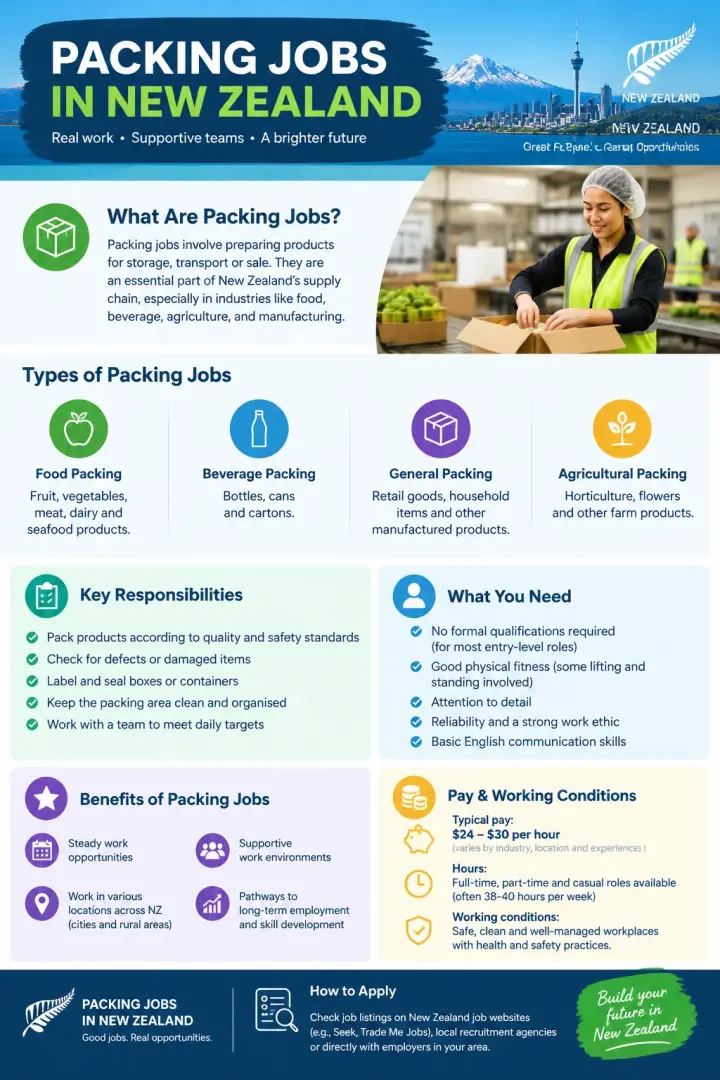
A packer's main job is to prepare products for storage, transport or sale. The details depend on the workplace. You might place apples into cartons, label skincare products, assemble online orders or check food packaging on a production line.
Common tasks include:
- Picking items from shelves and checking them against an order
- Packing products into boxes, bags, trays or other containers
- Weighing, sealing and labelling packages
- Checking products for damage or quality issues
- Keeping work areas clean and following hygiene rules
- Moving stock with trolleys or pallet jacks
- Recording quantities or using a handheld scanner
Some roles involve standing for long periods, repetitive movements or lifting. Job ads should give you an idea of the physical requirements, but it's worth asking for details before you accept an offer.
Types of Packing Jobs in New Zealand
Warehouse picker and packer
Warehouse workers collect products from storage locations, pack orders and prepare them for delivery. You might use a scanner, follow a picking list and help with stock checks. These jobs are common around larger cities and distribution hubs, especially Auckland and Christchurch.
Fruit and vegetable packhouse worker
Packhouses grade and pack produce for local sale and export. Work may include sorting fruit by size and quality, filling trays or boxes, and checking labels. These roles often increase during harvest periods and can be a good option if you're looking for seasonal work.
Food production packer
Food packers work with products such as baked goods, meat, seafood or ready-made meals. Hygiene is a big part of the job. You may need to wear protective clothing, follow strict cleaning procedures and work in a chilled environment.
Factory or manufacturing packer
Manufacturing businesses employ packers to prepare finished goods for dispatch. Depending on the product, the role could involve operating basic equipment, checking packaging quality or working alongside a production line.
Online order fulfilment worker
As online stores receive orders, fulfilment teams pick, pack and label them for couriers. Accuracy matters here: the right product, quantity and delivery label all need to match. Workloads can rise before major sales and holiday periods.
Where to Find Packing Jobs in New Zealand
Start with the main job websites, then check local employers directly. Not every business advertises in the same place, and seasonal vacancies may appear only a few weeks before work begins.
- Job boards: Search SEEK, Trade Me Jobs and Indeed for packer, picker packer, packhouse worker and production worker roles.
- Recruitment agencies: Agencies often recruit for warehouse, manufacturing and temporary assignments. Ask how shifts are offered and who your employer will be.
- Employer websites: Look at careers pages for supermarkets, logistics companies, food producers and horticulture businesses.
- Work and Income: If you're eligible for its support, ask about local vacancies and job-search assistance.
- Local networks: Community noticeboards and local groups can point you towards opportunities, although you should check each employer carefully before sharing personal details.
Try location-specific searches such as packing jobs in Auckland, warehouse picker packer Christchurch or seasonal packhouse jobs Hawke's Bay. Set up alerts so you're not checking the same searches every day.
Popular Locations for Packing Work
Packing jobs are available across the country, but the type of work varies by region:
- Auckland: Warehousing, distribution, manufacturing and online order fulfilment.
- Waikato: Food processing, manufacturing and distribution roles.
- Bay of Plenty: Kiwifruit packhouses and other horticultural work.
- Hawke's Bay: Apple, pear and other produce packing.
- Nelson and Tasman: Horticulture, seafood and food production.
- Canterbury: Warehousing, food processing and manufacturing.
- Otago and Southland: Seasonal fruit work in some areas, alongside food processing and distribution.
Availability changes with the season, the harvest and local demand. If you're planning to move for a job, check transport and accommodation costs before committing. A vacancy in a rural area isn't always easy to reach without a car.
When Are Seasonal Packing Jobs Available?
Fruit packing follows harvest times, which vary by crop, region and weather. As a rough guide, cherry work can be available during the summer, apple packing often picks up from late summer into autumn, and kiwifruit packing commonly runs through autumn and into winter.
Those are guides, not guaranteed dates. Contact packhouses early and ask when recruitment starts, how long the season is expected to last and whether hours depend on the amount of fruit arriving.
Seasonal work can be useful if you want a short-term job, but don't assume you'll get full-time hours every week. Weather, harvest volumes and production schedules can all affect shifts.
How Much Do Packing Jobs Pay?
Pay varies by employer, location, experience, shift and the type of work. Some jobs pay an hourly rate, while others may use a piece rate based on the amount packed. Check the full terms rather than relying on a headline figure in an advertisement.
New Zealand's minimum wage rates can change. Before accepting a job, check the current applicable rate on the Employment New Zealand website. Most employees must receive at least the relevant minimum wage for each hour worked, even where a piece-rate system is used.
Also ask about night-shift allowances, overtime rates and whether training is paid. Extra rates aren't automatic for every shift or every hour of overtime; what applies will depend on your agreement and the law.
Hours, Shifts and Working Conditions
Packing jobs can be full-time, part-time, casual, fixed-term or permanent. Warehouses and factories may run early morning, evening or overnight shifts. Packhouses may have longer days during busy periods, followed by quieter weeks.
Before accepting an offer, ask:
- How many hours are guaranteed, if any?
- What are the usual start and finish times?
- Are weekends or public holidays part of the roster?
- How much notice will I get for shifts or changes?
- Is the workplace accessible by public transport at those times?
- Will I be working in a cold room or lifting heavy items?
Honestly, the start time can matter as much as the hourly rate. A good-looking offer may be difficult to manage if your shift begins before buses run or your childcare is available.
Skills and Qualifications Employers Look For
Many entry-level packing jobs don't require formal qualifications. Employers are often more interested in reliability, a good attitude and your ability to follow instructions safely.
Useful skills include:
- Attention to detail when checking orders and labels
- Time management and the ability to keep a steady pace
- Basic reading, counting and communication skills
- Comfort working as part of a team
- Awareness of food hygiene or workplace safety
- Experience with scanners, stock systems or production lines
Some roles may require a driver's licence, a forklift qualification or specific experience. Don't claim a licence or skill you don't have. If training is offered, say you're willing to learn instead.
How to Apply for Packing Jobs
1. Make your CV relevant
Keep your CV clear and easy to scan. Include your contact details, work history and skills that match the advertisement. Retail, hospitality, cleaning and farm work can all show useful experience, even if you haven't worked in a warehouse.
For example, you could mention that you handled stock, followed hygiene procedures, worked early shifts or checked customer orders. If you're new to paid work, include relevant volunteering, study or practical responsibilities.
2. Address the job requirements
A short cover letter or application message can explain why the role suits you. Mention your availability, location and any relevant experience. If the ad asks about work rights, answer accurately and be ready to provide evidence when appropriate.
3. Prepare for the interview
You may be asked how you stay accurate during repetitive tasks, whether you can work the advertised shifts or what you'd do if you noticed a damaged product. Have a few examples ready. It's also a chance to ask about training, safety and guaranteed hours.
4. Read the offer before signing
Check the employer's name, pay rate, hours, location and employment type. If anything is unclear, ask for an explanation. You should have a written employment agreement and a reasonable opportunity to get advice before agreeing to it.
Can Overseas Workers Apply?
Yes, people from overseas can apply, but you must have the legal right to do the work in New Zealand. Your visa conditions matter: some visas allow open work rights, while others limit the employer, occupation, location or length of employment.
A job advertisement mentioning visa support doesn't guarantee that a visa will be approved. For an employer-supported work visa, the employer and job must meet the relevant Immigration New Zealand requirements, and the applicant must qualify. Rules can change, so check the current guidance directly with Immigration New Zealand before making plans or paying for travel.
If you're on a working holiday visa or a seasonal visa, check its specific conditions before accepting shifts. Don't start work until your visa permits it.
Know Your Employment Rights
Employees in New Zealand have minimum employment rights, including rights relating to pay, breaks, holidays and workplace safety. These generally apply to migrant workers too. Useful points to check include:
- Minimum pay: You must receive at least the applicable minimum wage for hours worked, subject to the relevant rules.
- Rest and meal breaks: Employees are entitled to breaks based on the length of their work period. Rest breaks are paid; meal breaks are generally unpaid.
- Annual holidays: Most employees become entitled to at least four weeks of paid annual holidays after 12 months of continuous employment. Different arrangements can apply to some eligible fixed-term or intermittent roles.
- Public holidays: Entitlements depend on whether the day would otherwise be a working day and whether you work it. If you work on a public holiday, you must generally be paid at least time and a half, and you may also be entitled to an alternative holiday.
- Deductions: Check any proposed deductions for accommodation, transport or other costs. Deductions must meet legal requirements, including consent where required.
- Safety: Employers must manage workplace risks. You should receive appropriate information and training for the work you're asked to do.
Keep copies of your agreement, rosters and payslips, and record your hours. For current information or help with a workplace problem, contact Employment New Zealand. WorkSafe New Zealand provides information about health and safety.
How to Spot a Packing Job Scam
Most employers want to fill genuine vacancies, but fake job ads do exist. Be cautious if someone offers a job without a proper conversation, promises a guaranteed visa or asks you to send money to secure a position.
- Check that the business has a genuine website and contact details.
- Be wary of recruiters using only personal email addresses or messaging apps.
- Ask for a written offer and check who will employ and pay you.
- Don't hand over passport or bank details until you've verified who you're dealing with and understand why they're needed.
- Don't pay an employer or agent a fee for getting you a job. Check the rules around any other proposed costs with official sources.
If the offer feels rushed or the details keep changing, pause and check. Immigration New Zealand and Employment New Zealand both publish guidance on avoiding exploitation and reporting concerns.
Frequently Asked Questions
Can I get a packing job without experience?
Yes. Many employers provide on-the-job training for entry-level roles. Show that you can follow instructions, arrive on time and handle the physical requirements. Relevant experience from other jobs can still help.
Are packing jobs physically demanding?
They can be. Some involve lifting, standing for most of a shift or repeating the same movements. Ask the employer about typical weights, the pace of work, equipment and any protective gear before accepting.
Are accommodation and transport included?
Sometimes, particularly for seasonal roles, but don't assume they're free or guaranteed. Ask for the cost, location, conditions and any deductions in writing. Work out whether the remaining pay will cover your living expenses.
Can a packing job lead to other work?
It can. With experience, you may be able to move into quality control, machine operation, inventory, team leadership or other logistics roles. The opportunities depend on the employer and any training or qualifications required.
Getting Started
Look for roles that match your location, availability and work rights, then tailor your CV to the tasks in the ad. Ask clear questions about pay, hours and conditions before you commit. Whether you're after a seasonal packhouse role or a longer-term warehouse job, a little checking upfront can help you find work that fits.