

Driver Jobs in New Zealand: A Practical Guide
Driver jobs in New Zealand can look very different depending on the vehicle, the employer and the route. You might spend your day delivering parcels around Auckland, driving a truck between regions, taking passengers to work or school, or moving goods around a local site.
If you enjoy being on the road and working independently, driving could be worth exploring. But the right job isn't just about liking cars or trucks. You'll need the correct licence, a sensible approach to safety and, in many roles, the ability to deal with customers and paperwork too.
Here's a practical look at driver jobs in New Zealand, including common roles, licence requirements, pay questions and ways to find work.
What Types of Driver Jobs Are Available?
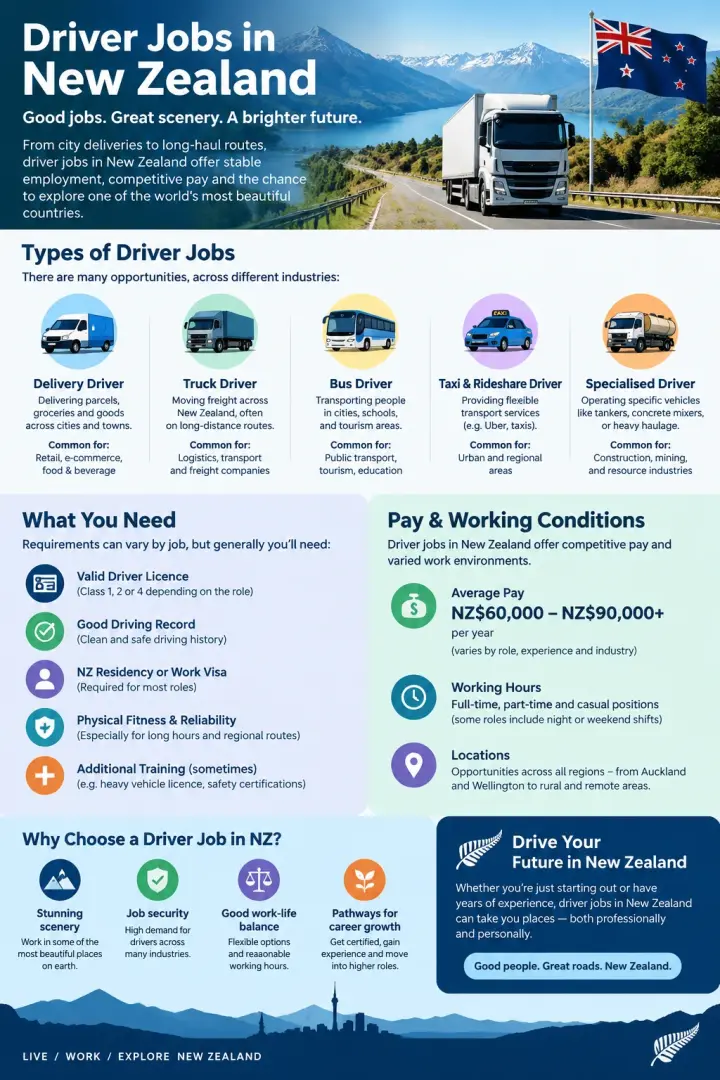
Driving jobs are advertised across the country, from busy cities to rural communities. Some are entry-level roles, while others call for heavy vehicle experience or specialist endorsements.
Delivery driver jobs
Delivery drivers transport parcels, groceries, furniture, food and other goods. Some work for courier companies or retailers, while others deliver for local businesses. Routes can be regular or change from day to day.
Many light-vehicle delivery jobs ask for a full Class 1 licence. You'll often need to lift packages, use a delivery app and manage your time well. Customer service matters too, especially when you're delivering to homes or handling returns.
Courier driver jobs
Courier work is a good fit for people who don't mind frequent stops and a fast-moving schedule. You may pick up and deliver packages within a set area, using a van or small truck.
Check whether a courier role is an employee position or an independent contractor arrangement. Contractors may need to provide a vehicle and cover expenses such as fuel, insurance and maintenance. Those costs can make a big difference to what you actually take home.
Truck driver jobs
Truck drivers move freight, construction materials, livestock, food and other loads. Depending on the role, you could be driving locally, travelling between regions or spending nights away from home.
Employers usually specify the heavy vehicle licence class they need, such as Class 2, 4 or 5. They may also ask for experience with a particular vehicle or load. Some jobs involve loading and unloading, securing freight or operating equipment as well as driving.
Bus and passenger driver jobs
Bus drivers work on urban routes, school services, charters and long-distance trips. Other passenger roles include taxi, shuttle and rideshare driving. These jobs suit people who are comfortable dealing with the public and keeping to a schedule.
Passenger service roles generally require a passenger, or P, endorsement in addition to the appropriate driver licence. There may also be operator or vehicle requirements, so check the rules for the specific service you want to provide.
Specialist driving roles
Some employers need drivers for tankers, recovery vehicles, waste collection, concrete trucks or refrigerated transport. These roles can offer variety, but they may also require extra training, endorsements or experience handling particular equipment and loads.
Which Licence Do You Need to Drive for Work?
The answer depends on the vehicle and the job. Start by reading the advertisement carefully, then check the current requirements with NZ Transport Agency Waka Kotahi, often called NZTA.
Class 1 licence
A Class 1 licence covers most cars and many light vehicles. It's commonly requested for car, van and some light delivery roles. Employers often ask for a full licence rather than a learner or restricted licence, even where the law might allow some driving under restrictions.
Heavy vehicle licences
New Zealand has separate licence classes for heavier vehicles. The class you need depends on the vehicle and its weight or combination. If you're looking at truck driver jobs, don't assume that one heavy vehicle licence covers every truck.
Getting a heavy vehicle licence generally involves meeting eligibility requirements and passing the relevant tests or completing an approved course where applicable. NZTA can explain the current pathway and any required time on a licence.
Endorsements and extra training
Some driving work needs an endorsement as well as a licence. Examples include:
- Passenger, or P: For drivers carrying passengers in certain commercial services.
- Dangerous goods, or D: For transporting dangerous goods when an endorsement is required.
- Forklift, or F: For driving a forklift on a road. Separate operator training may also be needed for workplace use.
- Vehicle recovery, or V: For certain vehicle recovery operations.
Not every role requires an endorsement, and the details depend on the work. Ask the employer and check NZTA's current guidance before paying for training.
How Much Do Drivers Earn in New Zealand?
Driver pay varies widely. A local van delivery role won't necessarily pay the same as a long-haul Class 5 truck job, and a contractor's advertised earnings aren't directly comparable with an employee's wage.
When comparing driver jobs in New Zealand, look beyond the headline figure. Ask about:
- Hourly pay versus a salary, daily rate or payment per delivery.
- Guaranteed hours and the likely length of a shift.
- Overtime, weekend, night or public holiday arrangements.
- Allowances for meals, travel or overnight stays.
- Whether training, uniforms and licence costs are covered.
- Vehicle, fuel, insurance and maintenance costs if you're a contractor.
Honestly, a slightly higher advertised rate can be less attractive if the hours are unpredictable or you have significant costs to cover. Check current listings in your area and compare the full terms. Employment New Zealand publishes current information on minimum pay rates and employment rights.
Where Are Driver Jobs Available?
You'll find driving opportunities throughout New Zealand, although the type of work varies by location.
- Auckland: Parcel delivery, passenger transport, freight and distribution roles are common around the region's large population and transport hubs.
- Waikato and Bay of Plenty: Look for freight, agricultural, port-related and regional delivery work.
- Wellington: Passenger services, courier work and deliveries serving businesses and government offices are worth checking.
- Canterbury: Christchurch offers distribution and delivery opportunities, with rural and regional transport jobs beyond the city.
- Otago and Southland: Depending on the season and location, you may find tourism, agricultural, passenger and freight roles.
Don't limit your search to the city name. Try nearby towns, industrial areas and regional routes too. Some employers advertise by depot location rather than the area you'll be driving through.
How to Find Driver Jobs in New Zealand
Start with job sites such as SEEK, Trade Me Jobs and Indeed. Search using the licence class or vehicle type as well as the job title. For example, try “Class 2 driver Christchurch”, “delivery driver Auckland” or “bus driver Wellington”.
It's also worth checking the careers pages of transport operators, courier companies, supermarkets, councils and bus companies. Local recruitment agencies may know about temporary or permanent vacancies that aren't widely advertised.
Set up job alerts and read the requirements before applying. A role labelled “driver” can range from a light van position to a specialist truck job, so the details matter.
What Employers Usually Look For
A licence is the starting point, but employers also want someone they can trust with a vehicle, a load and other road users. Depending on the job, they may look for:
- A suitable current New Zealand licence and any required endorsements.
- A safe driving history and willingness to follow road and workplace rules.
- Experience with the relevant vehicle, route or type of load.
- Reliability, punctuality and clear communication.
- Ability to use delivery apps, complete logs or handle basic paperwork.
- Physical fitness for loading, unloading or repeated stops, where the role requires it.
- Good customer service and the ability to work without close supervision.
Some employers may request a driving record, references, a medical assessment, a police check or drug and alcohol testing. The checks should be relevant to the role, so ask what's involved during the hiring process.
How to Apply for a Driver Job
Keep your CV clear and relevant. Put your licence class and any endorsements where an employer can find them quickly. If you have driving experience, mention the vehicles you've used, the areas you've covered and the types of loads or passengers you've handled.
Include related experience even if your previous job title wasn't “driver”. Warehouse work, customer service, route planning, stock handling and operating equipment can all be useful. Be specific about what you did rather than relying on phrases like “hard worker”.
If you're new to the industry, don't claim experience you don't have. Highlight your full licence, reliability, willingness to learn and any relevant training. A short cover letter explaining why the role suits you can help, particularly when you're changing careers.
Questions to Ask Before Accepting an Offer
A job advertisement rarely tells you everything. Before you say yes, it's sensible to ask:
- Am I being hired as an employee or engaged as a contractor?
- What are the normal start times, shift lengths and days of work?
- Is the route local, regional or long-distance?
- Will I be expected to load and unload, and what equipment is available?
- Which vehicle will I drive, and who is responsible for its maintenance?
- What training and induction will I receive?
- How are delays, overtime and overnight trips handled?
Employees and contractors have different rights and responsibilities. Employees may be entitled to protections such as annual holidays, sick leave and public holiday benefits, subject to the relevant rules. Get the agreement in writing, read it carefully and check Employment New Zealand if you're unsure about a term.
Safety and Working Hours
Driving for work can be tiring, especially when shifts start early or involve long distances. Vehicle checks, safe loading, rest breaks and realistic schedules all matter.
Work-time and logbook rules apply to many commercial transport drivers, with requirements and exceptions depending on the operation. Check NZTA's current guidance for your role. If you're an employee, your employer also has workplace health and safety responsibilities. Don't be afraid to ask how fatigue, vehicle faults and unsafe loads are reported.
Can Overseas Drivers Work in New Zealand?
It depends on your right to work, your licence and the position. An overseas licence may be usable for a limited period in some circumstances, but conversion rules and time limits depend on the licence and vehicle class. A commercial employer may also require a New Zealand licence or endorsement.
If you're not a New Zealand citizen or resident with an appropriate right to work, check the current visa requirements with Immigration New Zealand. Having a job offer doesn't automatically guarantee a visa. Be cautious of anyone promising a job or visa in exchange for a large upfront payment, and verify employers and advisers before sharing money or documents.
Frequently Asked Questions About Driver Jobs
Can I get a driver job with no experience?
Yes, some delivery and trainee roles consider applicants without professional driving experience. You'll still need the licence required for the vehicle, and many employers prefer a full licence and a good driving record. Look for listings that mention training or entry-level applicants.
Do I need my own vehicle?
Not always. Many employees drive a company vehicle, while some courier and rideshare contractors use their own. Check who pays for fuel, insurance, servicing and repairs before accepting the role.
Can I work part-time as a driver?
Part-time and casual opportunities exist in delivery, passenger transport and other areas. Availability varies by location, and some shifts include early mornings, evenings or weekends.
Is truck driving a good career in New Zealand?
It can be a good fit if you enjoy driving, take safety seriously and are comfortable with the hours. The best role depends on whether you want local work, long-distance travel or a specialist job. Compare the training costs and working conditions before choosing a path.
Finding the Right Driving Role
The best driver job isn't necessarily the one with the longest route or the biggest vehicle. Think about the hours you want, the licence you hold and whether you prefer working with customers, freight or passengers.
Start with current vacancies in your area, check the licence requirements and ask plenty of questions about pay and conditions. With the right preparation, you can find a driving role that fits both your experience and your lifestyle.