

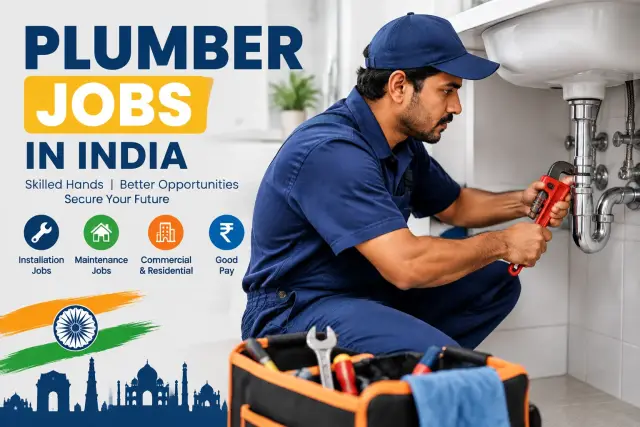
Plumber jobs in India can offer a practical career path for people who like hands-on work and solving problems. From fixing a leaking tap in an apartment to installing pipes on a construction site, plumbers are needed wherever water and drainage systems need to work properly.
You don't always need a college degree to get started. What matters most is learning the trade, working safely and building a reputation for reliable work. Here's a look at plumber job opportunities in India, the skills employers look for, possible earnings and how to find your first role.
What does a plumber do?
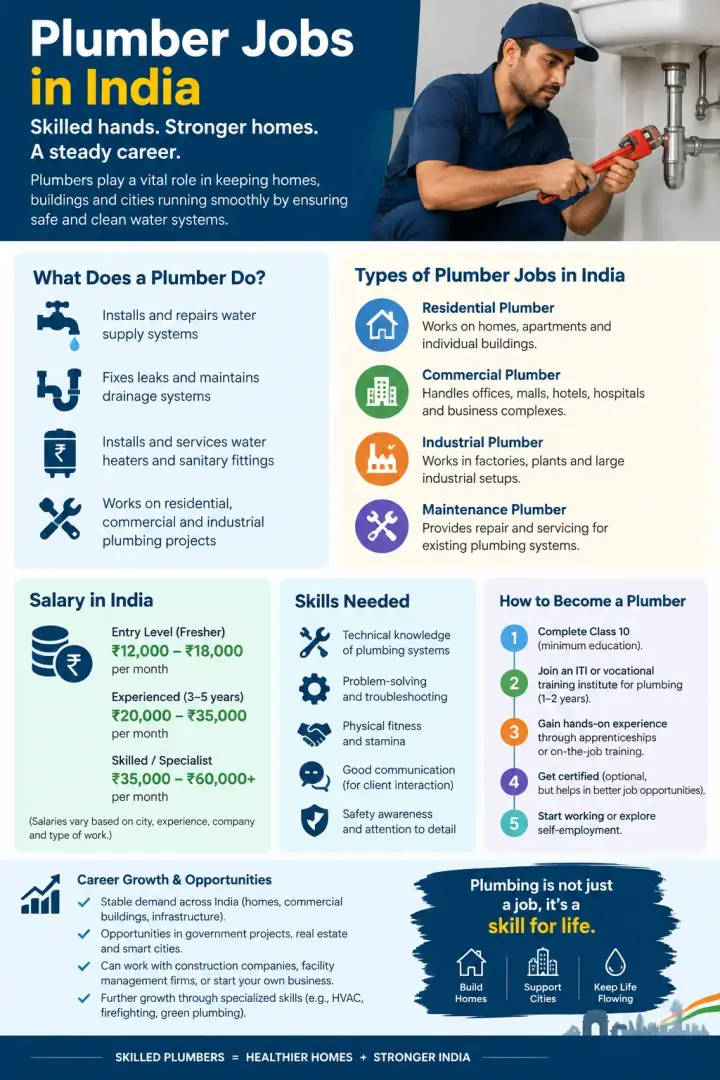
A plumber installs, repairs and maintains systems that carry water and wastewater. The exact work depends on the job. A residential plumber might spend the day fixing taps and toilets, while someone on a large project could be installing pipework from a construction drawing.
Common plumbing tasks include:
- Installing water supply lines, drainage pipes and bathroom fittings
- Finding and repairing leaks, blockages and damaged pipes
- Connecting sinks, toilets, showers, water tanks and pumps
- Checking water pressure and testing new installations
- Reading basic drawings and measuring pipe lengths
- Replacing worn-out valves, joints and other fittings
- Explaining repairs and maintenance needs to customers
Some roles also involve coordinating with electricians, masons, site supervisors and other workers. It helps to be comfortable working in a team as well as independently.
Types of plumber jobs in India
Plumbing isn't limited to house calls. There are several ways to work in the trade, and each offers a different routine.
Residential plumber
Residential plumbers work in houses, apartments and housing societies. They handle everyday issues such as leaking taps, clogged drains and faulty flush tanks. This work suits people who enjoy meeting customers and dealing with different problems each day.
Commercial and maintenance plumber
Hotels, hospitals, offices, malls and schools need regular plumbing maintenance. A plumber in a facility management team may inspect equipment, respond to complaints and carry out scheduled repairs. These roles can offer more predictable work locations, although shifts or emergency calls may be part of the job.
Construction plumber
Construction plumbers install pipe systems in new buildings and renovation projects. They work from site plans, measure and fit pipes, and coordinate their work with other trades. Jobs may be available with building contractors, plumbing contractors and real estate project teams.
Industrial plumber or pipe fitter
Factories and industrial facilities may hire plumbers or pipe fitters to install and maintain utility lines. These jobs can require additional training, familiarity with specific materials and strict safety procedures. Always check the job description: pipe fitter and plumber roles can overlap, but they aren't necessarily the same.
Self-employed plumber
Many plumbers work independently, finding customers through referrals, local contacts or service platforms. Self-employment offers flexibility, but it also means handling your own tools, travel, pricing, customer communication and periods when work is slow.
Plumber salary in India
Plumber earnings vary widely by city, experience, employer, technical skills and type of work. As a rough guide, a beginner working as a helper or trainee may see offers around ₹8,000–₹15,000 a month. A plumber with some experience might earn around ₹15,000–₹25,000 a month, while skilled plumbers, supervisors or specialists may earn more.
These are illustrative ranges, not guaranteed salaries. Some jobs include overtime, accommodation or travel support; others don't. Pay can also differ between a permanent employee, a daily-wage worker and a contractor.
For self-employed plumbers, customer payments aren't the same as take-home income. Travel, tools, materials, platform fees and unpaid time between jobs can all reduce what you keep. Before accepting a job, ask whether the quoted pay is monthly or daily, what hours it covers and when you'll be paid.
How to become a plumber in India
There isn't just one route into plumbing. You can start by learning from an experienced worker, taking a vocational course or combining formal training with on-the-job experience.
1. Check your education and training options
Some employers hire helpers without formal plumbing qualifications and train them on the job. Others prefer candidates who have completed an Industrial Training Institute, or ITI, course in the plumber trade or another relevant vocational programme.
Eligibility and course availability can differ by institute and programme. Check the admission notice for the required education, age criteria, duration, fees and whether the training includes practical work. Look at government and recognised private institutes, and verify the course details before paying.
2. Gain practical experience
Plumbing is a skill you develop by doing. An apprenticeship, trainee role or helper job can teach you how tools are used, how fittings are installed and how experienced plumbers diagnose faults. You can explore apprenticeship opportunities through official government apprenticeship portals as well as local employers.
Early on, focus on getting the basics right: measuring accurately, choosing the correct fitting, preventing leaks and keeping the work area safe. Ask questions and practise under supervision rather than taking on work you're not ready to handle.
3. Build a record of your work
Keep copies of training certificates and experience letters. If you're working independently, customer references and photos of completed work can help too, provided you have permission to use the photos. A simple record makes it easier to show an employer or customer what you can do.
4. Keep learning
Once you're comfortable with basic repairs, you can build skills in areas such as pumps, water-saving fixtures, larger installations or site supervision. For specialised work, look for training that matches the equipment and safety requirements involved.
Skills needed for plumber jobs
Good plumbing takes more than knowing how to use a wrench. Employers and customers also value someone who can find the cause of a problem and finish the job neatly.
- Technical skills: Understanding common pipe materials, fittings, valves, drainage and water supply systems.
- Measurement: Taking accurate measurements and following basic layouts or drawings.
- Problem-solving: Checking the source of a leak or blockage instead of guessing.
- Physical fitness: Working in tight spaces, lifting equipment and spending time standing or bending.
- Communication: Listening to customers, explaining the work and reporting issues to a supervisor.
- Time management: Arriving on time and giving realistic updates if a repair takes longer than expected.
- Safety awareness: Using suitable protective equipment and following site procedures.
Honestly, reliability matters as much as many people think it does. A plumber who shows up, explains the cost clearly and cleans up after a job is more likely to be remembered and recommended.
Where to find plumber jobs in India
Start your search with a few different channels rather than relying on just one. Try job portals, local contractors, building maintenance companies and your own network.
- National Career Service: Search the official NCS portal for suitable vacancies and check the details with the listed employer.
- Job websites: Search for plumber, plumbing technician, maintenance plumber, plumber helper and pipe fitter roles.
- Construction and plumbing contractors: Ask about openings on local projects and share your contact details and experience.
- Facility management companies: Look for maintenance vacancies in offices, hospitals, hotels and housing societies.
- Training institutes: Ask your ITI or training provider about placement support and apprenticeship opportunities.
- Local contacts: Let hardware shops, experienced plumbers and people in your community know you're looking for work.
When searching online, add your city or area to the job title. For example, try plumber jobs in Mumbai, plumber jobs in Delhi or plumbing technician jobs in Bengaluru. Also check the work location carefully; a job listed in a city may involve travelling to different sites.
How to apply for a plumber job
Your application doesn't need to be fancy. It should make it easy for an employer to see your skills and contact you.
- Include your name, phone number and current location.
- List any ITI course, apprenticeship or other relevant training.
- Describe your experience with installations, repairs, maintenance or construction work.
- Mention tools, pipe materials and equipment you're comfortable using.
- Add previous employers or references if you have them and they agree to be contacted.
If you're a fresher, be honest about it. Mention practical training, workshop projects and your willingness to work as a trainee or helper. An employer may be happy to teach someone who's punctual and ready to learn.
Questions to ask before accepting an offer
Ask about the work location, hours, weekly off, pay, overtime and payment schedule. Find out whether the employer provides tools, safety gear, transport or accommodation, if relevant. For construction work, ask who supervises the team and whether the job is for one project or an ongoing position.
Be cautious with anyone who promises a job in exchange for an upfront payment. Verify the employer and vacancy independently, and don't share sensitive documents or bank details until you're satisfied the opportunity is genuine.
Working conditions and safety
Plumbers may work indoors or outdoors, in occupied homes, on construction sites or in industrial spaces. Some jobs involve urgent call-outs, dirty water, heavy materials or awkward positions. The hours can vary, especially when a customer or facility needs an emergency repair.
Use appropriate gloves, footwear and eye protection for the task, and follow the site's safety rules. Isolate the water supply where needed and check for electrical hazards before starting. Don't enter a confined space or work on gas lines, hazardous systems or unfamiliar equipment without the required training, authorisation and safety arrangements.
Career growth for plumbers
A helper can progress to a plumber, then take on more complex jobs or supervise a team. With experience, some workers move into site supervision, maintenance management or specialist installation. Others build a customer base and start their own plumbing service.
If you want to work independently, start by learning how to prepare clear estimates, track expenses and communicate with customers. Agree on the scope of work and material costs before starting, and check the registration, tax and other requirements that apply to your business locally.
Frequently asked questions about plumber jobs
Can I become a plumber without an ITI certificate?
Yes, some people enter the trade as helpers or trainees and learn under experienced plumbers. However, certain employers or apprenticeships may ask for formal training or specific qualifications. Check each vacancy before applying.
Are plumber jobs available for freshers?
Yes. Look for plumber helper, trainee plumber and apprenticeship openings. These roles can be a good way to learn basic installations and repairs while gaining practical experience.
Do plumbers need their own tools?
It depends on the employer. Some companies provide tools and safety equipment, while independent plumbers usually buy their own. Ask what's provided before joining or accepting a contract.
What is the difference between a plumber and a pipe fitter?
Plumbers commonly work on water supply, drainage and sanitary fittings. Pipe fitters often work on larger or more specialised piping systems, including industrial installations. Duties can overlap, so read the job description rather than relying on the title alone.
Is plumbing a good career in India?
It can be a rewarding choice if you enjoy practical work, don't mind travelling or working in varied conditions, and are willing to keep learning. Earnings and job stability depend on your skills, location and employment arrangement.
Whether you're looking for your first trainee position or planning to work independently, start with solid practical skills and safe habits. Build trust one job at a time, and keep an eye out for opportunities to learn from experienced people in the trade.