


Restaurant Jobs in Canada: A Practical Guide to Getting Hired
Looking for a restaurant job in Canada? Whether you're after your first part-time job, a full-time kitchen role or a management position, restaurants offer a wide range of opportunities. You might work at a neighbourhood café, a busy hotel restaurant, a food truck or a fine-dining establishment.
Some roles are a great fit if you enjoy talking to people. Others are better suited to someone who likes working behind the scenes. Honestly, the best restaurant job isn't always the one with the fanciest title. It's the one that fits your skills, schedule and goals.
Here's what to know about restaurant jobs in Canada, from common positions and qualifications to pay, applications and workplace rights.
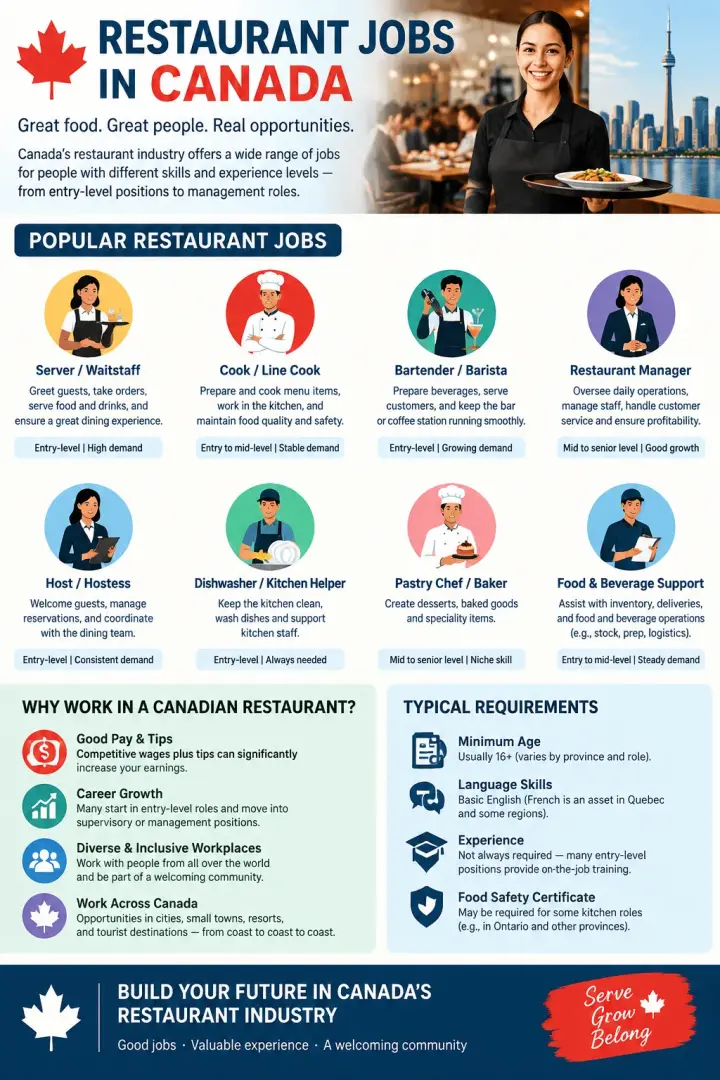
What Types of Restaurant Jobs Are Available?
Restaurant teams are usually split between front-of-house staff, who work with customers, and back-of-house staff, who prepare food and keep the kitchen running. Smaller restaurants may expect people to help in both areas.
Server
Servers take orders, answer questions, deliver food and handle payments. You'll need to stay organized, communicate clearly and keep your cool when several tables need attention at once. In some restaurants, servers also prepare drinks or help clean and reset tables.
Many server positions involve evenings, weekends and holidays. Tips may be part of your earnings, but the amount can vary considerably by restaurant, shift and local tipping practices.
Host or Hostess
Hosts greet guests, manage reservations and help coordinate seating. It's often an approachable entry-level restaurant job, especially if you're friendly and comfortable speaking with customers. You may also answer the phone, organize takeout orders or help with simple cleaning tasks.
Bartender
Bartenders prepare drinks, serve customers and keep their work area stocked and clean. Employers often look for knowledge of cocktails, beer, wine and responsible alcohol service. Depending on where you work, you may need an approved alcohol service certification before you start serving.
Cook or Line Cook
Cooks prepare ingredients, follow recipes and make sure meals are ready on time. A line cook might be responsible for one station, such as the grill, fryer or salads. The work can be physically demanding, especially during a busy dinner service, but it's a useful way to build kitchen skills.
Some employers train entry-level cooks on the job. Others prefer professional kitchen experience, culinary education or food safety training.
Dishwasher or Kitchen Helper
Dishwashers and kitchen helpers keep dishes, equipment and work areas clean. They may also handle basic food preparation, take out garbage and receive deliveries. These positions can be a good starting point if you want to learn how a kitchen works without previous restaurant experience.
Restaurant Manager or Supervisor
Managers and supervisors coordinate staff, schedules, customer service and daily operations. Depending on the position, they may also handle hiring, inventory, budgets and health inspections. These jobs generally require relevant experience, although some people work their way up from entry-level roles.
Where to Find Restaurant Jobs in Canada
Restaurants hire year-round, but opportunities can increase before summer, the holiday season and other busy periods. Tourist destinations and seasonal resorts may also recruit ahead of their busiest months.
Start your search in a few different places:
- Search Canada's Job Bank and other job websites using terms such as “server jobs,” “line cook jobs” or “restaurant jobs near me.”
- Check the careers pages of restaurant groups, hotels, cafés and food-service companies.
- Look at local community job boards, social media pages and neighbourhood groups.
- Ask friends, classmates or former co-workers if they know of restaurants hiring.
- Visit restaurants during a quieter period and politely ask whether they're accepting applications.
If you're dropping off a résumé in person, avoid the middle of lunch or dinner service. A manager is much more likely to have time to speak with you between rushes. Some restaurants only accept online applications, so be ready to follow their process.
Don't limit your search to large cities. Toronto, Vancouver, Montréal, Calgary and Ottawa have busy hospitality markets, but smaller communities, ski resorts and tourist towns also hire restaurant workers. Check housing and transportation costs before accepting a job in a location you're unfamiliar with.
What Qualifications Do You Need?
Requirements depend on the role, employer and province or territory. For many entry-level positions, a reliable attitude and willingness to learn matter more than a long résumé. Still, a few qualifications can help you stand out.
Food Safety Training
Food safety knowledge is valuable for cooks, kitchen helpers, managers and anyone handling food. Training may cover safe temperatures, cross-contamination, cleaning and allergen awareness. Requirements differ by location and establishment, so check with the employer or your local public health authority before paying for a course.
Alcohol Service Certification
If you plan to serve or sell alcohol, check the rules in the province where you'll work. Examples include Smart Serve in Ontario, Serving It Right in British Columbia and ProServe in Alberta. Rules about who needs certification and when they must complete it can differ, so confirm the current requirements with the relevant provincial authority.
Language and Communication Skills
Restaurant staff need to understand instructions, communicate with co-workers and respond to customers. English is commonly used across much of Canada, while French is particularly important in Québec and can be valuable elsewhere. The level of language ability required depends on the job and location.
Work Authorization
You must be legally allowed to work in Canada. If you're an international student or a temporary resident, check the conditions of your status before accepting a job. Your permitted hours or employer may be restricted. For current rules, use official Immigration, Refugees and Citizenship Canada guidance rather than relying on advice from a job posting.
Restaurant Job Pay in Canada
Restaurant pay varies by province or territory, city, position and experience. A dishwasher, experienced cook and restaurant manager can earn very different amounts. Some employers also provide meals, staff discounts, benefits or opportunities for advancement, though these aren't guaranteed.
Most employees are covered by the minimum wage and employment standards that apply in their province or territory. Minimum wage rates change, so check your provincial or territorial government website for the current rate and any rules that apply to your situation.
Tips can make a difference in some roles, but don't assume they'll make up for a low hourly rate or a quiet schedule. Ask how tips are collected, shared and paid. Tip rules vary by jurisdiction, and tips may have tax implications. Keep records and check Canada Revenue Agency guidance if you're unsure how to report them.
When comparing offers, look at the whole picture: hourly pay, expected hours, tip arrangements, benefits, commute and the cost of getting home after a late shift.
How to Get a Restaurant Job With No Experience
You don't need to have worked in a restaurant to make a useful contribution. Employers often value punctuality, teamwork and the ability to learn quickly. The trick is showing those qualities with examples.
- Include customer service experience from retail, volunteering, school events or community activities.
- Mention practical skills such as handling payments, cleaning, organizing supplies or following instructions.
- Be clear about your availability, especially if you can work evenings or weekends.
- Apply for entry-level roles such as host, dishwasher, kitchen helper or food counter attendant.
- Consider relevant food safety training if it's useful for the jobs you're targeting.
I'd also recommend tailoring your application rather than sending the exact same résumé everywhere. A café looking for a morning counter attendant may care about different things than a busy restaurant hiring a dinner line cook.
How to Write a Restaurant Résumé
A restaurant résumé doesn't need to be elaborate. Keep it easy to read and put your most relevant information near the top. For many applicants, one page is enough.
Include your contact details, a short summary, relevant experience, education and any applicable certifications. Use specific examples rather than a long list of generic qualities. For instance, instead of writing “good with customers,” you could describe helping customers choose products or resolving questions during a busy shift.
If you've worked in a restaurant before, mention the type of service and your responsibilities. Did you manage a section, prepare ingredients, use a point-of-sale system or train new staff? Those details help an employer understand what you can do.
Make sure your phone number and email address are correct, and check your messages after applying. Restaurant hiring can move quickly.
Restaurant Interview Questions to Prepare For
A restaurant interview may be brief, but it's still worth preparing. Think of a few examples that show how you handle busy situations, work with others and respond to feedback.
Common questions include:
- Why do you want to work at this restaurant?
- What days and hours are you available?
- How would you handle an unhappy customer?
- What would you do if several tasks needed attention at once?
- Have you worked with food allergies or dietary restrictions?
- How do you support your team during a busy shift?
Be honest if you haven't encountered a situation before. Explain how you'd approach it and when you'd ask a manager or experienced co-worker for help. If a customer mentions an allergy, for example, don't guess about ingredients. Explain that you'd follow the restaurant's procedures and confirm details with the kitchen.
It's also fair to ask questions. Find out about training, scheduling, duties, pay, tip sharing and how far in advance shifts are posted. If you're offered a trial shift, ask whether it's paid and what it involves before agreeing. Employment standards rules can vary by location.
What to Expect From Restaurant Work
Restaurant work can be social, fast-paced and rewarding. It can also mean long periods on your feet, changing schedules and busy shifts when the team has to move quickly. Kitchens may be hot and noisy, while front-of-house staff often deal with complaints as well as happy customers.
Before accepting an offer, think about whether the schedule works for your life. Ask about shift length, breaks, closing duties and how often employees are expected to work weekends. A restaurant that communicates clearly about these things is easier to evaluate.
Good shoes, a notebook and a willingness to ask questions can make the first few weeks easier. You'll probably need time to learn the menu, routines and point-of-sale system. That's normal.
Know Your Workplace Rights
Restaurant employees in Canada have workplace protections, but the details depend on the jurisdiction. Rules may cover minimum wage, overtime, public holidays, breaks, leaves and final pay. Occupational health and safety rules also apply.
Keep a copy of your offer, schedule, pay statements and hours worked. If something doesn't look right, start by asking your employer for an explanation. You can also contact the employment standards or labour authority in your province or territory for information about your rights and how to raise a concern.
Be cautious of anyone who promises a guaranteed job or immigration outcome in exchange for a large payment. Verify the employer and the position independently. Rules about recruitment fees and deductions vary by jurisdiction, so check official guidance before agreeing to pay anything or allowing deductions from your wages.
Can a Restaurant Job Lead to a Career?
Absolutely. A dishwasher might move into food preparation and then a cook position. A host could become a server or supervisor. With experience and further training, some workers move into restaurant management, catering, hotel food service or restaurant ownership.
If advancement matters to you, ask employers how they train staff and whether they promote from within. You can also look into culinary programs, apprenticeships or management courses when they make sense for your goals and budget. You don't have to decide on your entire career path before taking your first shift.
Frequently Asked Questions About Restaurant Jobs in Canada
Do I need restaurant experience to get hired?
Not always. Many employers hire and train people for entry-level positions. Show that you're dependable, willing to learn and able to work as part of a team.
Are restaurant jobs available part-time?
Yes. Restaurants often hire part-time staff, although available hours can change with customer demand and the season. Ask for an estimate of weekly hours before accepting an offer.
Can international students work in restaurants?
Some international students can, provided their study permit and immigration status allow the work and they follow applicable conditions. Check the latest official rules for your situation before starting.
What should I wear to a restaurant interview?
Choose clean, tidy clothes that suit the restaurant. Business casual is often a safe choice, but a formal fine-dining restaurant may call for a more polished look. If you're unsure, ask when the interview is arranged.
Ready to apply? Start with a few roles that match your availability and skills, tailor your résumé, and ask plenty of questions. A good restaurant job can be a useful first step, a flexible source of income or the beginning of a longer hospitality career.