


Security Guard Jobs in Canada: A Practical Guide
Security guard jobs can be a good fit if you like helping people, staying alert and solving problems as they come up. You might spend a shift greeting visitors at an office building, checking a construction site or keeping an eye on a busy event. The work varies quite a bit depending on the employer and location.
In Canada, most security guards need a provincial or territorial licence, and the steps to get one aren't the same everywhere. Pay, schedules and job requirements also vary. Here's what to know before you apply, whether you're looking for your first job in security or hoping to move into a more specialized role.
What Does a Security Guard Do?
A security guard's main job is to help protect people, property and information. That doesn't mean every day involves dealing with emergencies. Honestly, a lot of the work is about being observant, following procedures and communicating clearly.
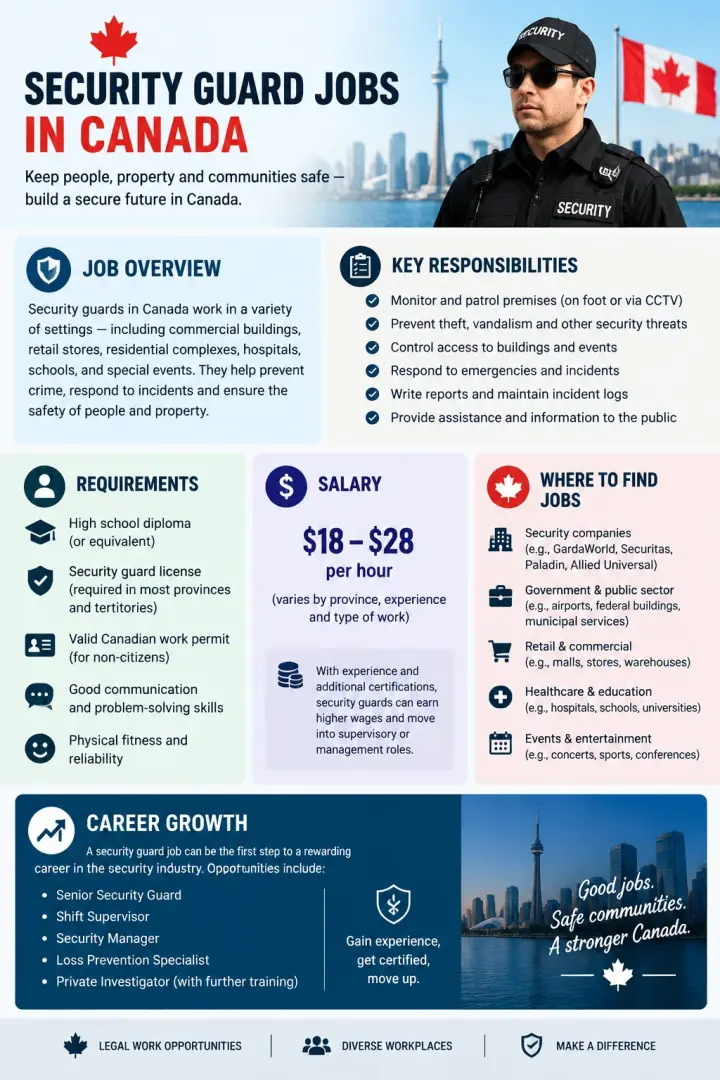
Depending on the site, your duties could include:
- Patrolling buildings, grounds or parking areas.
- Checking identification and controlling access to restricted areas.
- Monitoring cameras, alarms and other security systems.
- Writing incident reports and keeping accurate records.
- Helping visitors, staff or residents with directions and basic questions.
- Responding to disturbances and contacting emergency services when needed.
- Checking doors, fire exits and equipment for potential hazards.
Some positions are physically active, while others involve long periods at a desk or monitoring station. Before accepting a job, ask what a typical shift looks like. A quiet condominium desk and a crowded concert venue can be very different workplaces.
Types of Security Guard Jobs in Canada
Corporate and Office Security
Corporate guards often work in office towers or business parks. They may check visitor passes, monitor entrances, respond to alarms and support building staff. Customer service skills matter here because you'll probably speak with employees and visitors throughout the day.
Condominium and Residential Security
Residential guards may manage access, patrol common areas and document incidents. Some positions combine security with concierge duties, such as receiving deliveries or helping residents with building-related questions.
Retail and Loss Prevention
Retail security focuses on the safety of customers and staff as well as the protection of merchandise. Some roles involve visible patrols; others may be more focused on observation and reporting. Employers may have specific training and policies for handling suspected theft.
Events and Entertainment
Event security guards help manage entrances, crowds and restricted areas at concerts, festivals, sporting events and other venues. Shifts can be busy and irregular, with plenty of evening and weekend work. These jobs can suit people who enjoy working with a team and staying on their feet.
Industrial, Construction and Remote Site Security
Industrial and construction sites need guards to monitor access, protect equipment and report safety concerns. Some positions are outdoors or in remote locations. Ask about weather conditions, transportation, accommodation and shift rotations before applying.
Healthcare and Campus Security
Hospitals, colleges and universities hire security staff to help maintain a safe environment for patients, students, employees and visitors. These roles may involve responding to sensitive situations, so employers often value de-escalation skills and relevant experience.
How to Become a Security Guard in Canada
There isn't one national security guard licence for every job across Canada. Provinces and territories set their own rules, and the regulator where you'll work is the best source for current requirements. Moving to another province may mean applying for a new licence or meeting additional conditions.
While the details differ, the process often looks something like this:
- Check your eligibility. Review the age, background and other requirements set by the regulator in your province or territory.
- Complete approved training. Many jurisdictions require a basic security training course from an approved provider. Course content and length vary.
- Pass any required exam. Some jurisdictions require a test before you can apply for a licence.
- Gather your documents. You may need identification, a training certificate and other paperwork, along with a background check.
- Apply for your licence. Follow the regulator's instructions and budget for the application fee and any renewal costs.
- Apply for jobs. Once you've met the local requirements, look for positions that match your availability and interests.
Training providers and employers can explain their processes, but it's worth checking the official government or regulator website yourself. That way, you can confirm whether a course is approved and avoid paying for training that won't meet local licensing rules.
Important: You'll also need authorization to work in Canada. A security licence and work authorization are separate requirements. If you're an international applicant, check the conditions of your status or work permit before accepting a position.
Licensing Requirements by Province
Ontario, British Columbia, Alberta and other provinces have their own licensing systems. In Quebec, private security is regulated by the Bureau de la sécurité privée. Requirements can change, and different categories of security work may have different rules.
Search for your provincial or territorial government's security worker licensing page and check:
- Whether the position you're considering requires a licence.
- Which training providers and courses are approved.
- What identification and background checks are needed.
- The current application fee and processing steps.
- When and how the licence must be renewed.
- Whether an existing licence or training from another jurisdiction is recognized.
Don't assume an employer can waive a licensing requirement. If a job posting says you can start without a licence, ask how that fits with the rules in the place where you'll work.
How Much Do Security Guards Make in Canada?
Security guard pay depends on the province, city, employer, experience and type of assignment. Entry-level jobs often pay near the local minimum wage or somewhat above it, while specialized, supervisory or remote positions may pay more. Night shifts and certain sites can also offer premiums, though those aren't guaranteed.
For a current estimate, look up security guard wages on the Government of Canada's Job Bank and filter by location. Then compare actual postings in your area. A national average won't tell you much about the offer for a particular site.
When comparing jobs, look beyond the hourly rate. Ask about guaranteed hours, overtime, benefits, paid training, uniform costs and travel requirements. A slightly higher rate may be less attractive if the schedule is unpredictable or you have a long commute between sites.
Skills Employers Look For
You don't always need years of experience to get an entry-level security job. Employers do, however, want people they can trust to show up, follow instructions and handle situations calmly.
- Communication: You'll need to explain rules clearly, listen to concerns and pass accurate information to colleagues.
- Observation: Noticing an unlocked door, a safety hazard or unusual activity can help prevent bigger problems.
- Report writing: Clear, factual notes are important when documenting an incident.
- Customer service: Guards often serve as the first point of contact for visitors and residents.
- De-escalation: Staying calm and using a respectful approach can help reduce tension.
- Reliability: Arriving on time and following site procedures matter when others are counting on your coverage.
- Basic technology skills: Depending on the job, you may use access-control systems, cameras, radios or digital reporting tools.
First aid and CPR certification can make you a stronger candidate and may be required for some positions. Additional training in areas such as conflict management can also help, especially for public-facing roles.
Where to Find Security Guard Jobs
Start with the Government of Canada's Job Bank, major job boards and the career pages of licensed security companies. You can also check hospitals, universities, municipalities, property management firms and event venues, as some hire directly or list opportunities through contractors.
Try searches that match the work you want, such as:
- Security guard jobs near me.
- Entry-level security guard jobs in Toronto.
- Condominium security jobs in Vancouver.
- Night security guard jobs in Calgary.
- Event security jobs in Montreal.
- Part-time security guard jobs in Canada.
Replace the city with your own location and filter by full-time, part-time, casual or overnight work. Some listings stay online after a position has been filled, so check the posting date and apply through the employer's official website when possible.
How to Make Your Application Stand Out
Keep your resume straightforward. Put your security licence and relevant certifications where an employer can see them quickly. If you're still completing the licensing process, be honest about your status rather than implying you're already licensed.
Even if you haven't worked in security before, include experience that shows responsibility and people skills. Retail, hospitality, reception, warehouse and volunteer roles can all provide useful examples. Instead of simply writing “good communication skills,” describe a time you handled customer questions, followed safety procedures or completed accurate records.
Before an interview, read the job posting and prepare examples of how you've dealt with a difficult situation, worked independently or stayed focused during a repetitive task. Employers may also ask about your availability, transportation and willingness to work nights, weekends or holidays.
Questions to Ask Before Accepting a Security Job
A job title doesn't always tell you what the work will involve. These questions can help you decide whether an offer is right for you:
- What are the regular hours, and are they guaranteed?
- Will I work at one site or be assigned to several locations?
- What duties and physical demands should I expect?
- Is site-specific training paid, and who provides it?
- What equipment or uniform will I need, and are there any costs?
- Will I work alone, and what support is available during an incident?
- How are overtime, shift premiums and schedule changes handled?
It's also smart to get the details of your offer in writing. Be cautious if someone asks you to pay a recruiter for a guaranteed job, requests sensitive banking information too early or offers employment without a proper hiring process. Verify the company independently before sharing documents or money.
What Are a Security Guard's Legal Powers?
Security guards aren't police officers. Their authority depends on the law, the circumstances and the policies of the site where they work. For example, powers of arrest for private citizens are limited under Canadian law. Searches, use of force and handling personal information also involve legal boundaries.
Don't rely on a job posting or a colleague's informal advice to understand those limits. Follow your approved training, employer policies and applicable laws, and ask a supervisor when you're unsure. Some specialized roles, such as certain cash-in-transit positions, have additional requirements related to firearms; an ordinary security guard licence doesn't automatically authorize someone to carry one.
Career Growth in Security
A first security job can lead to more responsibility over time. With experience and further training, you might move into a team lead or site supervisor position, security operations, loss prevention, investigations or a specialized setting such as healthcare or industrial security. Requirements for those roles vary, and some may need separate licences or credentials.
If advancement matters to you, ask potential employers how they fill senior positions and whether they support additional training. A company with clear procedures, supportive supervisors and opportunities to learn can be a better starting point than one offering only a slightly higher hourly rate.
Frequently Asked Questions
Can I get a security guard job in Canada with no experience?
Yes, some employers hire entry-level candidates. You'll still need to meet the licensing and work authorization requirements for the job. Customer service experience, a clear resume and relevant certifications can help.
Do security guards need a licence in Canada?
Many security guard roles require a provincial or territorial licence, but the rules and any exemptions depend on the jurisdiction and type of work. Check with the regulator where the job is located.
Are part-time security guard jobs available?
Yes. Part-time and casual positions are common in areas such as events, retail and building security. Some employers also hire for weekends, nights or temporary assignments.
Can newcomers apply for security guard jobs?
Newcomers can apply if they have the required authorization to work in Canada and meet the relevant licensing and employer requirements. Check both your immigration conditions and the local security licensing rules before paying for training or accepting an offer.
Is security work a good career?
It can be, especially if you value varied workplaces and opportunities to build practical skills. The trade-offs may include shift work, long periods standing or working alone, and situations that require patience under pressure. Compare employers carefully and choose a setting that fits the way you like to work.