

Welder Jobs in Bahrain: A Practical Guide
Welders are needed in Bahrain for everything from structural steel fabrication to pipework, maintenance and industrial projects. You might find work in a fabrication shop, at a construction site or with a company that maintains equipment for larger facilities.
If you're looking for welder jobs in Bahrain, the job title alone won't tell you enough. The welding process, materials, site conditions and benefits can make a big difference to both the work and the pay. Here's what to look for before you apply.
What Do Welders Do in Bahrain?
Welders join, repair and sometimes cut metal components according to drawings and job specifications. On one project, that might mean building steel frames in a workshop. On another, it could mean repairing pipes or equipment during a scheduled maintenance shutdown.
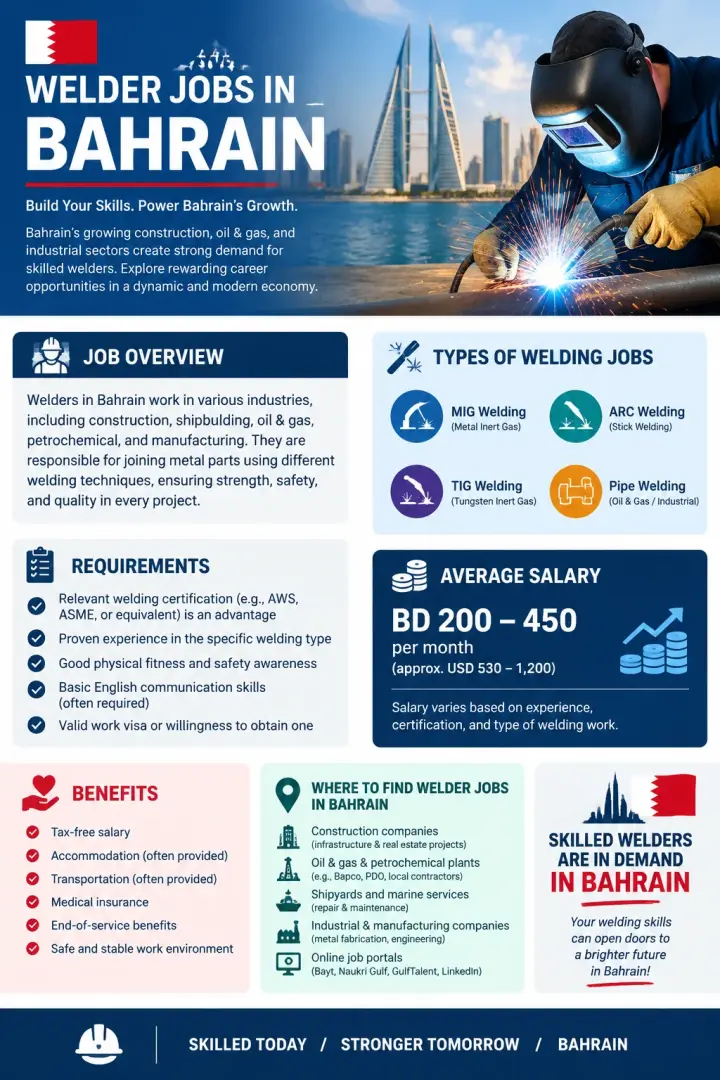
Common duties include:
- Reading welding symbols, drawings and work instructions
- Preparing metal surfaces and setting up welding equipment
- Joining steel or other metals using the required process
- Checking welds for visible defects and following quality procedures
- Working with fitters, supervisors and quality inspectors
- Using protective equipment and following site safety rules
Some employers want a welder who can also fit and measure components. Others split welding and fitting into separate jobs. Check the description carefully, especially if the role is advertised as a welder-fabricator or pipe welder.
Types of Welder Jobs Available
Structural Welder
Structural welders work on steel frames, beams, platforms, supports and similar components. Jobs can be based in fabrication workshops or on construction sites. Employers often look for experience with SMAW, also called stick welding, or MIG welding, depending on the project.
Pipe Welder
Pipe welders join and repair piping used in industrial facilities, utilities and other projects. These roles can require a practical test in a specific position and experience with a particular material or welding procedure. A 6G pipe welding qualification may be requested, but the exact test depends on the employer and job.
TIG Welder
TIG welders often work on jobs where control and a clean finish matter. Depending on the vacancy, they may weld stainless steel, carbon steel or other materials. Read the job requirements closely: being experienced with stainless steel doesn't automatically mean an employer will accept you for every TIG welding assignment.
MIG or Fabrication Welder
MIG welders are commonly found in workshops producing gates, frames, tanks, supports and other fabricated items. Employers may also ask for cutting, grinding, measuring and basic fabrication skills. Some ads use the term GMAW instead of MIG.
Maintenance and Shutdown Welder
Maintenance welders repair equipment and structures at operating facilities. Shutdown jobs are often tied to a fixed maintenance period and may involve long shifts, strict safety procedures and short contracts. Ask how overtime is calculated and what happens when the shutdown ends.
Welder Salary in Bahrain
As a general guide, monthly basic pay for welder jobs in Bahrain may fall within these ranges. They're illustrative estimates, not guaranteed rates or official wage figures. A real offer can be higher or lower depending on the employer, skills and benefits.
- Entry-level or general welder: around BHD 150–250 per month
- Experienced fabrication or structural welder: around BHD 250–400 per month
- Skilled pipe or TIG welder: around BHD 350–600 per month
- Specialist or highly experienced welder: around BHD 500–800 or more per month
Pay can vary considerably between a small workshop and a specialized industrial contract. A company may also offer accommodation, transport, meals, medical coverage or overtime on top of the basic salary. Another employer may expect you to cover some of those costs yourself.
Honestly, comparing the full package matters more than comparing the headline salary. A BHD 250 basic salary with accommodation and transport may leave you with a different amount at the end of the month than the same salary without those benefits.
Before accepting an offer, ask for the basic salary, allowances, normal working hours and overtime terms in writing. Also check whether the quoted amount is monthly basic pay or an estimate that already includes overtime.
Skills and Qualifications Employers Look For
Not every vacancy requires the same certificate or number of years of experience. A workshop hiring a general fabricator may have different requirements from a contractor recruiting pipe welders for a demanding industrial project.
Welding Processes and Materials
List the processes you can actually use, such as SMAW, GTAW/TIG, GMAW/MIG or flux-cored arc welding. Mention the materials you've worked with, including carbon steel, stainless steel or aluminium, along with relevant thicknesses and positions.
Be specific on your CV. Saying you have experience with TIG root passes on carbon-steel pipe gives an employer more useful information than simply writing “good welder.” Only include skills you can demonstrate in a test.
Practical Tests and Certifications
Many employers use a practical welding test during recruitment. They may check your weld visually or arrange further inspection, depending on the role. Your test could cover a particular process, material, joint and position.
Some vacancies ask for qualifications or experience connected to standards such as ASME, AWS or ISO. Requirements vary, and a certificate from a previous job may not replace the new employer's test. Keep copies of certificates and qualification records, and ask the recruiter exactly what evidence they need.
Safety and Communication
Welders need to understand hazards such as fumes, burns, electric shock and fire. Industrial jobs may also involve hot-work permits, work at height or confined-space procedures. Basic English can be useful for understanding instructions and communicating with a mixed team, although language requirements differ by employer.
Where to Find Welder Jobs in Bahrain
Start with several sources rather than relying on one advert:
- Check the careers pages of Bahrain-based construction, fabrication, maintenance and industrial companies.
- Search job sites such as LinkedIn, Bayt and GulfTalent using “welder Bahrain,” “TIG welder Bahrain” or “pipe welder Bahrain.”
- Look for vacancies posted by recruitment agencies that are properly licensed for the countries where they operate.
- Ask former colleagues and trade contacts about openings, then verify the job directly with the employer.
- Check Bahrain's Ministry of Labour resources for relevant vacancies and employment information.
Search using both the job title and your welding process. A suitable position might be listed as “fabricator,” “6G welder,” “maintenance welder” or “welder and fitter” rather than just “welder.”
How to Apply
Prepare a Relevant CV
Keep your CV clear and focused. Include your contact details, work history, welding processes, materials, positions and any relevant qualifications. For each previous role, briefly describe the kind of work you did, such as structural fabrication, pipe welding or equipment repair.
If you have shutdown experience or have worked under a particular welding procedure, mention it where relevant. Add your current location and availability, but don't send sensitive identity documents to an unverified contact.
Get Ready for the Interview or Trade Test
Review the job description before the interview. An employer may ask about your previous projects, welding defects, safety practices and the equipment you've used. For a trade test, ask in advance which process, material and position you'll be tested on and whether you need to bring any personal protective equipment.
Review the Offer
Ask for a written offer or contract you can understand. Check the job title, employer name, basic salary, working hours, overtime, accommodation, transport, leave and contract length. If anything discussed verbally is missing, ask for clarification before you sign.
Work Permits and Visas for Foreign Welders
Foreign nationals generally need the appropriate work authorization to work legally in Bahrain. Employers normally arrange the work permit through Bahrain's Labour Market Regulatory Authority, known as the LMRA. Your employer should explain the process and confirm when you're authorized to start.
Rules and procedures can change, and individual circumstances matter. Check current requirements with the LMRA or another official Bahrain government source before making travel plans. Don't assume that a job offer by itself gives you permission to begin work.
Can You Work as a Welder on a Visit Visa?
No. A visit visa is not permission to work. If you find an employer while visiting Bahrain, ask them about the proper work permit process and whether any change of status is available in your situation. Follow current official guidance and wait until you have the required authorization before starting work.
How to Spot a Suspicious Job Offer
A legitimate-looking message isn't proof that a vacancy is real. Be careful with unsolicited offers that promise unusually high pay without an interview or welding test.
- Verify the company's contact details independently rather than relying only on a messaging app number.
- Ask for a written offer that identifies the employer and explains the job and pay.
- Be wary of requests for money to secure a job or work permit. Check official guidance on recruitment and permit costs.
- Don't hand over your passport or sensitive documents to someone whose identity and authority you haven't confirmed.
- Keep copies of your offer, contract, receipts and important correspondence.
If you're unsure about an agency or permit, contact the relevant authority in Bahrain or in your home country before paying or travelling.
Questions to Ask Before Accepting a Welder Job
A few straightforward questions can help you understand what you're agreeing to:
- Which welding process, materials and positions will I use?
- Is the salary basic pay, and how is overtime calculated?
- Are accommodation, meals and transport provided or deducted from pay?
- Where is the worksite, and is the job permanent or project-based?
- What are the normal hours and weekly rest arrangements?
- Who provides protective equipment and safety training?
- Who handles the work permit, and when can I legally start?
There's no single best welder job for everyone. A workshop role might suit someone who wants a steady routine, while an experienced pipe welder may prefer a specialist project. Focus on jobs that match your skills, check the full offer and make sure the work authorization is in place before you begin.
Frequently Asked Questions
Do I need a welding certificate to get a job in Bahrain?
It depends on the employer and the role. Some jobs accept relevant experience and a successful practical test, while others specify welding qualifications. Specialist industrial positions are more likely to have detailed testing and certification requirements.
Can beginners find welder jobs in Bahrain?
Some employers hire less experienced welders, particularly for general workshop work, but many vacancies ask for previous experience. Training, a clear CV and the ability to pass a practical test can help. Check whether a vacancy accepts applicants from your current location.
Are accommodation and transport included?
Sometimes, but not always. These benefits vary by employer and contract. Ask whether they're provided free, offered as an allowance or deducted from your salary.
Is overtime guaranteed?
Not necessarily. Overtime depends on the employer, workload, contract and applicable rules. Ask about the calculation and approval process, but avoid budgeting as though extra hours are guaranteed every month.