


Security guard jobs are found everywhere in Australia, from shopping centres and office buildings to festivals, construction sites and hospitals. If you’re reliable, comfortable dealing with people and able to stay calm under pressure, the work could be a good fit.
It’s not just about standing at a door, either. Depending on the role, you might monitor CCTV, patrol a property, check access passes or help manage a busy crowd. Here’s what to know about getting licensed, finding work and choosing a role that suits you.
What does a security guard do?
A security guard helps protect people, property and information. The day-to-day work depends on the site, but most roles involve being alert, following procedures and responding professionally when something goes wrong.
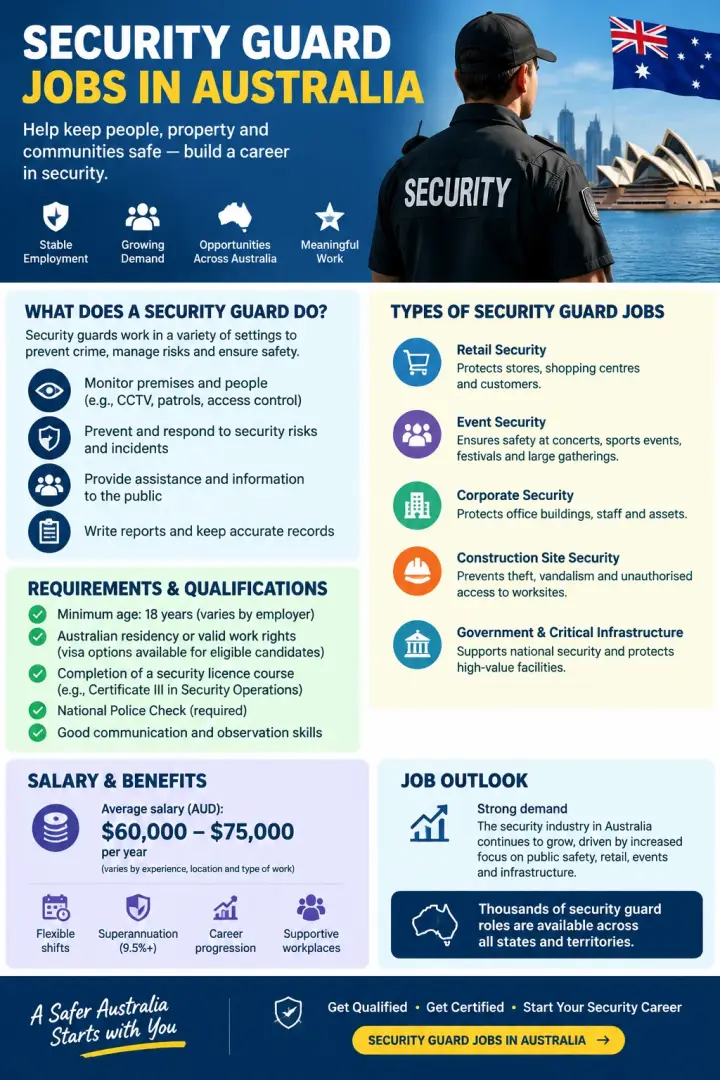
Common duties include:
- Patrolling buildings, grounds or public areas.
- Checking identification and controlling access.
- Monitoring alarms and CCTV systems.
- Writing incident reports and keeping shift records.
- Helping visitors, staff and customers with directions or concerns.
- Responding to incidents and contacting emergency services when needed.
- Working with venue staff, police or emergency responders.
Good communication is a big part of the job. A calm conversation can often prevent a situation from getting worse, and clear notes matter when an incident needs to be reviewed later.
Types of security guard jobs in Australia
Security work covers more settings than many people realise. These are some common options you’ll see advertised.
Static security guard
Static guards are assigned to a particular site, such as an office, warehouse, apartment building or construction site. Duties might include checking visitors in, monitoring cameras and completing regular patrols. Some shifts are quiet; others involve plenty of interaction with staff and contractors.
Mobile patrol officer
Mobile patrol officers travel between locations, checking buildings, responding to alarms and recording anything unusual. A valid driver’s licence is usually needed, and employers may have requirements around driving history.
Retail security guard
Retail guards work in shops and shopping centres. They may help deter theft, monitor entrances and assist when incidents occur. Customer service skills matter here because you’ll often be working around shoppers and store employees.
Event and crowd control
Events can offer variety, from sporting matches to concerts and festivals. Crowd controllers may check entry conditions, manage queues and help keep exits clear. These jobs often involve evenings, weekends and public holidays, and crowd control may require a specific licence or authorisation.
Control room operator
Control room roles can involve monitoring cameras and alarms, communicating with guards and recording incidents. Depending on the duties and location, a relevant security licence may be required. Employers may also look for confidence with computers and clear radio communication.
Specialist security roles
Other opportunities include airport security, cash-in-transit, close personal protection and armed security. These roles can involve additional screening, training, permits or licensing. Don’t assume a general security licence automatically covers them.
How to become a security guard in Australia
The process differs depending on the state or territory where you want to work. Before paying for training, check the current requirements with the relevant licensing authority and make sure the course is approved for the licence you need.
1. Check your eligibility
Applicants generally need to meet minimum age requirements, pass identity and background checks, and satisfy their local regulator that they’re suitable to hold a licence. You’ll also need the right to work in Australia. Requirements can vary, so check the rules for your location and licence class.
2. Complete approved training
Many entry-level applicants complete a regulator-approved security operations course through a registered training organisation, or RTO. Training commonly covers legal responsibilities, communication, patrols, incident response and reporting. First aid training may also be required.
Ask the training provider which licence classes its course supports, what the total cost includes and whether any practical assessments are required. It’s worth checking approval with the regulator as well as the provider.
3. Apply for your security licence
After completing the required training, you’ll generally need to apply to the relevant state or territory authority. The application may involve identity documents, fingerprints, background checks, photographs and fees. Processing times vary, so allow time between finishing your course and starting work.
4. Apply for suitable jobs
Once you meet the licensing requirements, look for entry-level roles that match your licence and availability. Some employers recruit new guards and provide site-specific induction. Others prefer previous security, customer service or control room experience.
Security licences: what to check before you apply
Australia doesn’t have one universal security guard licence that automatically lets you perform every security job nationwide. Rules and licence categories differ between states and territories. If you move interstate or want to work across borders, check whether you need a new licence or can apply for recognition under the relevant arrangements.
Before accepting a job, check:
- Whether your licence covers the actual duties, not just the job title.
- Whether crowd control, monitoring or specialist work needs a separate authorisation.
- When your licence expires and what’s needed to renew it.
- Whether you need to complete refresher training or maintain first aid certification.
- Whether the employer or security business must also be licensed.
Keep copies of your qualifications and licence details handy. A legitimate employer should be able to explain what credentials the role requires.
How much do security guards earn in Australia?
Security guard pay varies with the employer, location, duties and employment arrangement. Night shifts, weekends and public holidays may attract different rates, while specialised work can pay differently from general guarding. Casual, part-time and full-time employees may also have different entitlements.
The Security Services Industry Award 2020 covers many security employees in the national workplace relations system, but coverage and classification depend on the job and employer. Enterprise agreements or other arrangements may apply. Check the Fair Work Ombudsman’s current pay tools and guidance rather than relying on an old salary figure in a job ad.
When comparing offers, look beyond the headline hourly rate. Check the classification, ordinary hours, casual loading if applicable, penalty rates, overtime, allowances and any paid leave. Ask how travel between sites, uniforms and required equipment are handled too.
Skills employers look for
You don’t always need years of security experience to get started, but employers want people they can trust to follow procedures and represent the business professionally.
- Communication: speaking clearly with visitors, colleagues and emergency services.
- Observation: noticing unusual behaviour, hazards or changes at a site.
- Conflict management: staying calm and using de-escalation techniques.
- Report writing: recording facts accurately and promptly.
- Reliability: arriving on time and completing handovers properly.
- Fitness for the role: meeting the practical demands of patrols or long periods on your feet.
- Judgement: knowing when to follow escalation procedures and call for help.
One important point: security guards must work within the law and their training. A uniform doesn’t give someone unlimited police powers. Employers should explain site procedures and the limits of the role during induction.
Where to find security guard jobs
Start with Australian job boards, recruitment agencies and the careers pages of licensed security companies. You can also look at employers that advertise directly, including venues, shopping centres, universities and facilities management companies.
Try searching for several terms rather than just “security guard jobs”:
- Security officer jobs Australia
- Security guard jobs with no experience
- Static security officer
- Mobile patrol officer
- Retail security officer
- Event security or crowd controller
- Control room operator security
Add your suburb, city or state to narrow the results. For example, “security guard jobs Melbourne” or “security officer jobs Brisbane” may bring up more relevant vacancies. Regional searches are worth trying too, particularly around industrial sites, hospitals and local events.
How to make your application stand out
Put your current licence class, issuing state or territory and expiry date near the top of your resume. Include relevant training, first aid certification and your driver’s licence if they’re needed for the job. Don’t publish sensitive identification numbers in a public resume.
If you’re new to security, describe experience that transfers. Retail work can show customer service and conflict-resolution skills. Warehouse work might demonstrate safety awareness and accurate record keeping. Hospitality experience can show that you’re comfortable working busy shifts and dealing with the public.
Tailor your application to the site. A mobile patrol employer may value driving and independent decision-making, while an event security employer may want strong communication and availability on weekends. Be honest about your experience and the licence you hold.
Questions to ask before accepting a job
Security jobs can look similar in an ad but feel very different in practice. Honestly, a few questions upfront can save you a lot of frustration later.
- What site will I work at, and what are the main duties?
- Is the position casual, part-time or full-time?
- What award, agreement and classification apply?
- How are night, weekend and public holiday shifts paid?
- Will I work alone, and what support is available during an incident?
- What induction, equipment and uniform will the employer provide?
- How far in advance is the roster usually published?
Be cautious if a recruiter asks you to pay them to secure a job, pressures you to work without the right licence or won’t explain the pay arrangement. If you’re offered contractor work, understand the difference between a genuine contractor and an employee before agreeing. An ABN alone doesn’t decide the relationship.
Is security work right for you?
Security work can suit people who like practical responsibilities, varied workplaces and flexible shift options. It can also be a useful starting point for someone interested in facilities management, risk management or other safety-related work.
There are challenges, though. Some shifts involve long periods of standing or working alone. Others can be busy, noisy or unpredictable. Overnight work and changing rosters may not suit everyone, and dealing with distressed or aggressive people can be demanding.
Think about the environment you’d prefer. If you enjoy meeting people, retail or events might appeal. If you like structured routines, a static site or control room could be a better match.
Frequently asked questions
Can I get a security guard job with no experience?
Yes. Some employers hire entry-level guards, but you’ll generally still need the appropriate licence and required training. Customer service, hospitality and other public-facing experience can help your application.
Do I need a licence to work as a security guard?
Security work is regulated in Australia, and guarding roles generally require an appropriate state or territory licence. The exact licence depends on where you work and what you do. Check with the local regulator before starting.
Can international students work in security?
It may be possible if you meet the local licensing requirements and your visa allows the work. Student visa conditions can limit working hours, so check your current conditions with the Department of Home Affairs. A training course or security licence doesn’t override visa restrictions.
Are security guard jobs available part-time?
Yes. Full-time, part-time and casual positions are advertised, depending on the employer. Events and venues often need people outside standard business hours, while some static sites offer more regular rosters.
What’s the best first step?
Decide where you want to work and which type of security job interests you. Then check that state or territory’s licensing requirements before choosing an approved training provider. It’s a straightforward way to avoid paying for a course that doesn’t lead to the licence you need.