


Driver jobs are a big part of everyday life in Australia. From delivering groceries in the suburbs to moving freight between cities, drivers keep people and goods on the move. The work can suit all sorts of people, whether you're looking for a local job with regular hours or a longer-distance role that gets you out on the road.
Honestly, the right driving job is about more than liking to drive. Licence requirements, shift times, physical work and pay arrangements can vary a lot. Here's what to know before you start applying for driver jobs in Australia.
What types of driver jobs are available in Australia?
Driving roles range from entry-level delivery work to specialist heavy vehicle jobs. Some involve being behind the wheel for most of the day, while others include loading, customer service or paperwork.
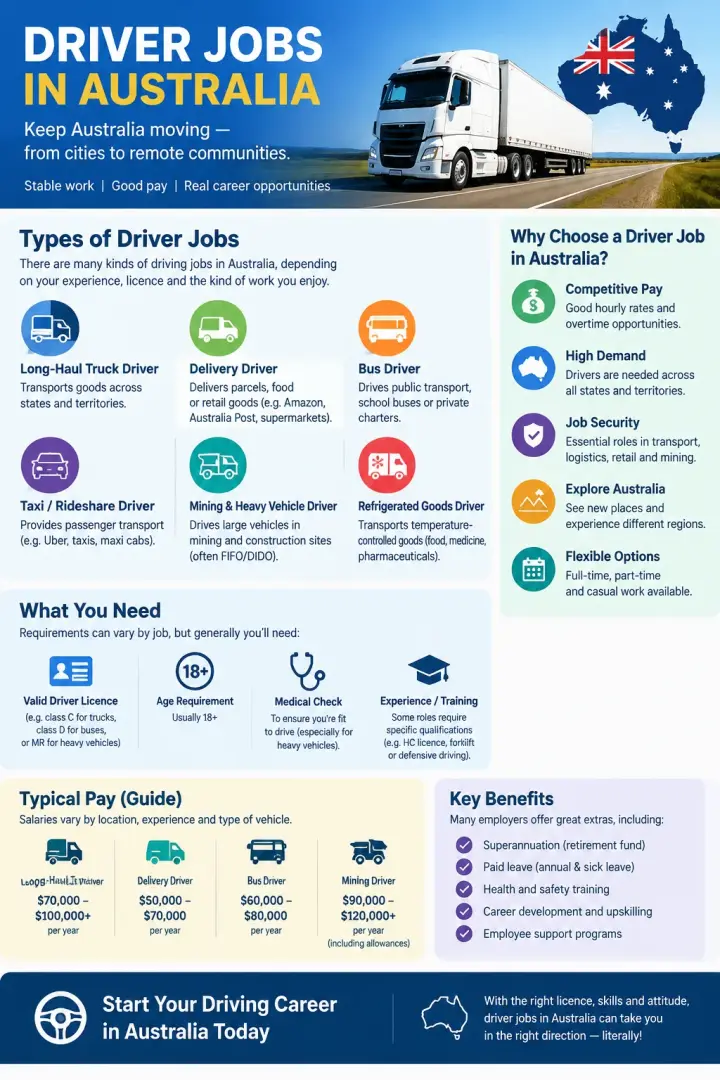
Delivery driver jobs
Delivery drivers transport parcels, food, groceries, furniture and other goods to homes and businesses. Many local roles use a car, van or light commercial vehicle, although some require a light rigid licence.
These jobs can be a useful starting point if you have a suitable licence and want to build experience. Expect frequent stops, time pressure and some lifting. An employer may provide the vehicle, while other opportunities require you to use your own.
Truck driver jobs
Truck drivers move everything from building materials and farm produce to supermarket stock. Jobs may be local, regional or interstate, and the vehicle can range from a small rigid truck to a large articulated combination.
Some roles involve returning home each day. Others include early starts, night shifts or time away. The licence class you need depends on the vehicle, and employers may also ask for experience with a particular type of load.
Bus and coach driver jobs
Bus drivers transport passengers on public routes, school runs, charter services and long-distance trips. Along with a suitable heavy vehicle licence, you may need passenger transport accreditation or authorisation from the relevant state or territory authority.
These roles can suit people who enjoy interacting with the public and are comfortable sticking to a timetable. Split shifts, weekend work and working with children checks may be part of the job, depending on the service.
Rideshare and taxi driver jobs
Rideshare and taxi drivers carry passengers in cars, usually within a city or regional area. Requirements differ by state or territory and can include driver accreditation, vehicle standards, background checks and insurance.
Flexible hours can be appealing, but look closely at the costs. Fuel, servicing, insurance and platform fees can reduce what you take home. Don't assume your personal car insurance covers commercial passenger work.
Other driving roles
There are plenty of specialist options too. Depending on your qualifications and location, you might find work as a courier, waste collection driver, removalist driver, tanker driver, forklift and delivery driver, or tipper truck driver. Some jobs require extra training, endorsements or licences beyond a standard driver's licence.
Driver licence requirements in Australia
Your licence is often the first thing an employer will check. You generally need a current Australian licence that's valid for the vehicle you'll drive, although rules for overseas licence holders vary by state and territory. Check with the local road authority before relying on an overseas licence for work.
For heavy vehicles, Australia uses licence classes based on the type and size of the vehicle. Common classes include:
- Light Rigid (LR): For certain smaller rigid trucks and buses.
- Medium Rigid (MR): For eligible rigid vehicles with two axles above the LR weight range.
- Heavy Rigid (HR): For eligible larger rigid vehicles, generally with three or more axles.
- Heavy Combination (HC): For eligible combinations such as a prime mover with a semitrailer.
- Multi Combination (MC): For eligible larger combinations, such as B-doubles and road trains.
Licence descriptions are a starting point, not a substitute for checking the rules. Eligibility, minimum holding periods, training, testing and vehicle restrictions can differ. Contact your state or territory licensing authority for the current requirements before booking a course or applying for an upgrade.
Some work needs additional qualifications. For example, transporting certain dangerous goods may require a dangerous goods driver licence and specific training. A forklift licence is separate from a road vehicle licence, even when a job involves both driving and loading.
Do you need experience to get a driving job?
Not always. Some employers offer entry-level delivery jobs or trainee opportunities, provided you meet their licence and insurance requirements. Others want a proven driving history, especially for heavy vehicles, passenger transport or specialist freight.
If you're starting out, look for roles that match the licence you already hold. Local courier work, warehouse jobs with delivery duties and trainee bus driver programs may be worth exploring. A position that includes loading and customer service can also help you understand how transport operations work.
For experienced drivers, make your background specific. An employer will want to know whether you've driven locally or interstate, the vehicles you've operated and the freight or passengers you've carried.
How much do driver jobs pay in Australia?
There's no single rate for driver jobs. Pay can depend on the vehicle, location, employer, experience, hours, employment arrangement and the type of work. A local van driver and an interstate heavy vehicle driver may have very different earnings and expenses.
When comparing job ads, check whether the figure is an hourly rate, annual salary or estimated contractor income. Also look for details about overtime, penalty rates, allowances and superannuation. A headline amount doesn't tell the whole story if the hours are long or you're paying vehicle costs yourself.
Employees' minimum entitlements depend on the applicable award, enterprise agreement or other industrial instrument. The Fair Work Ombudsman's website is a good place to check minimum pay and conditions. Independent contractors have different arrangements, so it's worth getting advice if you're unsure how a role is classified.
Employee or contractor: what's the difference?
Driver job ads may offer permanent, casual or contract work. The difference matters because it can affect your leave, tax, insurance, superannuation and business expenses.
- Permanent employees generally have ongoing work and entitlements such as paid annual and personal leave, subject to their circumstances.
- Casual employees are usually paid a casual loading instead of some paid leave entitlements. Their rights and pathway to permanent employment depend on the law and their circumstances.
- Independent contractors run their own business and may need to manage invoicing, tax and insurance. Some contractors can still be entitled to superannuation, depending on their arrangement.
A business calling you a contractor or asking for an Australian Business Number doesn't automatically make you one. The actual working relationship matters. Read the agreement carefully, and check Fair Work guidance or seek professional advice if something doesn't add up.
Skills employers look for in drivers
A clean, current licence is important, but it isn't the only thing that matters. Good drivers also need to be reliable, safety-conscious and comfortable dealing with unexpected changes.
- Safe driving habits: Following road rules, adjusting to conditions and reporting incidents promptly.
- Time management: Planning routes and meeting schedules without rushing or skipping required breaks.
- Customer service: Communicating politely with customers, passengers, dispatchers and site staff.
- Vehicle checks: Spotting and reporting issues with tyres, lights, loads and other equipment.
- Physical ability: Handling the lifting, climbing or loading a particular role requires, with suitable equipment and training.
- Record keeping: Using delivery apps, completing paperwork and keeping any required work diary or other records.
Not every job needs every skill. Read the advertisement carefully and focus your application on the requirements the employer actually lists.
Safety and fatigue in driving jobs
Long hours behind the wheel can be tiring, and tired drivers are a risk to themselves and everyone else. Before accepting a job, ask what a typical shift looks like, how breaks are scheduled and what happens if a delivery can't be completed safely on time.
Heavy vehicle fatigue and work diary requirements depend on the vehicle, journey and applicable law. The Heavy Vehicle National Law applies in participating states and territories, while Western Australia and the Northern Territory have separate arrangements. Check the National Heavy Vehicle Regulator or the relevant local authority for the rules that apply to your work.
Employers and other parties in the transport supply chain also have safety responsibilities. Drivers shouldn't feel pressured to speed, drive while fatigued or operate an unsafe vehicle. If a schedule seems impossible to meet safely, raise it before the trip starts.
Where to find driver jobs in Australia
Start with major Australian job boards and search using both the role and your location. Try phrases such as “delivery driver jobs Melbourne”, “HR truck driver Brisbane” or “bus driver jobs Perth”. Filtering by licence class, distance and employment type can save a lot of time.
You can also check the careers pages of transport companies, supermarkets, courier businesses, local councils and bus operators. Recruitment agencies specialising in transport and logistics may advertise casual, temporary and permanent work. If you're interested in regional or interstate driving, search beyond the nearest capital city.
Before responding to an ad, research the business and be cautious about requests for upfront payments or sensitive personal details. A legitimate employer should be able to explain the role, pay arrangement and recruitment process clearly.
How to apply for driver jobs
A straightforward application works best. Make it easy for an employer to see that you're licensed, available and suited to the work.
Update your resume
Include your licence class, relevant endorsements and any vehicle restrictions. Add recent driving roles, the types of vehicles you've operated and whether your experience is local, regional or interstate. Mention useful training, such as load restraint, dangerous goods or passenger transport accreditation, where relevant.
If you haven't worked as a driver before, include transferable experience. Customer service, warehouse work, route planning and jobs that required punctuality can all be relevant.
Prepare your documents
Employers may ask for proof of your right to work in Australia, your licence, references and a driving history report. Some roles also involve medical assessments, background checks or drug and alcohol screening. Requirements vary, so check what the employer needs and use official channels when obtaining records.
Ask useful questions
An interview is your chance to check whether the job suits you, too. Consider asking:
- What vehicle will I drive, and who maintains it?
- What are the usual start times, shift lengths and delivery areas?
- Does the job include loading, unloading or manual handling?
- How are overtime, allowances and superannuation handled?
- Am I an employee or an independent contractor?
- What training and safety procedures are provided?
Frequently asked questions about driver jobs
Can I get a driver job with a car licence?
Yes. Some parcel delivery, courier and other light vehicle roles accept a suitable car licence. Employers may have additional requirements, such as a minimum driving history or access to an insured vehicle. Passenger transport work can have separate accreditation rules.
Are truck drivers needed in regional Australia?
Driving opportunities exist in regional areas across freight, agriculture, construction and other industries. Demand changes by location and season, so check current local listings rather than assuming every area has the same opportunities.
Can overseas drivers work in Australia?
Possibly, if they have the right to work and meet the relevant licensing requirements. Rules for using or converting an overseas licence vary by jurisdiction, and heavy vehicle licensing can involve additional steps. Check with the local licensing authority and the Department of Home Affairs for your circumstances.
What is the best driver job for beginners?
There's no one-size-fits-all answer. A local delivery role or an employer-supported trainee program may be a good place to start. Compare the training, hours, physical demands and vehicle costs before deciding.
Whether you're after your first delivery job or your next truck driving role, take the time to check the details. The best opportunity is one that matches your licence and experience, pays you fairly and gives you enough time to do the work safely.