

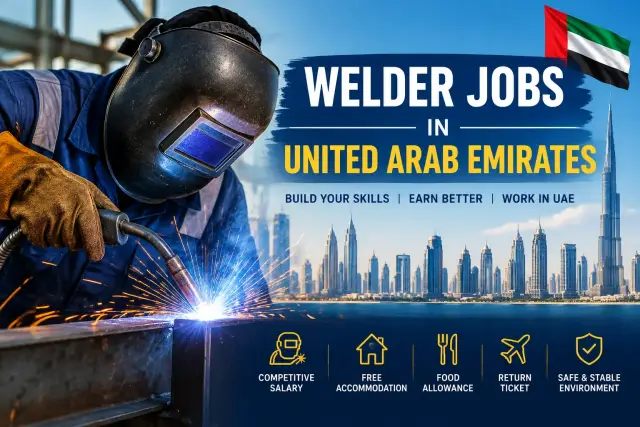
Welder Jobs in the UAE: Pay, Requirements and How to Apply
Welder jobs in the United Arab Emirates offer opportunities across construction, manufacturing, ship repair, oil and gas, and industrial maintenance. Whether you're a beginner looking for a fabrication role or an experienced pipe welder with specialist qualifications, there are positions worth exploring in Dubai, Abu Dhabi and the other emirates.
The right job depends on more than the monthly salary, though. Accommodation, transport, overtime, working conditions and visa arrangements can make a big difference to what you take home. Here's a practical guide to finding welding jobs in the UAE and choosing an offer that works for you.
What Does a Welder Do?
Welders join and repair metal parts using heat, pressure and different welding processes. In the UAE, that might mean fabricating steel frames for a building, repairing equipment in a workshop or joining pipes at an industrial site.
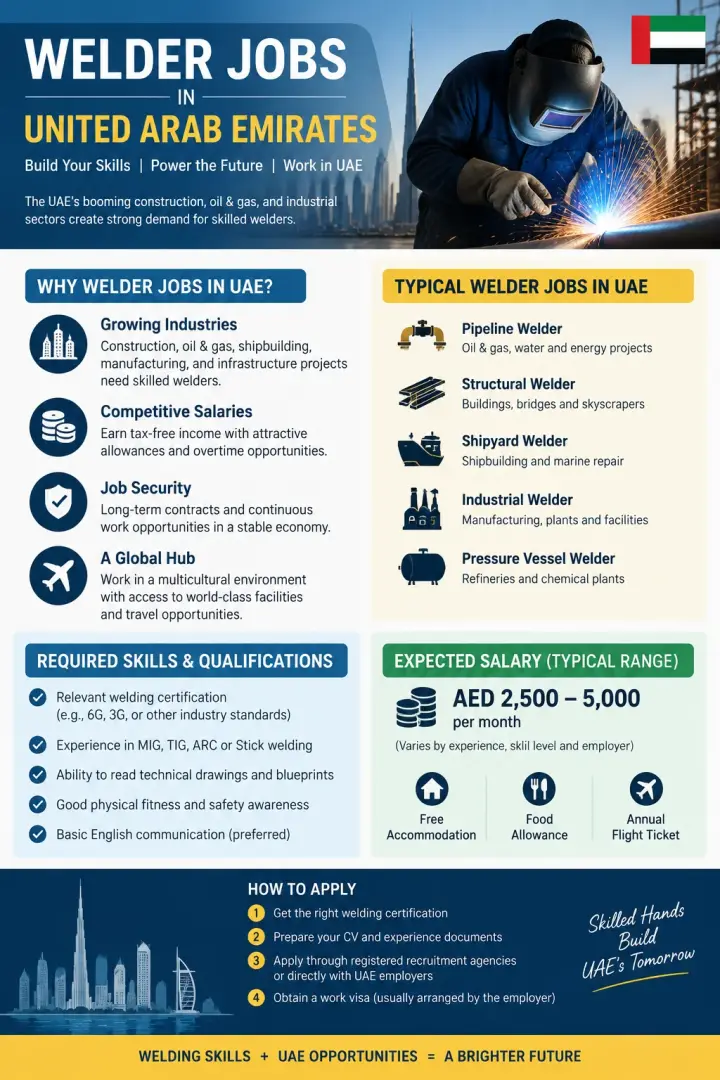
Daily responsibilities vary by employer, but a welder may be expected to:
- Read fabrication drawings and understand welding symbols.
- Prepare, measure, cut and fit metal components.
- Set up welding machines and select suitable settings.
- Weld joints using the process required for the job.
- Inspect finished work and correct visible defects.
- Maintain tools and follow site safety procedures.
Some roles combine welding with fitting, grinding or general fabrication. Read the job description carefully so you know what the employer actually expects.
Types of Welder Jobs in the UAE
Structural Welder
Structural welders work on steel beams, frames, platforms and other components used in buildings and industrial projects. These roles may involve workshop fabrication, site installation or both. Employers often look for people who can read drawings and work accurately in different welding positions.
Pipe Welder
Pipe welders join pipes used in water systems, industrial plants and energy facilities. Depending on the project, you may need experience with specific materials, welding procedures and inspection standards. A practical welding test is common for skilled pipe welding jobs.
TIG Welder
TIG welding is often used where a clean, controlled weld is important, including work on stainless steel, aluminium and thinner materials. Jobs can be found in fabrication shops, manufacturing plants and specialist maintenance companies. Employers may ask you to demonstrate experience with a particular metal or joint type.
MIG and MAG Welder
MIG and MAG processes are widely used in fabrication and manufacturing. These jobs can involve repetitive production work, structural components or repairs. A vacancy may describe the process as MIG welding even when the shielding gas and material details need to be confirmed with the employer.
ARC or Stick Welder
Stick welding, also called SMAW, is used in construction, maintenance and repair. It's a useful skill for site work, although the exact process required will depend on the project. Some employers prefer candidates who can use more than one welding method.
Other Welding Roles
You may also find vacancies for aluminium welders, stainless-steel welders, shipyard welders, welding fabricators and maintenance welders. Oil and gas projects can offer specialist work, but they may have stricter testing, documentation and safety requirements.
Welder Salary in the UAE
Welder salaries in the UAE vary considerably by experience, location, trade test results and the type of work. The figures below are rough monthly estimates in UAE dirhams, not guaranteed rates or official salary data:
- Entry-level or helper-level welding roles: around AED 1,800 to AED 3,000.
- Experienced general or structural welders: around AED 2,500 to AED 4,500.
- Skilled TIG or pipe welders: around AED 3,500 to AED 7,000 or more.
- Highly specialised or supervisory roles: potentially AED 6,000 to AED 10,000 or more, depending on the position and package.
These ranges overlap because job titles don't always mean the same thing. A pipe welder working on a demanding project may earn more than someone with the same title in a small workshop. Overtime and allowances can also change total earnings.
Before accepting an offer, ask whether the stated amount is the basic salary or the full package. Check whether accommodation, transport, meals, medical insurance and overtime are included or provided separately. UAE employment income is generally not subject to personal income tax, but living costs can still take a significant share of your pay.
Where to Find Welding Jobs in the UAE
Dubai
Dubai has welding opportunities in construction, metal fabrication, manufacturing, maintenance and marine services. Industrial areas and workshops can be useful places to look, while larger contractors advertise roles for construction and infrastructure projects.
Abu Dhabi
Abu Dhabi offers work connected with industrial facilities, construction, maintenance and the energy sector. Some project-based jobs are outside the city, so ask about the worksite, accommodation and transport before applying.
Sharjah and Ajman
Sharjah and Ajman have workshops and industrial businesses that may hire welders, fabricators and helpers. These roles can be a starting point for candidates seeking workshop experience, though pay and benefits differ between employers.
Other Emirates
Look beyond the biggest cities, too. Ras Al Khaimah, Fujairah and Umm Al Quwain have industrial, construction and marine-related employers. A job outside Dubai or Abu Dhabi may be worth considering if the overall package and working conditions suit you.
Requirements for Welder Jobs in the UAE
Requirements depend on the employer and the work. A helper role may be open to someone with limited experience, while a specialist position can require years of documented work and a successful practical test.
Experience and Practical Skills
Employers commonly ask for experience with a specific process, such as TIG, MIG or stick welding. They'll also want to know which materials you've worked with and whether your background is in fabrication, pipework, maintenance or construction.
Be specific on your CV. Instead of simply writing that you're an experienced welder, list the processes, materials, positions and equipment you know. If you've worked from technical drawings or followed a welding procedure, mention that too.
Education and Training
A formal degree isn't always required for a welder job. Vocational training, an apprenticeship or a trade course can help, particularly if you're starting out. Some employers may ask for school records or training documents, while others place more weight on your practical skills.
Welding Tests and Certifications
Many employers use a trade test to check weld quality and whether you can work to their requirements. You might be asked to weld a particular joint in a specified position, with the finished weld examined or tested.
Relevant qualifications can help you stand out, but don't assume one certificate is accepted for every project. Employers may ask for qualifications based on standards such as AWS or ASME, or for a project-specific test. The term 6G describes a pipe welding test position; ask the employer which process, material and qualification standard are required.
Language and Safety Awareness
Basic English is useful for understanding instructions, drawings and safety signs. Some workplaces also use other languages among crew members. You'll need to follow safety rules, wear the required protective equipment and report hazards promptly.
How to Apply for Welder Jobs in the UAE
A focused application usually works better than sending the same short message to every company. Here's a straightforward approach:
- Prepare a clear CV: Include your contact details, location, work history, welding processes, materials and relevant training.
- Gather supporting documents: Keep copies of trade certificates, experience letters and other documents an employer may request.
- Search using specific terms: Try searches such as TIG welder Dubai, pipe welder Abu Dhabi or structural welder UAE.
- Apply through reliable channels: Check established job sites, company career pages and licensed recruitment agencies.
- Get ready for a trade test: Review the process and materials listed in the vacancy, and ask what the test will involve.
- Compare the full offer: Review pay, benefits, location, hours and contract terms before making a decision.
If you're applying from outside the UAE, use accurate information about your current location and availability. Don't claim to hold a UAE work permit or certificate if you don't have one.
Work Permits, Visas and Job Offer Checks
Foreign nationals generally need the appropriate work authorisation and residency arrangements to work legally in the UAE. The employer normally arranges the relevant work permit and residency process. A visit or tourist visa isn't permission to take up employment.
For mainland private-sector roles, check the offer and contract through the UAE Ministry of Human Resources and Emiratisation, also known as MOHRE, where applicable. Free-zone employers may follow different procedures, so confirm which authority handles your employment. Make sure the written terms match what you were promised.
Be cautious if someone asks you to pay for a job offer or recruitment. Under UAE rules, employers generally bear recruitment and employment-related costs; reputable employers and agencies shouldn't charge workers recruitment fees. Verify the company independently, avoid sending money to a personal account and ask questions if anything feels unclear.
Questions to Ask Before Accepting a Welder Job
Honestly, a salary figure on its own doesn't tell you enough. Ask for the details in writing:
- What are the basic salary, allowances and payment date?
- Are accommodation and transport provided? If not, is there an allowance?
- What are the normal working hours, rest days and overtime arrangements?
- Where is the worksite, and is the job permanent or project-based?
- What welding process, materials and tests will the role involve?
- Who provides protective equipment, medical insurance and safety training?
- What are the contract terms, probation period and leave entitlements?
Keep a copy of your signed offer and employment contract. If a term is different from what was discussed, ask for clarification before signing.
Safety Tips for Welders
Welding can expose workers to fumes, sparks, intense light, hot metal and electrical hazards. Site work may also involve confined spaces, working at height or hot weather. The employer should provide suitable controls, training and protective equipment for the job.
Use the correct welding helmet, eye protection, gloves and protective clothing. Check that ventilation is suitable, inspect equipment before use and follow permit procedures where required. Never enter a confined space or begin hot work without the appropriate authorisation and precautions.
How to Improve Your Chances of Getting Hired
Strong practical skills matter, but employers also value reliability and attention to detail. If you're new to the trade, look for a reputable training course and build experience in a workshop. Learn to read basic fabrication drawings and practise the processes used in the jobs you want.
Experienced welders can make their applications stronger by keeping qualifications current where required and documenting the work they've done. List pipe sizes, materials, welding positions and project types only when you can discuss them confidently. A clean, accurate CV and a good trade test can do more for you than a long list of vague claims.
Frequently Asked Questions
Can a fresher get a welder job in the UAE?
Yes, some employers hire beginners as welding helpers or junior fabricators. Competition can be strong, so practical training and a willingness to learn are helpful. Check whether the role includes supervised welding experience or mainly support tasks.
Is a welding certificate mandatory in the UAE?
Not every welding vacancy asks for the same certificate. Requirements depend on the employer, process and project. Specialist jobs may require a recognised qualification or a successful employer-specific trade test.
Which welding jobs pay more in the UAE?
Specialist pipe welding, certain TIG roles and demanding industrial projects may pay more than general workshop jobs. Actual pay depends on your skills, the employer, hours and the complete benefits package.
Can I work as a welder on a UAE tourist visa?
No. A tourist or visit visa doesn't authorise employment. You need the appropriate work permit and residency arrangements before starting work.
Do UAE companies provide accommodation for welders?
Some do, while others provide an allowance or expect employees to arrange their own housing. Always check what's included and where the accommodation is located before accepting an offer.
Finding the Right Welding Job
There are welder jobs across the UAE for people with different levels of experience, from workshop helpers to specialist pipe welders. Focus your search on roles that match your skills, prepare for a practical test and compare the full employment package. Taking time to verify the employer and understand the contract can help you find a job that's a good fit for the long term.