

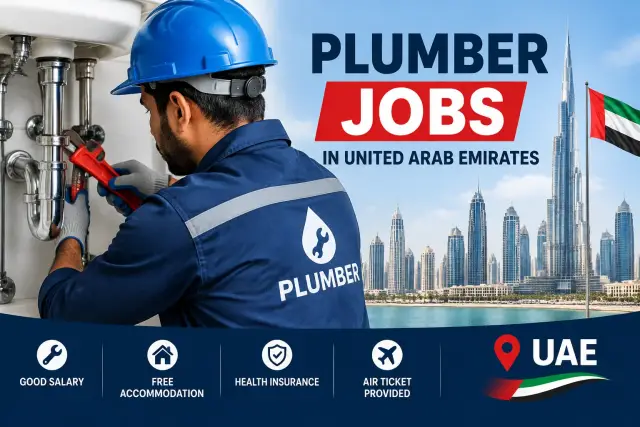
Plumber Jobs in the United Arab Emirates
Looking for a plumber job in the UAE? There are opportunities across construction sites, hotels, hospitals, apartment buildings and maintenance companies. Dubai and Abu Dhabi attract many applicants, but employers also hire plumbers in Sharjah, Ajman and other emirates.
The right job depends on more than the monthly salary. Accommodation, transport, working hours and overtime can make a big difference to what you save. Honestly, it's worth checking the whole offer before you accept.
Here's what to know about plumber jobs in the United Arab Emirates, from common duties and skills to salaries, applications and work permits.
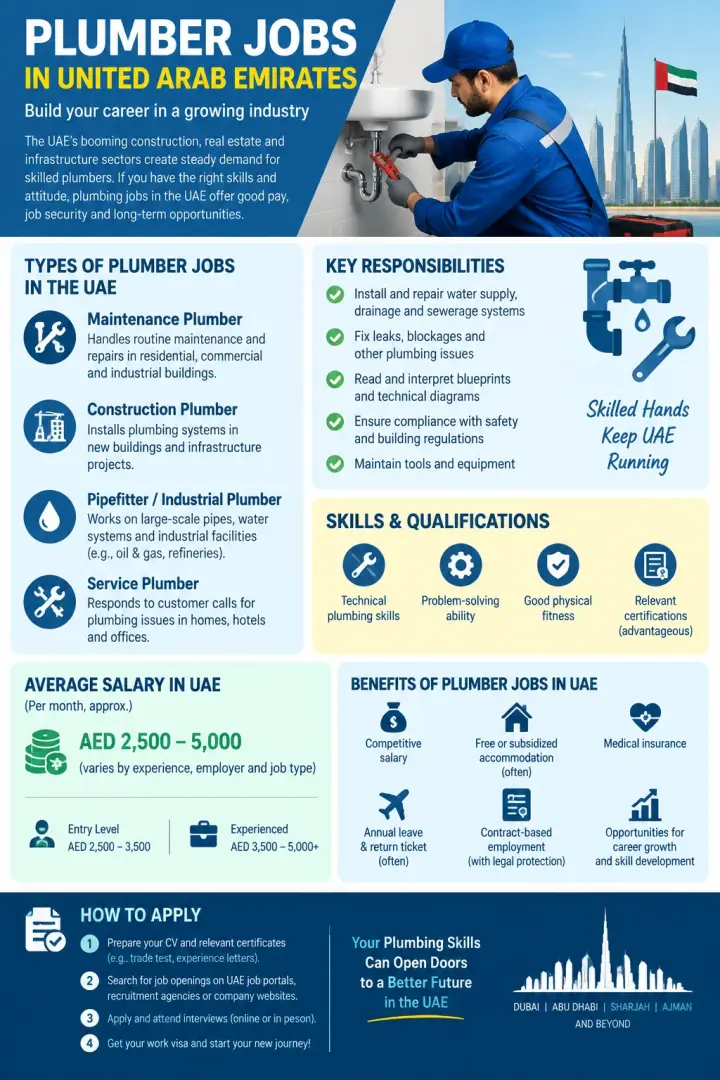
What Does a Plumber Do in the UAE?
A plumber installs, repairs and maintains systems that carry water and remove waste. The work can involve a new building project, a residential service call or regular maintenance at a commercial property.
Depending on the employer, your duties may include:
- Installing water supply and drainage pipes.
- Fitting toilets, sinks, taps, showers and water heaters.
- Finding and repairing leaks, blockages and damaged pipes.
- Reading drawings and following installation plans.
- Testing pipework and fixtures before handover.
- Maintaining pumps, valves, tanks and other plumbing equipment.
- Following site safety rules and reporting completed work.
Some jobs involve outdoor work, heavy lifting, confined spaces or emergency callouts. Before applying, check whether the position is mainly installation, maintenance or a mix of both.
Types of Plumber Jobs in the UAE
Construction plumber
Construction plumbers work on new buildings and renovation projects. They install pipework and fixtures, often as part of a larger mechanical, electrical and plumbing team, usually called an MEP team. Reading drawings and working to a site schedule are useful skills.
Maintenance plumber
Maintenance plumbers handle repairs and preventive checks in homes, offices, malls and residential communities. A typical day might include fixing a leaking tap, clearing a blocked drain and checking a pump room.
Hotel or facilities management plumber
Hotels, hospitals and facilities management companies need plumbing systems to run reliably. These roles may involve shift work, planned inspections and responding quickly to faults. Good communication matters because you may deal with guests, tenants or other maintenance staff.
Plumbing supervisor
Experienced plumbers can move into supervisory jobs, coordinating teams, checking workmanship and reporting progress. Employers may look for several years of experience, drawing-reading skills and the ability to manage materials and schedules.
Where to Find Plumber Jobs in the UAE
Dubai and Abu Dhabi have a wide range of construction, property management and hospitality employers. Sharjah and Ajman also have plumbing and maintenance companies, while industrial and infrastructure projects can create vacancies elsewhere in the country.
Search in a few places rather than relying on one advert:
- UAE job websites and professional networking platforms.
- Careers pages for construction, MEP and facilities management companies.
- Hotel groups, hospitals and property management companies.
- Licensed recruitment agencies in your home country or the UAE.
- Referrals from people who already work in the industry.
Try search terms such as “plumber jobs in Dubai,” “maintenance plumber Abu Dhabi,” “MEP plumber UAE” and “plumbing supervisor jobs.” Add your experience or speciality to narrow the results.
Plumber Salary in the UAE
Pay varies with experience, location, employer and the type of work. As a rough, non-official guide, some advertised plumber roles may offer around AED 1,500 to AED 4,500 per month. Entry-level and helper roles may pay less, while experienced specialists and supervisors may earn more. These figures aren't a guarantee, and job ads can change.
Always ask whether the amount is basic salary or total pay. Also check what the package includes:
- Accommodation or a housing allowance.
- Transport to and from work.
- Overtime rates and expected overtime hours.
- Medical insurance and any other benefits.
- Annual leave and return ticket provisions, if offered.
- Deductions, such as any agreed charges for accommodation or meals.
For example, a lower salary with free accommodation and transport may leave you with more savings than a higher salary that requires you to cover those costs yourself. Compare offers based on your likely monthly expenses, not just the headline number.
Skills and Qualifications Employers Look For
Requirements differ by vacancy. Some employers hire plumbing helpers with limited experience, while others want a trade certificate and several years on construction or maintenance projects.
Useful skills include:
- Installing and repairing water supply and drainage systems.
- Working with the pipe materials and fittings named in the job description.
- Using plumbing tools safely and accurately.
- Reading basic drawings, layouts and work orders.
- Finding faults and choosing practical repairs.
- Understanding site safety and using protective equipment.
- Communicating with supervisors, customers and other trades.
A vocational certificate, apprenticeship or relevant trade training can strengthen your application. Employers may also ask for experience with pumps, water heaters, pressure testing or particular building systems.
Basic spoken English is useful on many UAE job sites. Other languages can help too, depending on the team and customers. Some employers prefer UAE experience or a driving licence, but these aren't requirements for every job.
Local building and utility requirements depend on the emirate and project. Ask the employer about any approvals or training needed for the specific role rather than assuming one licence applies to every plumbing job.
How to Apply for Plumber Jobs in the UAE
1. Prepare a clear CV
Keep your CV easy to read and focused on plumbing work. Include your contact details, location, job history, training and the tasks you can do independently. List the types of buildings or projects you've worked on and the tools or systems you know.
Be specific. “Installed drainage and water supply pipework in residential buildings” tells an employer more than simply writing “plumbing work.” If you've supervised a team or handled customer callouts, mention that too.
2. Gather your documents
Employers may ask for a passport copy, trade certificates, experience letters and references. Keep clear copies ready, but share personal documents only with an employer or recruiter you've checked. Don't send original documents to an unfamiliar contact.
3. Read the vacancy carefully
Check the location, job duties, experience requirement and shift pattern. Apply for roles that match your skills, and adjust your CV to highlight relevant experience. There's no need to claim skills you don't have; employers may test them during an interview.
4. Prepare for practical questions
An employer might ask how you would find a leak, clear a blockage, read a basic drawing or work safely around a water heater. You may also be asked to complete a practical trade test. Review the basics and be ready to explain your previous work clearly.
Work Permits and Avoiding Job Scams
If you're coming from abroad, make sure the employer arranges the proper work permit and residency process for your job. A visit or tourist visa does not give you permission to work. The process can differ for some free zone employers, so check which authority handles your employment.
For private-sector jobs covered by the UAE Ministry of Human Resources and Emiratisation, or MOHRE, review the official job offer and employment contract carefully. The terms should match what you agreed to. Check the job title, salary, benefits and working hours before signing, and keep copies.
Be cautious if someone offers a job without an interview, pressures you to pay immediately or refuses to give you the company name and written terms. In the UAE, employers are generally responsible for recruitment and employment-related visa costs; a demand that you pay those costs is a warning sign. Verify the offer with the employer and the relevant labour authority if you're unsure.
You can check official guidance through MOHRE, the UAE government's official portals or the relevant free zone authority. If an offer sounds unusually generous for the work involved, take extra time to verify it.
Working Hours and Conditions
Plumbers may work regular daytime hours, shifts or callouts, depending on the job. Construction and maintenance roles can also involve overtime. Ask how hours are recorded, when overtime is paid and whether you will be on call.
For many private-sector workers under UAE labour law, normal working hours are generally eight hours a day or 48 hours a week, although rules, exceptions and Ramadan arrangements can apply. Your contract and the relevant authority can help clarify the terms for your role.
Outdoor work can be demanding in the UAE's summer heat. Employers and workers should follow applicable midday work restrictions and safety guidance. Ask about drinking water, breaks, protective equipment and procedures for reporting unsafe conditions.
Tips for Getting Hired
- Show relevant experience: Focus on the plumbing tasks that match the vacancy.
- Include practical training: Add trade courses, apprenticeships and safety certificates.
- Keep references ready: A former supervisor or employer may be able to confirm your experience.
- Apply consistently: Check new listings regularly and follow up professionally.
- Ask about the full package: Confirm pay, accommodation, transport, overtime and leave in writing.
- Check the employer: Use official company contact details rather than relying only on a message from a recruiter.
Frequently Asked Questions About Plumber Jobs in the UAE
Can I get a plumber job in the UAE without UAE experience?
Yes. Some employers hire candidates with experience from other countries, especially when they can demonstrate practical skills. UAE experience may be preferred for certain maintenance or supervisory roles, so read each advert carefully.
Are there plumber helper jobs in the UAE?
Yes. Plumber helpers assist qualified workers with materials, tools, basic installation and site preparation. These jobs can be a starting point, but pay and responsibilities differ from those of experienced plumbers.
Do plumbers need to speak English?
It depends on the employer. Basic English can help you understand instructions, safety notices and work orders. Some teams also use other languages, so check the requirements in the job advert.
Is accommodation included in plumber jobs?
Some employers provide accommodation or an allowance, while others don't. Ask for the details in writing, including whether utilities, transport and any deductions are included.
Can I work as a plumber on a UAE tourist visa?
No. You need the appropriate permission to work. Before starting, confirm that your employer has arranged the required work permit through the relevant authority.
A good plumber job offers more than a title. Take time to compare the work, salary and living arrangements, and make sure the contract is clear. With a solid CV and practical skills, you'll be in a better position to find an opportunity that fits.