
Company
Worldwide Staffing (Pty) Ltd
Location
Johannesburg
Posted
4 hours ago
Via
Pnet
Apply on
Job description
Introduction
Code 14 drivers in South Africa (Code EC licence) operate heavy articulated vehicles (over 16,000 kg) for long-distance or local freight, requiring a valid license, PrDP, and 2-5+ years of experience with interlinks or tankers. Responsibilities include pre-trip inspections, safe driving, load securing, compliance with traffic laws (AARTO), and route planning.
Duties & Responsibilities
- Vehicle Operation: Safely drive heavy vehicles, including super links, tippers, or tankers.
- Inspections: Perform daily pre-trip and post-trip vehicle inspections, ensuring roadworthiness and reporting faults.
- Logistics & Loading: Assist with or oversee the loading/unloading of cargo, ensuring it is properly secured to prevent damage.
- Compliance: Adhere strictly to the National Road Traffic Act, including speed limits, lane discipline, and obtaining border clearance for cross-border routes.
- Documentation: Maintain accurate, up-to-date trip logs, delivery notes, and documentation.
- Route Planning: Utilize GPS and maps to determine the most efficient routes
- Logistics and transport companies.
Desired Experience & Qualification
- License: Valid Code 14 (EC) driver's license.
- Permit: Valid Professional Driving Permit (PrDP).
- Experience: Generally 2–5 years of experience in heavy-duty vehicle driving, specifically with interlinks.
- Skills: Strong communication, time management, and basic mechanical knowledge.
Frequently asked questions
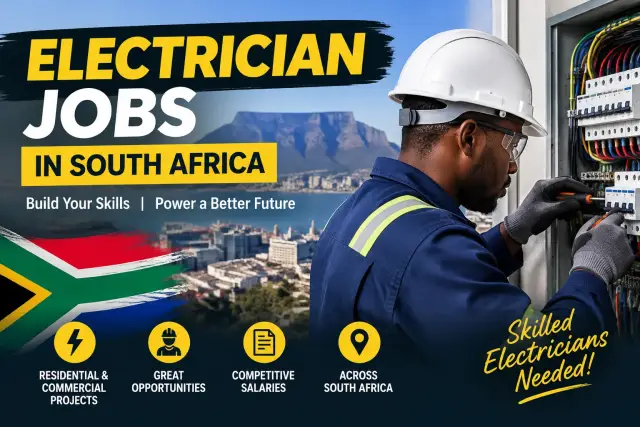
Quick answers about Electrician Jobs
Q
What qualifications do I need to become an electrician in South Africa in 2026?
A common route is to complete electrician training or an apprenticeship and pass a trade test at an accredited trade test centre. Section 26D of the Skills Development Act provides for trade testing and artisan certification; check the entry requirements with your training provider before enrolling.
Source: South African Government
Q
Can a qualified electrician issue an electrical certificate of compliance?
Passing a trade test does not by itself authorise you to issue electrical certificates of compliance. Under the Electrical Installation Regulations of 2009, you must also be registered in an appropriate category, such as installation electrician, and work within that registration’s scope.
Source: Department of Employment and Labour
Q
What is the minimum wage for an electrician in South Africa in 2026?
The national minimum wage is R30.23 per hour from 1 March 2026. An electrician may be entitled to a higher rate under an applicable bargaining council agreement or employment contract, so check which agreement covers the job.
Source: Department of Employment and Labour
Q
How many hours can an electrician normally work per week?
The Basic Conditions of Employment Act generally limits ordinary working time to 45 hours per week. Some employees, including those earning above the applicable earnings threshold, are excluded from certain working-time protections, so check your contract and eligibility.
Source: South African Government