
Company
U.S. Army
Location
Philadelphia, PA
Job type
Full-time
Salary
24,396–30,036 a year
Via
ZipRecruiter
Apply on
Job description
Plumber (12K)
Overview:
- Army plumbers and pipe fitters are responsible for installing and repairing plumbing and pipe systems.
Job Duties:
- Maintain heating systems, basic water supply and water distribution systems
- Pipe systems for waste water
- Basic plumbers repair and maintenance
- Maintenance for plumbing fixtures, pipes, stacks, brackets, traps, vents and insulation
- Construction plans and drawings
Requirements:
- Must meet DoD requirements.
- Those who want to serve must first take the ASVAB, a series of tests that helps you better understand your strengths and identify which Army jobs are best for you.
Training:
- Job training for a plumber requires 10 weeks of Basic Combat Training and seven weeks of Advanced Individual Training. Part of this time is spent in the classroom and part in the field with on-the-job instructions, including practice with carpentry and masonry tools.
Some of the skills you’ll learn are:
- Installation and repair of pipe systems, plumbing fixtures, boiler controls, water purification and distillation systems
- Maintenance and repair of hydraulic and pneumatic systems
Helpful Skills:
- Interest in math and shop mechanics
- Preference for physical work
- Ability to work with detailed plans
Required ASVAB Score(s)
- General Maintenance (GM): 88
- Learn more about the ASVAB and see what jobs you could qualify for.
Compensation:
- Total compensation includes housing, medical, food, special pay, and vacation time. Learn more about total compensation.
Earn Cash For In Demand Jobs:
- You could earn up to $40,000 in cash bonuses just for enlisting under certain Military Occupational Specialties. Visit Jobs in Demand to see if this job qualifies for an enlistment bonus.
Education Benefits:
- In the Army, qualified students can earn full-tuition, merit-based scholarships, allowances for books and fees, plus an annual stipend for living expenses. Learn more about education benefits.
Future Civilian Careers:
- The skills you learn will help prepare you for a career in a mechanical or plumbing contracting company.
PARTNERSHIP FOR YOUTH SUCCESS (PaYS) Program:
- Those interested in this job may be eligible for civilian employment, after the Army, by enrolling in the Army PaYS program. The PaYS program is a recruitment option that guarantees a job interview with military friendly employers that are looking for experienced and trained Veterans to join their organization. Find out more about the Army PaYS Program at
- AT&T,
Frequently asked questions
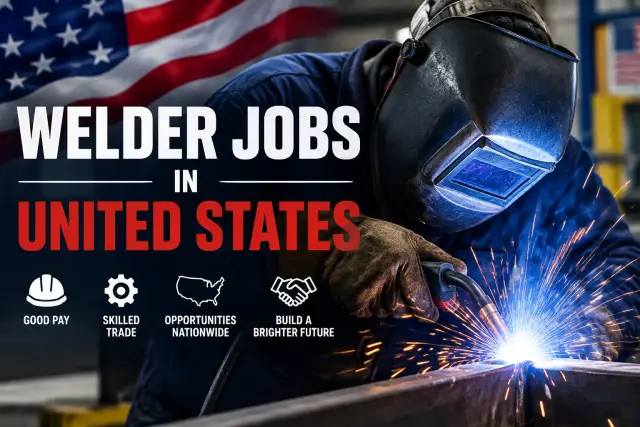
Quick answers about Welder Jobs
Q
How much does a welder have to be paid in 2026?
The federal minimum wage is $7.25 per hour, although many states and localities require a higher minimum. Actual welder pay varies by employer, location, experience and type of work.
Source: U.S. Department of Labor
Q
Do welders get overtime pay?
Most nonexempt employees must receive at least 1.5 times their regular pay rate for hours worked over 40 in a workweek. For example, a welder earning $20 per hour would generally receive at least $30 per overtime hour.
Source: U.S. Department of Labor
Q
What education do I need to become a welder?
Welders typically need a high school diploma or equivalent, along with technical and on-the-job training. When researching the occupation, you can find it under Standard Occupational Classification code 51-4121.
Source: U.S. Bureau of Labor Statistics
Q
How long does a welding apprenticeship take?
A time-based registered apprenticeship must include at least 2,000 hours of on-the-job learning. Federal rules also recommend at least 144 hours of related instruction per year, though individual programs can set their own schedules and requirements.
Source: Electronic Code of Federal Regulations