

Plumber Jobs in the Philippines: A Practical Guide
Plumber jobs can be a good fit if you like hands-on work, solving problems, and seeing the results of what you do. In the Philippines, plumbers help keep homes, offices, restaurants, factories, and construction sites running by installing and repairing water and drainage systems.
You don't always need years of experience to get started. Some employers hire helpers who learn on the job, while others look for trained plumbers who can work independently. If you're planning a career in the trade, here's what to expect, where to look for openings, and how to improve your chances of getting hired.
What Does a Plumber Do?
A plumber installs, maintains, and repairs pipes and fixtures that carry water or waste. The work can be as straightforward as replacing a leaking faucet or as involved as helping install a plumbing system in a new building.
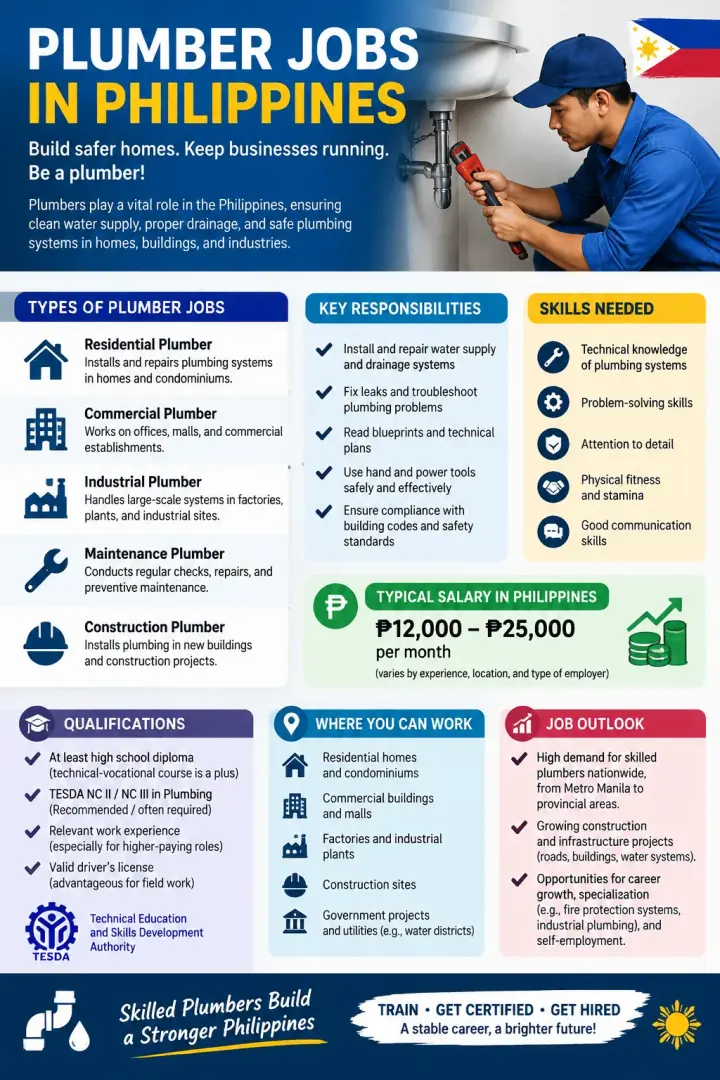
Common responsibilities include:
- Installing water supply lines, drainage pipes, toilets, sinks, and faucets
- Finding and repairing leaks, clogs, and damaged pipes
- Reading basic plans and following project specifications
- Measuring, cutting, joining, and fitting pipes
- Testing plumbing systems and checking for faults
- Using tools safely and keeping the work area clean
- Coordinating with supervisors, other tradespeople, and customers
The exact work depends on the job. A maintenance plumber at a hotel might respond to guestroom repairs, while a construction plumber could spend most of the day installing pipework on a project site. Some jobs also involve shifts, emergency calls, or work in tight spaces.
Types of Plumber Jobs in the Philippines
Residential Plumber
Residential plumbers work on houses, apartments, and condominiums. They install fixtures, fix leaks, clear blocked drains, and handle other household repairs. Good communication helps here because you'll often need to explain the problem and the proposed repair to a homeowner or tenant.
Construction Plumber
Construction plumbers install plumbing systems in new buildings or properties being renovated. They work with plans, measurements, materials, and project schedules. Job ads may look for experience with specific pipe materials, tools, or large construction sites.
Maintenance Plumber
Hotels, hospitals, schools, malls, and office buildings may hire plumbers to maintain their facilities. These roles can involve routine inspections as well as urgent repairs. Depending on the employer, you may work a regular schedule, rotating shifts, or be on call.
Plumber Helper or Apprentice
A helper supports experienced workers by preparing tools and materials, assisting with installations, and cleaning the work area. It's a practical entry point if you're new to the trade. Ask what training and supervision the job offers so you know what you'll have a chance to learn.
Industrial Plumber
Factories and other industrial facilities may need people who can maintain more complex piping systems. Requirements vary, but employers often value relevant site experience, the ability to read plans, and a strong understanding of safety procedures.
Qualifications and Skills Employers Look For
Requirements vary from one employer to another. For entry-level plumber jobs in the Philippines, some companies accept applicants with basic training or experience as a helper. More senior positions may require several years of work, the ability to read plumbing plans, or a relevant technical qualification.
Useful skills include:
- Basic knowledge of water supply and drainage systems
- Correct use of hand tools and power tools
- Measuring and calculating materials
- Troubleshooting leaks, low water pressure, and blocked drains
- Reading basic drawings and following instructions
- Working safely around water, electricity, and construction equipment
- Communicating clearly with coworkers and customers
Plumbing can be physically demanding. You may need to lift materials, stand for long periods, climb, or work in confined areas. Employers may also ask for a medical assessment, depending on the role and their hiring process.
TESDA Plumbing Training and Certification
If you're starting from scratch, technical training can help you build a foundation. TESDA's Plumbing NC II is one qualification to explore. Training can cover practical plumbing tasks, workplace safety, and the skills needed for assessment. Course schedules, fees, available slots, and scholarship options depend on the training provider.
Check the TESDA website or contact a TESDA office to find registered programs and accredited assessment centers. Before enrolling, confirm what the course covers, how long it runs, and whether assessment fees are included.
Keep in mind that completing training and passing an assessment are separate steps. A National Certificate can support your application, but it doesn't guarantee a job. Employers may still assess your practical skills and experience.
Do You Need a License to Work as a Plumber?
Not every job titled “plumber” has the same requirements. A helper position, for example, is different from work that requires a licensed master plumber. Don't assume that a TESDA certificate and a professional license are interchangeable.
If you're interested in becoming a registered master plumber or taking on work that requires one, check the current qualifications, examination requirements, and registration rules with the Professional Regulation Commission (PRC). For a specific project, ask the employer or relevant local authority what credentials and supervision are required.
Plumber Salary and Benefits in the Philippines
Plumber pay depends on your location, experience, skills, employer, and whether the job is permanent, project-based, or paid by the day. A helper will generally earn less than an experienced plumber who can troubleshoot independently or lead a team. Work in Metro Manila or on a specialized project may pay differently from a similar role elsewhere.
Rather than rely on a single salary figure, compare several current job listings for your area and experience level. Check whether the amount shown is a daily or monthly rate and whether it includes allowances or overtime. You can also check the National Wages and Productivity Commission for the applicable regional minimum wage orders and their coverage.
Before accepting an offer, ask about:
- Basic pay, payment schedule, and employment status
- Working hours, rest days, overtime, and holiday pay
- Project duration and any probationary period
- Transportation, meals, lodging, or tool allowances
- Safety equipment and who provides it
- SSS, PhilHealth, and Pag-IBIG contributions, as applicable
- 13th-month pay and other benefits for which you qualify
Get the terms in writing when possible. If something in the offer isn't clear, ask before you sign. For questions about labor standards, check official Department of Labor and Employment resources or contact the appropriate DOLE office.
Where to Find Plumber Jobs
You can find plumbing vacancies through several channels. Try searching for related job titles, too, since employers don't always use the same wording.
- Online job boards: Search for “plumber,” “maintenance plumber,” “construction plumber,” and “plumber helper,” followed by your city or province.
- Company career pages: Check construction firms, property managers, hotels, hospitals, and facilities management companies.
- Public Employment Service Offices: Ask your local PESO about job fairs and available vacancies.
- TESDA connections: Training centers may know about local employers or job opportunities for graduates.
- Personal referrals: Let former coworkers, trainers, and contacts in the construction trade know you're looking.
For local work, you can also approach building maintenance contractors and plumbing service businesses directly. A short, polite message with your location, experience, and availability makes it easier for them to decide whether to contact you.
How to Apply for a Plumber Job
1. Make a Clear Resume
Keep your resume easy to scan. Include your contact details, location, work history, relevant training, and skills. List the kinds of work you've actually done, such as installing PVC pipes, replacing fixtures, or maintaining building drainage systems.
If you're new, include your TESDA training, practical exercises, or helper experience. You don't need to exaggerate. A straightforward description gives an employer a better idea of where you can contribute and what you'll still need to learn.
2. Prepare Your Documents
Employers may request valid identification, certificates, references, and other pre-employment documents. Requirements differ, so check the job posting or ask the recruiter for a list. Keep copies of your training records and certificates ready, but share sensitive personal information only after you've verified who you're dealing with.
3. Get Ready for an Interview or Skills Test
You may be asked about previous projects, the tools you've used, and how you approach common plumbing problems. Some employers also conduct a practical test. Be ready to explain how you work safely, check your measurements, and report an issue you can't resolve on your own.
It's fine to say you haven't used a particular tool or material yet. Honestly, that's better than claiming experience you can't demonstrate. You can follow up by explaining a related task you've done and how you would learn the new one.
Can Filipino Plumbers Work Abroad?
Yes. Some employers overseas recruit Filipino plumbers, but qualifications, experience, language requirements, and licensing rules depend on the destination and the job. An overseas employer may ask for a skills assessment or experience with particular systems and standards.
If you're considering a job abroad, use the Department of Migrant Workers (DMW) resources to check recruitment agencies and job orders. Verify the job offer and contract through official channels before paying any fee or handing over documents. Be wary of recruiters who pressure you to pay immediately, promise guaranteed deployment, or refuse to provide verifiable details.
How to Grow Your Plumbing Career
Once you've got the basics down, look for opportunities to take on more varied work under proper supervision. Learning to read plans, estimate materials, document repairs, and communicate with clients can make you more useful to an employer.
You might progress from helper to plumber, then to a senior or supervisory position as your skills grow. Some people pursue additional credentials or explore master plumber registration when they meet the requirements. Others build experience in maintenance, construction, or another area that suits them.
Whatever route you choose, keep a simple record of your projects, training, and references. It'll make your next application much easier.
Frequently Asked Questions About Plumber Jobs
Can I apply for a plumber job without experience?
Yes. Look for plumber helper or trainee positions and check whether the employer provides supervision. Basic technical training can also help you show that you're serious about learning the trade.
Is Plumbing NC II required for every plumber job?
No. Requirements depend on the employer and the position. Some listings ask for a relevant certificate, while others focus on demonstrated skills or experience. Always read the job requirements carefully.
Are plumbing jobs available outside Metro Manila?
Yes. Plumbers are needed wherever homes, buildings, and facilities require installation and maintenance. Search job boards and contact your local PESO for openings in your province or nearby cities.
What should I ask before accepting a plumbing job?
Ask about pay, working hours, benefits, job location, project length, safety equipment, and the work you'll be expected to do. If the role involves travel or lodging, clarify who pays for those costs too.
A solid plumbing career usually starts with the basics: learn the trade, work safely, and keep building your skills. Whether you're applying as a helper or looking for a more experienced role, focus on jobs that match your abilities and offer clear terms.