
Company
Trade College
Location
Los Angeles, CA
Job type
Full-time
Posted
4 days ago
Via
Jobrapido
Apply on
Job description
What You Need to Know About Welder, Cutter, or Welder Fitter
Example of Welder, Cutter, or Welder Fitter Job
Use hand-welding or flame-cutting equipment to weld or join metal components or to fill holes, indentations, or seams of fabricated metal products.
Welder, Cutter, or Welder Fitter Responsibilities
- Guide and direct flames or electrodes on or across workpieces to straighten, bend, melt, or build up metal.
- Develop templates and models for welding projects, using mathematical calculations based on blueprint information.
- Cut, contour, and bevel metal plates and structural shapes to dimensions as specified by blueprints, layouts, work orders, and templates, using powered saws, hand shears, or chipping knives.
- Gouge metals, using the air-arc gouging process.
- Connect and turn regulator valves to activate and adjust gas flow and pressure so that desired flames are obtained.
- Operate manual or semi-automatic welding equipment to fuse metal segments, using processes such as gas tungsten arc, gas metal arc, flux-cored arc, plasma arc, shielded metal arc, resistance welding, and submerged arc welding.
Skills Needed to be a Welder, Cutter, or Welder Fitter
Below is a list of the skills most Welders, Cutters, and Welder Fitters say are important on the job.
- Critical Thinking: Using logic and reasoning to identify the strengths and weaknesses of alternative solutions, conclusions or approaches to problems.
- Operation and Control: Controlling operations of equipment or systems.
- Reading Comprehension: Understanding written sentences and paragraphs in work related documents.
- Monitoring: Monitoring/Assessing performance of yourself, other individuals, or organizations to make improvements or take corrective action.
- Active Listening: Giving full attention to what other people are saying, taking time to understand the points being made, asking questions as appropriate, and not interrupting at inappropriate times.
- Speaking: Talking to others to convey information effectively.
Types of Welder, Cutter, or Welder Fitter Jobs
What Kind of Welder, Cutter, or Welder Fitter Job Opportunities Are There?
In the United States, there were 404,800 jobs for Welder, Cutter, or Welder Fitter in 2016. New jobs are being produced at a rate of 5.6% which is above the national average. The Bureau of Labor Statistics predicts 22,500 new jobs for Welder, Cutter, or Welder Fitter by 2026. The BLS estimates 45,800 yearly job openings in this field. The states with the most job growth for Welder, Cutter, or Welder Fitter are Rhode Island, Utah, and Nevada. Watch out if you plan on working in Vermont, Maine, or Ohio. These states have the worst job growth for this type of profession.
What is the Average Salary of a Welder, Cutter, or Welder Fitter
Welders, Cutters, and Welder Fitters make between $28,560 and $63,740 a year.
Welders, Cutters, and Welder Fitters who work in Alaska, District of Columbia, or Hawaii, make the highest salaries.
Below is a list of the median annual salaries for Welders, Cutters, and Welder Fitters in different U.S. states.
What Tools & Technology do Welders, Cutters, and Welder Fitters Use?
Below is a list of the types of tools and technologies that Welders, Cutters, and Welder Fitters may use on a daily basis:
- Microsoft Excel
- Microsoft Office
- IBM Notes
- Recordkeeping software
- Scientific Software Group Filter Drain FD
Becoming a Welder, Cutter, or Welder Fitter
Education needed to be a Welder, Cutter, or Welder Fitter:
What work experience do I need to become a Welder, Cutter, or Welder Fitter?
Who Employs Welders, Cutters, and Welder Fitters?
The paragraph below does not include a table, but notes approximately the number of Welders, Cutters, and Welder Fitters employed by various industries.
Related Careers
Those thinking about becoming a Welder, Cutter, or Welder Fitter might also be interested in the following careers:
Career changers with experience as a Welder, Cutter, or Welder Fitter sometimes find work in one of the following fields:
Frequently asked questions
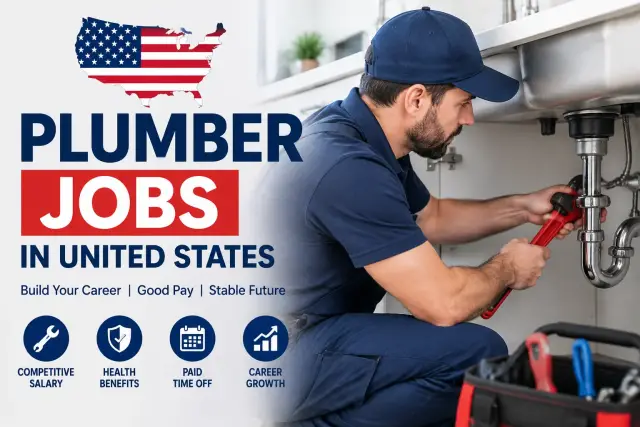
Quick answers about Plumber Jobs
Q
How much do plumbers make in the United States?
The Bureau of Labor Statistics reported a median annual wage of $62,970 in May 2024 for plumbers, pipefitters, and steamfitters. This is a historical benchmark, not a 2026 wage estimate; earnings vary by location, experience, and employer.
Source: U.S. Bureau of Labor Statistics
Q
How long does it take to become a plumber?
Plumbing apprenticeships typically last 4 or 5 years. Apprentices generally receive about 2,000 hours of paid on-the-job training each year, along with technical instruction.
Source: U.S. Bureau of Labor Statistics
Q
Do I need a license to work as a plumber?
Most states and some localities require plumbers to be licensed. Requirements vary, but many require 2 to 5 years of experience and a licensing exam before a plumber can work independently.
Source: U.S. Bureau of Labor Statistics
Q
What is the minimum pay for a plumbing apprentice in 2026?
The federal minimum wage for covered workers is $7.25 per hour, although a higher state or local minimum may apply. Some employees under age 20 may be paid $4.25 per hour during their first 90 consecutive calendar days of employment. These are legal minimums, not typical plumber wages.
Source: U.S. Department of Labor